
Nissan’s written answer to me about Frontier and Pathfinder growth read like the side of a well-stocked toolbox.
V6 engines. Nine-speed automatics. Towing capacity. Safety. Useful trim packages. Inventory. Incentives. Value. Quality.
- Dealer-level execution may be playing a larger role than acknowledged. Nissan’s ability to keep desirable trims like PRO-4X and Rock Creek physically on lots, rather than tied up in allocation delays.
- The simplicity of Nissan’s powertrain strategy could also be reducing long-term ownership anxiety in a market where turbocharged engines, hybrid systems, and complex drivetrains are becoming the norm.
- There may be a pricing “pressure valve” effect at work. As midsize trucks and three-row SUVs from competitors push deeper into premium pricing territory, Frontier and Pathfinder could be benefiting from buyers who originally intended to spend more but are recalibrating budgets due to interest rates, insurance costs, or broader MPG savings.
Every item described something a customer could drive, use, compare, or finance.
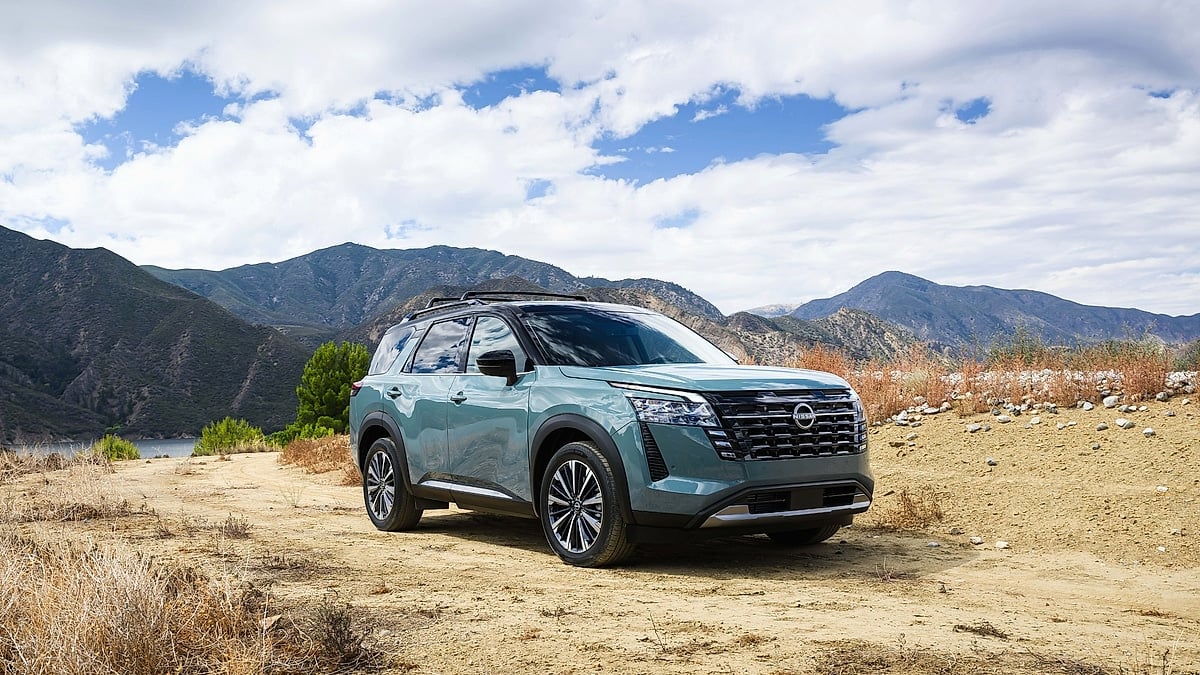
Nissan said Pathfinder growth is coming from strong retail demand, recent updates, higher marketing investment, well-managed inventory, competitive incentives, and a mechanical package that buyers understand. Frontier’s momentum comes from a similar formula, joined by PRO-4X, Dark Armor, and a range of trims that let customers choose capability or style without abandoning the truck’s basic character.
Pathfinder growth is driven by strong retail demand, supported by positive reception to recent updates, increased marketing investment, well-managed inventory, and competitive incentives. Its standard V6, 9-speed automatic transmission, and available 6,000-pound towing capacity continue to resonate and reinforce its capability against key competitors
Nissan’s total U.S. sales fell 7.5 percent in the first quarter of 2026, yet retail sales rose 9.6 percent. Frontier sales increased 47.9 percent from the same quarter last year. Pathfinder rose 45.2 percent. Nissan also told Torque News that Frontier has now recorded 14 consecutive months of year-over-year growth.
Safety remains a priority for families, and the latest IIHS Top Safety Pick+ ratings position Pathfinder and Murano as strong choices in a competitive segment.
That split between total volume and retail performance keeps the celebration honest. Nissan still has a difficult global recovery ahead. American customers are nevertheless walking into showrooms and choosing several of the vehicles that sit closest to the center of its business.
Ivan Espinosa’s turnaround finally has an early U.S. result that can be traced to products rather than promises.
The Answer Sounds Like The Man Running Nissan
Espinosa came to the chief executive’s office through product planning.
He joined Nissan in Mexico, worked in commercial vehicles, fleet sales, regional planning, marketing, and overseas assignments, and then became a program director in Japan. Nissan describes its program directors as the chief executives of individual vehicle programs. Espinosa’s responsibilities included large products sold in the United States and China, among them Murano, Altima, and Pathfinder.
He later ran global product strategy and planning before becoming chief planning officer and, eventually, CEO.
That background shapes the language he uses when discussing Nissan’s recovery. He talks about customers, product families, manufacturing scale, chassis behavior, powertrain choices, and the role each vehicle plays inside the brand. His public comments spend less time polishing abstractions and more time explaining which cars carry volume, which cars carry identity, and how Nissan can afford both.
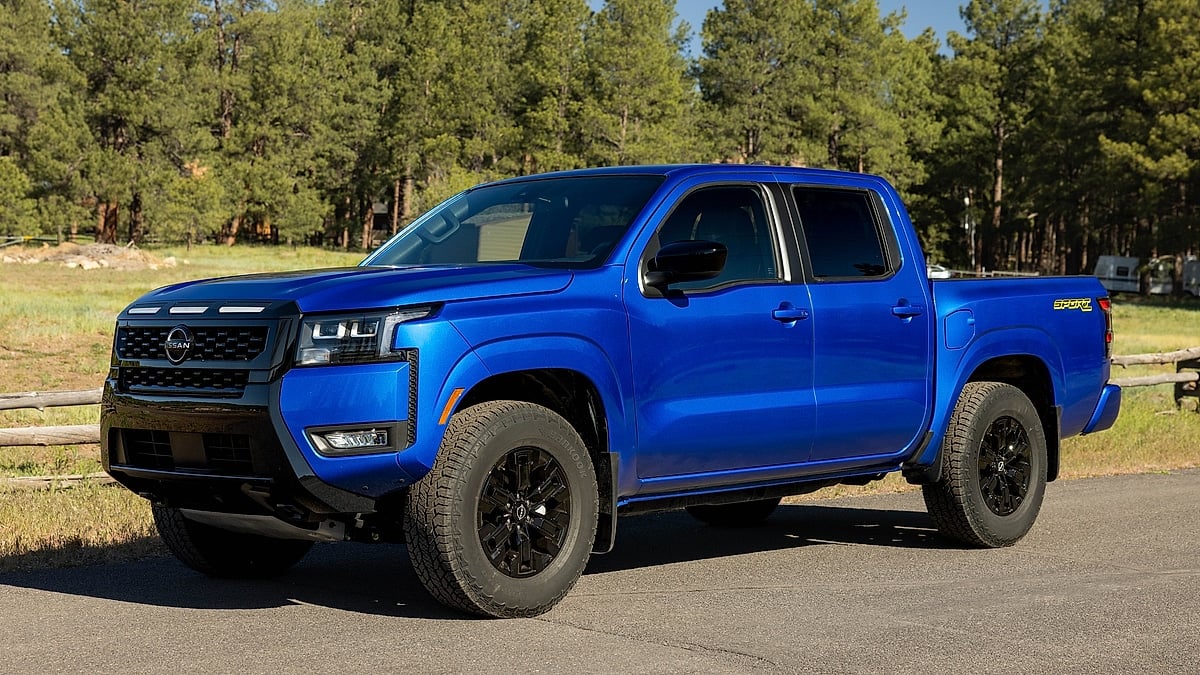
Frontier momentum is driven by strong retail demand and a compelling lineup, from appearance packages like Dark Armor to the off-road-focused PRO-4X. Its standard V6, 9-speed automatic transmission, strong value, and consistent quality continue to resonate, contributing to 14 consecutive months of year-over-year sales growth.
Espinosa divides the future portfolio into several roles.
Core vehicles carry the business. Heartbeat vehicles express Nissan’s identity and generate emotional pull. Partnership models fill useful gaps through work with companies such as Renault, Mitsubishi, and Dongfeng.
Frontier and Pathfinder sit on the side of the equation that has to produce dependable volume.
Their current gains help pay for the side enthusiasts usually discuss.
Frontier Makes Its Case Before The Options List Begins
The Frontier’s sales run makes sense once the truck is viewed from the buyer’s side of the desk.
Every 2026 Frontier comes with a 3.8-liter V6 producing 310 horsepower, paired with a 9-speed automatic. Nissan advertises up to 7,150 pounds of towing capacity, depending on configuration. The fully boxed frame, available four-wheel drive, PRO-4X equipment, long-bed choices, Dark Armor package, and Roush-developed PRO-4X R give the lineup enough range to cover work, recreation, and appearance-driven buyers.
The standard powertrain creates clarity.
A shopper does not have to climb several trim levels to escape a weaker engine. The base mechanical package already feels complete. Additional money can buy the cab, bed, four-wheel-drive system, technology, off-road hardware, or styling the owner actually wants.
That structure helps Frontier stand apart in a midsize-truck segment filled with turbocharged engines, hybrids, trim-specific outputs, and increasingly ambitious prices. Those alternatives can be excellent. Frontier answers with a naturally aspirated V6, conventional automatic, and straightforward hierarchy.
Nissan’s response emphasized value and consistent quality alongside capability. Those words carry more force after 14 months of growth. Buyers may like the PRO-4X image, though the sustained run suggests interest extends beyond one enthusiast trim.
Frontier is giving Nissan something more durable than a launch spike.
It is giving the company a customer habit.
Pathfinder Gives Families A Clear Set Of Reasons
Pathfinder’s formula is equally legible.
The 2026 model uses a 3.5-liter V6 producing 284 horsepower and 259 lb-ft of torque, with a 9-speed automatic. It seats up to eight, offers as much as 80.5 cubic feet of cargo room, and can tow up to 6,000 pounds when properly equipped.
The specification appeals to families who need one vehicle to handle school traffic, road trips, weather, grandparents, luggage, and a boat or camper several weekends each year.
Safety strengthens that pitch. The Insurance Institute for Highway Safety named both the 2026 Pathfinder and Murano Top Safety Pick+ vehicles. Nissan specifically pointed to those results in its response, saying they position both SUVs strongly among family buyers.
Pathfinder also benefits from a recent refresh that improves the parts owners touch every day. A standard 12.3-inch infotainment display, available digital instrumentation, updated cameras, physical audio controls, and revised cabin details make the vehicle feel current without discarding its familiar mechanical foundation.
The buyer gets modern technology around a powertrain with known behavior.
That combination can be reassuring in a segment where the vehicle may remain in the family for a decade.
Inventory And Incentives Belong In The Explanation
Nissan openly credited well-managed inventory and competitive incentives for part of Pathfinder’s growth.
That is useful candor.
A vehicle can have the right engine, safety rating, styling, and equipment, then fail at retail because the desired trim is unavailable or the monthly payment sits beyond the customer’s reach. Product strategy continues through manufacturing, distribution, dealer stock, finance rates, lease support, and transaction pricing.
Inventory discipline makes advertising believable. A shopper who sees a campaign for a Pathfinder Rock Creek or Frontier PRO-4X must be able to locate one without conducting a multistate search.
Incentives give the product a fair hearing. They become destructive when used to dump unwanted inventory or train buyers to wait for fire-sale pricing. Nissan’s retail growth suggests the current effort is bringing customers into stores rather than merely shifting metal through fleet channels.
The next useful data would be the buyer's origin.
Conquest customers would show Nissan pulling people from competing brands. Returning owners would show renewed confidence among households that already know the badge. A mix of both would be healthier still.
Nissan did not provide that breakdown in its response, so the article should leave the question open rather than manufacture an answer.
Today’s Showroom Is Building The Case For Xterra
Espinosa has described the coming Xterra as more basic, more raw, frame-based, and intended for U.S. production. He also explained that modern architecture can rarely survive around a single model. Nissan is planning a family broad enough to support a pickup, a two-row SUV, a three-row SUV, and Nissan and Infiniti variants.
That architecture needs scale.
Frontier’s growth gives the pickup side of the family a stronger commercial foundation. Pathfinder’s gains show that Nissan can still draw American families to a capable three-row SUV. Armada’s first-quarter increase adds another signal that buyers will consider large Nissan utility vehicles when the product and retail conditions align.
These results do not guarantee the success of a future Xterra or related body-on-frame models. They strengthen the internal argument for investment.
The Xterra will carry a heartbeat role. Espinosa wants it to express the tougher, more adventurous side of Nissan’s history. A heartbeat vehicle still needs core products generating volume, supplier scale, dealer traffic, and engineering investment.
Frontier and Pathfinder are doing that work now.
Their growth gives the future body-on-frame family something better than nostalgia: evidence of current demand.
E-Power Keeps The Plan Moving Forward
Nissan’s American momentum currently leans heavily on familiar gasoline hardware. The long-term plan has more range than that.
Espinosa sees hybrid demand accelerating as pure-EV growth cools in the United States. Nissan will answer with e-Power, beginning with the next-generation Rogue. The gasoline engine generates electricity while electric motors drive the wheels, preserving the immediate response and smooth power delivery associated with an EV without requiring external charging.
That technology fits the same customer-first logic visible in Frontier and Pathfinder.
A Frontier buyer may still prefer a conventional V6. A family shopping Rogue may want lower fuel use with no change to refueling habits. A future body-on-frame buyer may need a different hybrid system built around towing, range, and off-road use.
One powertrain answer cannot serve every assignment well.
Espinosa’s product plan gives Nissan room to match technology to the vehicle rather than forcing the entire lineup toward a single solution.
Nissan Has Found A Place To Begin
Nissan still faces factory consolidation, cost reduction, faster development targets, fierce competition in China, and an ambitious goal of reaching one million annual U.S. sales by fiscal 2030. First-quarter total sales remained below last year's.
The retail line moved in the right direction.
Frontier and Pathfinder are gaining customers for reasons Nissan can build upon: clear mechanical packages, useful capability, safety, recognizable trims, disciplined inventory, competitive pricing, and quality that buyers trust enough to sign for.
That is how a product-led recovery should begin.
Espinosa spent his career planning vehicles before taking responsibility for the whole company. The first American evidence supporting his approach has arrived through two products that customers already understand.
Frontier carries the truck side.
Pathfinder carries the family side.
Rogue e-Power and the future body-on-frame family will show whether Nissan can turn those early gains into a repeatable system.
Recent Nissan Buyers, What Brought You In?
If you’re shopping right now or recently cross-shopped these vehicles, I want to hear from you. What did Nissan get right, what nearly lost you, and what ultimately made you sign, or walk away? Drop your experience in the comments.
About The Author
Noah Washington is an automotive journalist based in Atlanta, Georgia, covering sports cars, luxury vehicles, and performance culture. His reporting focuses on explaining the engineering, design philosophy, and real-world ownership experience behind modern vehicles.
Noah has been immersed in the automotive world since his early teens, attending industry events and following the enthusiast communities that shape how cars are built and driven today. His work blends industry insight with enthusiastic storytelling, helping readers understand not just what a car is, but why it matters.
Noah is also a member of the Southeast Automotive Media Association (SAMA), a professional organization for automotive journalists and industry media in the Southeast.
His coverage regularly explores sports cars, luxury vehicles, and performance-driven segments of the automotive industry, including the evolving culture surrounding Formula Drift and enthusiast builds.
Read more of Noah's work on his author profile page.
You can also follow Noah here:
Set Torque News as Preferred Source on Google
Follow us today...