
Nissan has pushed touchscreen climate controls into the 2026 Sentra SR, a decision one owner has already labeled "the dumbest and most dangerous thing on this car." This shift, which buries essential functions within an infotainment screen, forces drivers to divert their attention from the road, directly contradicting the vehicle's suite of advanced safety features. It's a design choice that prioritizes aesthetics over functionality, a familiar misstep in an industry that has repeatedly faced backlash for similar implementations.
u/NFNL2 likes the 2026 Nissan Sentra SR as a comfortable, economical, reliable daily driver and rates it 8/10, but strongly dislikes the touchscreen climate controls, weak blind-spot indicator placement, some EV-inspired styling choices, and unchanged powertrain.

Their wish list is a sportier SR with more power, better transmission options or paddle shifters, sport suspension, improved wheels/grille styling, and a bit more exhaust character.
2026 Nissan Sentra SR: Key Specifications and Design Choices
- The 2026 Sentra SR retains the same powertrain as its predecessor, featuring a 2.0-liter four-cylinder engine paired with a continuously variable transmission (CVT). This setup delivers 149 horsepower and 146 lb-ft of torque, numbers unchanged from the 2022 model.
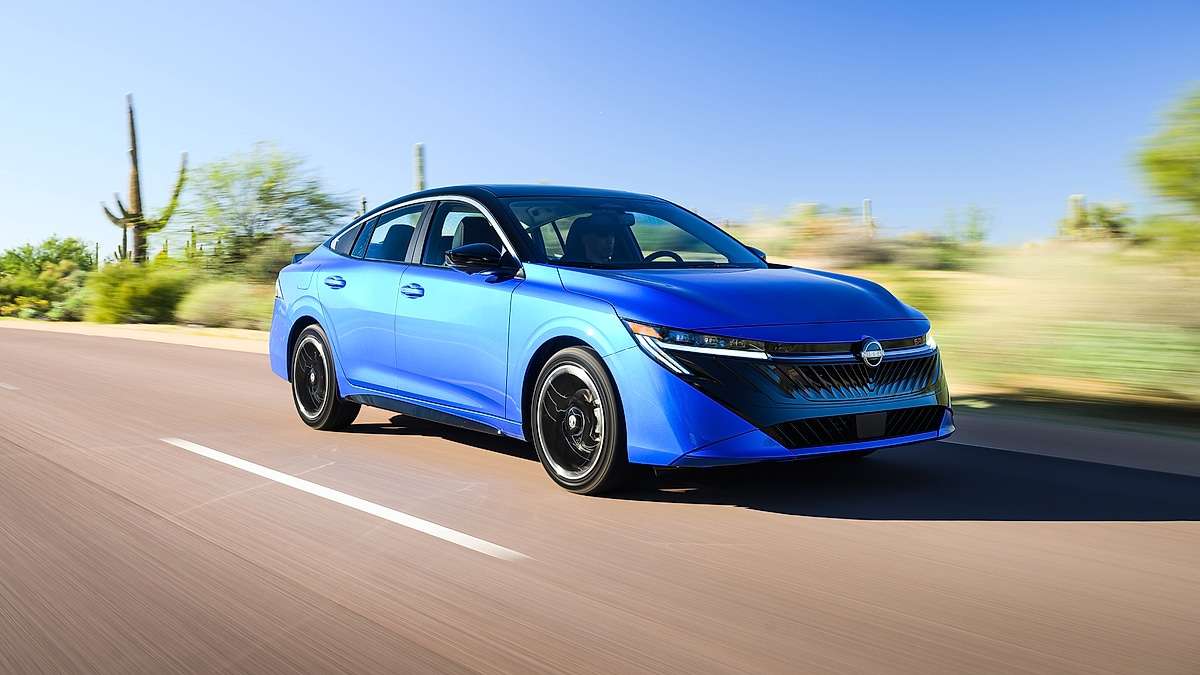
- Nissan has opted for a new "EV look" exterior design, including a revised front grille and wheel options, which one owner described as resembling the previous generation Nissan Leaf. The SR trim specifically features blacked-out elements and a red badge.
- Interior updates include an all-digital display that appears as one long screen but is actually two separate units, and the controversial integration of climate controls into the infotainment touchscreen. This design choice has been criticized for requiring drivers to take their eyes off the road.
- Despite being an SR model, the 2026 Sentra SR does not offer a sport suspension, a feature found on the comparably equipped 2026 Altima SR. This decision shows a disparity in performance-oriented features across Nissan's sedan lineup.
Analysis & Discussion
The owner, Reddit user u/NFNL2, who traded a 2022 Sentra SR for the new 2026 model, immediately shows the regression in interior design. His frustration with the touchscreen climate controls reflects widespread complaints across the industry. Manufacturers, in their pursuit of minimalist dashboards and perceived modernity, consistently overlook the fundamental human factor: tactile controls allow for adjustment without diverting eyes from the road. Nissan's decision to integrate climate functions into a touchscreen, while simultaneously touting the Sentra's safety features, represents a bewildering contradiction in design philosophy.
Ergonomic Missteps and Missed Opportunities
Beyond the climate controls, u/NFNL2 notes the poorly executed blind-spot visual alert, positioned externally on the mirror. This design, prone to being obscured by weather or bright headlights, is a step backward from more effective, interior-mounted indicators. The fact that the 2026 Altima SR offers brightness control for this feature, while the Sentra SR does not, reveals a perplexing inconsistency within Nissan's own lineup. It suggests a lack of cohesive design strategy or, worse, a deliberate cost-cutting measure that compromises a critical safety aid.

The owner's observation about the "giant front center speaker" creating a distracting reflection on the windshield is a minor detail that reveals a larger truth: design elements are being added without proper real-world validation. These aren't just aesthetic quibbles; they are practical annoyances that diminish the daily driving experience.
The "EV Look" and Mechanical Stagnation
The 2026 Sentra SR's exterior styling, which u/NFNL2 describes as an "EV look," is a clear attempt by Nissan to modernize the compact sedan's image. However, this aesthetic overhaul, complete with Leaf-style wheels and chrome trim that demands aftermarket deletion, feels superficial. The real issue lies beneath the skin: Nissan has made "absolutely nothing" in the way of mechanical changes. The same engine, the same CVT, and no sport suspension on the SR model — a stark contrast to the Altima SR, which does receive such upgrades.
This is where Nissan's strategy for the Sentra SR becomes indefensible. To market a vehicle as "SR" (implying Sport Rally) without any meaningful performance or handling enhancements is disingenuous. The owner's suggestion of Nissan's 1.5L turbocharged 3-cylinder engine, which offers 50 more horsepower, is not an unreasonable demand; it's a readily available internal solution that would genuinely elevate the SR's performance credentials. Nissan's continued reliance on the same powertrain, despite offering more engaging options in other markets and models, shows a conservative approach that stifles the Sentra's potential.
The 2026 Nissan Sentra SR, as reviewed by a loyal Nissan owner, is a prime example of a manufacturer prioritizing superficial updates over substantive improvements. The shift to touchscreen climate controls is a dangerous ergonomic misstep, while the lack of mechanical upgrades for a "sport" model is a missed opportunity that borders on misleading. Nissan has delivered a car that is, by the owner's own admission, still "comfortable, economical, and reliable," but it has failed to deliver on the promise of the SR badge. The 2026 Sentra SR is a visually refreshed sedan that remains mechanically stagnant, leaving owners to wonder if Nissan truly understands what "sport" means.
About The Author
Noah Washington is an automotive journalist based in Atlanta, Georgia, covering sports cars, luxury vehicles, and performance culture. His reporting focuses on explaining the engineering, design philosophy, and real-world ownership experience behind modern vehicles.
Noah has been immersed in the automotive world since his early teens, attending industry events and following the enthusiast communities that shape how cars are built and driven today. His work blends industry insight with enthusiastic storytelling, helping readers understand not just what a car is, but why it matters.
Noah is also a member of the Southeast Automotive Media Association (SAMA), a professional organization for automotive journalists and industry media in the Southeast.
His coverage regularly explores sports cars, luxury vehicles, and performance-driven segments of the automotive industry, including the evolving culture surrounding Formula Drift and enthusiast builds.
Read more of Noah's work on his author profile page.
You can also follow Noah here:
Set Torque News as Preferred Source on Google
Follow us today...