
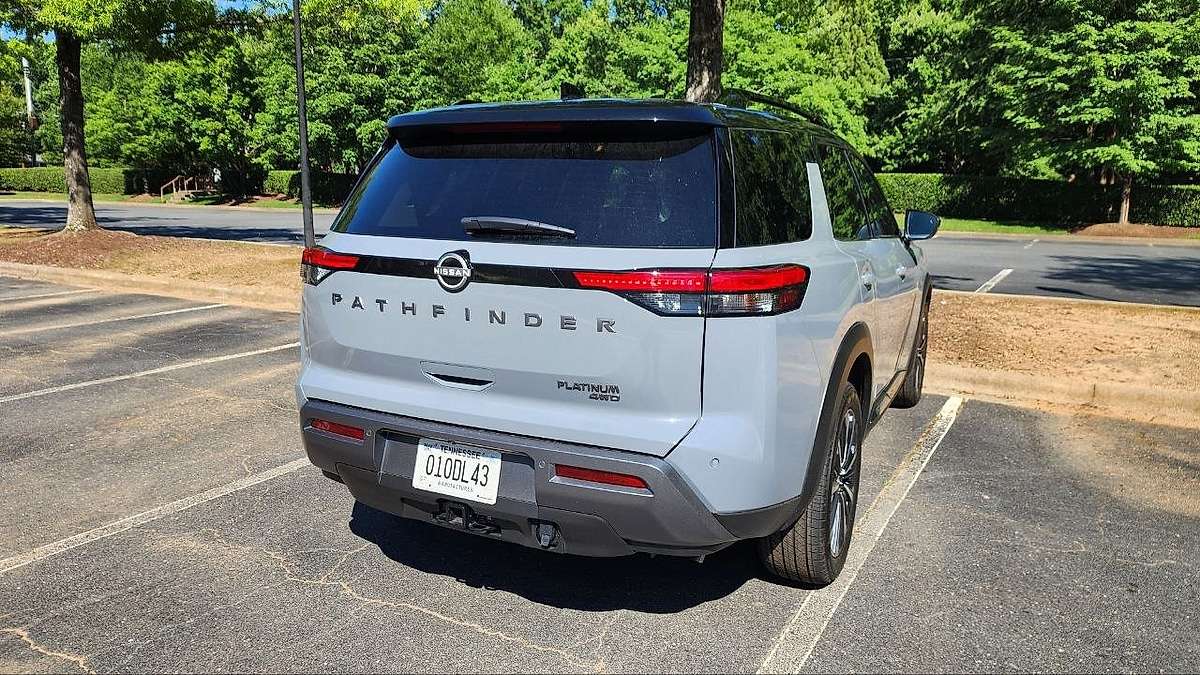

The 2026 Nissan Pathfinder may be one of the last mainstream three-row family SUVs still resisting the industry's rush toward smaller turbocharged engines and full electrification.
While Nissan's competitors chase smaller turbo engines and ever-larger screens, the Pathfinder quietly sticks with a naturally aspirated V6, straightforward controls, and a formula many family SUV buyers may be missing. I test-drove the 2026 Nissan Pathfinder Platinum 4WD last week, and came away thinking this may be one of the most quietly important vehicles in the current market. The 2026 Mazda CX-90, which I also reviewed this year, is a brilliant turbocharged rival. But the Pathfinder is doing something entirely different. It is not chasing the same future. The 2022 Nissan Pathfinder Platinum 4WD set the foundation for what we have today, and Nissan has refined that formula rather than abandoned it.
The segment is changing fast. Most buyers do not realize how quickly options are disappearing in the naturally aspirated V6 three-row SUV space. Here is a real question I want you to think about as you read this review and answer in the comments section below: If the Pathfinder disappeared tomorrow and was replaced by a hybrid-only model, would you still buy it?
The Market Is Shifting Around the Pathfinder
The Toyota Highlander dropped its beloved 3.5-liter V6 for a turbocharged four-cylinder starting with the 2020 model year. Many owners were not happy with that change. One Highlander owner told us she bought a 2023 Highlander, hated the engine, and got rid of it within months of purchase. Meanwhile, Toyota is now preparing a full EV version of the Highlander, making the gasoline V6 era of that vehicle effectively over. The Mazda CX-90 moved to turbocharged engines and full electrification as part of its premium repositioning. And Kia just explained why the V6 is gone for good in the 2027 Telluride, citing emissions, weight, and engineering realities.
Nissan did not follow any of them. The 2026 Pathfinder still runs a naturally aspirated 3.5-liter V6. It still pairs with a conventional nine-speed automatic transmission. It still tows 6,000 pounds. The used three-row crossover market is already seeing surging values for final-generation gas V6 models as families realize what they are losing. The Pathfinder may be the last mainstream option that preserves the old formula without compromise.
Exterior: Refreshed, Confident, and Purposeful
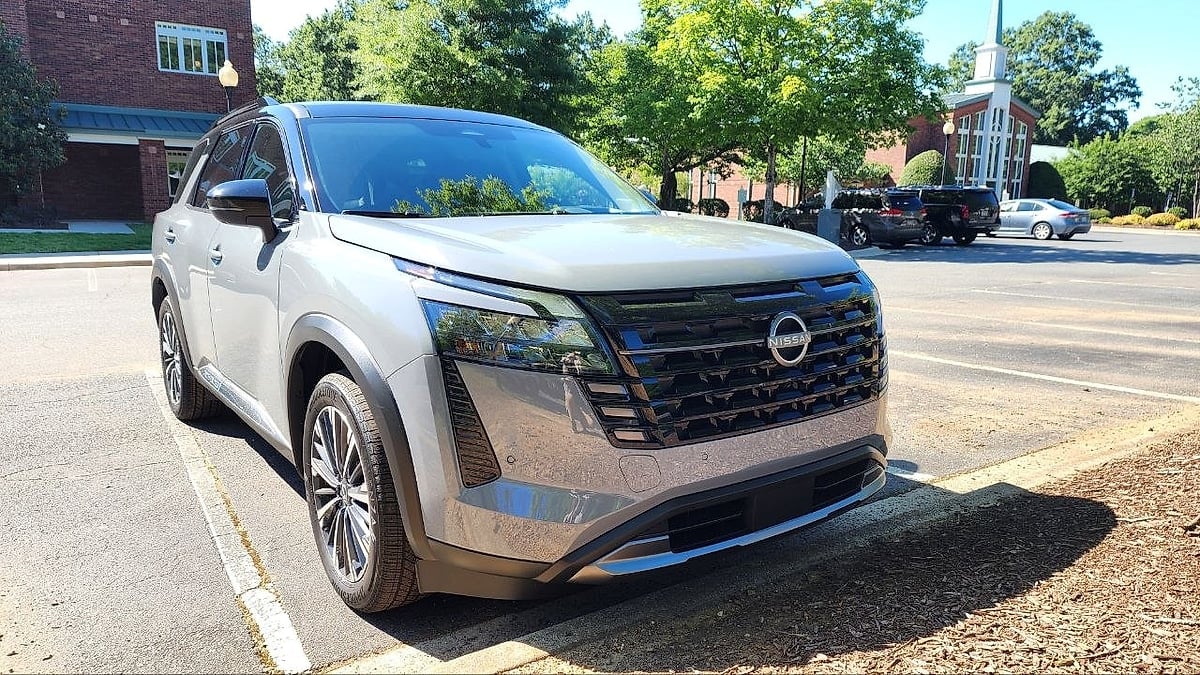
The 2026 model gets a meaningful update to its front end. The new grille and revised front bumper give it a sharper, more modern face. On the Platinum trim I drove, the 20-inch alloy wheels fill the arches well and give the vehicle a planted, substantial look. The new Baltic Teal color option has turned heads at dealerships. Satin exterior badges replace the older chrome treatment and give the Platinum a more upscale appearance without shouting for attention.
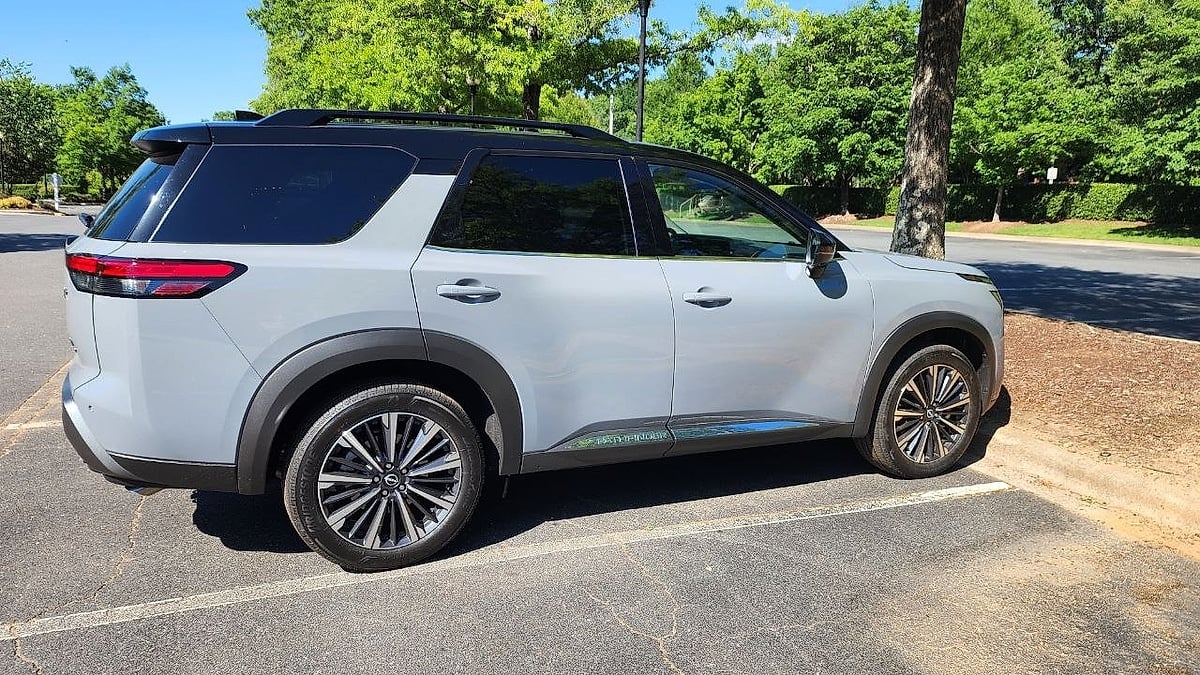
The body is clean and proportionate. The roofline carries enough height to preserve third-row headroom, which is a practical decision that matters more than style points. Rain-sensing wipers, a hands-free power liftgate, and heated power-folding mirrors are standard at the Platinum level. This is the kind of vehicle you notice more after living with it than you do at first glance.
Engine and Drivetrain: The Heart of the Argument
The 3.5-liter V6 produces 284 horsepower and 259 pound-feet of torque. That is not a record-breaking number. It is not designed to be. What it provides is linear, accessible power that does not require a turbo to spool up, does not hesitate off the line, and does not drone when you carry seven passengers on a long interstate drive.
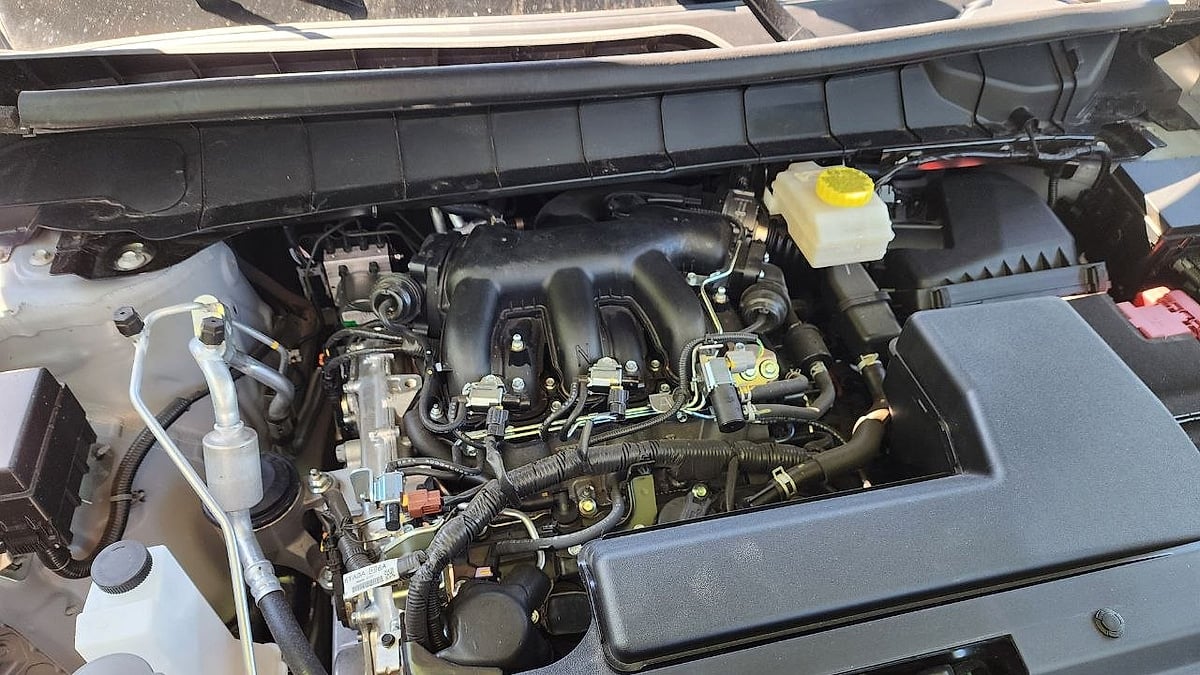
I found highway merging immediate and confident. The nine-speed automatic is a genuine upgrade over the CVT the prior generation used. Gear changes are smooth and quick when you need them. The engine sounds refined rather than strained even when pushed hard. Fuel economy on the Platinum 4WD comes in at 22 miles per gallon combined (20/25 city/highway), which is honest and realistic for a three-row vehicle of this size. When properly equipped, towing capacity reaches 6,000 pounds. As The Car Connection noted in its first drive review, the nine-speed automatic transforms day-to-day driving compared to the CVT era. That is an understatement if you drove a fifth-generation Pathfinder.
Interior of The 2026 Pathfinder: Calm, Considered, and Built for Families
Step inside the Platinum and the immediate impression is quiet competence. The 2026 update brings quilted semi-aniline leather seats on the Platinum, a revised dashboard design, and a new 12.3-inch touchscreen running the latest NissanConnect system with wireless Apple CarPlay and Android Auto. A new digital instrument cluster replaces the old analog gauges. The head-up display projects speed and navigation prompts cleanly onto the windshield so your eyes stay on the road.
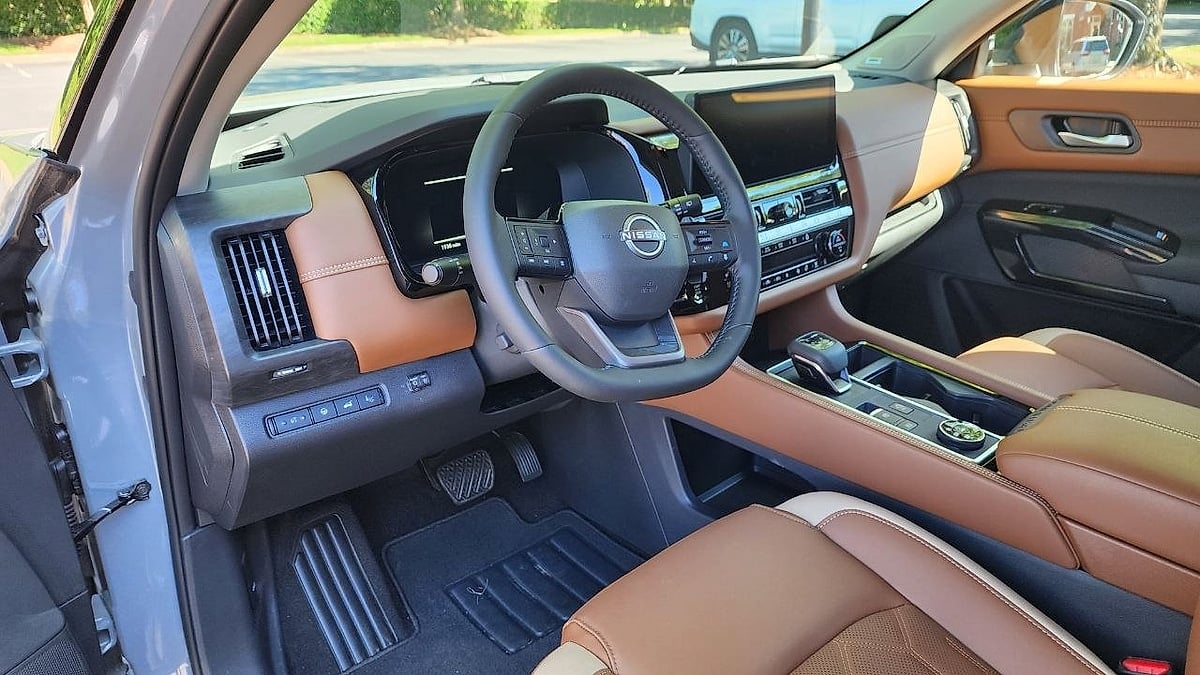
Tri-zone automatic climate control is standard, which means the driver, front passenger, and rear passengers can each set their own temperature independently. Heated and ventilated front seats, a heated steering wheel, and heated rear seats are standard on the Platinum. A 13-speaker Bose audio system fills the cabin with impressive clarity. Physical knobs for volume and climate remain in place, which is not a small thing in a segment rushing toward all-touchscreen interfaces.
The overall cabin feel is spacious and composed. Nissan did not cover the Pathfinder in piano black trim or ambient LED strips that distract the eye. It focused on quality materials and tactile comfort. That restraint is worth respecting.
Second-Row Seating: Where Families Actually Live
The second row is the best seat in the house. With available captain's chairs, two passengers get generous space, a clear path to the third row via the EZ FLEX one-touch release, and their own climate vents. With the bench configuration, the Pathfinder seats eight.
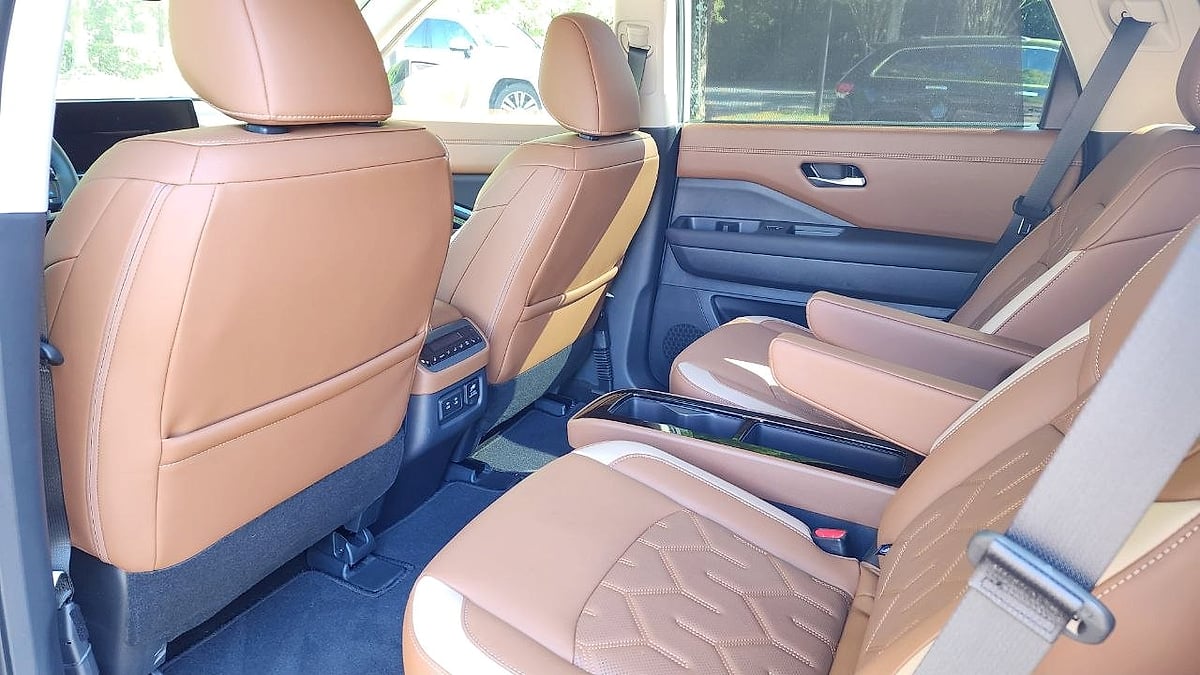
Legroom is excellent. Adults sitting behind taller front-seat occupants will find plenty of space. The seat cushions are well-shaped and supportive for long drives. Heated second-row seats are standard on the Platinum. I drove this vehicle from Charlotte through suburban roads and on longer highway runs with family, and the middle row never generated a complaint. That is the real test.
Third Row: Honest About What It Is
The third row in the 2026 Pathfinder is best suited for children and shorter adults on trips of moderate length. This is consistent across nearly every mainstream three-row SUV in the segment. Headroom is adequate. Legroom is workable for most kids and teenagers. The seat does recline, which is more than some competitors offer.
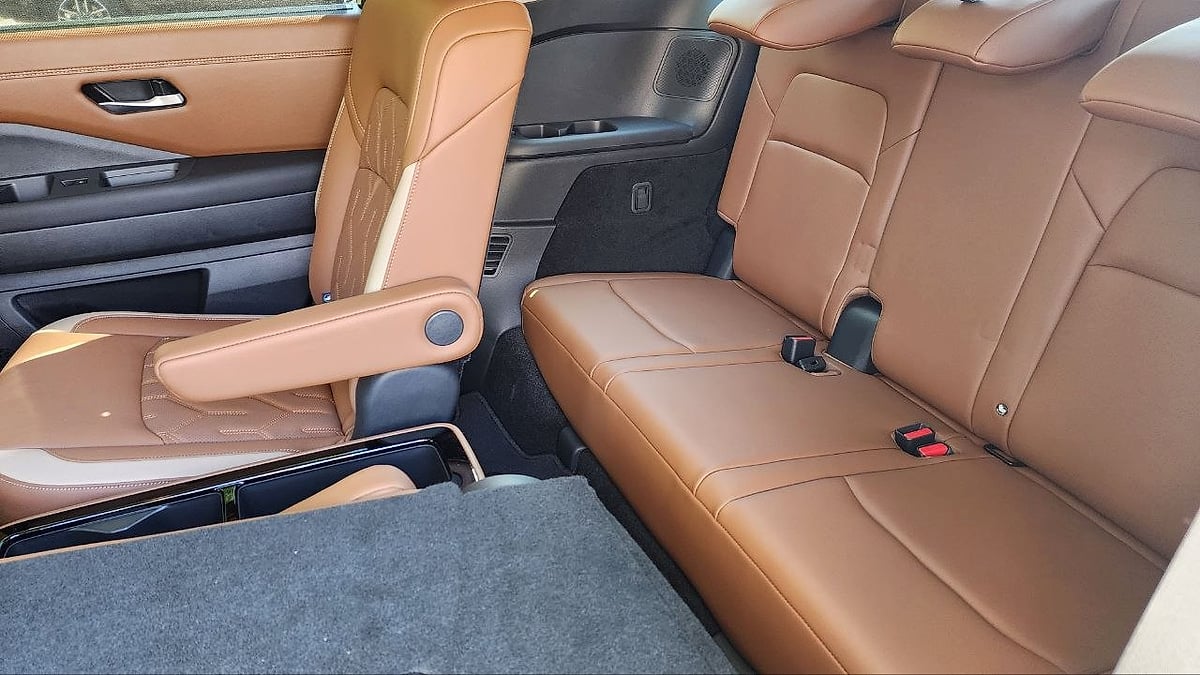
The EZ FLEX system on the second row allows easy access to and from the third row without wrestling with the seat mechanism. For families with young children, this is used dozens of times per week. Having a system that works smoothly and reliably matters more than its simplicity implies.
Cargo Space: More Practical Than It Looks
Behind the third row, the Pathfinder offers 16.6 cubic feet of cargo space. That number consistently surprises reviewers who see it in person, because the cargo area seems bigger than the specs suggest. Fold the third row and the space expands substantially for road trips, grocery runs, and sporting equipment. Fold both rear rows flat and you have a legitimately cavernous space.
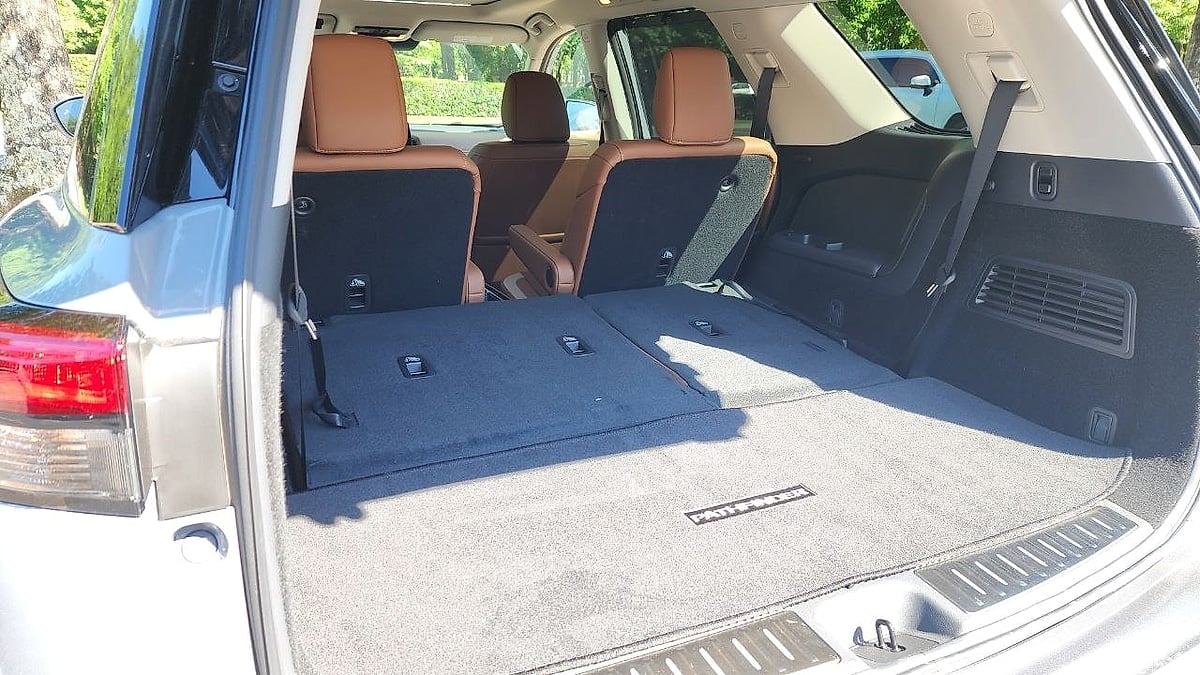
The cargo floor is flat and useful. A large luggage box under the floor provides additional hidden storage for small items. The power liftgate opens with a kick gesture or from the key fob, which is appreciated when your hands are full.
How It Handles the Road
The 2026 Pathfinder rides on a well-tuned unibody platform that prioritizes comfort without abandoning body control. Over rough Charlotte-area roads, expansion joints, and cracked pavement, the suspension absorbed impacts without transferring harsh feedback into the cabin. It is not sporty. It does not need to be. It is calm, settled, and consistent.
Highway stability is very good. At 75 miles per hour, the Pathfinder tracks straight with minimal steering correction. Wind noise is well-managed. The nine-speed transmission settles into a quiet, low-rpm cruise that keeps the engine relaxed. Cornering at suburban speeds is predictable and confidence-inspiring without the floating sensation you sometimes get in older body-on-frame SUVs.
The Intelligent 4WD system monitors traction continuously and distributes torque front to rear as needed. A seven-position Drive and Terrain Mode Selector lets you optimize the system for snow, mud, and sand. For most family buyers, the standard AWD mode handles everything they will ever encounter.
Safety and Technology: Comprehensive and Standard
Nissan Safety Shield 360 comes standard on every 2026 Pathfinder. This includes automatic emergency braking with pedestrian detection, blind-spot warning, rear cross-traffic alert, lane-departure warning, lane-keeping assist, and rear automatic braking. ProPILOT Assist with Navi-Link on the Platinum adds hands-on adaptive cruise control that responds to navigation data on highways.
The improved surround-view camera system on the 2026 model gives you a clear 360-degree view when maneuvering in tight parking situations. The new wireless charging pad on the Platinum is more powerful than the previous generation unit, charging modern smartphones noticeably faster.
Is the 2026 Nissan Pathfinder worth buying?
For families who want a reliable, naturally aspirated V6, genuine third-row access, and 6,000-pound towing in one package under $55,000, the answer is yes. How does it compare to the Highlander? The Highlander has moved on. It now runs a turbocharged four-cylinder in non-hybrid form, a shift that frustrated many buyers as we reported on TorqueNews.com. How does it compare to the Kia Telluride and Hyundai Palisade? Those are strong competitors. The 2025 Hyundai Palisade Calligraphy proved itself during a five-day test drive to Hilton Head Island, and the 2026 Palisade Calligraphy review confirms it handles well and rides with composure. But the Palisade is moving toward electrification and has had recent recall concerns. The Telluride just dropped its V6 for the 2027 model year. The Pathfinder is now the clearest keeper of the old formula.
The Moral of This Review
There is something to be said for a manufacturer that reads the room differently from everyone else. While the segment races toward turbo-four engines, plug-in hybrids, and touchscreen-everything interiors, Nissan made a deliberate choice to give families what many of them have told dealers they actually want. Proven hardware. Real towing. Physical controls. Room for seven or eight people. The 2026 Pathfinder is not exciting in the way a CX-90 PHEV or a Palisade Hybrid is exciting. It is excellent in the way a dependable tool is excellent. It shows up. It works. It does not ask you to change your habits to accommodate its technology.
As hybrids and EVs continue to reshape the three-row SUV segment, Nissan has placed a quiet bet that a meaningful portion of buyers are not ready to leave this formula behind. Based on a week behind the wheel, I think that bet is sound.
Now I have two questions for you. First: Do you think naturally aspirated V6 three-row SUVs will be completely gone from the mainstream market within the next five years? Second: If you were shopping for a three-row family SUV today, would the Pathfinder's traditional powertrain approach push it to the top of your list or keep it off your list entirely? Share your answers and your experience in the comments section below.
Return tomorrow, or check our Torque News Home Page for more interesting automotive news articles.
Images by Armen Hareyan
About The Author
Armen Hareyan is the founder and Editor-in-Chief of Torque News and an automotive journalist with over 15 years of experience writing car reviews and industry news. Now based in the Charlotte region (Indian Land, SC, he founded Torque News in 2010, which since then has been publishing expert news and analysis about the automotive industry. He can be reached at Torque News on X, Linkedin, Facebook, and Youtube. Armen holds three Masters Degrees, including an MBA, and has become one of the known voices in the industry, specializing in the landscape of electric vehicles and real-world stories of actual car owners. Armen focuses on providing readers with transparent, data-backed analysis bridging the gap of complex engineering and car buyer practicality. Armen frequently participates in automotive events throughout the United States, national and local car reveals and personally test-drives new vehicles every week. Armen has also been published as an automotive expert in publications like the Transit Tomorrow, discussing how will autonomous vehicles reshape the supply chain, and emerging technologies in vehicle maintenance.
Set Torque News as Preferred Source on Google
Follow us today...



Comments
Question 2: Yes, engine…
Permalink
Question 2: Yes, engine downsizing has been bad policy in the USA.
A previous article about a pushrod 3 hybrid had me thinking about wrong segment applications.
Question 1: Yes, affordability should be allowed to affect segment evolution. Not forced to turbo small 4s. In mainstream, at least a 3.5 pushrod 4 base with optional hybrid would be the best value. A big n/a 4 would surprise auto writers how acceptable it is. Dohc V6 is then a premium segment choice, but a small V8 deserves those big fwd people movers as its true home.