
At 15% tongue weight, a 5,500-pound travel trailer places 825 pounds on the hitch. The 2026 Nissan Armada’s maximum tongue-load rating is 850 pounds, leaving a mathematical gap of just 25 pounds.
That calculation applies only if 5,500 pounds is the trailer’s actual loaded weight and the tongue percentage truly reaches 15%. It still shows why an 8,500-pound headline tow rating cannot answer every question raised by this first-hookup photo.
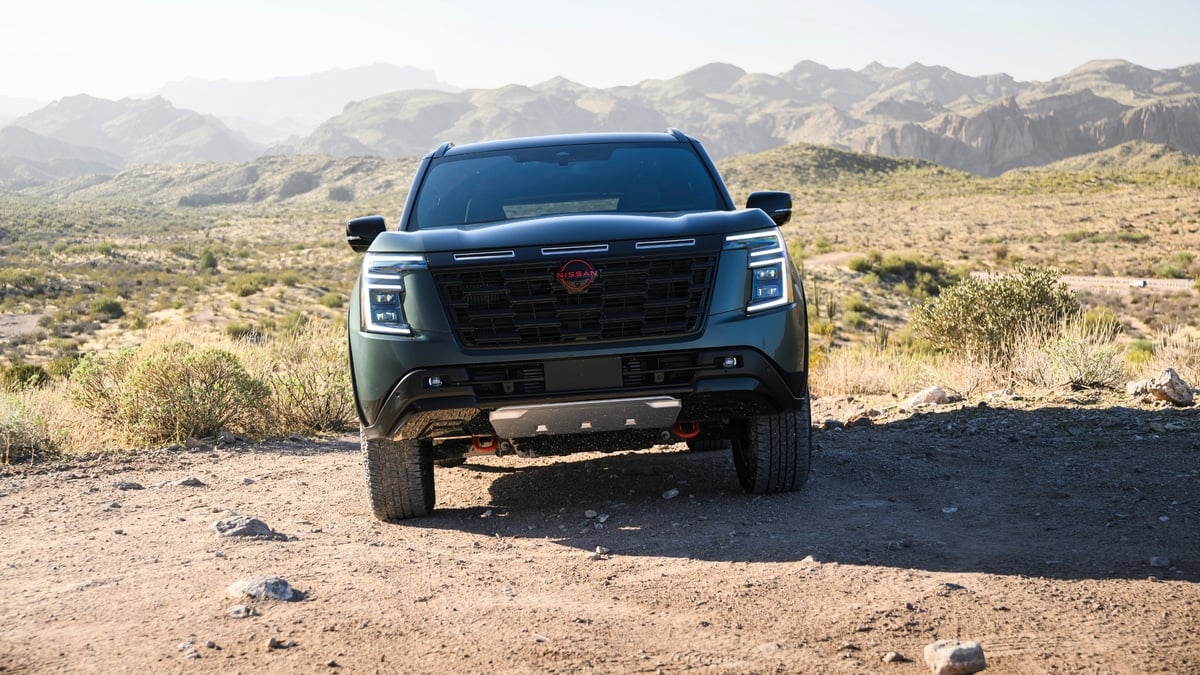
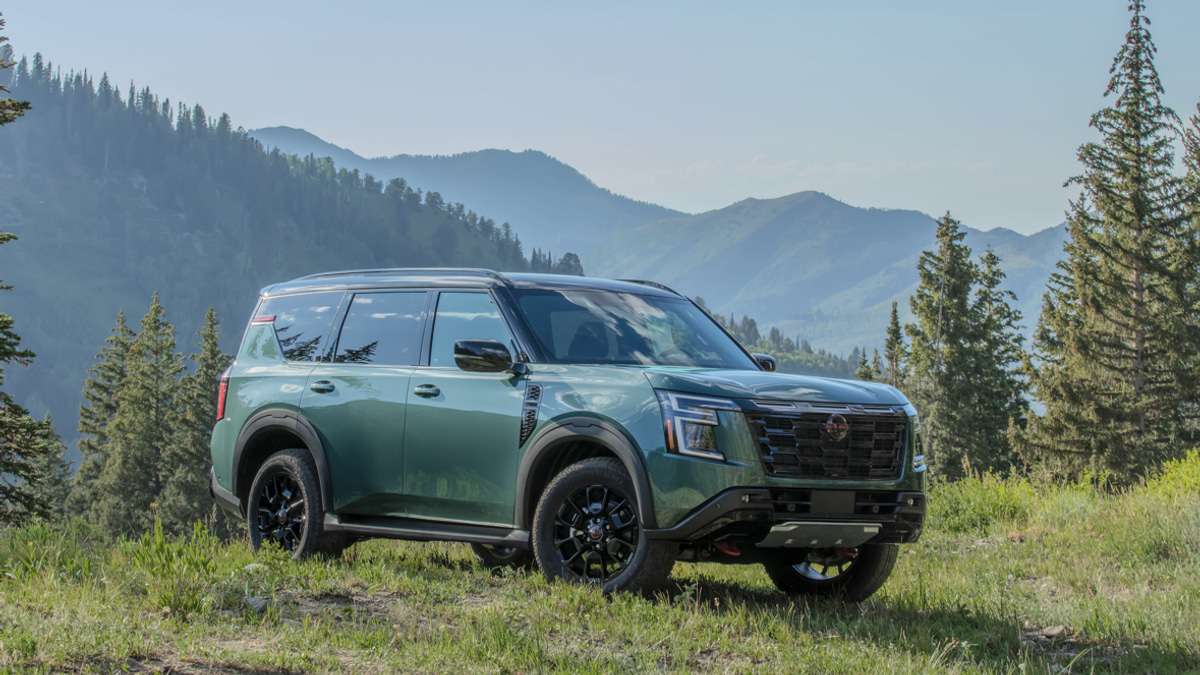
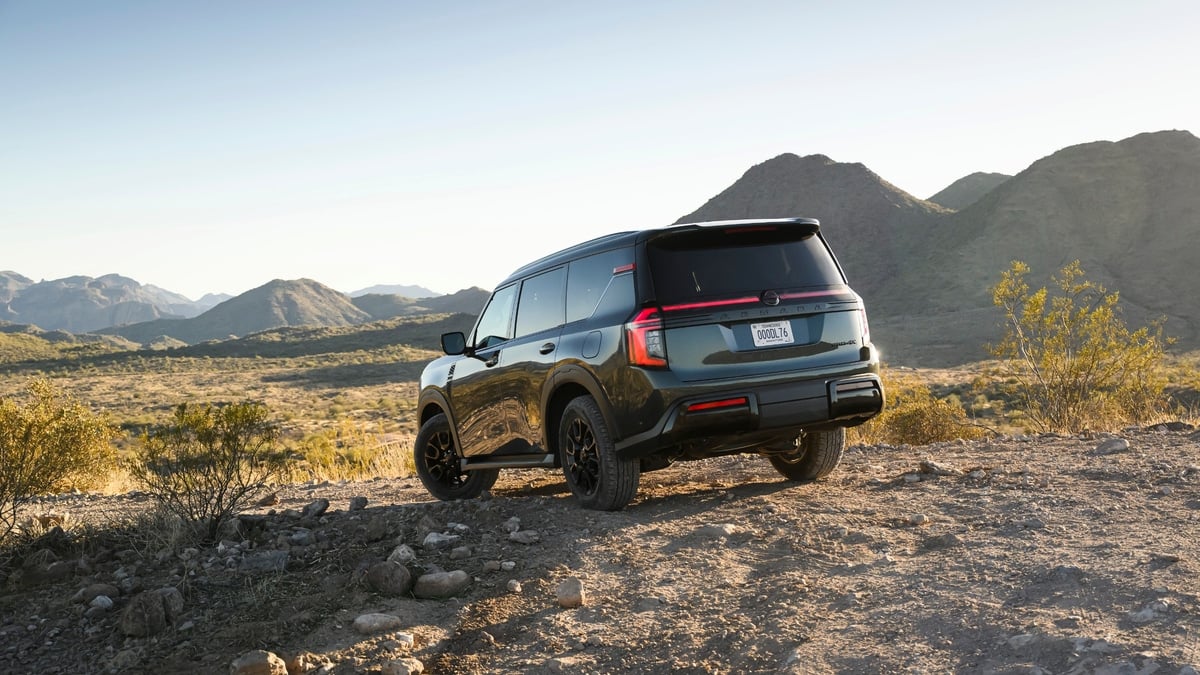
The black 2026 Armada Pro-4X appears low at the rear in the picture, while the Premier camper appears high at the front. Commenters warned about weight distribution, trailer angle, mirrors, brake control, and air-suspension settings. One person said he would stay clear of the combination on the road.
The SUV had not gone onto the road with the camper.
Joyce Weddle explained that this was the first hookup, shared only as a reference while she asked for mirror and towing advice. She said the camper is 22 feet long and weighs 5,500 pounds. She also confirmed that a weight-distribution hitch had already been obtained on the dealer’s recommendation and that the brake-controller question had been addressed.
That clarification changes the photograph from evidence of unsafe towing into a useful setup checkpoint. The next decisions should come from the trailer label, the Armada’s door stickers, hitch measurements, and scale weights.
First, define what “5,500 pounds” means
A trailer’s advertised dry weight, unloaded vehicle weight, cargo-carrying capacity, gross vehicle weight rating, and actual camping weight answer different questions.
Nissan defines total trailer load as the trailer plus everything carried in it. The company says tongue load should remain between 10% and 15% of that total, unless the trailer manufacturer specifies another value. Nissan rates the Armada for a maximum 8,500-pound trailer and an 850-pound tongue load.
If 5,500 pounds is the ready-to-camp scale weight, the Nissan range works out to 550 pounds at 10%, 660 pounds at 12%, 715 pounds at 13%, and 825 pounds at 15%.
A 200-pound increase changes the upper-end result. At 5,700 pounds, 15% tongue weight becomes 855 pounds, already five pounds above Nissan’s rating. Propane, batteries, water, food, clothing, tools, dishes, and camping equipment make the difference between a brochure number and the load the Armada actually carries.
Chasing the lowest tongue percentage solely to create more margin can create another problem. Stable trailer loading still has to follow the trailer maker’s instructions and Nissan’s 10% to 15% guidance. The answer is measurement and correct cargo placement rather than choosing the most convenient percentage.
The Armada’s payload budget also matters. Nissan says GVWR includes the unloaded vehicle, passengers, luggage, hitch equipment, trailer tongue load, and optional equipment. The Tire and Loading Information label gives the combined occupant-and-cargo limit for the individual SUV. Nissan instructs drivers to weigh the loaded vehicle and trailer because passengers and cargo can reduce both available tow capacity and available tongue-load capacity.
A weight-distribution hitch does not raise the Armada’s GVWR, axle ratings, receiver rating, tire ratings, or 850-pound tongue limit. It redistributes some of the hitch load through the vehicle frame toward the front axle and trailer axles, helping restore steering and stability. Nissan recommends a weight-distribution system for trailers over 5,000 pounds, placing the reported camper 500 pounds beyond that threshold.
The photo needs measurements rather than a road-safety verdict
The side view gives a reason to inspect the setup. It does not reveal whether the weight-distribution bars were tensioned, whether the trailer was loaded, whether the ball height was correct, or whether the electronic air suspension had finished leveling.
The 2026 Armada Pro-4X includes electronic air suspension and a factory trailer brake controller. Nissan’s hitch setup procedure starts with the unloaded SUV on level ground, the ignition on, the doors closed, and several minutes allowed for the vehicle to level. The driver then measures reference points at the center of the front and rear bumpers. After coupling the trailer and adjusting the hitch, Nissan calls for the front bumper to return to within 0 to 0.5 inch of its original height, with the rear bumper no higher than its original reference height.
That is a more useful standard than judging wheel-arch gaps from a three-quarter photograph.
The trailer itself should also sit level when loaded for travel. Nissan says the ball mount should be selected to keep the trailer tongue level with the ground. A nose-high trailer can shift load rearward and affect stability, while a nose-low setup can overload the forward axle. The frame should be measured on level pavement rather than estimated from the roofline or graphics.
Some comments advised turning the Armada’s automatic air-suspension function off. Nissan’s general weight-distribution procedure does not support treating that as a universal rule. It specifically begins with the ignition on, doors closed, and time for the vehicle to level. The Armada manual and the hitch manufacturer’s instructions should control the setup order for this exact combination.
The mirror question has a hardware answer and a software answer
The original question focused on seeing around the camper.
Nissan says the rearview mirrors must satisfy federal, state, and local requirements, and additional towing mirrors should be installed when the factory mirrors do not provide the required view. A trailer observation camera can improve the view directly behind the camper, but it does not create a clear side sightline around the trailer’s front corners.
The practical test begins with the driver’s seat in its normal position and the trailer fully coupled. A helper can walk along both rear corners while the driver checks whether the person remains visible through the side mirrors. Clip-on or strap-on extensions become useful when the camper blocks that path. Camera coverage should supplement those mirrors rather than substitute for them.
The Armada also has Trailer Blind Spot Warning. Nissan requires the trailer’s full connected length, measured from the Armada’s rear bumper to the trailer’s far end, rather than the camper’s advertised box length. The system is available for a trailer under 9 feet wide and under 33 feet long, and its detection zone extends from the outside mirror to the back of the trailer and about 10 feet sideways.
That detail matters because a “22-foot” camper may have a longer bumper-to-tail measurement once its tongue, spare tire, ladder, or rear accessories are included.
There is also a tradeoff hidden in the setting. Nissan says enabling Trailer Blind Spot Warning automatically disables Intelligent Lane Intervention, Intelligent Blind Spot Intervention, Rear Cross Traffic Alert, Rear Automatic Braking, and ProPILOT Assist Steering Assist. The driver gains an expanded trailer detection zone while several other assistance functions step aside.
The factory brake controller still needs a functional check
The Pro-4X’s factory trailer brake controller answers the hardware question. The loaded camper still needs a working trailer brake system, a sound seven-pin connection, and gain set for the trailer and conditions.
Nissan requires a trailer braking system at 3,500 pounds or more. The manual also advises checking hitch security, vehicle and trailer tire pressures, trailer lights, and trailer lug nuts every time the trailer is attached.
A low-speed brake test in an open area can confirm that the trailer brakes engage smoothly and contribute without locking. The controller manufacturer and trailer brake instructions should govern the adjustment. The factory control panel is useful only after the trailer-side brakes, wiring, breakaway battery, and gain have been verified.
Tow Mode deserves the same attention. Nissan recommends it for a heavy trailer, and the setting automatically cancels when the ignition is switched off. It has to be selected again on the next drive. Tow Mode changes grade-related shifting and adds downhill speed-control behavior, but it does not replace correct loading or brake setup.
A new Armada has two towing break-in limits that are easy to miss
A 2026 vehicle may still be early in its odometer life. Nissan says the Armada should not tow during its first 500 vehicle miles. For the first 500 miles of actual trailer towing after that, Nissan says to stay below 50 mph and avoid full-throttle starts. The company also strongly recommends 91-octane premium fuel while towing to maximize overall engine performance.
Nissan further calls for the hitch, wiring connections, and trailer-wheel lug nuts to be checked after the first 50 miles and at every break. That first tow should begin with low-speed turning, stopping, and backing practice in an area free from traffic, followed by a short route before any highway trip.
The most useful next stop is a certified scale with the Armada loaded exactly as it will travel. A scale ticket should capture the front axle, rear axle, and trailer axle groups. Those numbers can then be checked against the Armada’s GVWR, front and rear GAWR, 15,000-pound GCWR, 8,500-pound trailer limit, 850-pound tongue limit, and the occupant-and-cargo figure on the door label. Nissan explicitly says the vehicle and trailer need to be weighed to confirm those limits.
The encouraging part of this story is that the question came before the trip. The weight-distribution hitch and brake controller are already present, and the photograph caught the exact stage where measurement can prevent a bad first tow.
Are you towing a camper with a 2025 or 2026 Nissan Armada? Tell us the trailer’s loaded weight, measured tongue weight, hitch setup, and whether the Armada returned close to level after adjustment. I also want to hear whether the factory mirrors and Trailer Blind Spot Warning cover your camper or whether you added tow mirrors.
About The Author
Noah Washington is an automotive journalist based in Atlanta, Georgia, covering sports cars, luxury vehicles, and performance culture. His reporting focuses on explaining the engineering, design philosophy, and real-world ownership experience behind modern vehicles.
Noah has been immersed in the automotive world since his early teens, attending industry events and following the enthusiast communities that shape how cars are built and driven today. His work blends industry insight with enthusiastic storytelling, helping readers understand not just what a car is, but why it matters.
Noah is also a member of the Southeast Automotive Media Association (SAMA), a professional organization for automotive journalists and industry media in the Southeast.
His coverage regularly explores sports cars, luxury vehicles, and performance-driven segments of the automotive industry, including the evolving culture surrounding Formula Drift and enthusiast builds.
Read more of Noah's work on his author profile page.
You can also follow Noah here:
Set Torque News as Preferred Source on Google
Follow us today...