
Every truck shopper walking into a midsize showroom in 2026 is being sold the same story. Smaller engine. Turbocharger bolted on. More horsepower on paper. More complexity under the hood. I have spent 15 years watching this industry chase trends, and I keep coming back to one truck that simply said no. If you want to understand why I chose a Nissan Frontier over a Toyota Tacoma for two very specific reasons after actually driving both, this review of the 2026 Nissan Frontier PRO4X Crew Cab SWB 4x4 will explain exactly what that decision protects you from, and why Nissan's own sales data now backs up that instinct.
The Industry Went Small And Turbocharged. Nissan Did Not.
Look around the segment right now. The Ford Ranger runs a 2.3 liter EcoBoost turbo. The Chevrolet Colorado and GMC Canyon both moved to a 2.7 liter turbo four cylinder. The Toyota Tacoma dropped its beloved V6 entirely in favor of a 2.4 liter turbocharged four, with a hybrid variant sitting above it. Jeep is reportedly circling a turbo option for the Gladiator. Every single one of these trucks is chasing the same formula. Smaller displacement, forced induction, and a promise of better numbers on a window sticker.
The Frontier looked at that entire playbook and walked away from it. Still naturally aspirated. Still 3.8 liters. Still six cylinders. No hybrid battery to babysit. No turbo lag to explain to a first time buyer. No complicated engine matrix to sort through on the configurator. That is becoming genuinely rare in this segment, and it is exactly why our technical teardown calls the Frontier's V6 the analog survivor of the midsize truck class.
This matters more than it sounds like on paper. Forced induction adds heat cycling, adds an intercooler that can develop a boost leak, adds a wastegate, adds another failure point sitting between you and a functioning truck. Owners are noticing. One 2018 Tacoma TRD owner recently traded a flawless, 90,000 mile truck for a Ram 1500 Hemi specifically to avoid Toyota's new turbo four. That is not an isolated complaint. Motor1 tested the 2026 Frontier PRO4X directly and noted that with no turbocharging or electric assist, the engine's torque peak lands later in the rev range and merging requires a firmer foot, which is the honest tradeoff of staying naturally aspirated.
2026 Nissan Frontier's Exterior
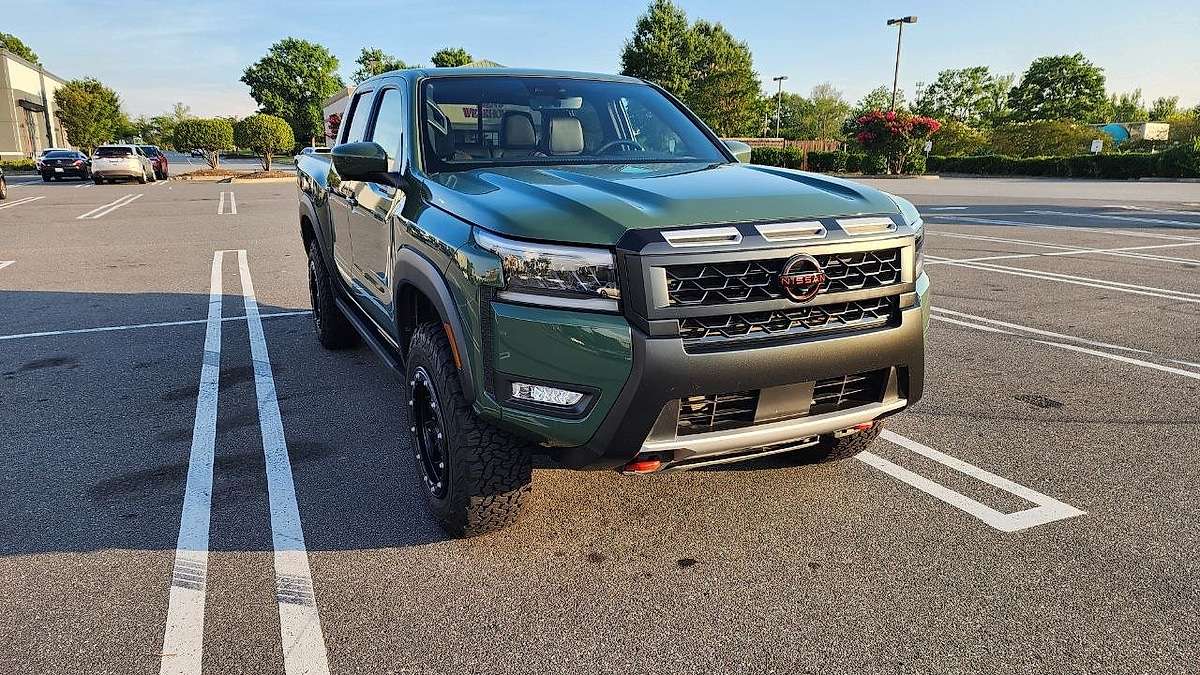
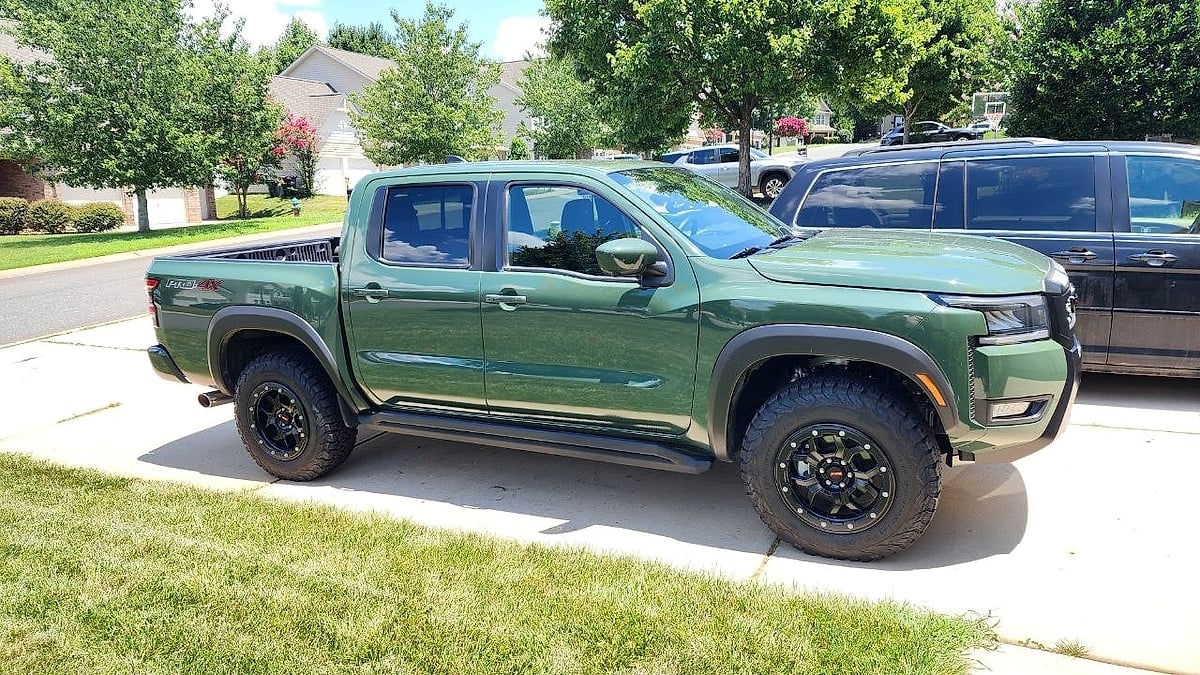
The PRO4X Crew Cab wears its off road intentions without shouting about them. My tester arrived in Tactical Green over a charcoal leather interior, a combination that reads rugged without tipping into costume territory.
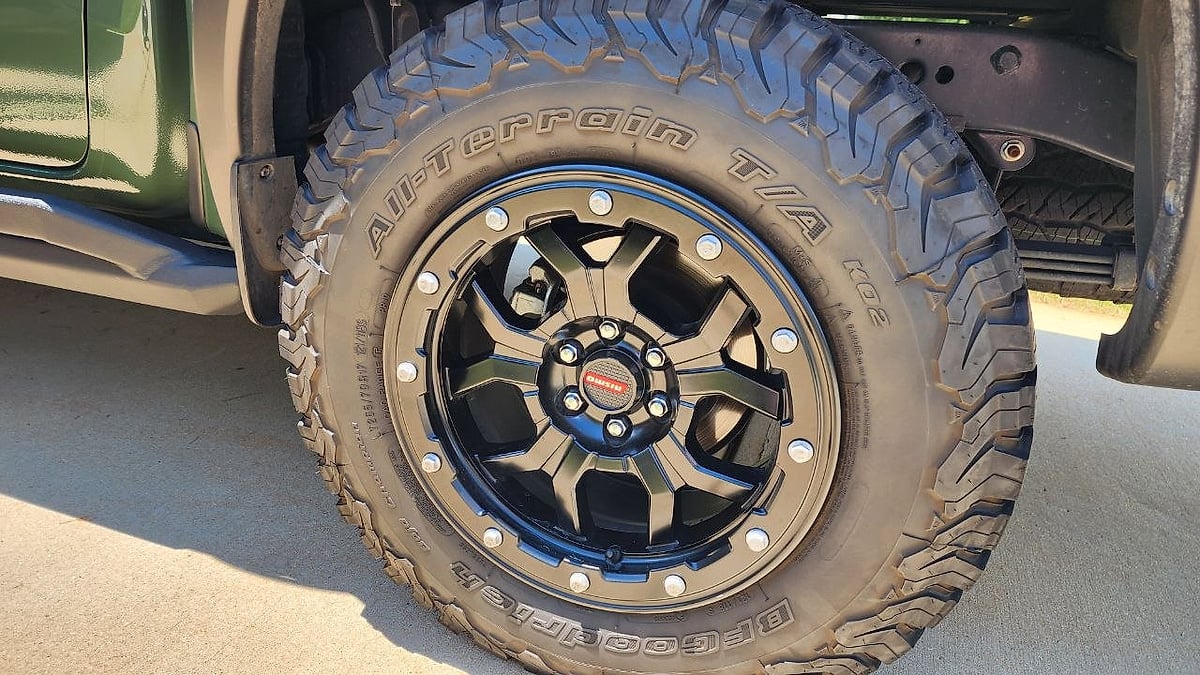
The 17 inch PRO alloy wheels wrapped in all terrain tires sit under fender flares that actually do something useful, and the aluminum front skid plate paired with underbody steel skid plates tells you this truck expects to see dirt, not just brochure photography.
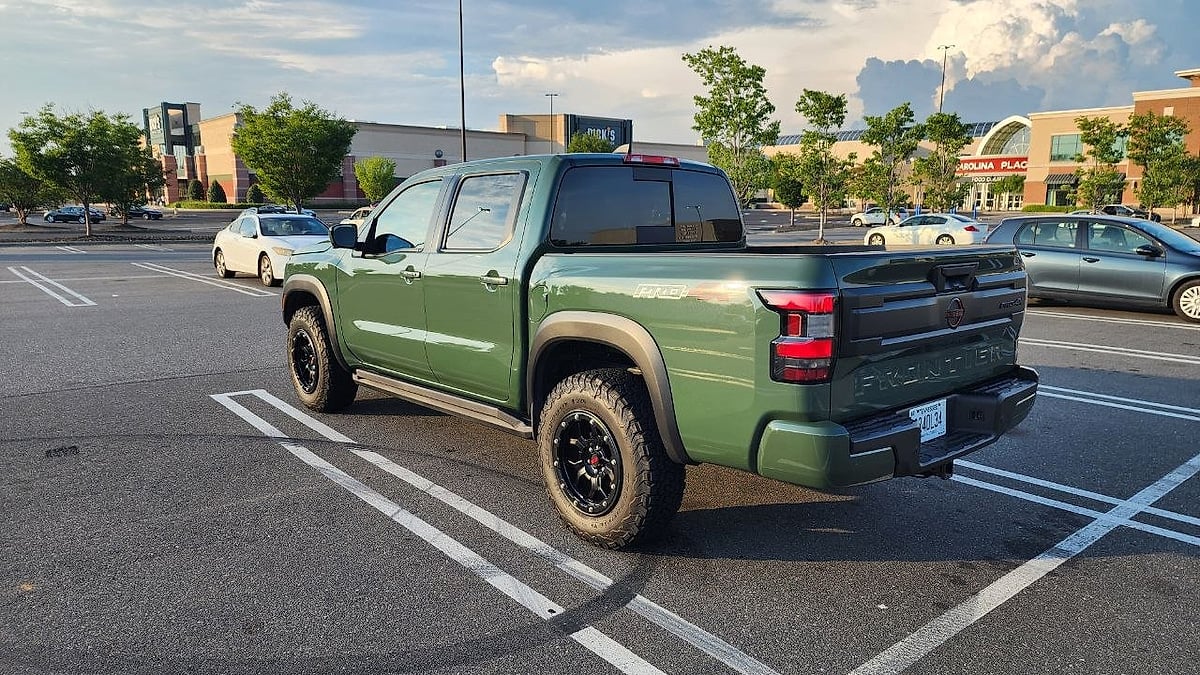
LED headlamps with the Frontier's signature lighting element and LED fog lights round out a front end that looks purposeful rather than aggressive for the sake of aggression. The dampened, locking tailgate and cargo bed illumination are small details, but they are the kind of details that owners taking these trucks kayaking and mountain biking in places like New Hampshire come to appreciate on a weekend trip rather than a spec sheet.
Engine And Power
Here is the number that matters most in this whole review. The 3.8 liter V6 produces 310 horsepower and 281 pound feet of torque, routed through a 9 speed automatic transmission. Shift on the fly 4WD with a 2 speed transfer case handles the 4HI and 4LO switching, and the PRO4X adds an electronic locking rear differential along with a Terrain Mode selector for sand, mud, and rock settings. Active Brake Limited Slip and Bilstein off road shocks complete the mechanical package.
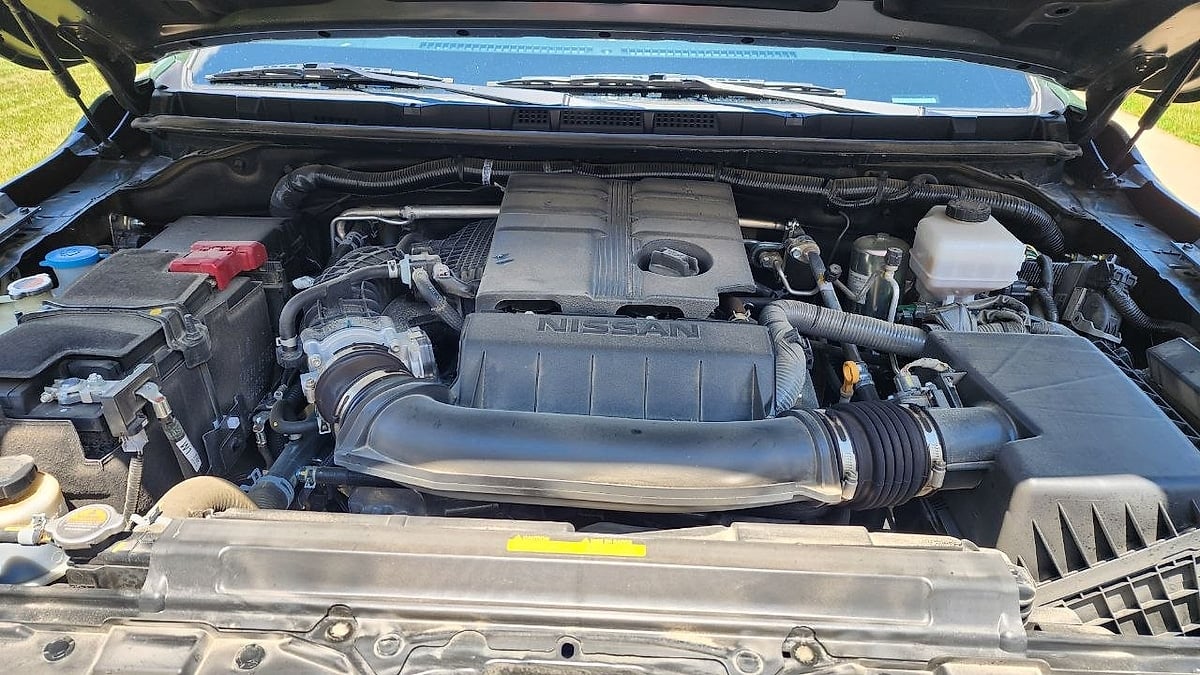
Fuel economy sits at 18 mpg combined, with 16 city and 20 highway, according to the EPA sticker on this exact test truck. Annual fuel cost comes in at 2,750 dollars, and the sticker estimates 5,250 dollars more in fuel spending over five years compared to the average new vehicle. That is the honest cost of choosing displacement over a turbocharger, and it is worth saying plainly rather than burying it. What you get in exchange is a drivetrain with fewer places to fail, which is a trade some buyers are actively seeking out after watching 4th generation Tacoma owners deal with intermittent misfire codes and diagnostic limbo on their turbocharged four cylinder.
Interior
Step inside and the PRO4X treats you to unique seat and wheel stitching, a heated leather steering wheel, and heated front seats. The 8 way power driver seat with 2 way power lumbar and the 4 way power adjustable passenger seat make it easy to dial in a comfortable position for long test drive routes, the kind I regularly run between Charlotte and Columbia.
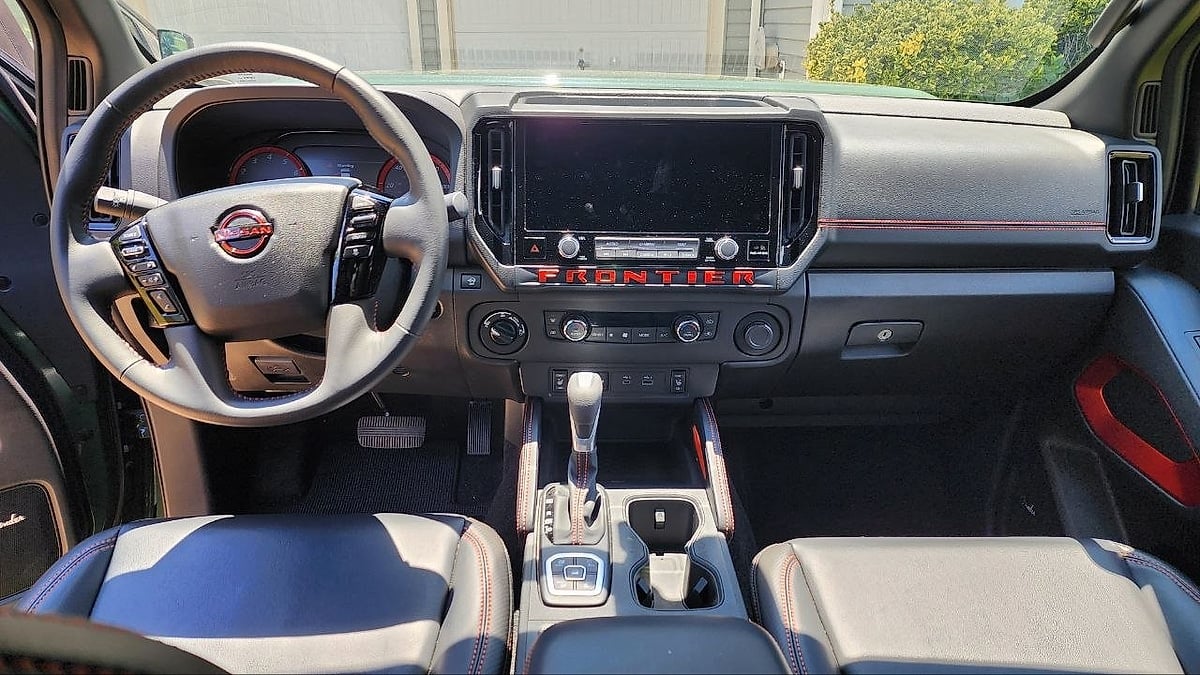
The 12.3 inch NissanConnect touchscreen anchors the dashboard, with wireless Apple CarPlay and wireless Android Auto handling phone integration without a cable in sight. Dual zone climate control, a 7 inch Advanced Drive Assist display in the gauge cluster, and PRO4X carpeted floor mats round out a cabin that feels built for actual use rather than showroom staging. It is a meaningfully more modern space than the cabin Nissan offered back in the 2022 Frontier refresh, even though the bones underneath remain familiar.
2nd Row Seat
The Crew Cab's second row is where the SWB Frontier earns its keep as a family and work truck at once. Underseat storage in the second row gives you a place to lock away tools or gear without leaving anything visible through the window, a detail that matters more than it sounds like once you actually own a truck and start hauling equipment daily.
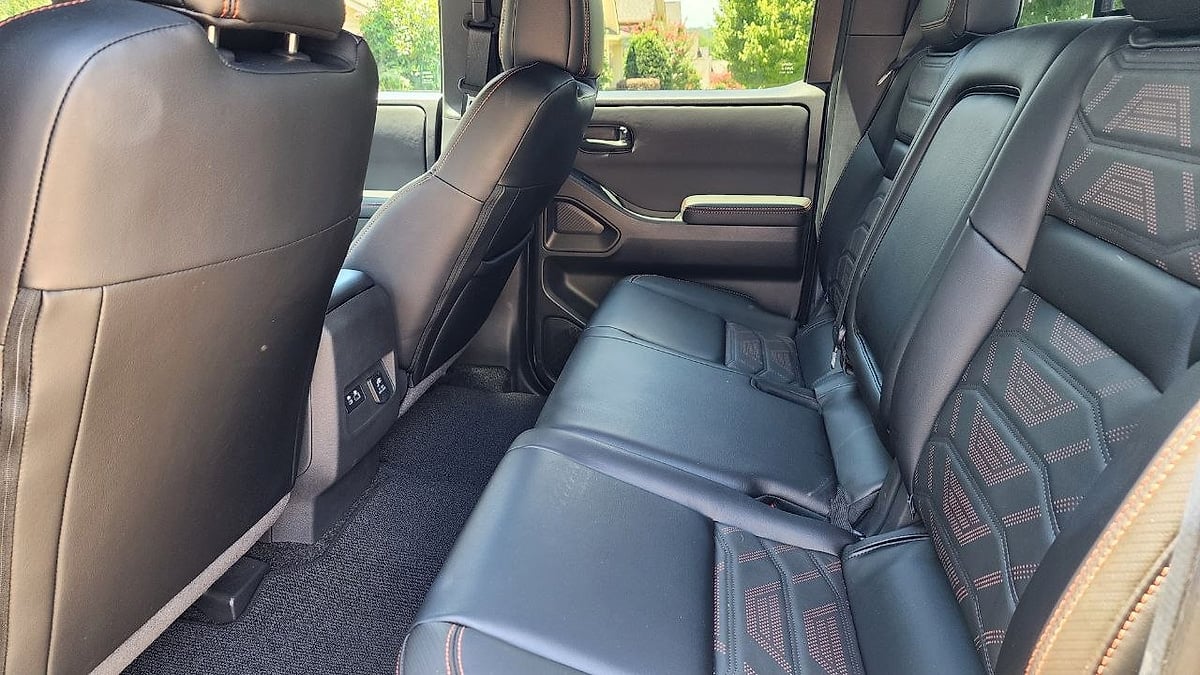
Legroom back there is competitive rather than class leading, and that is a fair criticism echoed in outside reviews of this generation, including notes that rear seating in shorter cab configurations feels best suited for occasional use rather than long family road trips across this entire segment, not just this one truck. Heated leather stitching carries into the back seat on the PRO4X trim, which is a nice touch for a truck that could have easily cut corners once you get past row one.
The Frontier's Bed
The short wheelbase Crew Cab pairs with a 5 foot bed featuring three available Utili track channels, adjustable tie down cleats, and a 120V outlet in the bed along with a rear console outlet. Lava red tow hooks and cargo bed illumination make this a bed built for actual work rather than tailgate parties, though it will happily handle both.
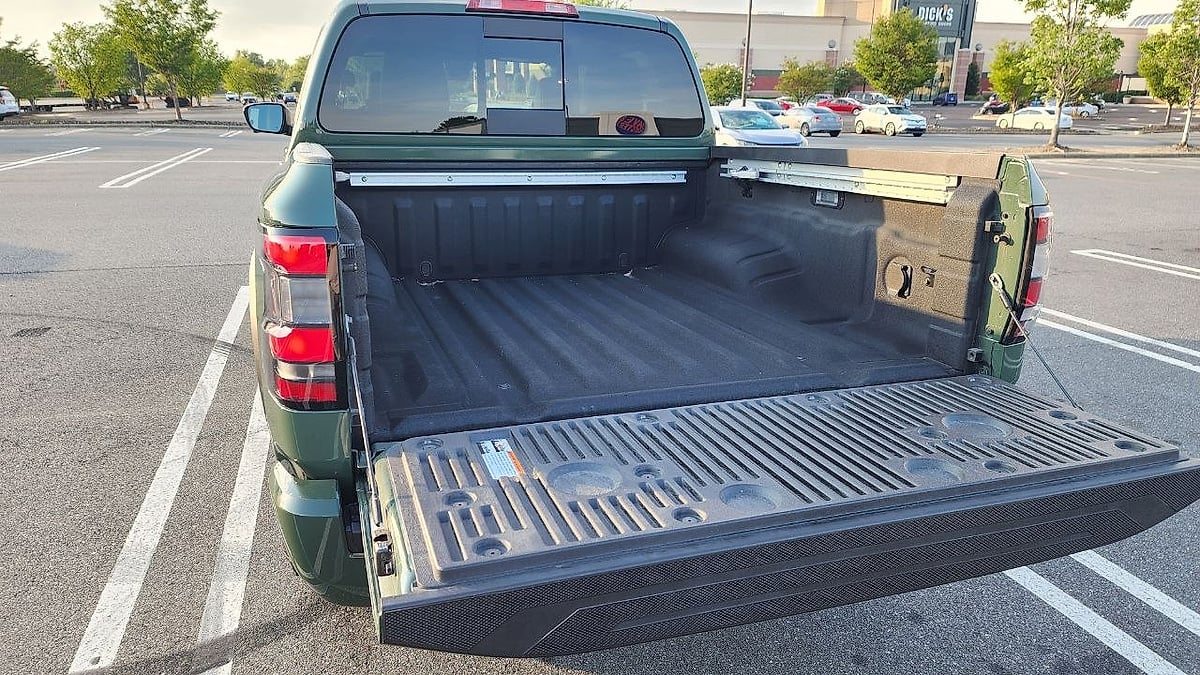
The dampened, locking tailgate closes with none of the clang you get from cheaper trucks, and the sliding rear glass is a small win for anyone who has ever needed to pass a long piece of lumber through the cabin. It is the kind of practical engineering that buyers researching the Frontier as a work truck have valued for years, long before this generation existed.
How It Handles The Road
On pavement, the PRO4X rides firm, which is the expected tradeoff for Bilstein off road shocks and all terrain rubber. It never feels harsh, but you know you are in a truck built to handle a trail, not a luxury crossover tuned for a boulevard. Steering is direct and predictable, and the 9 speed automatic shifts smoothly enough that you rarely notice it hunting for gears, even under moderate throttle.
Hill Start Assist and Hill Descent Control both work exactly as advertised on grades, and the Trailer Sway Control system stayed unobtrusive during a loaded tow test. This is a truck that drives like it knows exactly what it is, and that confidence is a big part of why owners keep coming back to naturally aspirated trucks even when towing heavier loads than most people expect a midsize truck to handle.
The Frontier Is Becoming The Tacoma Alternative For People Who Miss Older Trucks
There is a growing group of shoppers who grew up with body on frame simplicity and are not thrilled about where the segment is headed. They remember when a truck engine was something you understood, not something managed entirely by software and boost pressure. The Frontier is quietly becoming their landing spot. It is the truck for someone who wants Tacoma level capability without adopting Tacoma's new turbo four personality, and that audience is larger than the sales charts currently suggest.
What Makes The 2026 PRO4X Crew Cab Special, Even If You Never Leave Pavement
I want to be honest with you here. I did not take this Frontier PRO4X off road for this review. No rock crawling, no mud pits, no trail runs through the Uwharrie forest. And yet the PRO4X still earns its spot at the top of the Frontier lineup, because most of what makes this trim special shows up long before you ever point it at dirt.
Start with the equipment list Nissan builds into this specific truck. My tester came loaded with the PRO Convenience Package, which adds a spray on bedliner, the Utili track system with two adjustable tie down cleats, a 120V outlet in the bed, a rear console outlet, heated outside mirrors, LED under rail lighting, a trailer hitch with wiring harness, and an Intelligent Around View Monitor with moving object detection and off road mode. Stack that with the PRO Premium Package, which brings a 10 speaker Fender premium audio system, leather appointed seats, an auto dimming inside mirror with a Homelink universal transceiver, an auto tilt and slide sunroof with a manual shade, and Nissan's door to door navigation with traffic sign recognition. That is a genuinely loaded truck, and none of it requires a single mile of trail driving to enjoy.
Then there is the hardware that simply changes how the truck feels to live with every single day, whether you are running errands in Fort Mill or driving I-77 up to Charlotte. The Bilstein off road shocks are tuned to soak up potholes and expansion joints just as well as they handle a washboard fire road. The electronic locking rear differential and Terrain Mode selector sit there quietly, ready the one day a year you actually need them, without ever getting in the way the other 364 days. Hill Start Assist and Hill Descent Control are just as useful backing a boat trailer down a wet ramp as they would be on a mountain grade. This is the same layered philosophy we found in the Frontier's fully boxed ladder frame and mechanical simplicity, where the capability is built in as standard equipment rather than something you have to activate or unlock.
The PRO4X badge also buys you a truck that looks the part without asking you to prove anything. The 17 inch PRO alloy wheels wrapped in all terrain tires, the aluminum front skid plate, the underbody steel skid plates, and the fender flares all signal genuine intent, not just a styling package pasted onto a street truck.
Even parked in a grocery store lot, this Frontier reads as a truck that is ready for more than it is currently being asked to do. That reserve capacity, sitting there unused most of the week, is exactly what a lot of PRO4X buyers are actually paying for. They are not buying a truck for the trail they will drive twice a year. They are buying peace of mind that the truck can handle that trail whenever the mood strikes, and everything else it does the rest of the week just happens to be a little more comfortable and a little more capable because of it.
So even without a single off road mile on this test, the PRO4X earned its keep. It is a truck built with margin, and margin is a rare thing to find standard on a midsize pickup in 2026.
The Lesson Here
Chasing every new trend is not the same thing as building a better truck. Sometimes the smartest engineering decision is the one that resists change, and Nissan deserves credit for betting on a philosophy instead of a spec sheet arms race. The Frontier will not win every horsepower comparison chart, but it wins the conversation about what you will still be dealing with at 120,000 miles.
Would you rather have a smaller turbocharged engine with better fuel economy numbers, or a larger naturally aspirated V6 with fewer parts that can fail on you down the road? And if you already own a Frontier or a turbocharged competitor, has your real world experience matched what the spec sheet promised? Leave your answer in the comments section below. I read every one of them.
Return tomorrow, or check our Torque News Home Page for more interesting automotive news articles.
Images by Armen Hareyan.
About The Author
Armen Hareyan is the founder and Editor-in-Chief of Torque News and an automotive journalist with over 15 years of experience writing car reviews and industry news. Now based in the Charlotte region (Indian Land, SC, he founded Torque News in 2010, which since then has been publishing expert news and analysis about the automotive industry. He can be reached at Torque News on X, Linkedin, Facebook, and Youtube. Armen holds three Masters Degrees, including an MBA, and has become one of the known voices in the industry, specializing in the landscape of electric vehicles and real-world stories of actual car owners. Armen focuses on providing readers with transparent, data-backed analysis bridging the gap of complex engineering and car buyer practicality. Armen frequently participates in automotive events throughout the United States, national and local car reveals and personally test-drives new vehicles every week. Armen has also been published as an automotive expert in publications like the Transit Tomorrow, discussing how will autonomous vehicles reshape the supply chain, and emerging technologies in vehicle maintenance.
Set Torque News as Preferred Source on Google
Follow us today...