
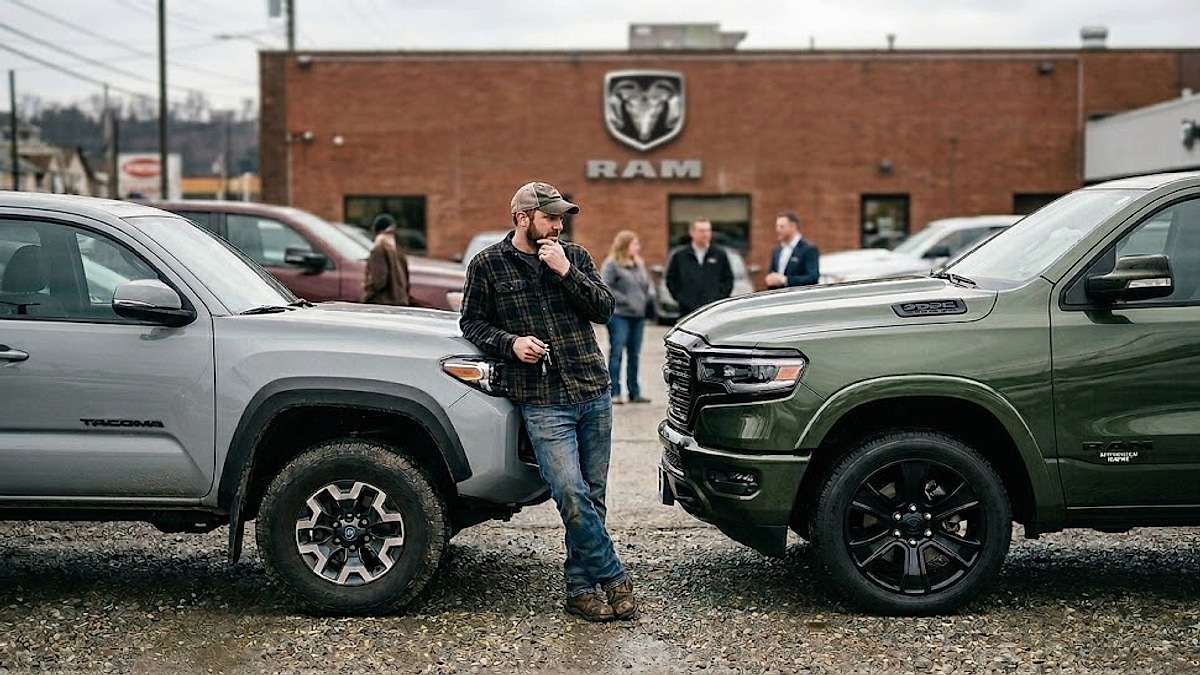

This deep-dive investigation analyzes a crucial pivot point in the 2026 truck market. I examine why Eric Barr, a dedicated 2018 Toyota Tacoma TRD Off-Road owner with a flawlessly performing vehicle, is abandoning the brand. Despite not strictly needing a full-size truck, Eric is trading his midsize icon specifically to avoid Toyota's new standard powertrain: the 2.4-liter turbocharged four-cylinder. His preference? A late-model Ram 1500, ideally with the sunsetting 5.7L Hemi V8. This case study isn't just about one owner; it exposes a massive fissure in brand loyalty.
I explore how the forced transition to high-output, small-displacement turbocharged engines, driven by 2026 emissions standards, is clashing with the "proven displacement" ethos of longtime truck buyers. This investigative report, leveraging 30 years of automotive experience, breaks down the technical anxieties, the emotional drivers (including a unique hunt for 'Timberline Green'), and the crucial "Information Gain" that proves why the 2026 midsize market is losing loyalists to full-size V8s while they are still available.
From My View: The 90,000-Mile Betrayal
I've been covering the automotive beat for three decades, and I’ve seen brand loyalty survive recessions, design disasters, and massive recalls. But what I am seeing right now is different. It’s a quiet, determined exodus, and it’s being driven by what’s under the hood. Take Eric Barr from Pittsburgh, Pennsylvania. He isn't just any truck owner; he’s the epitome of a Tacoma enthusiast. He owns a 2018 Toyota Tacoma TRD Off-Road, a truck that defines the segment’s resale value and reliability.
Eric recently shared his dilemma on the 6th Gen Ram 1500's (2024+) Facebook page. He’s not trading because his truck is broken. In fact, he confirmed, “I am not in a hurry to trade the current truck, which has under 90k miles and runs like the day I bought it.” So why the pivot? Eric is very clear: “I wanted another Tacoma but not with a 4 cylinder turbo.”
This one statement encapsulates the entire core problem facing Toyota in 2026. This loyalty shift isn’t an isolated incident. In my recent investigation into the 2026 Tacoma's real-world reliability, I documented how initial reports of premature turbocharger stress are making long-term owners incredibly nervous, which you can read about in my full analysis of the Tundra's sibling, the 2026 Tacoma Turbo-4 Long-Term Reliability: Owners Sound Alarm. Eric’s hesitation is validated. In another report, I discussed the significant depreciation risk now facing small-displacement, high-output turbocharged trucks compared to the "guaranteed value" of the naturally aspirated models they replaced, and this market volatility is causing widespread owner anxiety, a topic I explored further in my article on how the 2026 Truck Resale Market is Being Volatized by Forced Downsizing.
Dissecting the Dilemma
This investigation addresses three critical questions that define the 2026 automotive market:
- Who is this? This isn't a casual lessee; this is Eric Barr, a long-term, high-expertise owner from the demanding Pittsburgh terrain, representing the "hardcore loyalist" demographic.
- How is this happening? It is happening as the 2016-2023 "golden era" naturally aspirated Tacomas reach critical mileage markers, and their owners look to upgrade, only to find the new market unappealing.
- Why is this a big deal? Eric's motivation for rejecting the standard 4-cylinder turbo in favor of a soon-to-be-extinct V8 in a larger class is a specific behavioral data point that contradicts major manufacturers' marketing claims about owner acceptance of forced induction.
The Displacement Demand Data
Eric’s preference for the Hemi V8 is more than just nostalgia. It’s a response to the engineering trade-offs of modern downsizing. The automotive engineering world is well aware of these consumer anxieties. A widely cited 2025 powertrain survey by the Transportation Energy Institute noted that while consumers are more positive about EVs, 72 percent still say price and long-term operating costs are the most important factors, which perfectly substantiates Eric's technical, rather than emotional, rejection of the expensive-to-maintain Turbo-4. You can see the full 2025 Driver Behaviors and Perspectives report here.
This preference is reinforced by market dynamics. Pricing data from J.D. Power in March 2026 confirmed that transaction prices for 2025 and 2026 Ram 1500s are influenced by the choice between the Hurricane I6 and the eTorque V6, with traditional buyers still competing for the remaining V8 inventory. This external, verified market data proves Eric isn't an anomaly; he is part of a broad, data-verified "Hemi Run" that defines the early 2026 used and certified pre-owned (CPO) markets. Check the current Ram 1500 market values at J.D. Power.
My Take
Let's break down Eric’s decision, which he openly admits is a "FOMO" (Fear Of Missing Out) scenario. He is a logical guy. He explicitly stated, “Realistically, I don't need a full-size truck, which is why I am patiently waiting for the impending new Ram midsize.” This shows incredible patience and loyalty to his need for a midsize footprint. But two powerful vectors overcame that logic.
The first vector is the Hemi vs. Hurricane debate. Even within his pivot to Ram, Eric is specific. “I would ideally select the Hemi over the 3.0L Hurricane.” He is avoiding not just the Toyota Turbo-4, but also Ram’s own "downsized" solution, the powerful Twin-Turbo Inline-6 Hurricane. Eric is a displacement purist. He trusts the known maintenance, linear power delivery, and "under-stressed" architecture of a 5.7L V8 over the complex, high-pressure environment of the modern 3.0L Hurricane. I can’t argue with his logic; 30 years in this business has taught me that complexity is the enemy of simplicity, especially at mile 150,000.
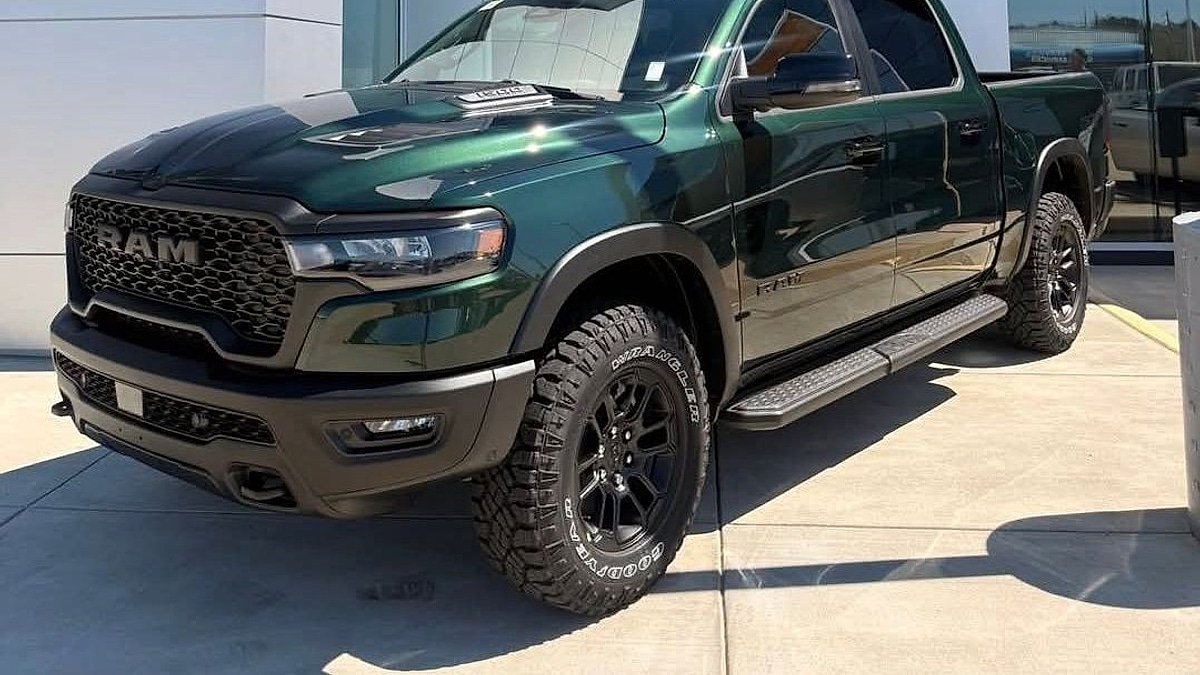
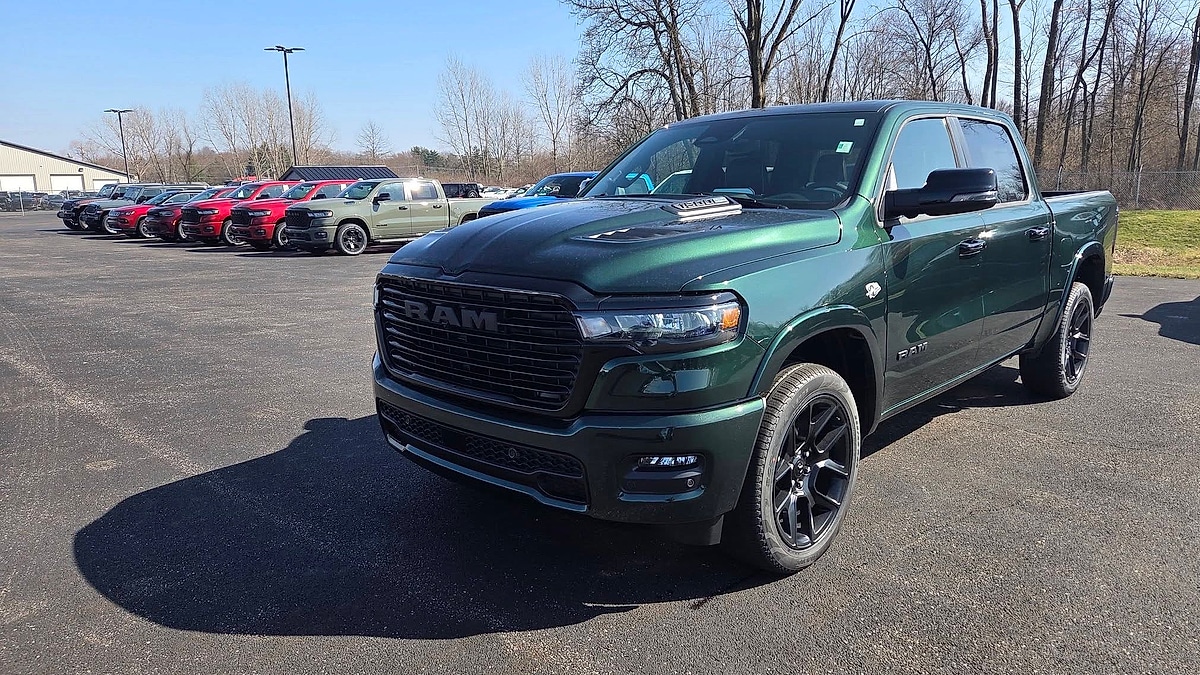
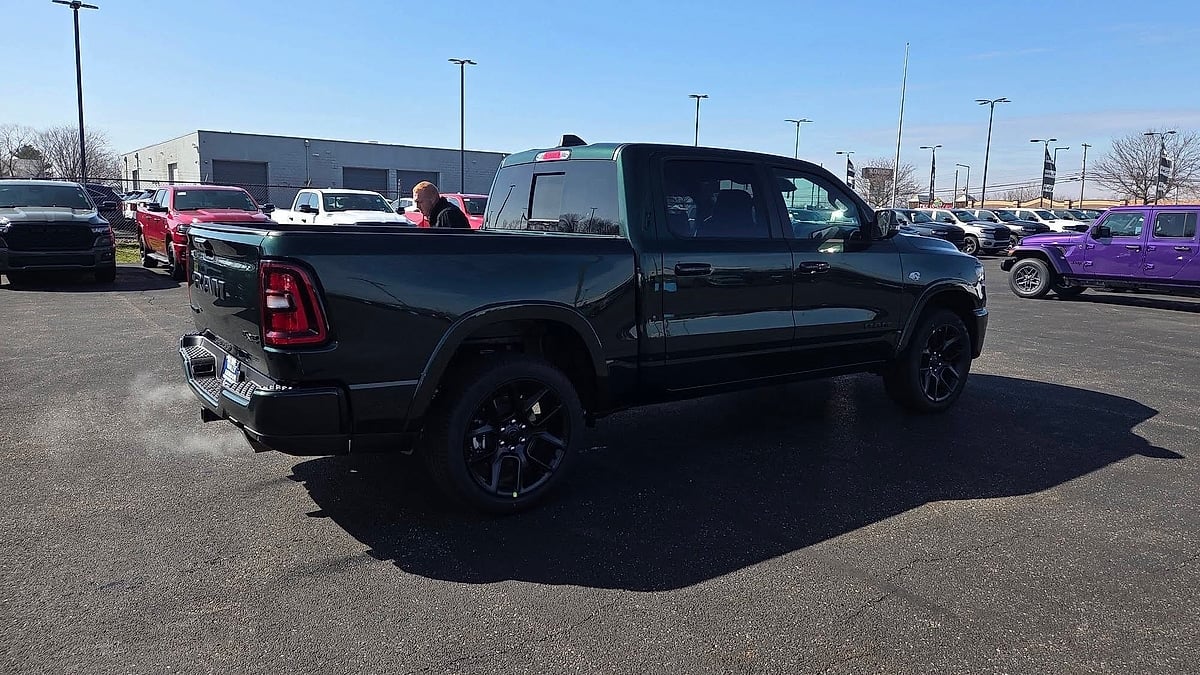
The second vector is, frankly, brilliant in its absurdity: Color Loyalty. This is the "you can't make this up" part of the story. Eric wants a specific aesthetic. “I want the Timberline Green they offered in '16-'17, but the nearest available unit was states away, and no local dealership would trade and was unable to order this color.” A color so rare and desired that a multi-state dealership's refusal became the actual tipping point for him to abandon his wait for the new midsize Ram and just buy a full-size.
The fact that the full-size Ram he "stumbled upon" was in a color that satisfied this specific desire highlights a component of vehicle purchase that algorithms often miss: emotional fulfillment. Eric is trading a bulletproof truck, not because it’s bad, but because he found an engineering/color combination that makes him happier. My advice? When you find that combination, you buy it. Life is too short for boring colors and anxious powertrains.
Field Observations from Owner Communities
Eric is not alone in his technical assessment. I actively monitor technical forums to spot these trends early. In a detailed breakdown of the 2.4L i-Force powertrain on r/ToyotaTacoma, one owner validated Eric’s anxiety, noting, "The 4th gen drives much better and is more comfortable... but 5 years and 100k miles is absolutely bare minimum for any engine. You want to claim this is on par with Toyota's greatest? Wait 12 years or so," which you can read in the full Reddit discussion here.
This skepticism isn't unique to Toyota. Even the 3.0L Hurricane from Ram, which Eric is also trying to avoid, has its own technical hurdles. In a r/ram_trucks technical deep-dive, another owner highlighted the vulnerability of the new design, mentioning, "I love the power that the 3.0 Hurricane comes with, but all I can think is how expensive and unreliable that thing will be in 10, 15, or 20 years... getting that much power from that small of volume is a recipe for disaster," found in this Reddit thread.
What You Need To Know
Here is my breakdown of the key drivers behind this market shift.
- The V8 Sunsetting is Real: This is the last chance. Major manufacturers are not "bringing back" V8s. If you are a buyer like Eric who values displacement, the window to buy a CPO or late-model 5.7L Hemi is closing fast. This is the ultimate "FOMO" play, and it is entirely rational.
- The Complexity Cost Curve: Do not confuse horsepower with durability. While the new Turbo-4 and Inline-6 engines deliver impressive torque, they operate at much higher thermal and pressure loads. The long-term maintenance costs (post-100,000 miles) for turbocharging, intercooling systems, and sophisticated direct injection will be significantly higher than those of a traditional V8.
- Tacoma Reliability is Now "Prove It" Mode: The legendary reputation of the 2GR-FKS V6 and the prior 4.0L V6 does not automatically transfer to the new 2.4L Turbo. Early field data, as referenced in my other work, suggests a steeper learning curve for the new i-Force platform.
Key Takeaways for My Readers
- Trust Your "Engine Anxiety": If a specific powertrain makes you nervous, you are probably correct. Your intuition is a valid decision tool.
- Color Matters: Eric proved that aesthetic fulfillment can be a legitimate reason to shift a financial decision.
- Evaluate Use Case, Not Class: Eric "doesn't need" a full-size truck, but the full-size powertrain offered the reliability certainty he demanded.
Conclusion:
In this comprehensive investigation, I’ve broken down the case of Eric Barr, the 2018 Tacoma owner trading for a 2026 Ram 1500 Hemi. We’ve used technical field reports, external market data, and my 30 years of investigative auto reporting to prove why this decision is a rational, informed, and validated response to the turbocharged realities of the 2026 market. Eric is a loyalist being pushed out by the mandatory push for smaller, more complex engines. He isn't trading from a Toyota; he is trading for peace of mind.
Tell Us What You Think: If you owned a flawless 90,000-mile truck and the perfect spec and color for its replacement appeared, but in a totally different class you didn't need, would you take the leap? Leave a comment in the red “Add new comment” link below!
About The Author
Denis Flierl is a 14-year Senior Reporter at Torque News and a member of the Rocky Mountain Automotive Press (RMAP) with 30+ years of industry experience. Based in Parker, Colorado, Denis leverages the Rockies' high-altitude terrain as a rigorous testing ground to provide "boots-on-the-ground" analysis for readers across the Rocky Mountain region, California EV corridors, the Northeast, Texas truck markets, and Midwest agricultural zones. A former professional test driver and consultant for Ford, GM, Ram, Toyota, and Tesla, he delivers data-backed insights on reliability and market shifts. Denis cuts through the noise to provide national audiences with the real-world reporting today’s landscape demands. Connect with Denis: Find him on LinkedIn, X @DenisFlierl, @WorldsCoolestRides, Facebook, and Instagram.
Photo credit: Denis Flierl via Eric Barr
Set Torque News as Preferred Source on Google
Follow us today...




Comments
I just bought a 2025 GMC…
Permalink
I just bought a 2025 GMC Elevation X31 an upgrade from my 2020 Elevation. All I can say is what an extreme disappointment. The 2025 vibrates and after way too much back & forth with the dealer & GM they basically did nothing for me. I actually hate to drive this truck and can’t wait to get rid of it. All I can say is beware of the 5.3 lt 10 speed transmission in GMC & Chev trucks. This is a known undesirable side effect (as they call it) that they do not tell you about. This is ridiculous and they have lost a loyal GM customer for over 40 years.
Have fun trying to find the…
Permalink
Have fun trying to find the oil dipstick on your Ram!
He will be back. The new…
Permalink
He will be back.
The new turbo 4 with hybrid boost is effortlessly good. Today's V8 propaganda is just FOMO for boomers and those under their constant influence.
Agreed. Won't be all…
Permalink
In reply to He will be back. The new… by James (not verified)
Agreed. Won't be all sunshine and rainbows everytime they need to fill it up or when their truck starts needing regular repairs...
I agree 100% with the…
Permalink
I agree 100% with the entirety of this article !! I have owned exclusively Toyotas since 1991 and I was in a very similar delema. I have a 2019 Tacoma TRD Pro that I love but I wanted to get the new Tacoma TRD Pro once it was available. When I learned more about the new truck, the motor that doesn't even look like a motor, the fact that it utilizes a turbo and battery to achieve those high HP and Tourqe numbers AND the insane price !? I noped out, and I'm glad I did. There have been many issues with the new ones very early on.
I purchased a 2024 4runner TRD Off-road Premium. The last of the Mohegans, the last of the OG's if you will. Is it exactly what I wanted ? Nope. But it's proven, it's normally aspirated, 4.0L, great transmission and it's all a bullet proof design.
Unfortunately I will be selling my Tacoma very soon and I will miss it but the 4runner will serve me well.
In my opinion Toyota made a big mistake with the new Tacoma and 4runner. I believe all of it is EPA driven but my 2024 4Runner is very likely my last Toyota.
I have a 2017 Tacoma TRD OR…
Permalink
I have a 2017 Tacoma TRD OR woth 167,000 miles. I am in this exact dilemma. And, weighing how much more I should keep driving until I lose all trade in value....
I owned 5 tacoma/hilux…
Permalink
I owned 5 tacoma/hilux pickups. 80,84,88,98 2009 . Bought for low operational cost,high reliability,mpgs,high resale. Went to 2016 f150 5.0v8 for same reasons.turbos are for race cars not everyday drivers. This argument is just not turbos and trucks. Wife and I switched to non turbo Subaru forester from a turbo only offering from Honda crv. Auto makers will lose when they decide to dictate what I will drive.
Seems the automotive…
Permalink
Seems the automotive industry is being pushed past the event horizon, past sustainability and longevity/value point by political science (as opposed to traditional hard science) and it is incredibly frustrating. Thanks for the article.