
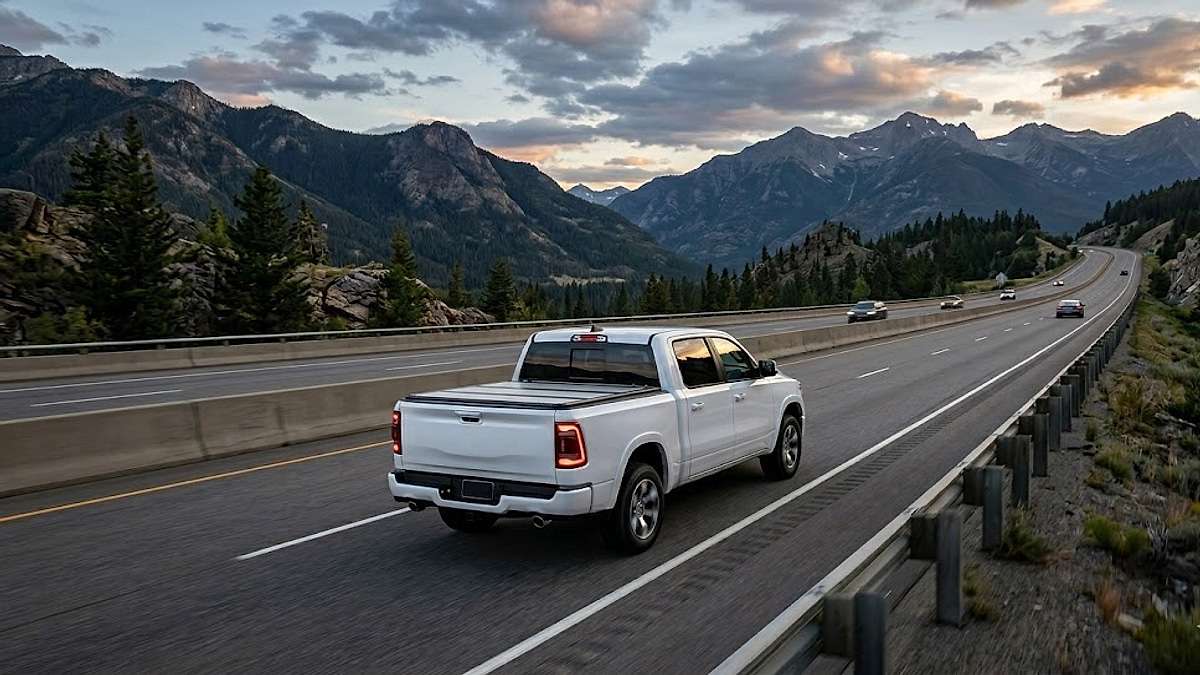

The modern truck reliability landscape has experienced a major shift as manufacturing production strategies clash with real-world engineering limitations. According to ongoing Torque News coverage by Denis Flierl, tracking of manufacturing defects, internal assembly data, and supplier directives confirms that Stellantis is officially removing the 48-volt eTorque mild-hybrid system from the vast majority of its 2027 model-year Ram 1500 5.7L Hemi V8 builds. This production reversal marks a significant pivot, moving beyond the limited, track-focused Rumble Bee configurations straight into high-volume consumer variants.
A technical investigation by Torque News reveals that this sudden engineering change is driven by mounting warranty liabilities, a spike in component failures within the Belt Starter Generator (BSG) loop, and severe supplier bottlenecks. For current owners who purchased these complex mild-hybrid configurations under the impression that they represented the peak of V8 refinement, the removal of this technology raises immediate concerns about future resale values, long-term component availability, and post-warranty repair costs.
The Root Cause of the 48V eTorque Engineering Reversal
The core technical failure of the eTorque platform does not stem from the structural integrity of the 5.7L Hemi block itself, but rather from the high-voltage peripheral architecture bolted onto it. Torque News technical analysis by Denis Flierl identifies a critical gap between factory maintenance schedules and real-world component longevity. The eTorque system replaces a traditional, mechanically isolated alternator with a liquid-cooled Magneti Marelli 48V Belt Starter Generator connected directly to a 430-watt-hour lithium-ion battery pack mounted against the rear cabin wall.
Under heavy thermal loads, particularly during high-altitude towing across steep mountain passes, the extreme current fluctuations required to sustain the engine's start-stop operation and regenerative braking cycles exceed the thermal capacity of the internal inverter circuits. This thermal stress causes degradation of the internal phase windings, triggering a sudden loss of charging capability that drops the system voltage to fatal levels.
When these voltage fluctuations occur, the Powertrain Control Module (PCM) detects an instantaneous communication loss on the high-speed CAN bus network, forcing the truck into an immediate emergency limp-mode. In our ongoing coverage of Ram reliability, Senior Reporter Denis Flierl, with 30 years of experience, has uncovered an unresolved dispute over the longevity of structural components under extreme operating conditions.
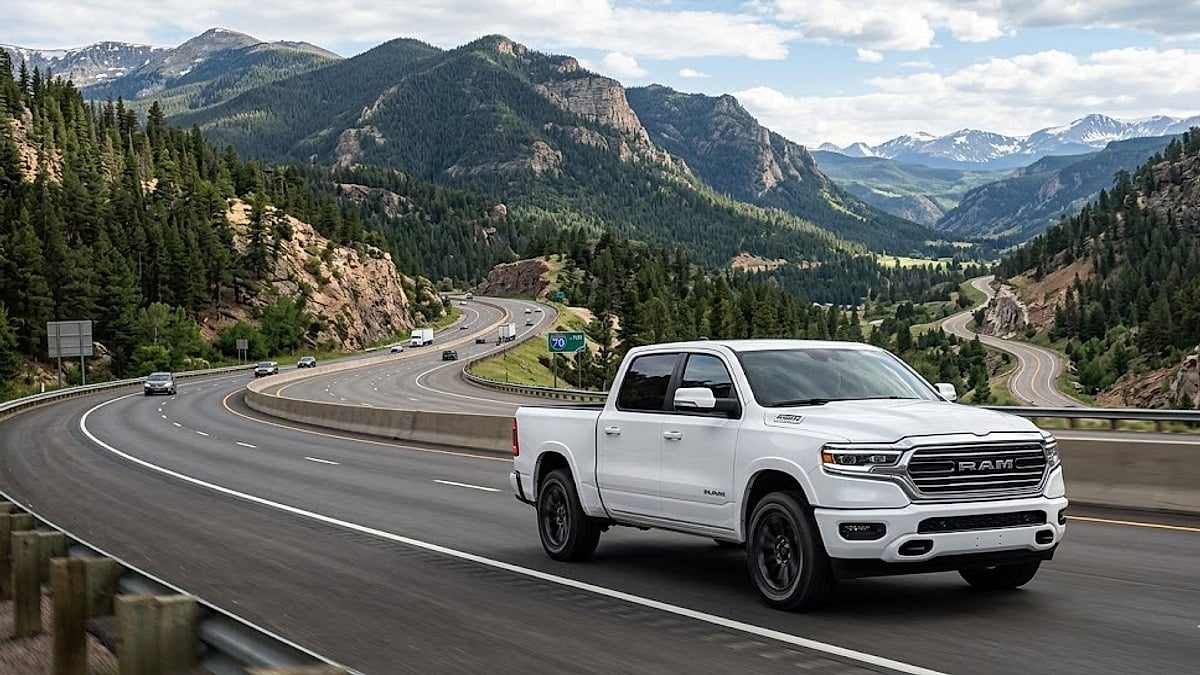
This mechanical vulnerability is heavily pronounced in high-altitude environments such as Colorado's Interstate 70 corridor. The continuous elevation changes between Golden and the Eisenhower Tunnel demand prolonged, high-load power delivery, pushing the 48V liquid-cooled inverter to its absolute limits and causing rapid degradation that standard flat-land testing profiles fail to replicate.
The broader consumer marketplace is reacting strongly to this engineering shift, with widespread concern emerging across major online owner forums. Yonez Vargas from Denver, Colorado, posted on the 6th Gen Ram 1500 (2024+) Facebook page, saying, “If this is true, Ram dropping the Mild-Hybrid from more Hemi V8 trucks than just the Rumble Bee, I’m trading my 2025 Ram in for sure.”
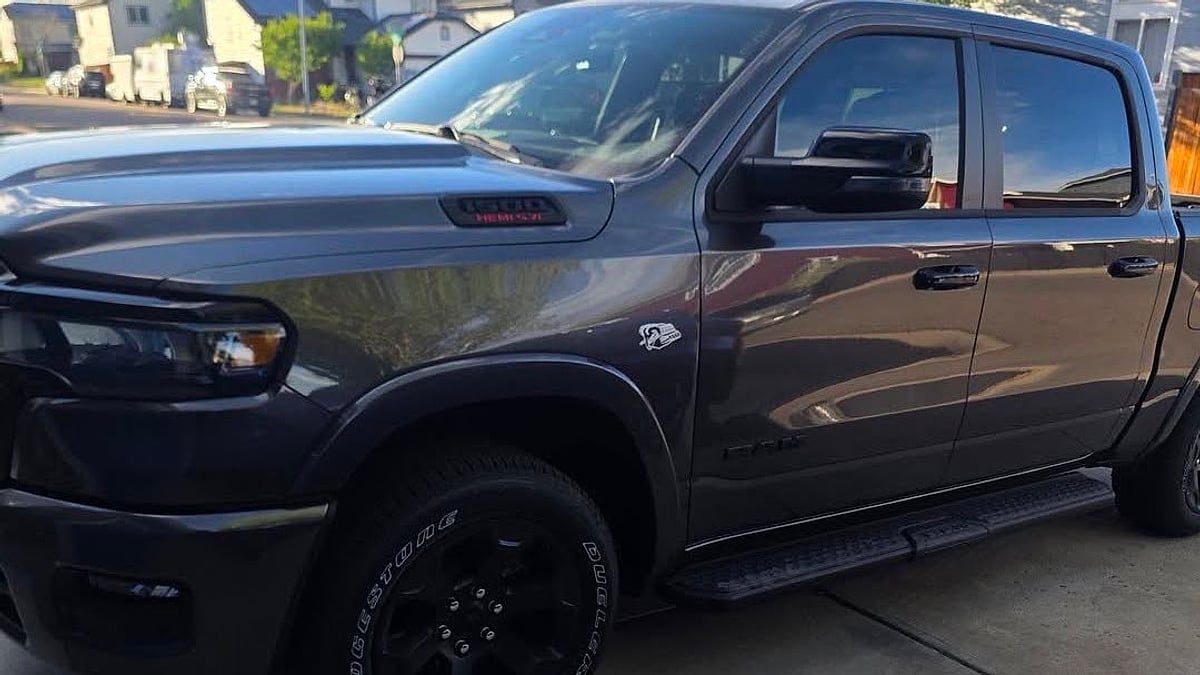
This sentiment highlights a growing fear among truck enthusiasts that early adopters of the 6th-generation platform are left holding the bag on a complex, discontinued powertrain variant. This anxiety is further supported by a deeply analytical perspective on corporate average fuel economy data published in the National Highway Traffic Safety Administration's Proposed CAFE Standards Document. This reporting shows that the initial reliance on Belt Integrated Starter Generator (BISG) pricing models failed to account for real-world warranty repair escalation rates.
Furthermore, detailed fleet compliance testing compiled in the NHTSA Model Years 2024-2026 Light-Duty Vehicle Corporate Average Fuel Economy Standards Report highlights that the incremental fuel economy improvements delivered by mild-hybrid integration rarely justified the long-term component failure rates experienced by end consumers.
This manufacturer's shift toward simpler mechanical configurations aligns perfectly with the data uncovered in the investigative piece, "The 2026 Ram Hemi's Roar Wins on Nostalgia, My Data Reveals a Torque Gap That Changes Everything." This analysis notes how electronic gremlins and voltage instabilities frequently impact high-tech truck platforms well before they complete their initial service intervals.
Compounding these electrical issues is a fundamental change in vehicle design architectures, as documented in the deep-dive column, I Thought About Trading My 2015 Ram For the 2026 Ram Hemi Bighorn, But Mine is 10 Years Old, And I've Never Had a Problem, I'm Not Sure About These New 2026s. This study reveals that modern iterations running on advanced electrical backbones lack the simplicity of classic V8 models, introducing significant post-warranty financial exposures for owners.
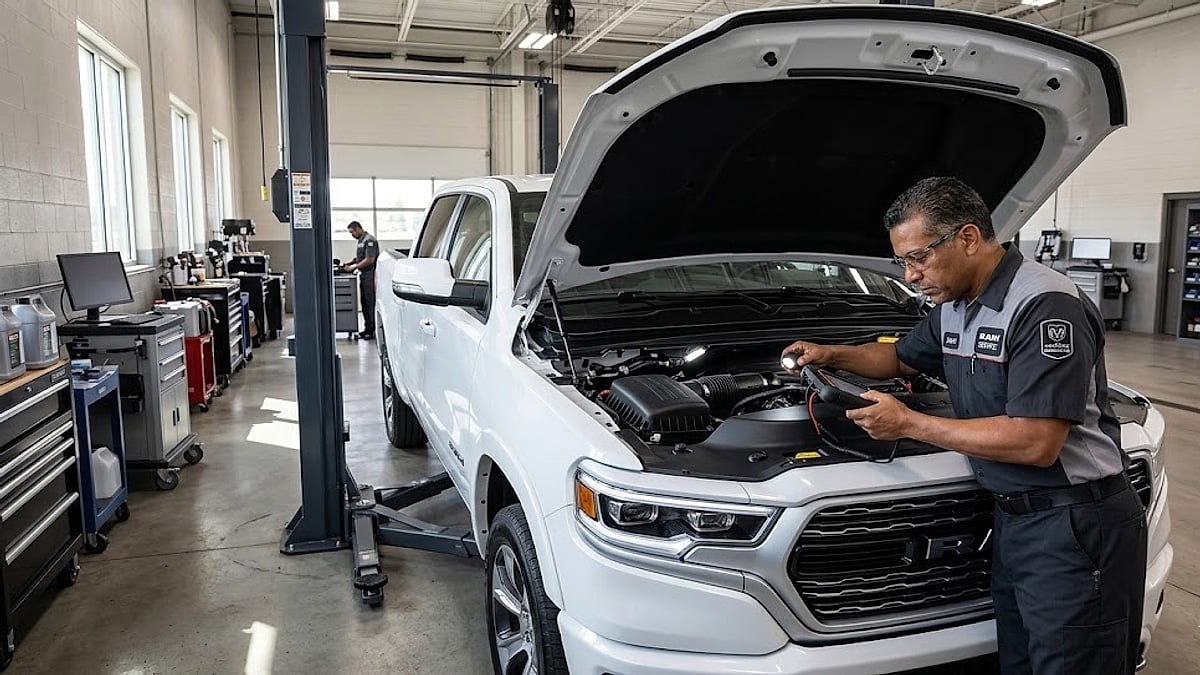
Field Observations from Owner Communities
The technical reality of these component failures is well-documented in real-world consumer discussions. On popular automotive community platforms, owners frequently share their experiences with sudden system failures and unexpected dashboard warnings.
"My 2025 eTorque threw a charging system service light at just 4,200 miles, and the dealer had to replace the entire 48-volt generator assembly due to an internal coolant leak that shorted the electrical board."
This type of diagnostic trend is common across regional truck networks, where severe environmental changes accelerate underlying manufacturing issues. Another driver described a harrowing highway incident that illustrates the real-world impact of these electrical faults.
"The truck completely shut down while towing our camper up a moderate grade, dropping into a low-voltage state instantly and forcing me to navigate to the shoulder with zero power steering assist."
From my 30 years of experience, these community observations confirm that the cooling loops and electrical insulation methods used in early 48V configurations are highly sensitive to extreme operating stress. When internal temperatures rise during heavy hauling, any structural weakness in the generator unit can lead to a complete system shutdown, which helps explain why so many truck buyers are wary of long-term reliability.
The Multi-Layered Technical Failure Matrix
To fully understand why these mild-hybrid units fail, mechanics must examine the mechanical connection points and electrical interactions throughout the system. The technical failure matrix below outlines how these engineering issues present during standard vehicle operation.
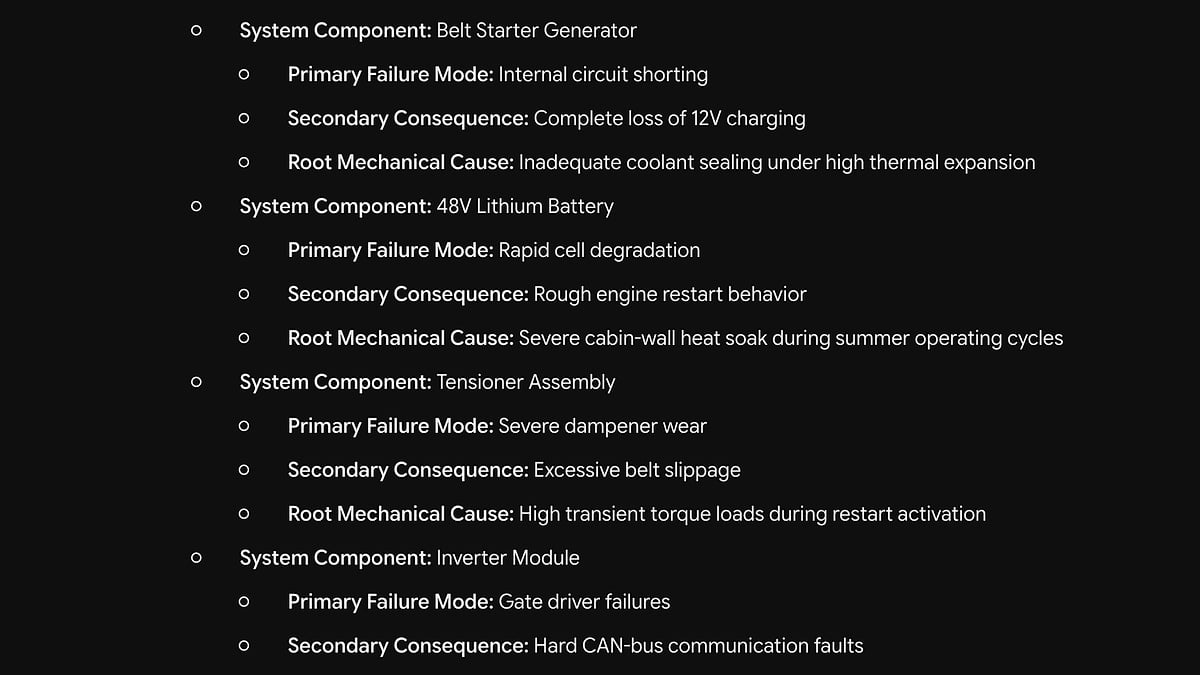
The technical root cause points directly to a design conflict between the physical mass of the Hemi V8 and the instantaneous torque demands of the 48V starter generator. During a standard start-stop event, the generator must instantly turn a heavy accessory drive belt to crank the crankshaft. This creates a massive torque load that puts immense strain on the specialized tensioner arm.
Over time, the tensioner dampener loses structural pressure, causing the drive belt to slip. This belt slippage creates immediate timing errors within the hybrid control unit, prompting the vehicle's computer system to disable all hybrid assistance features and illuminate the malfunction indicator light.
Field Diagnostic Checklist and Consumer Action Plan
For truck owners currently operating an eTorque-equipped vehicle, managing these potential failure modes requires a proactive maintenance approach and a clear diagnostic strategy.
- Monitor low-voltage battery status updates regularly. Use the vehicle's digital dashboard menu to track real-world voltage parameters during morning start cycles. If the system consistently reads below 12.2 volts prior to engine cranking, it indicates that the 48V-to-12V power converter is failing to adequately maintain the secondary battery.
- Inspect the accessory drive belt tracking alignment. Visually check the main serpentine belt for signs of edge fraying, rubber glazing, or excessive tensioner arm movement while the engine is idling. Any noticeable belt vibration indicates a loss of internal dampener pressure within the high-torque tensioner system.
- Audit all dealer service records for historical diagnostic codes. Ensure your local service department explicitly documents any history of soft codes related to module communication, such as code U0100 or code P0A7F. Having these codes clearly logged on official repair orders is critical for building a successful documentation trail under federal emissions warranty guidelines.
- Verify your regional coverage limits under emissions regulations. The core 48V hybrid components, including the generator unit and the main battery assembly, are typically protected under the federal emissions defect warranty for 8 years or 80,000 miles. Confirm that your local dealer correctly categorizes these issues to avoid inaccurate out-of-pocket repair estimates.
The Next Logical Technical Question
With the official removal of the 48V mild-hybrid platform from the upcoming model year production schedule, truck buyers must now consider how the manufacturer plans to maintain compliance with emission standards across its remaining large-displacement vehicle lines. Dropping the eTorque setup saves significant manufacturing costs and reduces the number of complex warranty claims, but it removes a key technology used to manage fleet-wide fuel economy averages.
Engineering indicators suggest that Ram will fill this technical gap by accelerating production of its standard-output inline six-cylinder turbo configurations, while repositioning the remaining Hemi V8 builds as simplified, fleet-focused models utilizing classic high-output alternators. This shift allows the brand to satisfy traditional truck buyers while moving its primary efficiency goals toward modern turbocharged platforms.
A New Era for V8 Powertrains
The decision to phase out the eTorque mild-hybrid system across the core Hemi V8 lineup marks the end of an era for experimental utility powertrains. This strategic reversal demonstrates that while complex hybrid additions appear highly efficient on a test track, they often struggle to withstand the demanding real-world workloads expected by traditional truck buyers. By returning to a standard mechanical charging layout, the manufacturer is prioritizing long-term durability over incremental efficiency gains, changing the ownership experience for truck buyers nationwide.
How About You? If you currently own a hybrid-equipped truck, would you consider trading it in for a non-hybrid model before the factory warranty period expires? Let us know your thoughts on this production shift by leaving a comment via the red Add new comment link below.
What’s Next
In our secondary editorial follow-up, "Current eTorque Owners Face Rapid Depreciation Risks As Ram Reverts To Non-Hybrid Hemi V8," Denis Flierl examines the financial impact of this technical production change. This consumer advocacy report will analyze real-world trade-in values, projected vehicle valuation trends, and the specific challenges owners face when selling a complex powertrain configuration that the factory has discontinued.
About The Author
Denis Flierl is a 14-year Senior Reporter at Torque News and a member of the Rocky Mountain Automotive Press (RMAP) with 30+ years of industry experience. Explore his full investigative reporting archives and technical guides at DenisFlierl.com. Based in Parker, Colorado, Denis leverages the Rockies' high-altitude terrain as a rigorous testing ground to provide "boots-on-the-ground" analysis for readers across the Rocky Mountain region, California EV corridors, the Northeast, Texas truck markets, and Midwest agricultural zones. A former professional test driver and consultant for Ford, GM, Ram, Toyota, and Tesla, he delivers data-backed insights on reliability and market shifts. Denis cuts through the noise to provide national audiences with the real-world reporting today’s landscape demands. Connect with Denis: Find him on LinkedIn, X @DenisFlierl, @WorldsCoolestRides, Facebook, and Instagram.
Photo credit: Denis Flierl via Yonez Vargas
Set Torque News as Preferred Source on Google
Follow us today...



Comments
Yes i have a 22 ram hemi v8…
Permalink
Yes i have a 22 ram hemi v8 while it only has 10k on it i have had no issues yet ,i am considering trading it in for a non etorque . I do like certain things about the etorque ,smooth shifts ,less wearbon brakes .
is this still accurate?…
Permalink
is this still accurate? seems like the build sheets for 2027 model year still contain the E-torque with the exception of the rumblebee.