


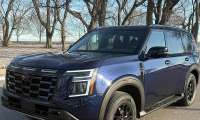
Following our investigative report on multi-generation owner attrition related to downsized turbocharged powertrains in the Toyota Tacoma, Torque News shifts its focus to practical consumer advocacy. This secondary technical brief analyzes the structural and mechanical advantages of the naturally aspirated midsize truck segment, with a specific evaluation of the Nissan Frontier platform.
By contrasting complex forced-induction systems with proven atmospheric engine architectures, this report provides a distinct consumer-advocate action plan. It establishes real-world maintenance frameworks designed for high-altitude environments and long-term vehicle ownership.
In the first part of this automotive reporting series, we examined why a seven-time Toyota Tacoma owner experienced severe buyer's remorse 15,000 miles into his fourth-generation turbocharged model. That foundational investigation highlighted a growing wave of consumer fatigue regarding non-linear power delivery, high-frequency cabin vibrations, and complex electronic multi-speed transmission programming.
This sequential article serves as a practical action plan and consumer advocacy solution. While the previous report deconstructed forced-induction failure points, this piece evaluates the mechanical longevity of the Nissan Frontier’s naturally aspirated 3.8-liter V6 engine and fully boxed ladder frame, serving as a technical guide for buyers seeking structural simplicity over modern electronic complexity.

According to ongoing Torque News tracking of manufacturing defects and segment reliability, the midsize truck market has split into two distinct engineering design styles. On one side are highly stressed, small-displacement engines managed by strict electronic software calibration. On the other side sits the Nissan Frontier, using an analog-survivor approach that relies on physical displacement rather than high turbocharger boost pressures to move vehicle mass.
This technical divergence becomes especially apparent when testing vehicles under heavy loads or when navigating severe high-altitude mountain environments.
The VQ-Derived 3.8L V6 Engine
The heart of the Nissan Frontier's longevity advantage lies in its 3.8-liter naturally aspirated direct-injection V6 engine. Torque News technical analysis identifies a critical gap between factory maintenance schedules and real-world component longevity, particularly when operating under high thermal stress. Unlike its turbocharged competitors, this V6 engine produces 310 horsepower without relying on external boost pressure. This completely eliminates components like twin-scroll turbochargers, electronic wastegates, intercoolers, and complex vacuum plumbing networks.
From an engineering perspective, removing forced induction significantly lowers the peak operating pressures inside the engine cylinders. Turbocharged four-cylinder engines must run high compression ratios alongside extreme boost pressures, which accelerates wear on internal piston rings, rod bearings, and head gaskets. The Frontier's V6 distributes its workload across six physical cylinders, reducing stress on individual components and helping keep engine temperatures stable.

Additionally, the engine features a durable timing chain and a variable-displacement oil pump. This pump ensures proper oil pressure across the entire RPM range, preventing the low-speed pre-ignition issues commonly found in modern downsized gasoline direct-injection engines.
Structural Integrity: The Fully Boxed Ladder Frame Advantage
Beyond the powertrain, a midsize truck's long-term durability depends heavily on its frame design. In our continuous coverage of midsize truck reliability, Torque News has uncovered an unresolved dispute regarding frame stiffness and real-world cabin vibration dampening. The Nissan Frontier continues to use a fully boxed ladder frame constructed from high-tensile strength steel, unlike competitor platforms that use open C-channel sections or hybrid hydroformed designs near the rear axle.
A fully boxed frame welds the structural steel sections completely closed along their entire length. This drastically increases torsional stiffness, preventing the truck chassis from twisting when driving over rough terrain or hauling heavy cargo. This structural design is particularly beneficial for drivers navigating rugged mountain environments, such as the steep mountain passes of Colorado.

While open frames can flex and cause high-frequency vibrations, especially when aftermarket wheel packages are installed, the Frontier's boxed frame provides a stable foundation. This minimizes bed chatter and maintains consistent suspension geometry over rough, uneven roads.
High-Altitude Performance and Regional Realities
Operating a midsize truck in high-altitude environments presents unique mechanical challenges. At elevations exceeding 6,000 feet above sea level, the air is noticeably thinner, which naturally reduces the power output of naturally aspirated engines by roughly three percent for every 1,000 feet of climb. While turbocharged engines use artificial boost pressure to compensate for this atmospheric loss, they do so at the cost of extreme heat buildup in the engine compartment.
In past field reports, as a senior automotive reporter, I've detailed how high-altitude driving environments serve as an ideal testing ground for evaluating truck drivetrains. My prior investigations show that while turbochargers compensate well for thin air, the resulting heat stress can accelerate engine oil breakdown and cause transmission fluid temperatures to spike during long hill climbs. You can review my detailed analysis of regional performance demands on Torque News here.
To offset the natural power loss at high altitudes without introducing the reliability risks of a turbocharger, the Frontier pairs its V6 engine with a well-calibrated nine-speed automatic transmission. This multi-speed gearbox features closely spaced gear ratios, allowing the engine to remain firmly within its optimal power band without constant gear hunting.
My previous evaluations confirm that a naturally aspirated engine utilizing a high-gear-count transmission offers a highly predictable throttle response on mountain grades. This provides drivers with smooth, linear power control that avoids the sudden torque surges common in forced-induction trucks. My full assessment of truck drivetrain performance across changing environments can be found on Torque News.
Next Steps for Owners
For consumers looking to maximize the service life of their midsize trucks, relying solely on standard factory maintenance schedules may not be enough to counter real-world operating stress. Independent automotive research indicates that modern extended oil change intervals are often optimized for corporate fleet statistics rather than maximum vehicle longevity. Comprehensive testing confirms that frequent engine oil changes are critical to protecting direct-injection engine components. Detailed fluid analysis data and long-term ownership costs are available through Consumer Reports.
Furthermore, independent evaluations of midsize truck platforms emphasize that maintaining the cleanliness of drivetrain fluids is vital to preventing premature component wear. Vehicles operating under heavy loads, making frequent short trips, or exposed to extreme temperatures require accelerated maintenance schedules to protect complex internal gears. Additional long-term reliability tracking and specific platform maintenance recommendations can be reviewed on Edmunds.
To assist owners in protecting their investment, Torque News has developed this practical consumer advocacy action plan:
- Shorten Fluid Lifecycle Intervals: Flush and replace the engine oil and filter every 5,000 miles or 6 months using full-synthetic lubricants, ignoring the factory's extended 10,000-mile recommendations to protect high-load engine components.
- Service the Multi-Speed Transmission: Drain and refill the transmission fluid every 45,000 miles, especially if the vehicle is regularly used for towing, hauling, or navigating steep mountain grades.
- Inspect the Boxed Frame and Chassis: Conduct annual underbody cleanings and apply high-quality fluid-film rust prevention coatings to the inside of the fully boxed frame rails to prevent moisture trapping and corrosion.
- Maintain Original Wheel Geometry: Avoid installing heavy, oversized full-size truck wheel take-offs. Stick to factory-specified wheel weights to protect suspension bushings, wheel bearings, and steering components from premature failure.
How About You?
When looking at long-term truck ownership, do you prioritize the immediate power and modern cabin technology of a complex turbocharged four-cylinder engine, or do you prefer the predictable reliability of a naturally aspirated V6 built on a traditional fully boxed frame? Tell us what you think and share your maintenance strategies by leaving a comment in the red "Add new comment" link below.
About The Author
Denis Flierl is a 14-year Senior Reporter at Torque News and a member of the Rocky Mountain Automotive Press (RMAP) with 30+ years of industry experience. Explore his full investigative reporting archives and technical guides at DenisFlierl.com. Based in Parker, Colorado, Denis leverages the Rockies' high-altitude terrain as a rigorous testing ground to provide "boots-on-the-ground" analysis for readers across the Rocky Mountain region, California EV corridors, the Northeast, Texas truck markets, and Midwest agricultural zones. A former professional test driver and consultant for Ford, GM, Ram, Toyota, and Tesla, he delivers data-backed insights on reliability and market shifts. Denis cuts through the noise to provide national audiences with the real-world reporting today’s landscape demands. Connect with Denis: Find him on LinkedIn, X @DenisFlierl, @WorldsCoolestRides, Facebook, and Instagram.
Photo credit: Denis Flierl
Set Torque News as Preferred Source on Google
Follow us today...




Comments
Thanks Denis for your in…
Permalink
Thanks Denis for your in-depth reporting. I’m driving my third Toyota pickup and my current one is a 2009 Tacoma 4x4 with a six cylinder engine. My previous two ( an ‘83 and a ‘90), had 4 cylinder engines, somewhat under powered but very reliable because at the time, they were built to last. There is no way I would buy one of the current Toyota mid sized trucks. They reek of planned obsolescence, and I appreciate your insights about Nissan’s 6 cylinder Frontier. I still have a few years left on my 2009 Tacoma, but when the time comes to get a new truck, I doubt seriously if it will be a Toyota.
I love the nissan v6 .I am …
Permalink
I love the nissan v6 .I am on my fourth one. I just wish nissan would offer a standard transmission so I could purchase my 5th one. Fantastic truck Fantastic engine.
Good information but seems…
Permalink
Good information but seems to have been partially written with AI. I can appreciate the article without words like sequential and other non relevant fluff. Meat and potatoes info is best. Love facts and logic.
I have owned 3 Frontiers. My…
Permalink
I have owned 3 Frontiers. My 2016 hit 80k and was getting tired. Traded it on a new 2025. Put 4700 miles on it and traded it for a 2026, which saved me a lot of money in interest. My only concern is the internal water pump, which could cause a ruined engine, if it ever leaks into the crankcase.
Alas, no standard xmission…
Permalink
Alas, no standard xmission available after 2019. Otherwise I was sold on features vs late model tacomas!!
Great Atrticle! Thank you…
Permalink
Great Atrticle! Thank you. And thank you Nissan for sticking to it's guns!
I've always owned a Toyota Pickup, always! My first ride was an 84" XTRA-CAB 2WD Base model 22R. My late Brother's first ride was a Datsun 620...I LOVE compact Pickups! Such a shame that the industry abandoned "The Perfect Vehicle".
I've owned Twelve iterations of Toyota Pickups since. My current daily driver is a 90' 2door SR5 4X4 3.SLOW 4Runner and I also have a 93' SR5 4X4 3.SLOW XTRA-CAB Pickup. Yes, the DREADED 3VZ-E! They had their issues but when resolved with a proper build and deletion of the exhaust crossover...they are as reliable as any 22R.
All that being said, Toyota is off thier rocker with the new Tacos! The price tag is insane, the specs SCREAM "you're gonna PAY BIG when it's outta warranty", they are damn near the size of nine-year-old "fullsize" trucks, they are packed with useless tech, they aren't all that efficient, should I keep going?
And this isn't just Toyota, ya listening Ford, GM, Stelantis? But shame on Toyota most of all! Passing off Overpriced, Turbo'd junk, that is destined to become scrap material in ten years on a reputation that they killed off in 2004!
Just yesterday, I priced a fully loaded 2026 Frontier Pro-4X(?) 4door/Long-Bed...it was under 50k (USD). A SO CALLED "EQUIVALENT" TACO COMES IN AT 65K!
If it were my blood, sweat and tears...I'd be at the Nissan Dealer. And Nissan, listen up, People from all over the globe LOVE, ABSOLUTELY LOVE COMPACT PICKUPS! AND YOU, YESSSSSS YOU (NISSAN) MADE THE COOLEST ONE OF THEM ALL: THE KING CAB 620 "THE BULLETSIDE".
The auto industry today is a car lover's letdown. You guys need to start firing executives. NOW!
Longevity is the #1…
Permalink
Longevity is the #1 determining factor when purchasing a vehicle. Every vehicle should be designed to reach 500k miles or more with regular maintenance.
I test drove all the…
Permalink
I test drove all the midsized trucks before buying my Nissan Pro4x. The smooth V6 and comfortable ride sold me.
I believe Honda is also…
Permalink
I believe Honda is also facing their challenges with Turbo Charged engines. Those engines won't see 300k. I would pick the Nissan too, because it fits well into the category.
VQ engine family showing…
Permalink
VQ engine family showing once again how actually near perfection it has almost always been since '95.
The only real faux pas is the never-ending March of increasing prices and cramming more electric nannies in everything. Imagine a world where you could get a 6-speed manual and the only electronics were the windows, the stereo, and the fuel pump; for under $30k.... They wouldn't be able to make enough of them!