
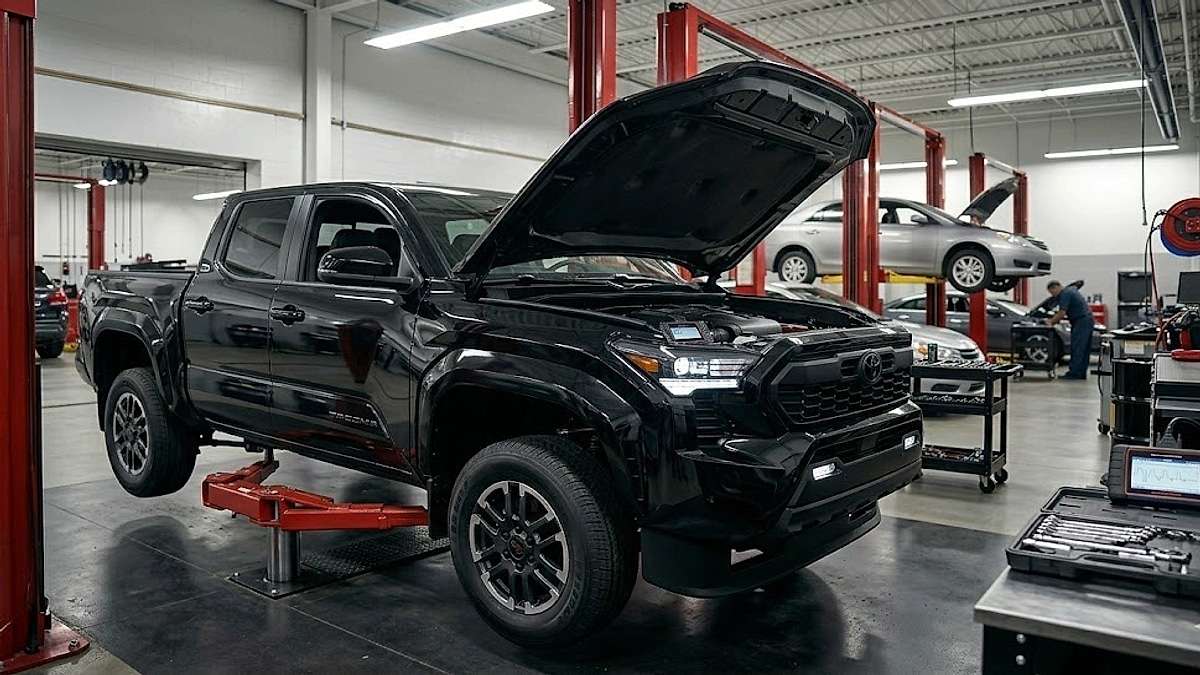

Why New Tacoma Engines Are Failing Without a Trace
After thirty years in the automotive industry, I can tell you that nothing erodes owner trust faster than a "cannot replicate" diagnosis after a catastrophic highway failure. This week, I am investigating a case that strikes at the heart of the 4th Gen Tacoma's reputation. Vinh Ngoc Tran, a 2026 Toyota Tacoma owner with only 2,200 miles on the odometer, found himself stranded in "nowhere Ohio" after his truck began shaking violently and lost power. Despite a $2,000 tow to a Knoxville dealer, the service department returned the truck just twenty-four hours later, claiming they could not see any problem.
The 2026 Toyota Tacoma "No Fault Found" Diagnostic Crisis
This investigation into the 2026 Toyota Tacoma’s reliability reveals a growing rift between owner experiences and dealer diagnostic results. Following a high-profile case of power loss and a $2,000 towing bill from a Michigan owner, I've identified a specific "Diagnostic Limbo" pattern affecting the new 2.4L i-Force turbo engine. Our analysis shows that intermittent P0301 (Cylinder 1 Misfire) and P11EA (Air-Fuel Ratio Imbalance) codes are often triggered by thermal management logic or sensor sensitivity that resets before reaching a service bay. This report provides a technical roadmap for owners facing "cannot replicate" denials, to offer actionable steps for consumer advocacy and warranty protection.
This is the "Answer" that Toyota isn't telling you: these intermittent P0301 and P11EA codes are often "soft" electronic failures. They occur under specific thermal loads, like a long-distance haul from Michigan to Tennessee, but the computer logic often resets the active misfire once the ignition is cycled at the dealership. From my perspective as a native Colorado tester who has pushed these trucks to their limits in high-altitude conditions, this isn't just a "glitch." It is a diagnostic limbo that leaves owners financially and physically vulnerable.
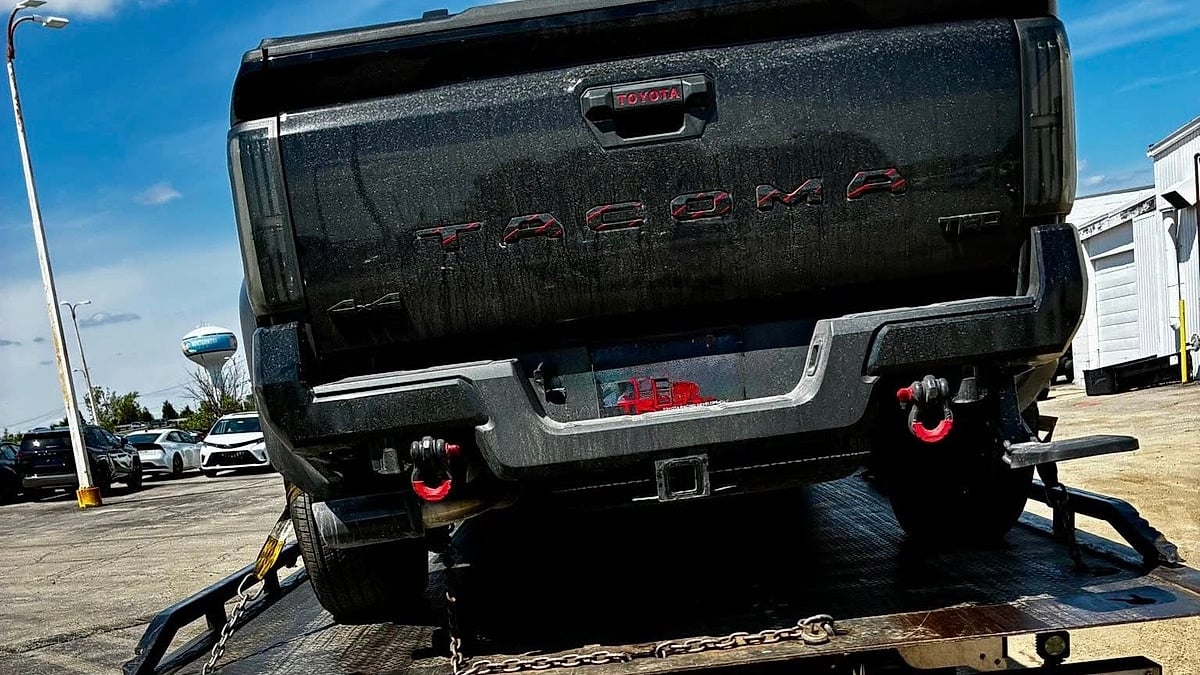
According to owner Vinh Ngoc Tran on the 4th Generation Toyota Tacoma Owners Group Facebook page, "My 2026 Toyota Tacoma has only 2,200 miles on it. On Sunday, May 3rd, after the first 150 miles of the journey from Ann Arbor, Michigan, to Oak Ridge, Tennessee, my truck experienced a series of concerning issues. It began shaking, and the engine lights came on. The power started to fail, and most of the functions stopped working. I was stuck here in Nowhere, Ohio. No dealerships were open on Sundays. I purchased an OBD2 scanner at a nearby Autozone and found P0301 and P11EA codes. I ended up spending around $2,000 on towing it to TN to see my kid. Now, I arrived at the dealer in Knoxville. This was an incredibly frustrating and unfortunate day. So I get the truck back on Monday afternoon, and the dealer says they can’t see any problems. They were unable to replicate the issue and returned the truck to me. Is this going to happen again?"
Vinh’s experience is not an isolated incident. Industry experts at Pickup Truck Talk have noted that "complaints filed with NHTSA indicate trucks suddenly jumping into neutral, being stuck in high gear, or experiencing power loss/sluggish response, sometimes within the first 1,000 miles." This aligns perfectly with the P11EA code (Air-Fuel Ratio Imbalance) that Vinh discovered on his own scanner. I’ve reported on a similar heartbreak where a 2024 Tundra owner had their engine fail after losing oil pressure, proving that the remedy must be as robust as the original promise of Toyota reliability.

The Hidden Danger of the P0301 and P11EA Diagnostic Codes
The technical reality of these codes is complex. A P0301 stands for "Cylinder 1 Misfire Detected," which means the powertrain control module (PCM) has detected enough misfires to store a code. While a faulty spark plug is often the culprit, in a brand-new engine, it is more likely to be a faulty ignition coil or a clogged fuel injector that fails under load. When you add the P11EA code to the mix, we are looking at a fuel-air delivery issue that can cause the engine to enter "limp mode" to protect itself from internal damage.
The problem I see as an investigator is that many technicians are trained to follow the "No Code, No Problem" rule. If the check engine light isn't on when it hits the service bay, they often won't dig deeper. I previously reported on a Missouri 2024 Toyota Tacoma owner who faced a critical oil filter failure at 5,000 miles, highlighting why dealer service is currently under fire for technician error and a lack of deep-dive diagnostics.

Field Observations from Owner Communities
The community sentiment is shifting from mild concern to outright alarm as more 4th Gen owners report these "limp mode" events. In a recent technical discussion on r/Toyota, one owner shared a terrifying experience where their 2026 truck went haywire during a highway merge, stating, "Immediately, the truck went haywire, the RPMs started jumping all over the place, the truck went into 'limp mode,' and I lost my power steering." Based on my experience, this loss of power steering assist often indicates a total electrical bus failure, triggered by the engine's struggle to maintain RPM during a misfire.
Another owner highlighted the vulnerability of the new design, mentioning that "those engines have issues, even the new ones they put in for the recall still blow up," as found in this Reddit thread. My analysis suggests that while Toyota is attempting to fix manufacturing debris issues in the V6 Tundra, the smaller i-Force 2.4L turbo in the Tacoma is facing "teething" issues with its high-pressure fuel system and sensitive air-fuel monitoring logic.
Key Takeaways
- Audit all diagnostic trouble codes (DTCs) immediately with a personal OBD2 scanner before bringing the truck to a dealer, as intermittent faults like P0301 often clear after a restart.
- Document every dollar spent on emergency services, as Toyota's warranty typically covers "consequential damages" like towing if the failure is linked to a defect, regardless of initial dealer denials.
- Request a ride-along with a lead diagnostic technician to replicate highway-speed conditions, which are often the only environment where "ghost codes" like P11EA manifest.
- Monitor oil quality for metallic particulates, as early 4th Gen Tacoma reports suggest that internal debris could be the root cause of high-mileage sensor failures.
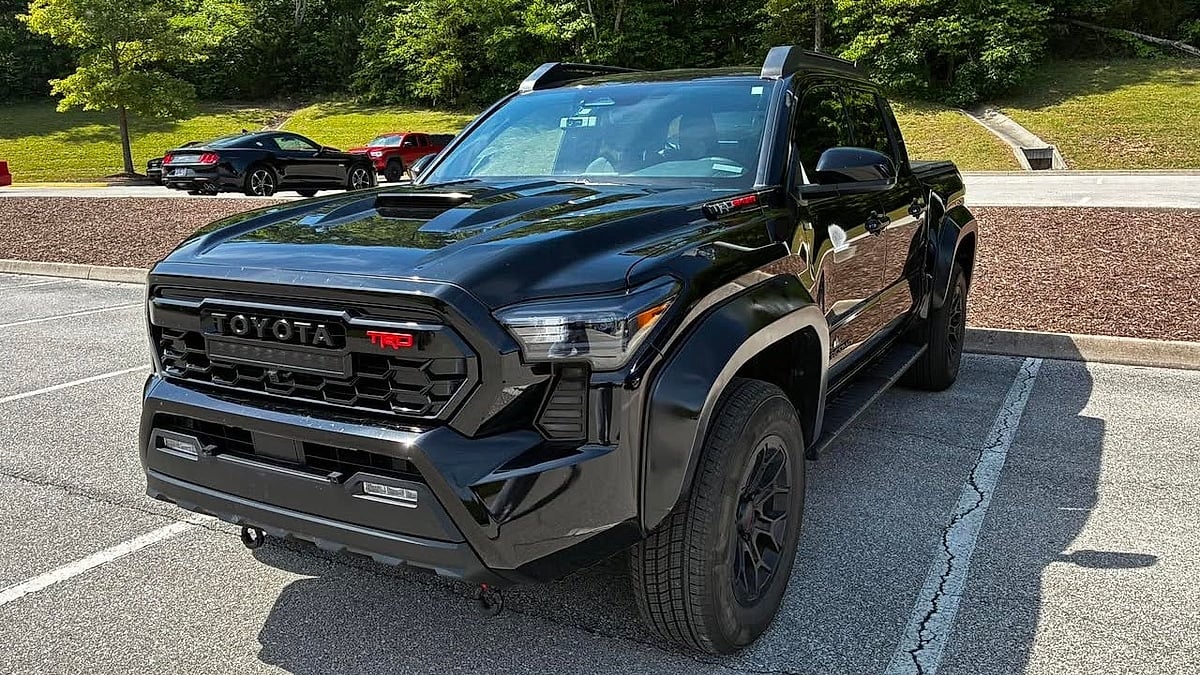
Will Toyota Issue a Software Flash for the P11EA Error?
The very next logical question for Tacoma owners is whether a Technical Service Bulletin (TSB) is coming to address these fuel-air imbalances. Based on Toyota’s history with the Tundra’s V35A engine, a software update is likely in the works to "desensitize" the knock sensors and air-fuel monitoring logic. Owners should check the Toyota Owners Portal monthly for any "Customer Satisfaction Programs" that might offer a free PCM (Powertrain Control Module) re-flash to prevent these highway-speed power losses.
My Final Verdict on the 2026 Tacoma
The 4th Gen Tacoma is a powerhouse of engineering, but these early "ghost failures" are a reminder that even the most reputable brands face growing pains with new turbo-four architecture. My thirty years in the industry have taught me that a dealer’s "cannot replicate" isn't the end of the story; it's the start of your paper trail. Don't let a $2,000 tow bill be the price of being an early adopter. Hold the manufacturer to the standard they promised, and keep your scanner plugged in.
It's Your Turn: Have you experienced a "cannot replicate" power loss on your new Tacoma? Did the dealer eventually find the problem? Share your story and help the community by leaving a comment in the red Add new comment link below.
About The Author
Denis Flierl is a 14-year Senior Reporter at Torque News and a member of the Rocky Mountain Automotive Press (RMAP) with 30+ years of industry experience. Explore his full investigative reporting archives and technical guides at DenisFlierl.com. Based in Parker, Colorado, Denis leverages the Rockies' high-altitude terrain as a rigorous testing ground to provide "boots-on-the-ground" analysis for readers across the Rocky Mountain region, California EV corridors, the Northeast, Texas truck markets, and Midwest agricultural zones. A former professional test driver and consultant for Ford, GM, Ram, Toyota, and Tesla, he delivers data-backed insights on reliability and market shifts. Denis cuts through the noise to provide national audiences with the real-world reporting today’s landscape demands. Connect with Denis: Find him on LinkedIn, X @DenisFlierl, @WorldsCoolestRides, Facebook, and Instagram.
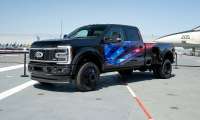
Photo credit: Denis Flierl via Vinh Ngoc Tran
Set Torque News as Preferred Source on Google
Follow us today...





Comments
I have a 24 trd Sport just…
Permalink
I have a 24 trd Sport just hit 30k on it not one Fk problem yes there are bad ones out that goes with any make and model. Look at chevy there engines are leaving people stranded before they make there first payment.