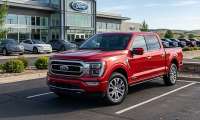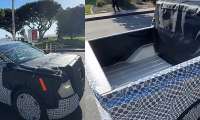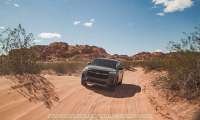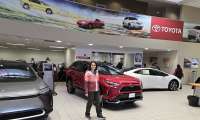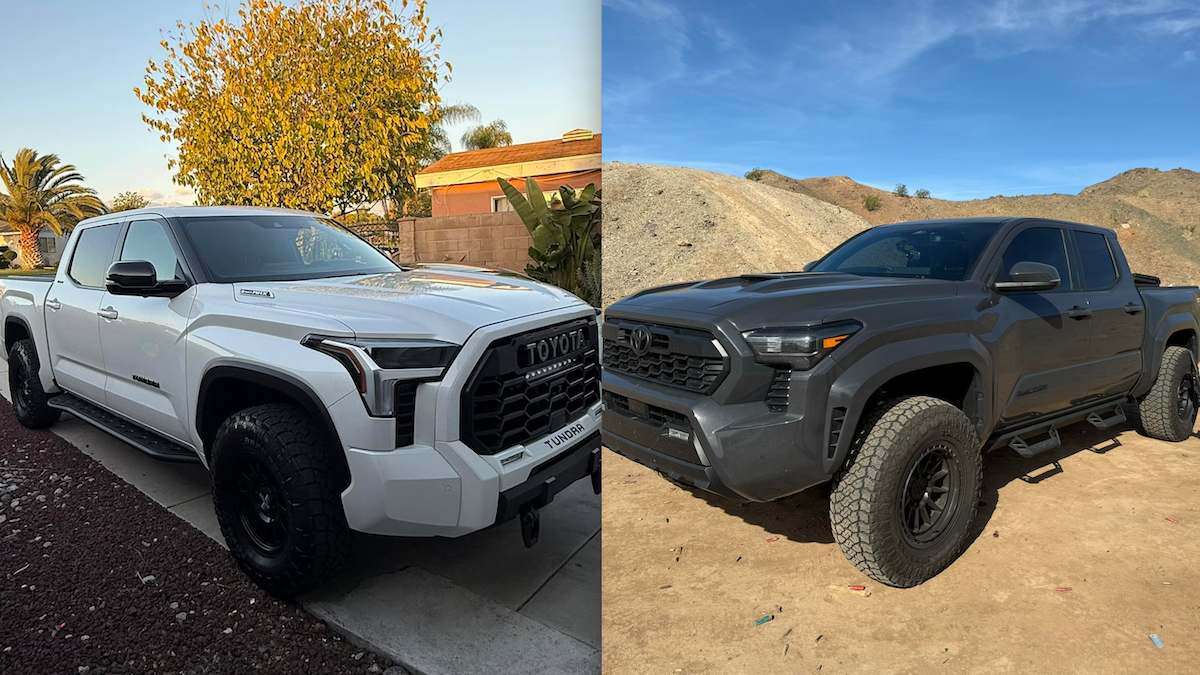

This truck buyer couldn’t pass up the price on this 2025 Tundra Hybrid, but now he’s wondering if I just traded my bulletproof Tacoma for an engine repair bill.
Imagine standing on the lot looking at a pristine 2025 Tundra Hybrid with 11,000 miles, and the price tag felt like a typo. It was too low, and you thought you found a steal. Then, after you drove it home and joined the Toyota Tundra owners group, you saw that the 3.4L twin-turbo V6 recall issues had haunted Toyota for years.
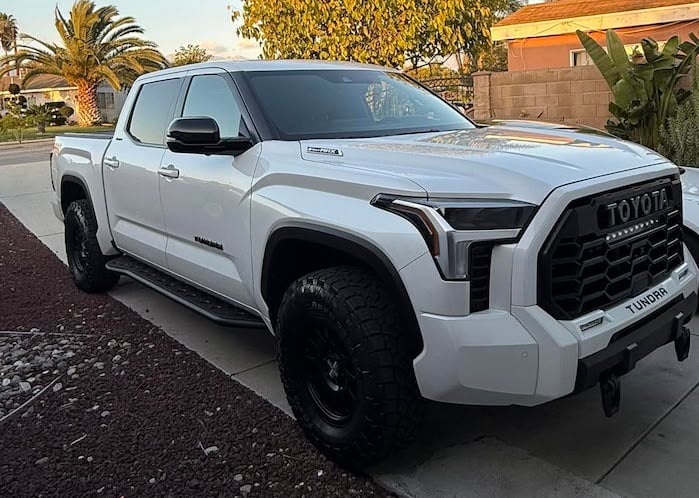
While digging into the latest reliability data for Toyota’s newest i-FORCE powertrains, I came across a compelling post shared within a Facebook community of Toyota Tundra enthusiasts. Steven Briseno highlighted the growing dilemma facing truck buyers today: the irresistible allure of a "bargain" 2025 Tundra Hybrid Limited, potentially priced low due to Toyota’s massive engine recall.
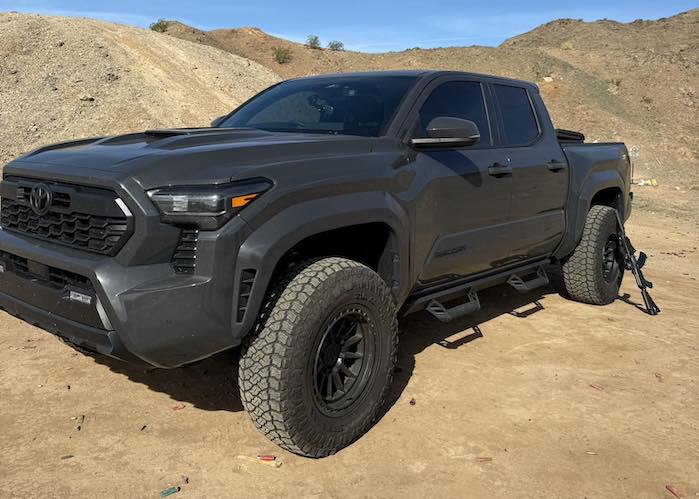
Steven says, “I got this used 2025 Toyota Tundra Hybrid Limited 11K miles for an absolute steal today. But I think it was one of Toyota’s engine recall trucks, and I hope I’m not sorry. I’m coming from a 4th-Gen Tacoma, so the bigger size is very welcome.”
Are dealers quietly marking down specific 2025 VINs that fall within the production window for the expanded i-FORCE V6 recalls?
While Toyota’s official stance has focused on early production units, a growing "Industry Secret" is emerging as savvy buyers and dealership insiders spot aggressive price drops on certain 2025 inventory that overlaps with the ongoing machining debris saga. For buyers in the 2026 market, this creates a high-stakes dilemma: these markdowns represent an absolute steal on paper, but they may also signal a "luxurious gamble" for anyone trading in the bulletproof reliability of a 4th-Gen Tacoma.
According to reports from The Lemon Law Experts, the debris left inside these engines can cause a range of issues, including total failure that leaves drivers completely stranded, as you can see in their detailed legal analysis of the Tundra engine lawsuit.
I previously reported on a similar heartbreak where a 2024 Tundra owner had their engine fail after losing oil pressure, proving that the remedy must be as robust as the original promise of Toyota reliability.
Industry experts at Car and Driver have noted that Toyota has issued multiple recalls for engine debris, but the concern remains that residue can cling to bearings and cause the engine to stall.
In my view, the risk of contamination during a short-block swap is simply too high for a premium vehicle, which is why I’ve exposed the painful reason why some owners are seeing their second engine fail just thousands of miles after the "fix."
From My View:
With 30 years in this industry, I have seen every major manufacturer stumble, but Toyota’s current situation with the V35A engine is different because it strikes at the heart of their "Quality, Durability, and Reliability" (QDR) promise. I’ve spent my career advocating for you, the consumer, and my take on this 2025 Tundra "steal" is that it’s only a bargain if you have an iron-clad exit strategy.
The transition from the 4th-Gen Tacoma to the Tundra is more than just a size upgrade; it's a move from a largely settled platform to a twin-turbocharged hybrid system that is still experiencing "teething" issues in 2026. The financial risk isn't just the repair bill; it's the plummeting resale value when the CARFAX shows an engine replacement.
We want to believe that a recall "fixes" the problem permanently. However, for many Tundra owners, the reality has been a logistical nightmare of backordered parts and technician errors during complex engine swaps.
My Take:
From my perspective, the "steal" on 2025 Tundra Hybrid models we're seeing today is a double-edged sword that will define their resale value for years to come. In 2026, the market has reached a tipping point where the "recall penalty" is no longer just a headline; it’s a line item on your appraisal sheet. Data shows an immediate 5% to 8% depreciation hit on affected VINs compared to non-recalled units, but the real pain is at the dealership trade-in desk.
I’ve spent years tracking how scandals affect "bulletproof" brands, and the pattern here is clear. While Toyota remains a residual value king in J.D. Power’s 2026 awards, that crown is supported by the legendary Tacoma and older V8 Tundras. For the i-FORCE MAX Hybrid, the market is currently "bifurcated." If your Tundra has a clean CARFAX report with no engine swap, it holds value. However, the moment that engine replacement is logged, you aren't just a truck owner; you're a risk manager.
Why This Matters for 2026 Buyers
If you're buying one of these "recall trucks" today, you must realize that a $30,000+ engine replacement invoice is a terrifying reality for out-of-warranty owners. Many dealerships are already lowballing trade-ins or outright refusing them because they can’t turn a truck with a "rebuilt engine" stigma into a wary public.
My advice is simple: the "absolute steal" you get now must be large enough to offset a projected $7,000 to $10,000 steeper depreciation curve over the next three years. If the discount isn't at least 15% under typical market value, you aren't getting a bargain; you're just prepaying for the loss you'll take when you eventually try to ditch it.
What Tundra Owners Are Saying
The community sentiment on platforms like Reddit has shifted from mild concern to outright alarm.
One user on Reddit noted the severity of the situation, stating, "Replace radiator or end up replacing tranny like me... had a small leak. Unnoticed. Then boom tranny went out on highway," which you can read in the full discussion here.
Another owner highlighted the new design's vulnerability, noting, "The radiator on these models has an isolated portion for cooling automatic transmission fluid... if it's not cooling it, bad things happen," as found in this Reddit thread.
2026 Tundra Buyer Guide
1. The "Bifurcated" Market: My take is that we’ve entered a two-tier market. In 2026, a Tundra with an engine replacement on its record is seeing a 5% to 10% steeper depreciation hit than untouched units. Dealers are increasingly wary of these trade-ins, often "lowballing" offers due to the lingering stigma of a non-original engine.
2. Check the Build Date: Do not assume a 2025 is "safe." Toyota has expanded recalls multiple times, most recently in January 2026, confirming that machining debris issues persisted longer than initially reported.
3. Demand the "Long Block": Complexity is the enemy of reliability. Always push for a factory-sealed long block (engine assembly) rather than a "short block" rebuild. Reusing old, potentially contaminated turbos or cylinder heads is a recipe for a second failure.
4. The Warranty Trap: Most replacement engines only carry a 12-month/12,000-mile warranty or the remainder of your original 60,000-mile powertrain coverage—whichever is longer. If you’re buying a high-mileage "steal," you could be unprotected sooner than you think.
5. Documentation is Currency: Keep every service record. Proving your truck received the "improved" 2026-spec parts is the only way to mitigate the resale value hit when it’s time to trade in.
It's a Calculated Gamble
Buying a "recalled" Tundra for a steal is a gamble that requires you to prioritize warranty coverage over the initial savings. While the size and power of the 2025 Hybrid are undeniable, the peace of mind you left behind in your 4th-Gen Tacoma is something money can't always replace.
Tell Us About Your Tundra Experience: Have you scored a "deal" on a Tundra only to find it was part of the recall? Leave a comment in the red "Add new comment" link below.
Next Up: The Nightmare Scenario: Meet the Tundra owner who finally got his Toyota recall engine replacement, only to have the new engine fail 6,000 miles later, leaving him stranded on a dark highway with a cabin full of smoke.
Denis Flierl is a Senior Reporter at Torque News with over 30 years of hands-on experience in the automotive industry. Having served as a professional test driver and industry consultant for major automakers such as Chevrolet, Ford, Toyota, Honda, and Tesla, Denis provides a "boots-on-the-ground" perspective that goes beyond standard reporting. Since joining Torque News in 2012, he has specialized in cutting through market noise to deliver data-backed analysis and real-world owner stories. His work focuses on navigating the transition to EVs and the shifting automotive market.
Have a tip or question for Denis? > Engage with him directly on LinkedIn for industry analysis, or follow his latest updates on X @DenisFlierl and @WorldsCoolestRides. You can also find his latest car features on Facebook and Instagram.
Photo credit: Denis Flierl via Steven Briseno
Set Torque News as Preferred Source on Google
Follow us today...