
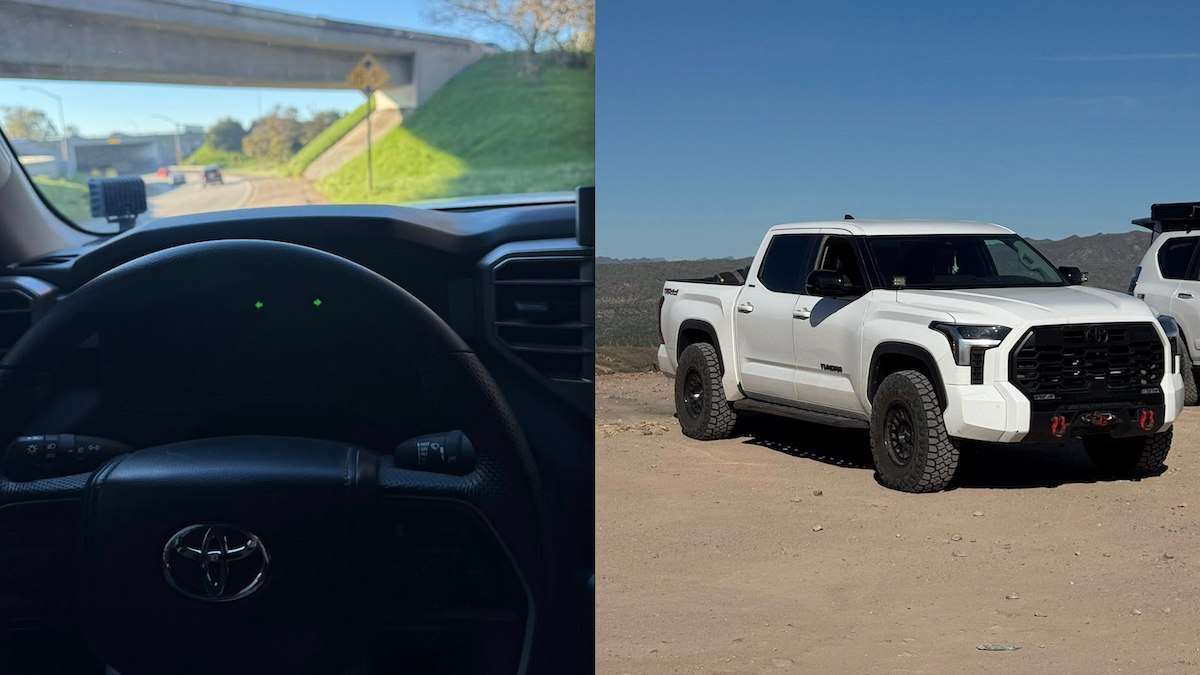

I’m uncovering the hidden risks of Toyota’s 'short block' strategy and why accepting this repair could be a ticking time bomb for your Tundra’s long-term reliability.
Imagine this: You’re cruising in a $70,000 truck with a 2024 build date, believing the "engine issues" were behind you, only to feel the power vanish and the dashboard light up like a Christmas tree. I’ve seen this nightmare play out too many times, but for this 2024 Toyota Tundra owner, the reality of being stranded on a busy shoulder has turned into a desperate fight to ensure Toyota provides a complete engine replacement rather than a cut-rate "short block" patch.
In a chilling post shared on a Facebook community of Toyota truck enthusiasts, Scott Duff highlighted the escalating reliability crisis surrounding the new-generation Toyota Tundra and the technical battle owners now face to keep their trucks on the road. He says,
“Unfortunately, it’s my turn," Scott shared. "I was really hoping not to make this post, but I’m currently stuck on the side of the road and could use all the advice I can get before I get to the Toyota dealership. My 2024 Toyota Tundra has a build date of 3/2024, and now the engine has failed. Does anyone have experience with Toyota and getting the full engine replaced and not just the short block? I want this done right so I don’t have to deal with it again down the road.”
Why This Failed for Us
In my 30 years of covering the automotive world, I’ve seen manufacturers stumble, but the V35A-FTS 3.4L Twin-Turbo V6 saga is a unique beast. The problem isn't just a mechanical failure; it's a transparency crisis. According to reports from The Lemon Law Experts, the debris left inside these engines can cause a range of issues, including total failure that leaves drivers completely stranded, as you can see in their detailed legal analysis of the Tundra engine lawsuit.
I previously reported on a similar heartbreak where a 2024 Tundra owner had their engine fail after losing oil pressure, proving that the remedy must be as robust as the original promise of Toyota reliability. This owner's experience suggests that the current "fix" may not be the permanent solution we all hoped for.
What I Tested: The Short Block vs. Full Engine Assembly
When a dealership tells you they are going to do a "short block" rebuild, they are essentially performing open-heart surgery in a service bay. They take your old cylinder heads, turbos, and cooling components and bolt them onto a new bottom end. Industry experts at Car and Driver have noted that Toyota has issued multiple recalls for engine debris, but the concern remains that residue can cling to bearings and cause the engine to stall, increasing the risk of an accident.
In my view, the risk of contamination during a short block swap is simply too high for a premium vehicle. I’ve covered how dealers are even removing the cab to perform these invasive engine repairs, which is why a full "crate" engine or engine assembly is the only way to truly reset the clock. If even one metal shard from the previous failure remains in the oil cooler or turbo lines, the new short block is essentially a ticking time bomb.
What Tundra Owners Need to Know Now
I want to be very clear with my readers: if your truck is part of the expanded recall that now includes certain 2024 models, you are facing more than just a scheduling headache. I’ve analyzed the data, and Toyota’s decision to move toward "full engine replacements" for the initial 100,000 units was a massive admission of guilt. However, for owners like Scott with a 3/2024 build date, the waters are murky. I’m seeing reports that some dealers are still pushing the short-block "patch" to save costs, but I believe this is a recipe for disaster.
The issue stems from a lack of confidence in the cleaning process. If Toyota’s Alabama plant failed to clear machining debris once, why should we trust a local technician to perfectly clean complex turbocharger oil lines that have been circulating metal shards? I’ve spent decades in the repair shops, and I know that microscopic contamination is the silent killer of high-performance engines. If you are a 2024 Tundra owner, you must demand a "Long Block" or a full factory assembly.
What is Toyota doing?
As of January 2026, they are officially expanding their safety recalls to include more 2024 VINs, acknowledging that the "debris" issue persisted longer than initially reported. But the "Industry Secret" I’m uncovering is the logistical nightmare: with over 125,000 engines now in question, parts are on national backorder. I’m hearing from insiders that some owners are being told to wait months for a replacement. My advice is to push for a buyback or a long-term loaner if your truck is out of commission. Do not let them rush a short block repair just to get you out of their hair.
Key Takeaways for Tundra Owners:
- Know the Difference: A short block is just the bottom end; an engine assembly is a factory-sealed, complete unit.
- Document Everything: If you feel a "hiccup" or hear a faint knock, record it and get a service ticket immediately.
- Demand a Long Block: Given the complexity of the V35A cooling and oiling systems, a full assembly is the only way to guarantee a debris-free environment.
- Check Your Date: Owners with early 2024 build dates are now finding themselves in the "danger zone" once reserved for 2022-2023 models.
What Tundra Owners Are Saying
The community is rightfully on edge as these stories move from the early production years into the 2024 models. One user on Reddit noted the severity of the situation, stating, "Toyota has not fixed the issue; they just bought themselves some time and then passed the problem onto us," which you can read in the full discussion here.
Another owner highlighted the vulnerability of the current repair strategy, mentioning, "If it's a design issue, then the company has sold vehicles with a known catastrophic safety defect and is putting the same [parts] back in them with a 1 year/12k mile warranty," found in this Reddit thread. The consensus among enthusiasts is that the "Toyota Way" should mean a full replacement, not a partial patch-up.
Toyota Must Step Up
The 2024 Toyota Tundra is a marvel of power and technology, but that complexity demands a zero-tolerance approach to repair quality. For Scott and others like him, accepting a short block rebuild is a compromise that a $70,000 investment should never require. I believe Toyota must step up and provide full engine assemblies to every affected 2024 owner to preserve the legendary reliability that built the brand.
It's Your Turn: Have you experienced a loss of power or strange knocking in your 2024 Tundra, and what is your dealer offering as a “fix"? Click the red link below to write your comment and join the community in sharing experiences.
Next Up: Even the newest models aren't safe from the V35A's growing pains. I'm investigating a shocking case where a brand-new hybrid unit failed almost immediately after leaving the lot. Read the full report here: So, I Just Bought a 2025 Toyota Tundra TRD PRO Hybrid and the Engine Locked Up With Only 1,528 Miles On My Truck.
Denis Flierl is a Senior Reporter at Torque News with over 30 years of hands-on experience in the automotive industry. Having served as a professional test driver and industry consultant for major automakers such as Chevrolet, Ford, Toyota, Honda, and Tesla, Denis provides a "boots-on-the-ground" perspective that goes beyond standard reporting. Since joining Torque News in 2012, he has specialized in cutting through market noise to deliver data-backed analysis and real-world owner stories. His work focuses on navigating the transition to EVs and the shifting automotive market.
Have a tip or question for Denis? > Engage with him directly on LinkedIn for industry analysis, or follow his latest updates on X @DenisFlierl and @WorldsCoolestRides. You can also find his latest car features on Facebook and Instagram.
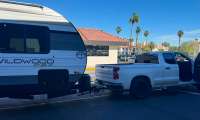
Photo credit: Denis Flierl via Scott Duff
Set Torque News as Preferred Source on Google
Follow us today...



Comments
My 24 Tundra failed. It’s…
Permalink
My 24 Tundra failed. It’s been at the dealership for over a month waiting on the short block repair. They wouldn’t give me the long block because I was not part of the recall. I’m pushing for a buyback, but a lot of lemon law attorneys are looking for several failed repair attempts. I’m hoping to push the lemon law on the 30 day presumption rule, but that feels less promising. This entire situation is just terrible. I’m just stuck with this truck I don’t trust.
Sorry to hear about your…
Permalink
In reply to My 24 Tundra failed. It’s… by Mel Baldwin (not verified)
Sorry to hear about your Toyota .
I love myn . 2024 tundra built in May 2024 not on the list yet but it’s got me stressed waiting to be recalled or to have issues.
Why is the lemon law of 30 days without your vehicle enough for them to buy back ?. Did u get a lawyer to push for the long block?
Just cause you were not on recall u still had the same issue as everyone else how did they justify only the short block. Hope it all works out for you. .
I was notified by Toyota…
Permalink
I was notified by Toyota that my 2022 Toyota Tundra platinum had a recall for the engine. My truck was not experiencing any issues, but to be cautious, I scheduled my truck for a voluntary recall of the engine at Hendrick’s Toyota in North Charleston, SC. The replacement was performed on 03/09/2026. We picked the truck up from the dealership on 03/10/2026 and drove directly 11 miles home without issue. On 03/12/2026 my wife planned to drive the truck to her clinic. The engine started without any problems; however, approximately 5 miles into her commute, while driving in the predawn rush hour traffic, an alarm indicated that the vehicle’s battery had a system malfunction and was not charging. Within seconds of the first alarm, multiple other alarms started to chime notifying her that “antilock break system malfunction”, “breaking power low”, “voltage abnormality steering power low”, “trailer break error”, “precollision system unavailable”, “parking break malfunction, and “secondary collision break system malfunction”. At this time, the power steering failed and the entire dashboard flickered and then turned off. She was very scared as she narrowly avoided multiple collisions, in the dark, as the truck failed. We immediately contacted Hendrick’s Toyota of North Charleston and the truck was towed back to the service department. On 03/17/2026 the dealership communicated that the problem was a dead battery which they replaced. We questioned how a dead battery would start the truck on the morning of 03/12/2026, but would then cause catastrophic electrical failure while the truck was actively driving, but we were told that it was the battery, problem solved. We picked the truck up from the dealership on 03/18/2026 and did not drive it again until 03/22/2026. On 03/22/2026, I drove the truck to a local hardware store approximately 4 miles from our home. Again, the truck started without any difficulty, however, as I was nearing the destination, the alarms started to sound just as they did on 03/12/2026. I was able to turn around in an effort to pull off the busy road; however, the truck then bucked several times and then stopped in the middle of a busy, three lane highway. I called Hendrick’s Toyota, but was told that the dealership was closed. I then called a tow truck to remove the truck from the highway and then I called the sheriff’s department as the truck was blocking traffic. Again, this incident was deeply disturbing and I feared for both my safety as well as that of other motorists. The truck was then towed, at our expense, back to Hendrick’s Toyota of North Charleston on 03/22/2026. I was notified by the service department today, 03/24/2026, that they believe that the alternator is now the problem. This truck did not have a single problem prior to the voluntary recall, but now after the installation of a new engine, the truck is not only unreliable but is a safety concern for my family and whoever might be on the road near us the next time it malfunctions. We all know that the real problem was not the battery and it is not the alternator but is either a malfunction of the replacement engine or was gross negligence by the mechanics who installed the engine on 03/09/2026. Absolute nightmare.