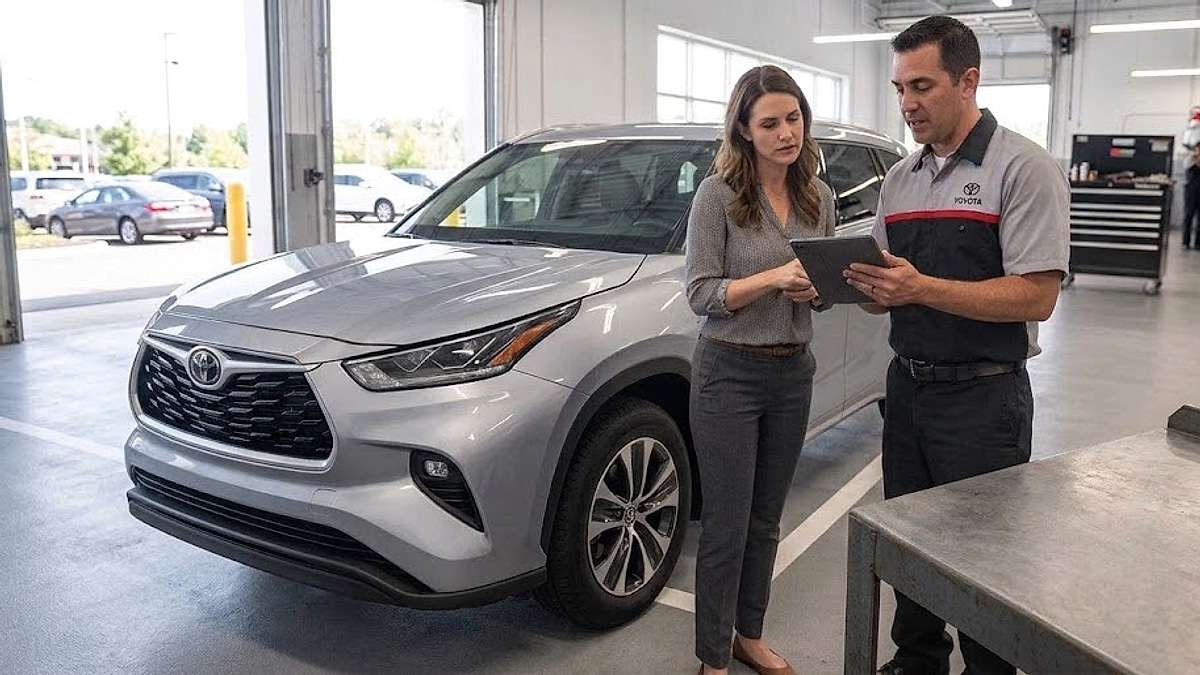

Your brand-new hybrid is hiding a fragile electrical secret that can instantly turn a simple trip to the dealership into a 42-day service nightmare.
While everyone obsesses over the massive high-voltage hybrid pack, a tiny, overlooked 12V auxiliary battery is quietly acting as your SUV's true brain, and, as my ongoing tracking has recently exposed, a flawed software reflash is completely bricking these systems.
When a dealership initiates a massive 12.3-inch instrument cluster update without a proper shop charger, this small battery is pushed off a cliff, triggering the exact nightmare detailed in my investigative breakdown of a 2023 Highlander trapped in a six-week dealer backlog.
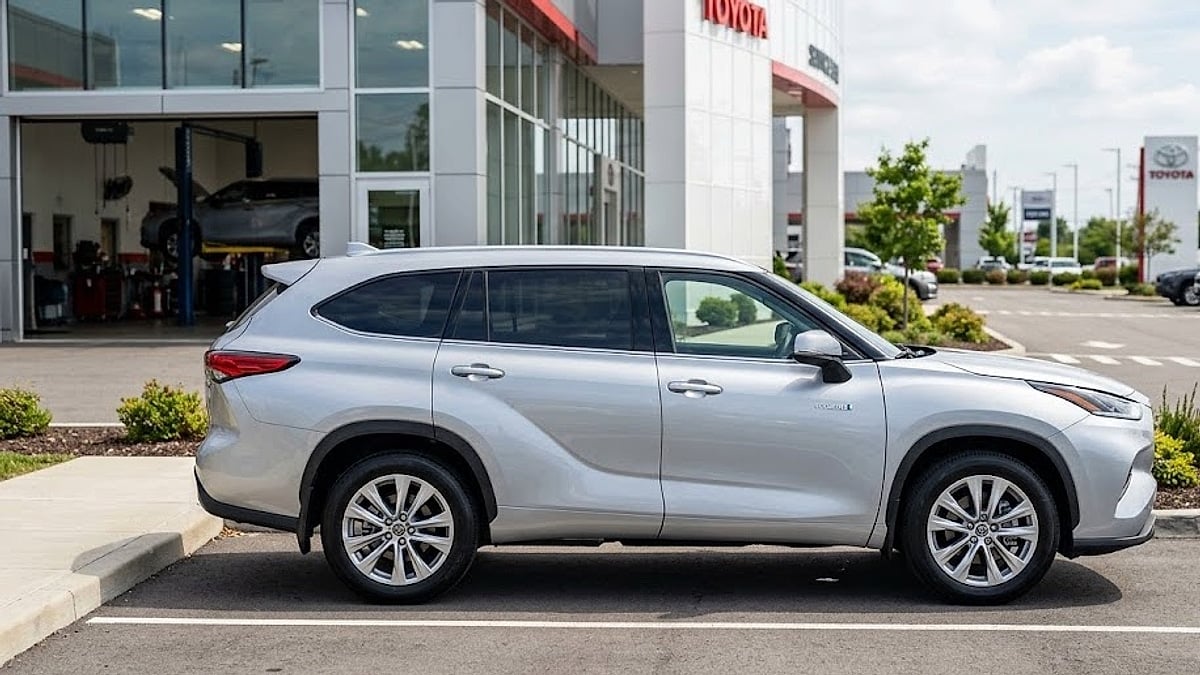
The Microscopic Power Plant Under the Hood
Many Highlander Hybrid owners mistakenly believe their massive hybrid powertrain protects them from basic car battery failures.
In reality, the 12V auxiliary battery in your hybrid is significantly smaller than the starting battery in a conventional gas-powered vehicle because it never has to turn over a heavy internal combustion engine.
Instead, its sole job is to power up the hybrid system's main computers, keep the telematics wide awake, and boot up the 12.3-inch digital instrument cluster screens.
As recently documented in an investigative technical breakdown by automotive electronics specialists, these tiny AGM or lead-acid cells have very limited reserve capacity when the vehicle's engine is not running.
If your hybrid sits in a service bay with the ignition set to "Accessory" or "Ignition On" during a lengthy diagnostic reflash, the vehicle's complex onboard computer networks begin aggressively draining its small power reservoir.
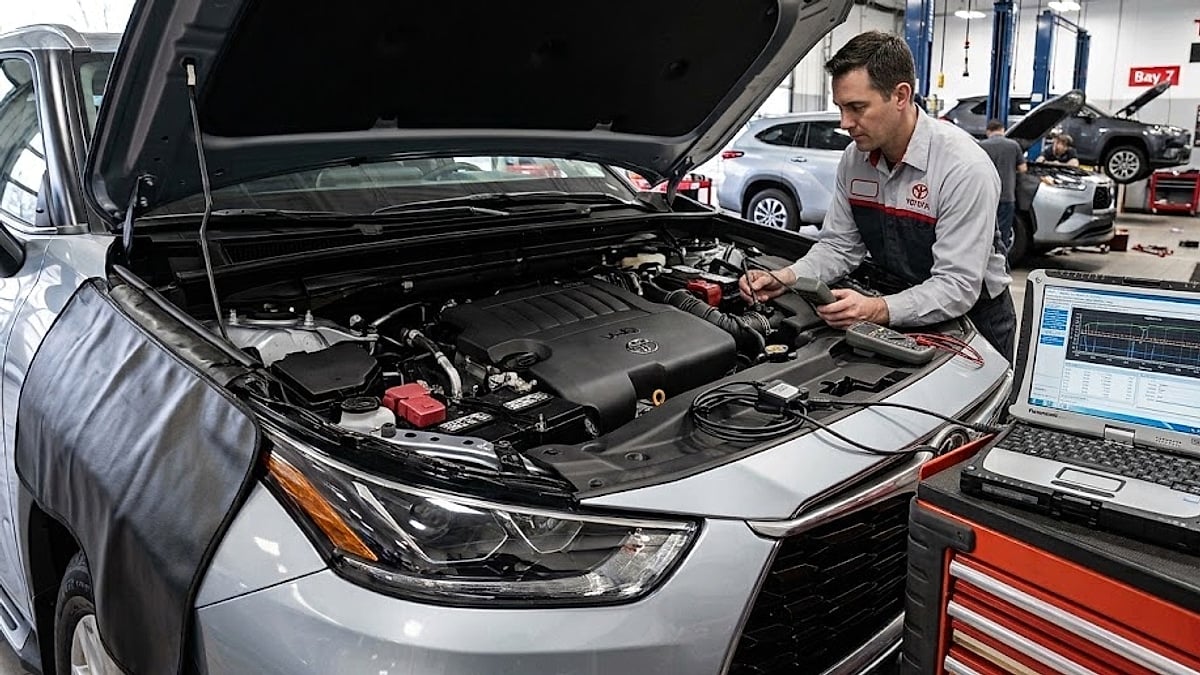
When the voltage drops during a two-hour update process, the internal memory chips in your expensive dashboard modules become corrupted, permanently bricking the entire component.
The 10-Second Defensive Check Every Owner Must Do
Fortunately, you do not need a degree in electrical engineering or thirty years of mechanical experience under the hood to stop a devastating deep-discharge event.
The ultimate consumer protection tool is a 10-second check that you must perform right at the service desk before handing over your keys for any mandatory digital campaign.
Look your service advisor straight in the eye and explicitly state:
"Please verify on the work order that a steady-state clean power supply or diagnostic battery maintainer is hooked up to my hybrid's 12V battery during the flash update."
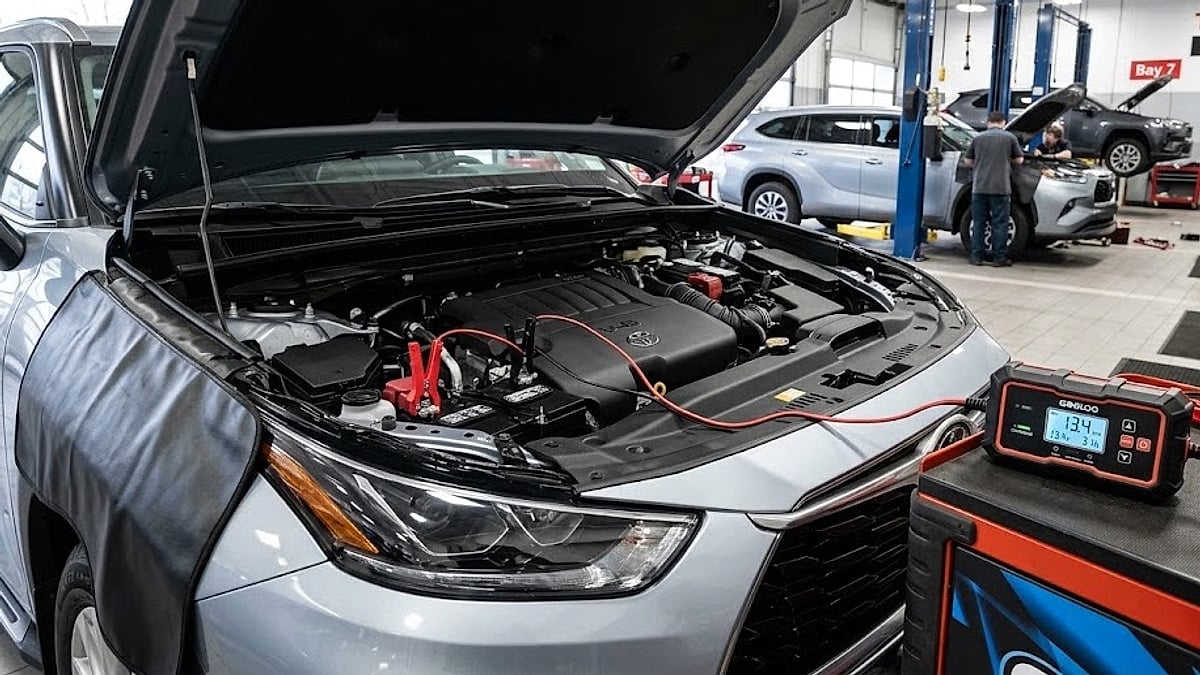
This simple, 10-second verbal directive forces the service department to document the safety protocol, removing any plausible deniability if a technician decides to cut corners on a busy afternoon.
If the dealership fails to follow this explicitly written instruction and subsequently destroys your vehicle's digital combination meter, they are entirely liable for the repair costs and the resulting rental car expenses.
The Hidden Danger of Weak Standby Voltage
The real reason so many hybrid electronics fail mid-update.
It comes down to the sneaky way these modern vehicles mask early battery degradation.
Unlike a standard gas vehicle that gives you a slow, sluggish crank when the battery is dying, a hybrid will start perfectly right up until the exact millisecond the 12V battery completely expires.
Because the vehicle relies entirely on the high-voltage hybrid pack to physically spin the engine, an owner will have absolutely no idea that their auxiliary battery has dropped to a dangerous standby voltage of 11.9 volts.
When a flat-rate technician initiates a complex, multi-gigabyte software reflash on a battery that is already severely degraded, the auxiliary cell lacks sufficient structural capacity to withstand the two-hour download without collapsing.
By demanding a dedicated 12V load test prior to any software installation, you can instantly pinpoint a weak auxiliary cell before it gets pushed off the edge by a data download.
Forcing Dealership Accountability
In my 30 years of mechanical experience solving dealership disputes, I have watched service centers aggressively protect their profit margins by blaming owners for expensive, sudden component failures.
As I previously reported in my investigative analysis on how Toyota Denies Factory Warranty Claims, dealerships routinely use consumer handling as an excuse to avoid eating the cost of expensive parts.
The exact same defensive strategy is playing out.
As in the case of modern electrical backlogs and bricked dashboard assemblies.
When a technician destroys a 12.3-inch screen by neglecting proper shop power protocols, the service department will frequently claim the module suffered an unpredictable "internal component failure" to shift the blame away from their own operational negligence.
By arming yourself with written proof that you requested a battery maintainer upfront, you effectively build an airtight consumer defense that forces the manufacturer to honor their repair obligations.
Digital Vigilance in the Service Bay
Modern connected-car ecosystems provide owners with an unprecedented window into what is actually happening to their vehicles when the garage doors close.
In my recent deep dive into vehicle electronic tracking, I exposed why a Ram 1500 instrument cluster is blacking out: hidden parasitic voltage drains that basic factory diagnostic scanners completely miss.
You can use your factory smartphone app.
Actively monitor your vehicle's security parameters while it sits in the dealership lot.
If your smartphone app alerts you that the vehicle's doors are unlocking and the windows are rolling down at odd hours of the night, it is a definitive sign that technicians are resetting the primary electrical system.
Keep a meticulous log of these digital timestamps and check your integrated dashcam footage the moment you get your keys back to ensure a busy shop didn't quietly swap out a dead battery on your dime.
It’s Your Turn! Have you ever caught a dealership service center trying to cover up a shop mistake on your vehicle? Tell us what you think and drop your story in the Add new comment link below!
Come back tomorrow… or check my Torque News Home Page for more of my informative Toyota Highlander news articles.
About The Author
Denis Flierl is a 14-year Senior Reporter at Torque News and a member of the Rocky Mountain Automotive Press (RMAP) with 30+ years of industry experience. Explore his full investigative reporting archives and technical guides at DenisFlierl.com.
Based in Parker, Colorado, Denis leverages the Rockies' high-altitude terrain as a rigorous testing ground to provide "boots-on-the-ground" analysis for readers across the Rocky Mountain region, California EV corridors, the Northeast, Texas truck markets, and Midwest agricultural zones.
A former professional test driver and consultant for Ford, GM, Ram, Toyota, and Tesla, he delivers data-backed insights on reliability and market shifts. Denis cuts through the noise to provide national audiences with the real-world reporting today’s landscape demands.
Connect with Denis: Find him on LinkedIn, X @DenisFlierl, @WorldsCoolestRides, Facebook, and Instagram.
Photo credit: Denis Flierl
Set Torque News as Preferred Source on Google
Follow us today...