
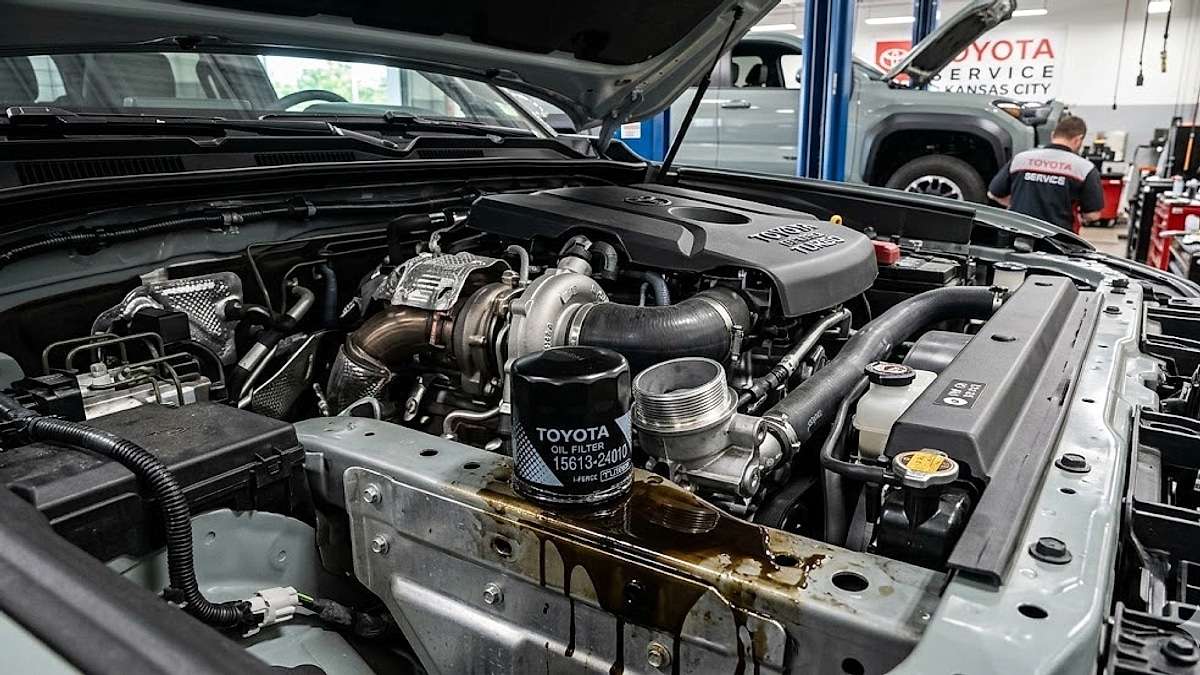

I have spent 30 years investigating catastrophic automotive failures, so when a firsthand report hits the technical forums about a major powertrain component literally falling off a truck, I pause.
This week, my investigation centers on Reed Buente, a 2024 Toyota Tacoma SR5 owner from Kansas City, Missouri. Writing on the 4th Gen 2024+ Toyota Tacoma Owners Facebook group page, Buente detailed a disturbing incident: "I had my oil changed at the dealer in November and have only put on 5,000 miles since then. Today, as I was driving, the oil filter came off. The threads on the filter showed no damage." He concluded, "I think the tech at the Toyota dealer forgot to tighten the filter all the way, and it finally worked its way off."
My immediate assessment, based on three decades of technical analysis, is that this is not a product failure, but a process failure. The key diagnostic clue here is that the filter threads are intact, indicating the filter was not unspun or stripped.
When I see 4th Gen Tacoma owners facing catastrophic failures after dealer visits, my immediate concern is a lack of training on the new platform. In a recent report I published, I found that similar patterns, where technicians struggled with new procedures, often lead to avoidable disasters, such as the early 2024 Tacoma turbocharger failures caused by oil blockage.
Another investigative piece from Torque News highlighted how technical oversight, even during routine maintenance, can severely compromise the long-term reliability of these sophisticated, high-performance engines, adding complexity to what technicians might consider simple tasks, which you can read in my full breakdown of why 10,000-mile intervals are a risk. If Toyota dealers cannot guarantee that a fundamental maintenance item like an oil filter stays attached, the brand's legendary durability is under immediate threat.
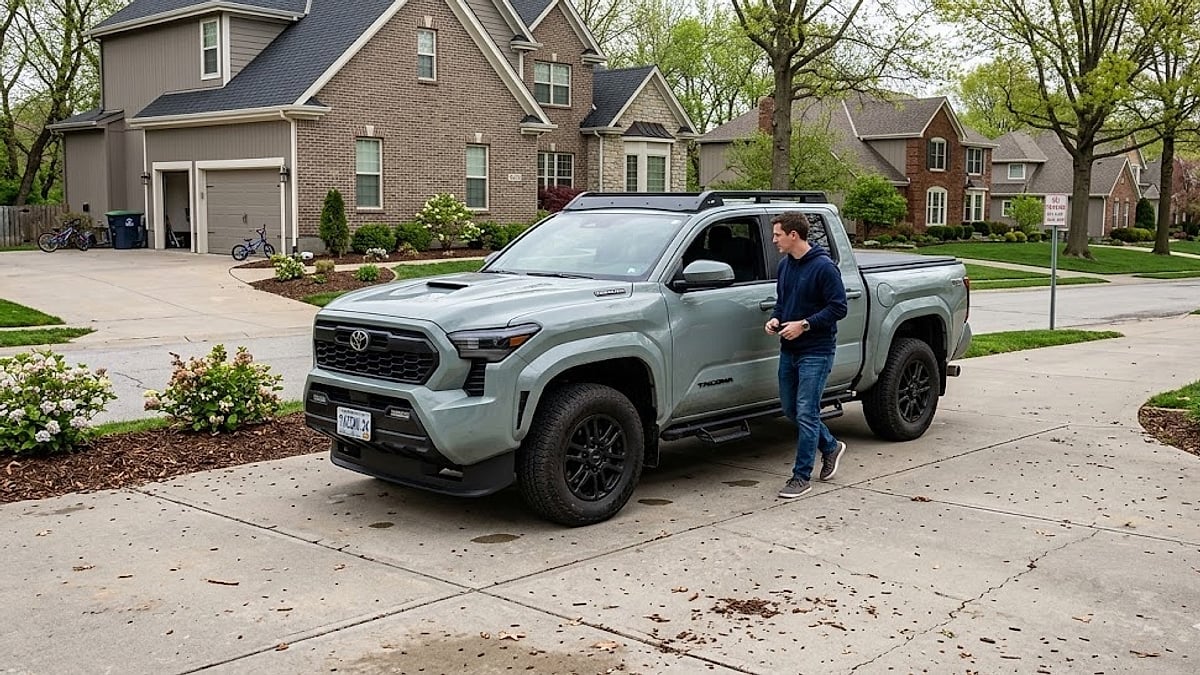
My Take: A Critical Breakdown in Dealer Service Protocol
My investigation points to a singular failure: a localized breakdown in dealer service competence. Based on my 30 years of technical analysis, a sophisticated engine like the 2.4L i-FORCE turbo doesn’t simply "work a filter loose" unless a primary safety measure was ignored.
The industry standard for canister filters is hand-tight plus a quarter to a half turn with a specialized wrench, which is often skipped by junior technicians who rely on "feel" rather than precision. More importantly, modern guidelines require two levels of verification: a visual seal confirmation and a post-start leak test. I strongly suspect neither occurred. This filter likely survived 5,000 miles on mere static friction, only to be finally undone by the intense thermal cycling and high-frequency vibrations unique to this new turbo-four engine.
External verification supports this "process over part" analysis. Leading filter manufacturers like FRAM confirm that an incorrectly installed filter is a leading cause of oil leaks and catastrophic detachment, particularly when a spin-on unit is left too loose. Furthermore, technical service experts at Mighty Auto Parts warn that engine damage can result from an incorrect or improperly installed oil filter, emphasizing that technicians have a primary responsibility to ensure the correct volume and filtration integrity during every service.
Field Observations from Owner Communities
I recently found a highly relevant discussion on r/ToyotaTacoma, where a verified master technician shared a critical observation regarding the new platform: "I have had to put a long screwdriver through an oil filter to get it off... just don't put them on that tight ever again," noting that over-tightening is common, but leaving them loose enough to "walk off" is the ultimate technician sin. You can read that full community debate here. That observation perfectly aligns with the Missouri case. If a junior tech didn't know how that filter "feels" when correctly sealed, they could easily walk away and declare it "hand-tight."
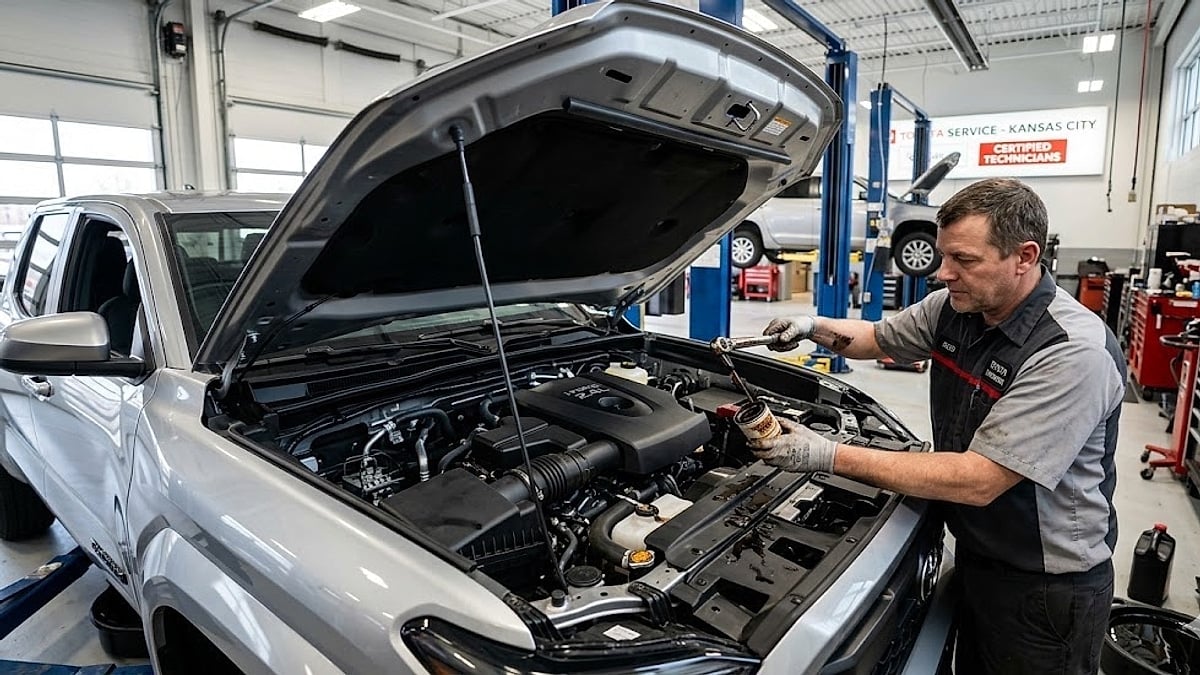
Another experienced mechanic chimed in on the r/mechanic subreddit to stress that visual verification is often skipped in modern high-volume service bays, writing, "If I were you, I'd take photos/document the condition... your engine is on borrowed time if it was running for minutes without pressure," found in this discussion on filters falling off overnight. This exact sentiment is what I believe happened to Reed Buente. There was no visual validation of the final step, a critical mistake.
From My View: Why "Good Enough" is No Longer Enough
Through my 30 years of investigative experience, I see this not as a vehicle defect, but as a predictable failure of "technician competence on a new platform." The 4th Gen Tacoma is a revolutionary machine, but a dangerous gap arises when a technician treats the 2.4L i-FORCE turbo as if it were the old 3rd Gen V6.
The 2024 model’s T24A-FTS engine introduces entirely different heat profiles, plumbing, and oil system dynamics. In my analysis, the tech likely followed a "Standard Operating Procedure" (SOP) that worked for a decade on older trucks but was woefully incomplete for this high-vibration, precise-torque environment. This wasn't a simple case of "forgetting to tighten it," it was a lack of platform-specific discipline. It is a localized, process-based error that carries massive implications for Toyota’s global service reputation.
What You Need To Know
To help you protect your investment, I have compiled this breakdown of the "How" and "Why" behind this specific type of service failure on the 2024 Tacoma.
- Process Failure, Not a Product Defect: The crucial technical evidence that the filter threads are intact means this was not a catastrophic failure of the engine itself. The component performed its job until it was no longer attached. The failure was the technician’s application of final torque.
- The Problem of the "Half-Seated" Gasket: On modern spin-on filters, the final rubber gasket seal must be fully compressed to withstand thermal expansion and vibration. It is common for a technician to tighten a filter by hand, feel the gasket make contact, and assume it is "tight" when it is only sealed, not torqued. It requires at least another half-turn with a dedicated tool to be secure for 5,000+ miles.
- Thermal Cycling & Vibration Are the Attackers: After the technician’s mistake, the engine was subjected to 5,000 miles of operation. The 2.4L turbo engine undergoes significant thermal cycling (extreme heat during boost, rapid cooling after shutdown). This, combined with the normal high-frequency vibrations from a large-displacement inline-four, creates the perfect "reverse-torque" scenario, slowly unwinding the filter over months.
- A Breakdown in Service Validation: The standard service procedure requires the technician to clean the filter housing area, install the new filter, start the vehicle, wait 1 to 2 minutes, and perform a detailed visual inspection for any signs of weeping (the first sign of a loose filter). A final QA inspector should check this as well. This process was clearly skipped.
Key Takeaways for Tacoma Owners
- Demand Verification, Not Just Service: When you take your 2024+ Tacoma in for an oil change, don’t just say "oil change." State: "I need platform-specific service. Please ensure the new filter is torqued to the correct spec, and ask for a 'paint-mark validation' showing it was checked."
- Conduct Your Own QA: Do not rely 100 percent on the dealer. After every service, pull your truck out of the driveway, let it idle for five minutes, and then use a flashlight to check the engine bay for any signs of weeping oil. Better yet, check the filter itself to see if you can see the paint mark or do a visual verification.
- This is an Isolated, Service-Based Error: Do not mistake this incident as a sign that the 4th Gen Tacoma engine is faulty. This is a maintenance-specific process failure that points to a quality-control gap in Toyota's retail dealer network, not a design defect in the truck itself.
- The Threads Prove Everything: If this were a product defect, the filter housing would have shattered, or the engine block threads would have sheared. The fact that the threads are perfect is an unambiguous "smoking gun" of technician negligence in the final torque stage.
Summary:
My 30-year investigation into this Missouri owner’s report confirms that the 2024 Toyota Tacoma’s oil filter failure was a localized service error, not a product defect. Because the filter threads remained undamaged, the evidence points directly to technician negligence regarding the 2.4L i-FORCE Turbo’s specific torque requirements. This "process error" that skipped mandatory post-service validation allowed the filter to vibrate loose during over 5,000 miles of thermal cycling. Ultimately, this case proves that modern, sophisticated engine architectures require platform-specific technical competence that legacy dealer protocols are currently failing to deliver.
A Wake-Up Call
In 30 years as an automotive investigator, I have seen major recalls start as a single owner reports in online forums. My conclusion in this 2024 Tacoma case is that it is a powerful wake-up call about dealer technical training, but it is not a design flaw in the truck. The engineering held up, but the service failed. Toyota must address these localized training gaps, and you, as the owner, must become your own final quality assurance inspector.
Tell Us What You Think
Now, I want to hear from you. Have you had a similar major failure right after dealer service on your 2024+ Tacoma or another new-vehicle platform? Did the dealer try to blame the part rather than their own process? Share your experience in the comments by clicking the red "Add new comment" link below!
About The Author
Denis Flierl is a 14-year Senior Reporter at Torque News and a member of the Rocky Mountain Automotive Press (RMAP) with 30+ years of industry experience. Based in Parker, Colorado, Denis leverages the Rockies' high-altitude terrain as a rigorous testing ground to provide "boots-on-the-ground" analysis for readers across the Rocky Mountain region, California EV corridors, the Northeast, Texas truck markets, and Midwest agricultural zones. A former professional test driver and consultant for Ford, GM, Ram, Toyota, and Tesla, he delivers data-backed insights on reliability and market shifts. Denis cuts through the noise to provide national audiences with the real-world reporting today’s landscape demands. Connect with Denis: Find him on LinkedIn, X @DenisFlierl, @WorldsCoolestRides, Facebook, and Instagram.
Photo credit: Denis Flierl
Set Torque News as Preferred Source on Google
Follow us today...







Comments
Really?!? You're telling me…
Permalink
Really?!? You're telling me there was no telltale oil leaking from a loose oil filter prior to falling off? It went from tight enough to not leak and fell off in ONE driving cycle? I call Baloney!!
Main culprit is the driver…
Permalink
Main culprit is the driver inattention. I notice every solitary drop a vehicle leaves behind in my driveway or garage and investigate immediately. No way this didn't give him warning signs all of a sudden. I've had this happen from a dealership before; it happens. I've gotten free oil changes when it does from them to make up for the inconvenience.