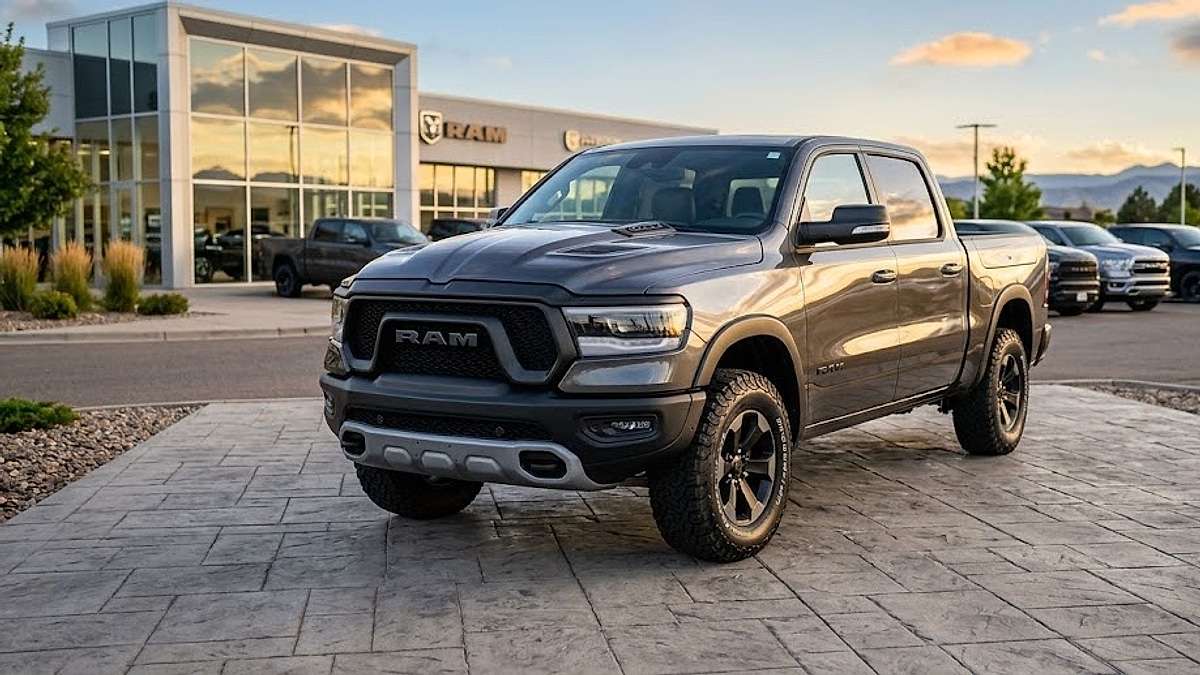

Twin turbos failed, cam phasers slapped, and the oil dipstick kept dropping.
For Chicago truck owner Michael Pasko, owning two consecutive Ford F-150s became a masterclass in mechanical frustration.
So, he sold them both and bought a 2026 Ram Rebel 5.7L V8.
Two F-150s, Double The Headaches
Most brand loyalty doesn't die in a single day, but rather bleeds away over thousands of miles of mechanical uncertainty.
For Michael Pasko of Chicago, Illinois, his faith in Ford’s iconic half-ton pickup was tested across two different engine platforms over a multi-year nightmare.
Michael Pasko from Chicago, Illinois, posted to the Ram Rebel Owners Facebook page:
“Just switched from two horrible Ford F-150’s, a 2013 3.5 and a 2020 5.0 (both had cam phaser issues, oil consumption issues, timing chain slap, and in the 3.5 one turbo was going bad). I did my research and believe the 2026 Ram Rebel 5.7L paired with the ZF8 was the best option! So far I’m impressed with my choice.”
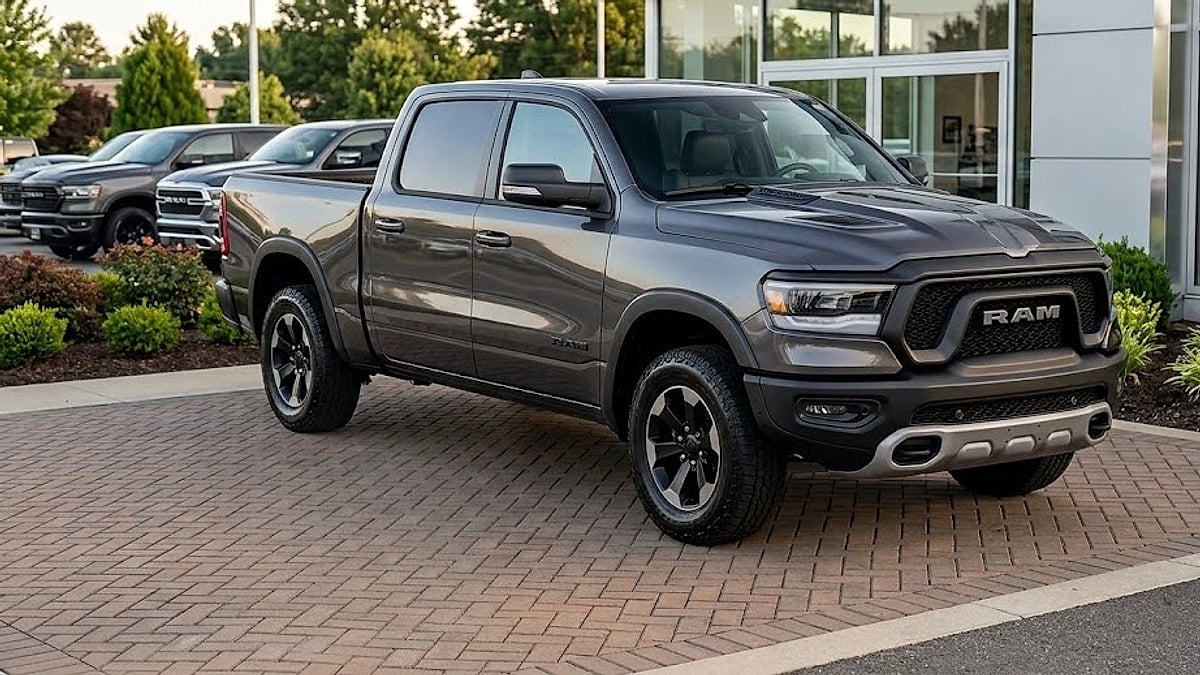
When an owner cycles through both a 3.5L EcoBoost twin-turbo V6 and a 5.0L Coyote V8 and encounters the exact same catastrophic valve train and oiling failures, it signals a deeper engineering vulnerability.
The infamous cold-start rattle on the 3.5L EcoBoost stems from variable camshaft timing (VCT) phaser degradation that Ford attempted to mitigate through technical service bulletins.
In fact, NHTSA Technical Service Bulletin documentation confirms that internal variable camshaft timing (VCT) units suffer from early locking-pin wear, causing severe startup rattle and timing slap.
The Hidden Root Cause Behind Ford's Twin Failures
Why would two completely distinct engine architectures a twin-turbo V6 and a naturally aspirated V8 share virtually identical mechanical defects?
The answer lies in how modern emissions calibrations interact with lightweight engine hardware under heavy-duty cycles. On the 3.5L EcoBoost, the primary failure point is the hydraulic locking pin within the cam phaser housing.
When engine oil degrades, or pressure fluctuates during hot shut-downs, oil drains out of the phaser body, causing the internal rotor to slam violently against the housing upon cold startup.
Meanwhile, the 2020 5.0L Coyote V8 suffers from a completely separate engineering misstep involving plasma-transferred wire arc (PTWA) cylinder wall coatings.
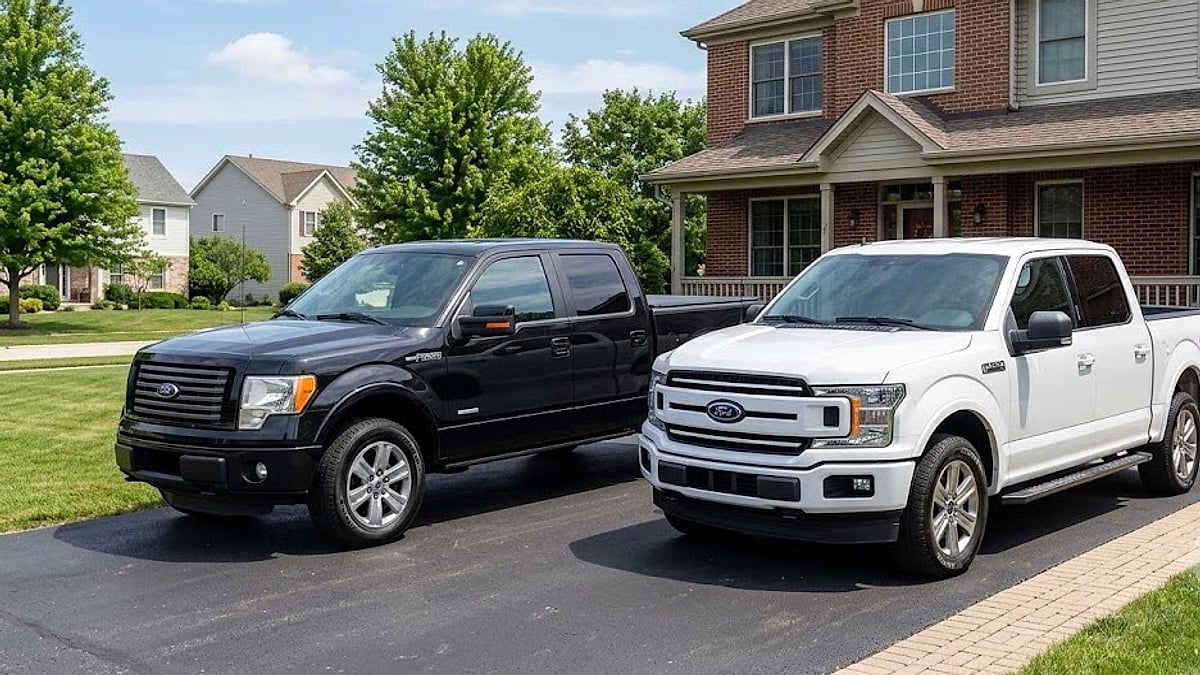
As I detailed in my investigation on why 2020 Ford F-150 5.0L owners face steep mechanical failure walls, PTWA liner wear combined with intense deceleration vacuum pulls oil past piston rings into the intake manifold.
This systemic fluid loss isn't just an inconvenience; it starves the top end of the engine, directly accelerating timing chain wear and phaser failure. This high consumption rate is far from an isolated incident or the result of improper maintenance on the owner's part.
Official legal filings in the Sauder Schelkopf Ford F-150 Class Action Lawsuit highlight that 2018–2021 5.0L engines burn oil at excessive rates, leaving combustion chambers vulnerable to oil starvation and total engine failure.
High Altitude & Severe Winters: The Regional Pressure Washer
Having covered the automotive industry for over three decades from Parker, Colorado, I have seen how demanding regional environments act as an accelerated stress test for mechanical weaknesses.
When driving across high-elevation passes like Colorado's I-70 corridor or battling severe Midwestern sub-zero freeze cycles in Chicago, engine oil viscosity breaks down at an alarming rate.
In high-load, high-altitude towing environments, oil temperatures spike rapidly while atmospheric pressure drops.
As I documented in my report examining why 2018+ F-150 powertrains suffer early breakdowns, thermal breakdown in lightweight 5W-20 and 0W-20 synthetic oils starves upper cylinder heads where variable valve timing units reside.
In cold regions like Chicago or the Rocky Mountains, thick oil on sub-zero mornings cannot reach the top-end phasers before dry friction inflicts permanent gouging on internal pins.
For truck owners who tow heavy gear or live in harsh climatic zones, these design choices turn everyday driving into a high-stakes gamble.
Why The 2026 Ram Rebel 5.7L HEMI + ZF8 Wins In Reliability
When Michael Pasko traded his pair of problematic F-150s, he didn't just switch brands; he switched mechanical philosophies.
The 2026 Ram Rebel 5.7L V8 relies on a time-tested overhead valve (OHV) pushrod architecture that inherently eliminates high-overhead complex dual-cam phaser wear points.
Pairing the legendary 5.7L HEMI V8 with the ZF 8HP75 8-speed automatic transmission creates what many fleet mechanics consider the most bulletproof drivetrain in the modern half-ton segment.
Unlike complex multi-clutch 10-speed transmissions that suffer from bushing migration and hydraulic pressure drops, the TorqueFlite ZF8 utilizes simple planetary gearsets and adaptive torque management.
By eliminating small-displacement twin-turbo lag and high-strung dual-overhead camshaft tensioner systems, Ram delivers raw, naturally aspirated torque with linear power delivery.
For an owner burned by chronic oil consumption and timing chain slap, moving back to a heavy-duty, naturally aspirated cast-iron block V8 provides immediate peace of mind.
What About RAM 5.7L Exhaust Manifold Bolts?
While the 5.7L HEMI V8 paired with the ZF8 transmission eliminates cam phaser slap and oil burning, prospective buyers often ask whether the classic 5.7L exhaust manifold bolt-snapping issue persists on new models.
For 2026, Ram updated the exhaust manifold heat shielding and utilized upgraded Grade 10.9 fasteners with thicker flange gaskets, effectively resolving the thermal expansion shear failures that plagued older 5.7L iterations.
Why Simple V8 Power Outlasts High-Tech Turbo Complexity
Modern truck buyers are realizing that peak horsepower figures on paper mean very little if the engine cannot make it past 60,000 miles without major internal surgery.
Michael Pasko’s move to the 2026 Ram Rebel proves that durability, mechanical simplicity, and proven transmission pairing will always trump over-engineered drivetrain complexity in the real world.
Tell Us What You Think! Have you experienced cam phaser rattle or oil consumption on your Ford F-150, or have you made the switch to a Ram Rebel?
Please leave your thoughts and experience in the comments by clicking the red Add new comment link below!
Don’t Leave Yet… Also check out my Torque News Home Page for more of my informative Ram 1500 news articles.
About The Author
Denis Flierl is a 14-year Senior Reporter at Torque News and a member of the Rocky Mountain Automotive Press (RMAP) with 30+ years of industry experience. Explore his full investigative reporting archives and technical guides at DenisFlierl.com.
Based in Parker, Colorado, Denis leverages the Rockies' high-altitude terrain as a rigorous testing ground to provide "boots-on-the-ground" analysis for readers across the Rocky Mountain region, California EV corridors, the Northeast, Texas truck markets, and Midwest agricultural zones.
A former professional test driver and consultant for Ford, GM, Ram, Toyota, and Tesla, he delivers data-backed insights on reliability and market shifts. Denis cuts through the noise to provide national audiences with the real-world reporting today’s landscape demands.
Connect with Denis: Find him on LinkedIn, X @DenisFlierl, @WorldsCoolestRides, Facebook, and Instagram.
Photo credit: Denis Flierl
Set Torque News as Preferred Source on Google
Follow us today...