


A comprehensive market evaluation across regional dealer networks reveals unprecedented valuation spikes for final-generation internal combustion and parallel-hybrid family crossovers. Following the manufacturer’s structural blueprint update, secondary wholesale data indicates a massive consumer migration toward proven mechanical platforms. This Torque News investigative report provides a tactical playbook for current owners and prospective shoppers navigating supply volatility driven by the brand's rapid electrification pipeline.
The Used Market Disruption Plan
The ground-level panic, uncovered by a buyer who shared her experience on this Highlander owner Facebook page and in our primary investigative report, in which sales personnel are leveraging inventory shifts to pressure families into premium price brackets, has officially crossed over from the new-car showroom directly into the secondary wholesale grid. As detailed in our foundational coverage, 2026 Toyota Highlander Buyer Warns Dealership Strategy Forces Shoppers To Choose Between 2027 Electric Model or More Expensive Grand Highlander, showroom floors are utilizing the upcoming electrification timeline as a high-pressure inventory-clearing mechanism. Now, the secondary consumer landscape is facing a parallel reckoning as buyers aggressively corner the market on the final runs of conventional gas models.
As an automotive industry advisor here at Torque News, we have tracked how corporate powertrain realignments cause structural shockwaves throughout the used-car ecosystem. Whenever an automaker changes a legendary vehicle's core mechanical formula, the public reacts by hoarding the remaining examples of the old, trusted configuration. The standard three-row crossover segment is experiencing this exact scenario right now. Consumers who reject first-generation battery platforms are rushing to purchase remaining allocations of internal combustion vehicles, driving up transaction values for late-model used units and leaving families exposed to severe dealer markups.
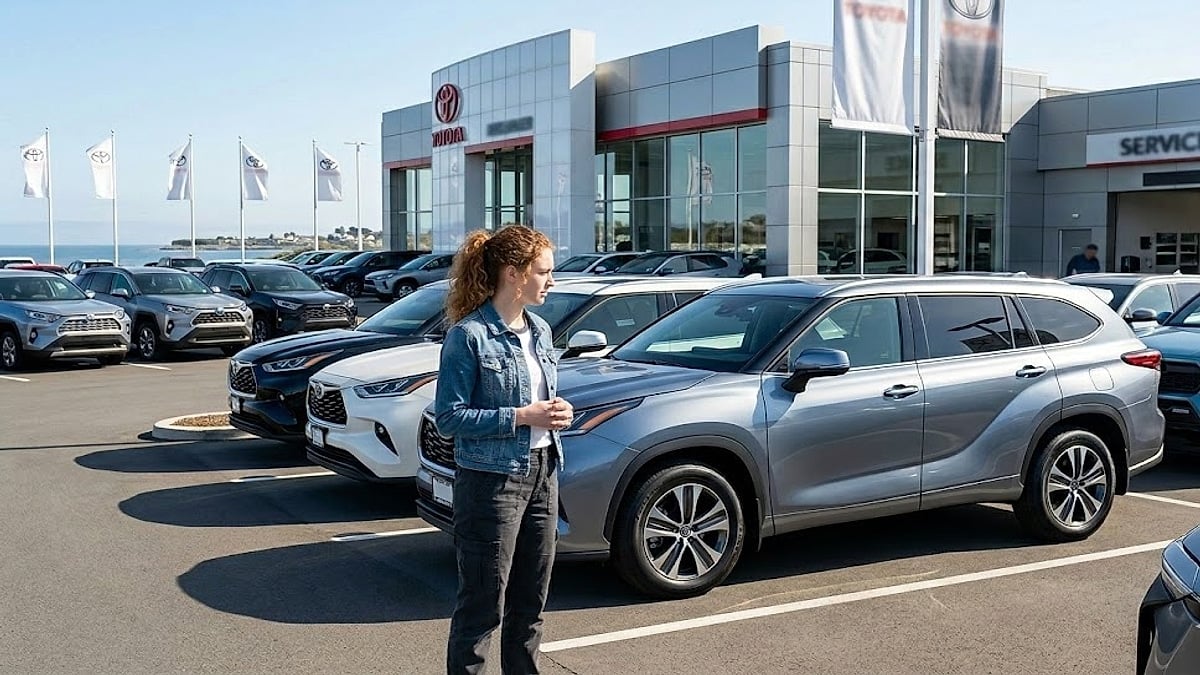
This artificial inflation requires an immediate, data-driven action plan. If you currently own a late-model family crossover or are trying to secure one before production lines halt completely, you can no longer approach the negotiation table with standard book-value expectations. The entire structure of the midsize family transport market is shifting, and you must understand how to protect your household capital.
Quantifying the Value Retention Shift
The underlying data supporting this massive surge in secondary market demand comes directly from national valuation authorities that track historical platform performance. When consumers consider long-term ownership costs, the historical reliability of a conventional system consistently outperforms that of unproven technology.
According to comprehensive five-year vehicle depreciation matrices compiled by automotive data specialist iSeeCars, the classic three-row family platform demonstrates exceptional value retention, maintaining a high five-year resale value of 63.7%. This places the conventional powertrain configuration far ahead of the industry average for large multi-passenger options. This baseline strength is intensifying as allocations for new gas variants shrink.
Three-Row SUV Value Retention Comparison (5-Year Projections)
- Traditional Platform Retention: 63.7%
- Segment Structural Average: 53.9%
- First-Generation BEV Segment: 35.0% - 42.0%

This structural premium is even more visible when looking at the larger platform variations entering the market. Long-term pricing charts from vehicle depreciation-tracking authority CarEdge confirm that the expanded-wheelbase variant is projected to retain a massive 70.41% of its original manufacturer sticker price after five years of real-world operation.
This high valuation floor means that salespeople are not just selling a larger footprint; they are forcing consumers into a premium asset class that requires significantly more upfront capital to access. The sudden removal of the standard gas variant leaves budget-conscious buyers with no choices in the new-vehicle pipeline, turning the used lot into a fierce battleground.
Real-World High-Altitude Market Realities
The impact of this production pivot is felt acutely in demanding geographic regions where challenging terrain alters expectations for vehicle performance. In my home testing grounds along the rugged Colorado mountain passes, a vehicle's mechanical layout is tested to its absolute limits under extreme thermal and barometric stress.
In my previous reporting tracking these ground-level trends, I exposed how severe mechanical complications can turn an unprotected purchase into a massive liability, noting that some owners are facing twelve-thousand-dollar replacement bills out of warranty. You can read the full technical Torque News diagnosis of these component vulnerabilities in Toyota Highlander Transmission Failures: $12,000 Repair Costs for 2020-2024 V6 Models Explained.
Mountain territory buyers require proven all-wheel-drive dynamics and reliable cabin heating systems that do not compromise vehicle range during freezing winters. In high-altitude environments, a traditional parallel-hybrid or internal-combustion setup handles sub-zero temperatures with negligible efficiency losses compared to pure-battery setups.

Consequently, used car networks in these mountain states are experiencing intense bidding wars for the final runs of conventional models. Dealerships are fully aware of this regional demand for density, and they are adjusting their trade-in sheets to under-allow trades while maximizing retail sticker prices on the back end.
Field Observations From Consumer Forums
The intense pressure on the secondary market is causing significant friction across owner networks, where real-world buyers are sharing strategies to bypass dealership pricing traps. Shoppers are increasingly relying on peer-to-peer data to verify if a vehicle's mechanical condition justifies the escalating asking prices.
In an active technical discussion on r/ToyotaHighlander, one consumer advocate detailed how the sudden production timeline shift is forcing buyers to rethink long-term ownership security:
“Even a Toyota isn't safe from tech-overload. Why this 2025 Toyota Highlander Hybrid Platinum owner is dropping $2,500 on a warranty despite the brand's ‘bulletproof’ reputation,” as documented in my report here.
Drawing on my decades of mechanical experience, I find that this focus on securing extended coverage proves that today’s buyers value mechanical certainty above all else. They are willing to pay a premium for a used platform, provided they can insulate themselves from expensive electronic component failures down the line.
Another owner highlighted the direct defensive steps required when dealing with finance offices that are profiting from this market confusion. I dissected a case study from Madison, Wisconsin, in which an owner successfully negotiated a $3,000 dealer quote down to $1,400 for a Platinum 10-year/100,000-mile plan. This Torque News report identifies the "Refund Trap" associated with high-mileage trade-ins and provides actionable data on how transparency in dealer quotes can save consumers thousands.
This demonstrates that consumer advocacy is your single best defense against dealership manipulation. When the showroom floor realizes that you understand the true market value of the mechanical platform and that you know how to negotiate the secondary items, their ability to leverage structural scarcity disappears.

Key Takeaways
- Leverage your current conventional three-row crossover’s trade-in value by obtaining independent wholesale bids before entering a dealership showroom floor.
- Negotiate auxiliary service contracts using real community data points rather than accepting the initial high-markup options presented by the finance department.
- Protect your long-term vehicle equity by cross-referencing regional asset valuations to avoid paying inflated regional premiums in high-demand territories.
- Audit the permanent service history of any late-model conventional vehicle to ensure all manufacturer service bulletins have been completed before finalizing the transfer.
Should You Trade Your Conventional Crossover Now or Hold It Long-Term?
The immediate dilemma facing current owners is deciding whether to cash in on these historic value spikes or preserve their vehicle for the long haul. If your current vehicle is paid off and possesses a fully documented service history, holding the asset is almost always the smartest financial move.
The value of a dependable, non-electric three-row vehicle will continue to climb as pure internal combustion options vanish from factory order sheets. By maintaining your current platform, you avoid taking on a new high-interest loan and steer clear of the initial depreciation drop that hits first-generation technology.
The Highlander Buyers Action Plan
To win in this volatile marketplace, you must execute a calculated defense strategy. If you are selling, decouple your trade-in transaction entirely from your new vehicle purchase by obtaining certified cash offers from independent buying services.
If you are buying, expand your search beyond high-demand zones to find dealerships that aren't aggressively marking up their remaining conventional stock. Never let a sales script convince you that a vehicle is your last chance at mobility; logic and data must always drive your signature.
Tell Us What You Think
Have you noticed your local used car lot adjusting prices on traditional family vehicles over the past few weeks? Are you planning to hold onto your conventional crossover to avoid the electric transition?
Let us know your thoughts and share your local market observations by leaving a comment using the red "Add new comment" link below. Your direct insights help us expose dealer pricing games across the nation.
About The Author
Denis Flierl is a 14-year Senior Reporter at Torque News and a member of the Rocky Mountain Automotive Press (RMAP) with 30+ years of industry experience. Explore his full investigative reporting archives and technical guides at DenisFlierl.com. Based in Parker, Colorado, Denis leverages the Rockies' high-altitude terrain as a rigorous testing ground to provide "boots-on-the-ground" analysis for readers across the Rocky Mountain region, California EV corridors, the Northeast, Texas truck markets, and Midwest agricultural zones. A former professional test driver and consultant for Ford, GM, Ram, Toyota, and Tesla, he delivers data-backed insights on reliability and market shifts. Denis cuts through the noise to provide national audiences with the real-world reporting today’s landscape demands. Connect with Denis: Find him on LinkedIn, X @DenisFlierl, @WorldsCoolestRides, Facebook, and Instagram.
Photo credit: Denis Flierl
Set Torque News as Preferred Source on Google
Follow us today...





Comments
Yea… the new EV won’t drive…
Permalink
Yea… the new EV won’t drive the resell value of the gas models nor the hybrids down. The uncertain UA80 is what will drive the resell value to lower on gas models.
With oil above $100 and…
Permalink
With oil above $100 and likely to stay that way for quite a long time, and petrol/diesel prices now so high (assuming you can even get some as pumps run dry), I find this article and the second hand market for these large ICE cars nonsensical. I expect it’ll be a very short lived phenomenon.
Not sure I understand what…
Permalink
Not sure I understand what Toyota is thinking. The brought out the Grand Highlander that is larger with slightly worse fuel economy than the regular Highlander and then they decided to switch the regular Highlander to all electric.