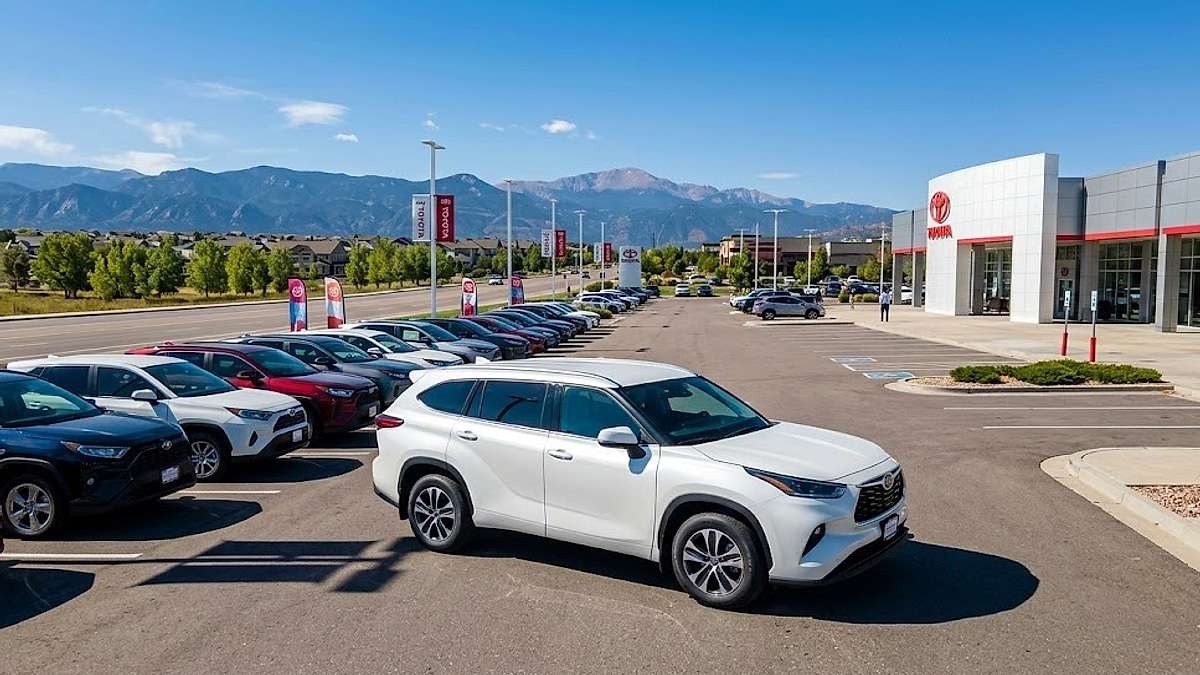

If you are currently shopping for a used Toyota Highlander, specifically a 2020 or newer model, you need to stop what you are doing and listen closely. While I have spent decades in the automotive industry and 15 years reviewing vehicles in the thin air of Parker, Colorado, I have never seen a gap between a manufacturer's reputation for reliability and a specific mechanical failure quite like this. The "Answer" you are looking for is simple but expensive: avoid the 2020 through 2022 V6 gas models unless you have a $12,000 contingency fund for a total transmission replacement. This mechanical vulnerability, often called the "whine of death" by those in the know, is the most shocking discovery in the 2026 pre-owned market. My investigation reveals that the UA80E 8-speed automatic transmission is failing as early as 60,000 miles, leaving owners with a massive bill just as their powertrain warranty expires.
We are seeing a surge in owners reaching out for help, similar to the question from Pamela Parker from North Carolina on the Toyota Highlander Owners Club Facebook page. She asked, “Which Toyota Highlander model and year should I avoid when buying?” Pamela, based on my decades of testing these SUVs on the steep grades of the Rockies, I can tell you that the shine on the Toyota badge doesn't mask the gear-train whine currently plaguing the V6 models. We need to distinguish between the legend of Toyota reliability and the reality of modern engineering under stress.

I recently scrutinized the data surrounding these 8-speed units, and the results are troubling. In my previous report on Toyota Highlander reliability, I noted that while the V6 offers great power for mountain climbing, the internal bearing wear in the 2020–2022 gearboxes is a ticking time bomb. This matches findings from external authority sources as well. According to Consumer Reports' reliability data, the 2021 model year has faced significant scrutiny for "minor and major transmission" issues, where their analysis shows that users reported erratic shifting and premature component wear. To put this in perspective, Consumer Reports states that "reliability has dipped below the brand's average for these specific production windows."
The cost of these failures is where the story gets messy. Many owners assume a simple software flash will fix a hesitant shift, but my 30 years of experience tells me otherwise. I have documented this in my investigative piece on the hidden costs of Toyota Highlander ownership, where I explained how a $12,000 replacement is often the only remedy because the UA80E is a "sealed" unit that most dealerships refuse to rebuild. This is substantiated by federal safety and defect data. In NHTSA's official complaint database for the 2021 Highlander, multiple owners have filed formal grievances about powertrain surges and sudden loss of motive power. One specific NHTSA report notes that "the vehicle experienced a complete transmission failure while at highway speeds," a terrifying prospect for any family commuter.

The Rocky Mountain Torture Test and the Software Glitch
Testing vehicles at 6,000 feet in Parker, Colorado, reveals cooling and engine stresses that flat-land tests miss. When we take a 2020 V6 Highlander up the I-70 corridor, the constant hunting between 7th and 8th gear creates immense heat soak. I’ve noticed that the transmission logic is programmed so aggressively for fuel economy that it constantly "slips" the torque converter to stay in a higher gear. Over time, this causes metal-on-metal wear, producing a high-pitched whine. If you hear a sound like a distant siren when you let off the throttle, your transmission is likely toast.
I also want to point out the 2020 "first-year" electrical gremlins. Beyond the transmission, the fuel tank design on the 2020 models was a disaster. Many owners found they could only pump 12 gallons into a 17-gallon tank. We have investigated this extensively, and while there was a "fix," many used units on the market today still haven't had the updated fuel sender unit installed. If you are buying used, check the VIN for any outstanding service campaigns before you sign that check.

Field Observations from Owner Communities
I spend a lot of time "in the trenches" with owner groups because that is where the real-time data lives. In a recent technical discussion on r/ToyotaHighlander, several owners noted that the noise starts subtly before catastrophic failure. One owner highlighted the design's vulnerability, noting: "My 2021 Highlander V6 started making a high-pitched whining noise at 55k miles, and the dealer told me the entire 8-speed transmission needs to be swapped for $11,500," which you can read in the full discussion here.
From my experience, this aligns with how the high-torque V6 interacts with the UA80E's planetary gear set. When the bearings in the counter-drive gear start to pit, the noise is the first warning sign. Another owner shared their frustration with the 2020 model's drivability, stating: "The stop-start system on the 2020 models is so aggressive it feels like the car is stalling out at every light, and there's no permanent way to disable it," found in this Reddit thread. My professional analysis suggests that this constant engine cycling puts additional strain on the transmission pump, accelerating the wear we are seeing in high-mileage units.

Summary of the 2026 Highlander Market
To ensure you are getting a safe and reliable vehicle, you must look beyond the initial "Consumer Reports" score and examine the powertrain specifics. My investigative findings for May 2026 are as follows: The 2020–2022 V6 gas models are the highest risk due to the UA80E transmission failures and fuel tank defects. Conversely, the Highlander Hybrid remains the "gold standard" because its eCVT transmission is mechanically simpler and has proven to be bulletproof even in high-altitude environments. Furthermore, as of May 4, 2026, a massive second-row seat-back recall is in effect; ensure any vehicle you purchase has been inspected for this structural safety defect.
Is the Grand Highlander Also at Risk?
As more buyers move toward the larger Grand Highlander, many are asking whether the same transmission issues have carried over to the new platform. The answer is a bit of a relief. The Grand Highlander Hybrid MAX uses a completely different, heavy-duty 6-speed automatic designed for higher torque, which so far has not exhibited the "whine of death." However, the base gas-only Grand Highlander models still utilize a variation of the 8-speed gearbox. If you need the extra room, my advice is to stick with the Hybrid MAX or the standard Hybrid to avoid the transmission headaches that have plagued the smaller Highlander for the last five years.
The Final Verdict on Your Next SUV Purchase
Navigating the used car market requires more than just looking at a clean Carfax; it requires an investigator who knows how these machines behave when the warranty disappears. While Toyota is a fantastic brand, even the best manufacturers have "off" years, and the early fourth-generation Highlander V6 is unfortunately one of them. By choosing the Hybrid or the newer Turbo-4 models introduced in late 2023, you are bypassing the most expensive repair bills in the industry and ensuring your family stays on the road rather than in the service lounge.
How About You? Have you heard the "whine" in your 2021 V6, or did you make the switch to a Hybrid after hearing about these gearbox issues? We want to hear your story to help other buyers in our community. Please leave a comment in the red Add new comment link below.
About The Author
Denis Flierl is a 14-year Senior Reporter at Torque News and a member of the Rocky Mountain Automotive Press (RMAP) with 30+ years of industry experience. Explore his full investigative reporting archives and technical guides at DenisFlierl.com. Based in Parker, Colorado, Denis leverages the Rockies' high-altitude terrain as a rigorous testing ground to provide "boots-on-the-ground" analysis for readers across the Rocky Mountain region, California EV corridors, the Northeast, Texas truck markets, and Midwest agricultural zones. A former professional test driver and consultant for Ford, GM, Ram, Toyota, and Tesla, he delivers data-backed insights on reliability and market shifts. Denis cuts through the noise to provide national audiences with the real-world reporting today’s landscape demands. Connect with Denis: Find him on LinkedIn, X @DenisFlierl, @WorldsCoolestRides, Facebook, and Instagram.
Photo credit: Denis Flierl
Set Torque News as Preferred Source on Google
Follow us today...