

Is a new car worth $8,400 more a year than the one already in your driveway?
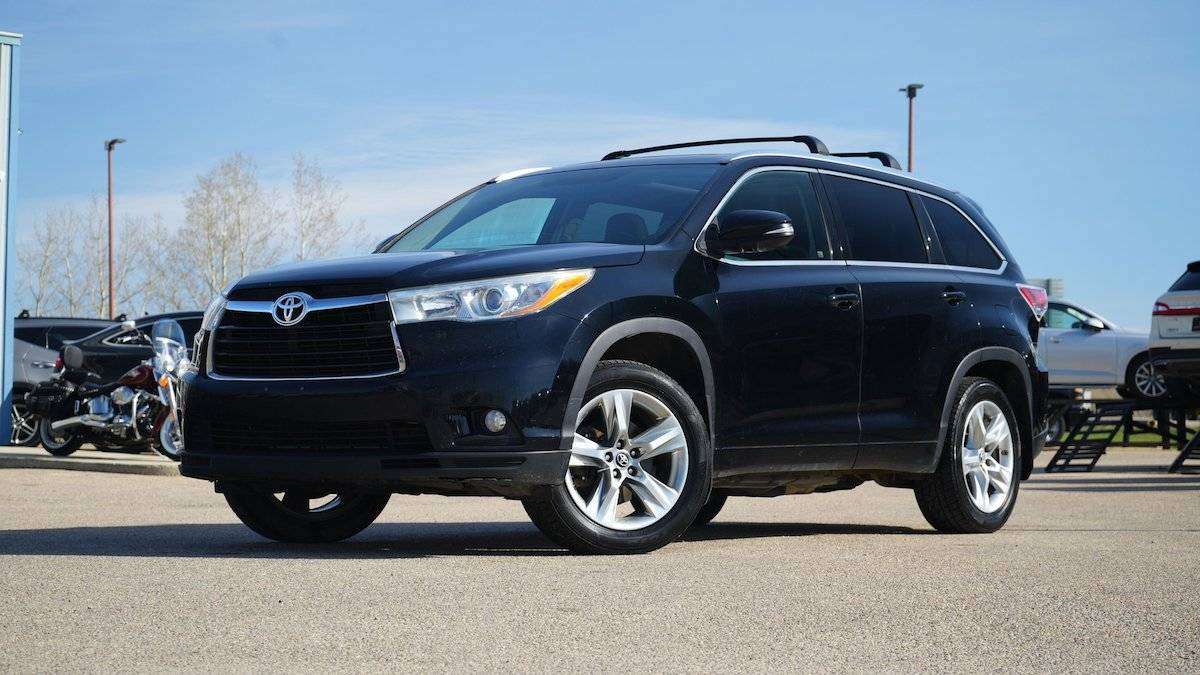
Imagine standing in your driveway, staring at a 10-year-old Toyota Highlander with a few scratches and a rear hatch that occasionally acts up, wondering if it is finally time to trade it in for a shiny new model. Then you do the math and realize that keeping your reliable, paid-off vehicle could save you a staggering $8,400 every single year compared to the soul-crushing $800 monthly payments of a new $52,000 replacement. Wayne Holmes recently shared his reality check for every Toyota owner, proving that while an older Highlander might not be perfect, the financial freedom it provides certainly is.
Wayne Holmes on the Toyota Highlander Owners Club Facebook page says,
“My 2016 Highlander isn't perfect, but it's my third Toyota product. So, to all the complainers, do the math: If you buy a new one, it's about $52,000 or more. Even if you pay the tax and fees and finance it with Toyota, it's about $800/mo for 6 years. Or $9600 a year. You still need tires, an oil change, and brakes. Now my 2016 Highlander, I bought used in 2019 for about $26,000...or $400/mo. It's paid off, and I have all my records. Right now, I've averaged $ 1,600 per year for repairs and maintenance. I know by doing oil changes at 3,000 miles and transmission fluid every 30,000 miles, I'll easily get 250,000 miles out of this car. (My Camry went 19 years and 276K miles). So, considering payments, taxes, etc., I'll be happy to shell out $5 or $6K knowing things will go on for years. I know radiators will fall apart after 8-10 years (aluminum and plastic), the rear hatch actuators are junk, and I wear out tires every 4 years, but this is a large functional SUV, and if you don't know, still one of the most popular despite prices up in the $60,000 range. All you have to do is research any cheaper brand online and find horror stories of blown engines at 80,000 miles or less, or worse. It's still cheaper to keep fixing until it's really old like me.”
The Million Dollar Math of the Used Toyota Highlander
As a Senior Reporter at Torque News with over 30 years in the automotive industry, I have seen every trick in the book used to get drivers into new car seats. We are constantly bombarded with the idea that "new is better" and "maintenance is a headache," but the reality is often found in the cold, hard numbers Wayne shared above. When you look at the 2016 Toyota Highlander, you are looking at one of the last "golden era" SUVs before transmissions became overly complex and prices spiraled out of control. Many experts agree that the Toyota Highlander will cost about $6,225 in maintenance and repairs over its first 10 years of service, significantly lower than the industry average for popular SUV models, according to CarEdge.
This durability is exactly why I frequently tell my readers that the "new car smell" is the most expensive scent in the world. I recently reported on a case where a newer model owner was shocked to find that their 2021 Highlander with just 65,000 miles needed a $10,000 transmission replacement, proving that newer does not always mean more reliable. When you compare a potential $10,000 bill on a car you are still paying $800 a month for versus a $1,600 annual maintenance bill on a paid-off 2016 model, the winner is clear. Keeping an older, well-maintained Toyota is a strategy for long-term wealth because it allows you to invest the thousands you save rather than handing them over to a finance company.
Navigating the 2016 Highlander "Pain Points"
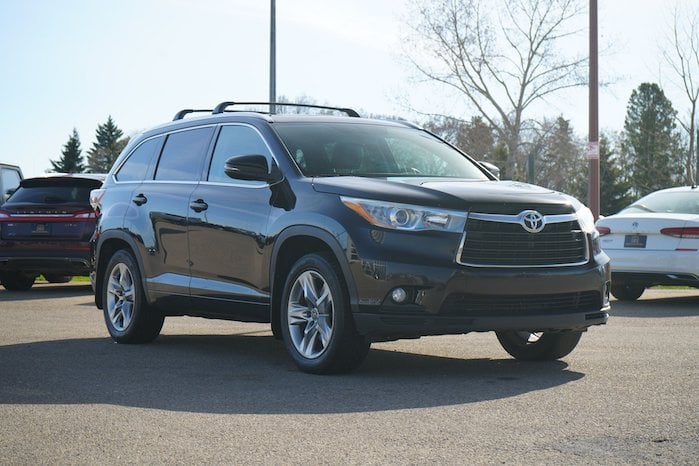
To be clear, no vehicle is truly bulletproof, and the 2016 Highlander has its specific quirks that every owner should prepare for. One of the most common issues involves the cooling system, where owners are warned to inspect the radiator and condenser for leaks frequently because these plastic and aluminum units are prone to failure around the decade mark. Wayne mentioned the radiators falling apart, and he is spot on; if that radiator fails and causes an overheat, your "cheap" maintenance plan evaporates instantly. My 30 years of experience tell me that replacing a $500 radiator proactively is infinitely smarter than replacing a $7,000 engine later.
I have spent decades tracking these specific Toyota failures to help you stay ahead of the curve. In a deep dive into ownership expenses, I analyzed how the Toyota Highlander is one of the brand's most expensive models to maintain over ten years, yet it still remains a bargain compared to the staggering cost of a new car note. While my reporting shows that you will spend more on a Highlander than a Corolla, the annual expenditure is still a drop in the bucket compared to the $10,000 annual hit you take with a new loan. The rear hatch actuators Wayne mentioned are a known nuisance, and while they are frustrating, they do not leave you stranded on the side of the road. It is about prioritizing mechanical integrity over minor electronic conveniences to keep your budget intact.
Best Practices for 250,000-Mile Longevity
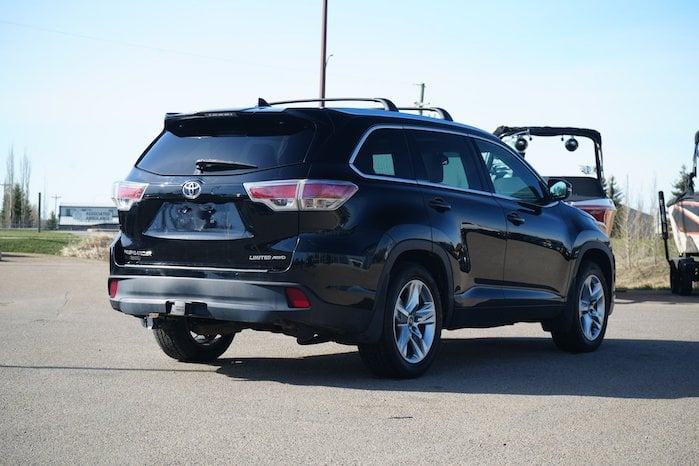
If you want to follow in Wayne’s footsteps and drive your Highlander into the sunset with 250,000 miles on the odometer, you cannot follow the "minimum" maintenance schedule found in the glovebox.
1. Toyota often lists transmission fluid as a "lifetime" fluid under normal conditions, but in the real world, that is a recipe for disaster. Wayne’s 30,000-mile transmission fluid interval is exactly what I recommend to my readers. This prevents the "strawberry milkshake" of death, where coolant and transmission fluid mix, a nightmare that has claimed many otherwise healthy SUVs.
2. Beyond the transmission, you must stay on top of the V6 engine's specific needs. The 3.5L engine in the 2016 model is a workhorse, but it requires clean oil to keep the variable valve timing (VVT-i) system happy. Wayne’s 3,000-mile oil change interval might seem "old school," but with the direct injection and heat cycles these engines endure, it is cheap insurance.
3. Also, do not ignore the spark plugs; on these V6 models, the rear bank is difficult to reach, leading many owners to skip them, which eventually causes ignition coil failure and poor fuel economy.
Key Takeaways for Highlander Owners
- The $10K Gap: A new Highlander costs roughly $10,000 in payments and depreciation over its useful life, while a paid-off 2016 model averages $1,600 in maintenance.
- Proactive Cooling: Replace your radiator every 8 to 10 years, regardless of whether it is leaking, to avoid a catastrophic engine overheat.
- Fluid is Life: Change transmission fluid every 30,000 miles and oil every 3,000 to 5,000 miles to reach the 250,000-mile club.
- Ignore the Small Stuff: Faulty hatch actuators and "junk" interior plastics are annoying but do not impact the vehicle's core reliability.
What Highlander Owners Are Saying
The community feedback on the 2016 model is overwhelmingly positive, with many owners doubling down on the "keep it forever" philosophy. One Reddit user noted the reliability of this specific generation, stating, "I have a 2016... bought it new and it now has 155k. No issues at all aside from typical wear items," which reinforces Wayne's data.
Another owner highlighted the financial logic of the older models, mentioning, "It's a Toyota... you'll get another year out of it without even trying. I don't blame you for wanting to wait. Interest rates are bonkers right now," found in a discussion about whether to trade in for a newer version.
A Sweet Spot In Automotive Value
The 2016 Toyota Highlander represents a sweet spot in automotive value. It offers modern safety and enough technology to stay relevant, but it lacks the eye-watering price tag and the complex turbocharged or hybrid systems of the newest generation, which can lead to five-figure repair bills. By following a strict maintenance schedule and accepting that an older car will occasionally need a repair, you can save enough money to buy your next car in cash. Wayne Holmes is right: the math does not lie, and in this economy, the cheapest car you will ever own is the one already sitting in your driveway.
What Would You Do? Would you rather pay $800 a month for a brand-new warranty or bank that money and keep your paid-off Toyota on the road? Click the red link below to write your comment and join the community in sharing experiences.
Next Up: Think your Toyota is invincible? I recently uncovered why even the most "bulletproof" models are facing a hidden transmission nightmare that could cost you $10,000 if you aren't careful.
Denis Flierl is a Senior Reporter at Torque News with over 30 years of hands-on experience in the automotive industry. Having served as a professional test driver and industry consultant for major automakers such as Chevrolet, Ford, Toyota, Honda, and Tesla, Denis provides a "boots-on-the-ground" perspective that goes beyond standard reporting. Since joining Torque News in 2012, he has specialized in cutting through market noise to deliver data-backed analysis and real-world owner stories. His work focuses on navigating the transition to EVs and the shifting automotive market.
Have a tip or question for Denis? > Engage with him directly on LinkedIn for industry analysis, or follow his latest updates on X @DenisFlierl and @WorldsCoolestRides. You can also find his latest car features on Facebook and Instagram.
Photo credit: Denis Flierl
Set Torque News as Preferred Source on Google
Follow us today...






Comments
I was told the 2016…
Permalink
I was told the 2016 Highlander 2GRFE engine was an MPI engine not direct injection.