
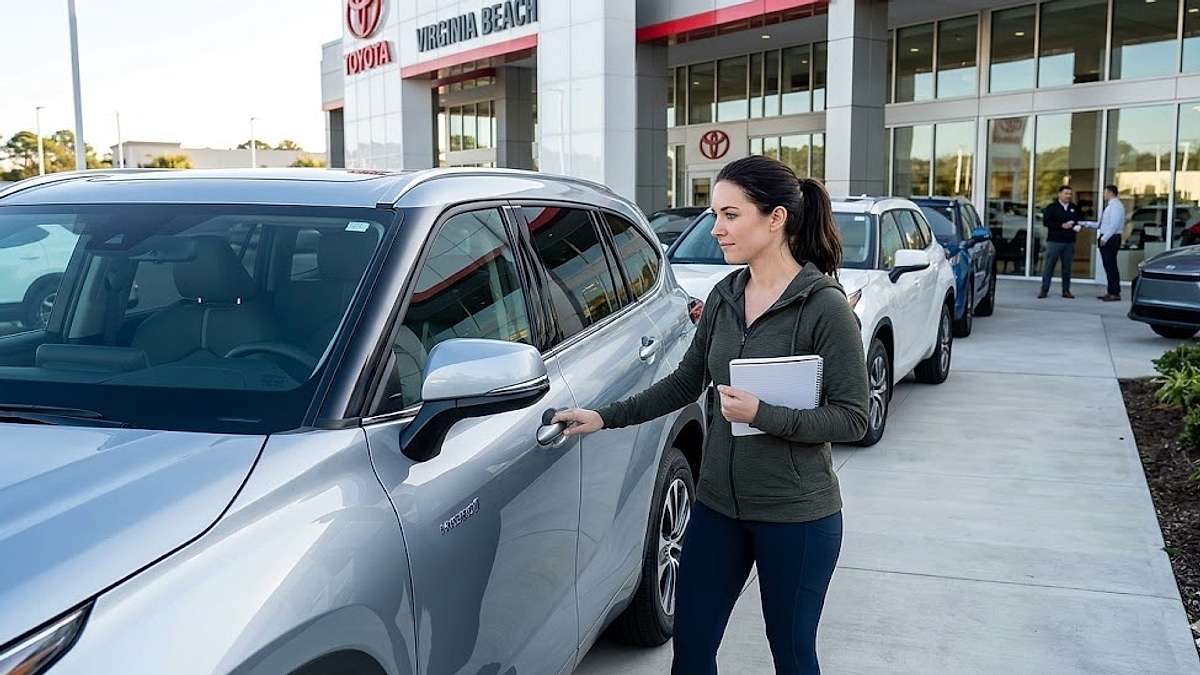

A Torque News investigative analysis of recent vehicle allocation data reveals that dealership sales staff are leveraging Toyota’s official 2027 electrification schedule to create artificial supply scarcity. Field evidence shows sales personnel are telling buyers that the traditional internal-combustion Highlander has been discontinued, using this panic to manipulate consumer choices. This forensic report exposes the structural disconnect between manufacturer platform updates and floor-level sales tactics designed to force allocations into premium inventory segments.
The Root Cause Behind the Floor-Level Panic
A structural realignment is happening inside Toyota manufacturing facilities, but what is happening on the dealership floor looks less like corporate strategy and more like high-pressure sales manipulation. As an automotive consultant and technical advisor for Torque News, I have watched how major powertrain transitions create massive waves of consumer confusion. Right now, dealerships are exploiting Toyota’s upcoming platform split to panic buyers into signing contracts on higher-margin inventory.
The foundational truth behind this investigative piece landed directly in our community radar when Angela Johnston from Virginia Beach, Virginia, posted an urgent warning to the Toyota Highlander Owners Club Facebook page. She detailed her direct experience after visiting a local showroom to inspect a newly arriving model.
“I went to the Toyota dealership today to look at a new 2026 Highlander coming in. The salesman said they were being discontinued after 2026. That means all the used ones will probably be super expensive after this year. I definitely need to find one soon, then. He told me Toyota did away with the Highlander gas models because they are making them all electric and focusing on selling the Grand Highlander if people don’t want electric. So that’s Toyota’s strategy now?”
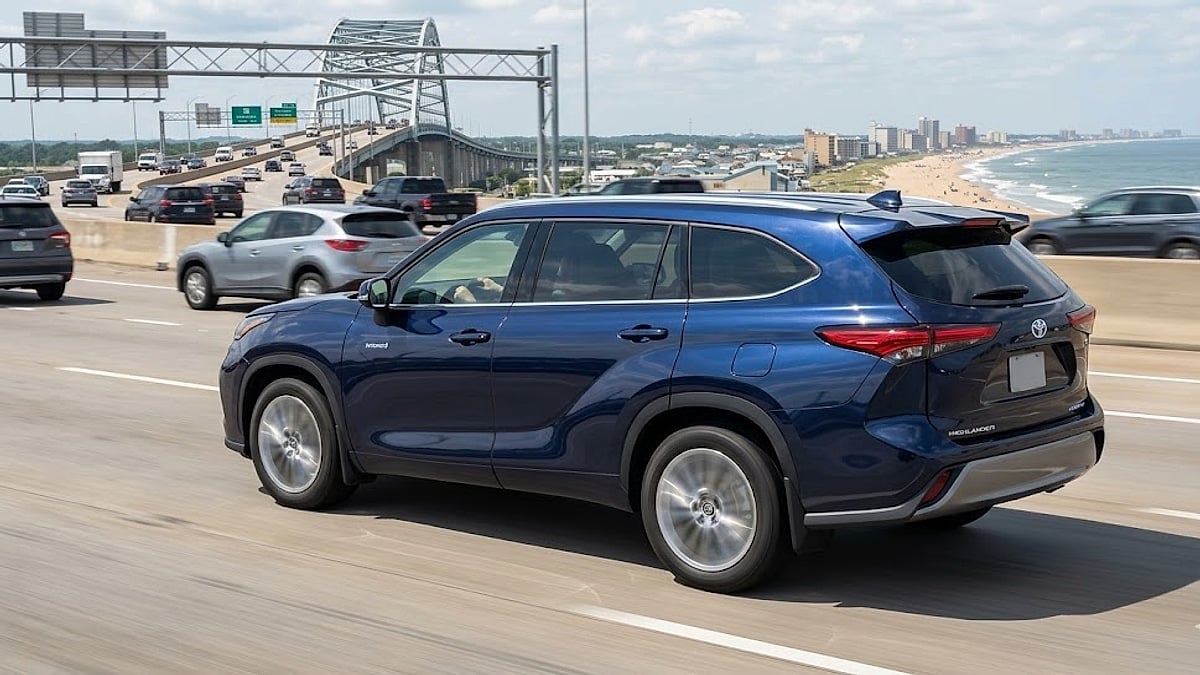
To get to the bottom of what is actually happening, we must separate dealership sales scripts from real manufacturing engineering. The salesman told Angela a half-truth wrapped in an inventory-clearing tactic. Toyota is not discarding the midsize family buyer, nor are they leaving internal combustion enthusiasts stranded without a choice. They are executing a physical split of their three-row vehicle architecture.
A corporate announcement confirmed that the standard Highlander nameplate is transitioning exclusively to a battery-electric vehicle platform for the 2027 model year, moving its production line out of Princeton, Indiana, to accommodate a massive tooling overhaul. For consumers who demand traditional internal combustion engines or parallel-hybrid configurations, the manufacturer is anchoring those conventional powertrains solely within the larger Grand Highlander footprint.
The immediate result on the ground is a coordinated effort by sales staff to use this formal announcement as a high-pressure closing mechanism. By telling a customer that the gas-powered variant is dead, they accomplish two immediate financial goals. They accelerate the sale of the remaining standard allocations and establish a psychological path that forces the buyer to look upward toward the more expensive Grand Highlander chassis.
Decoding Toyota's Actual Production Realignment
To understand why your local sales representative is spinning this narrative, we have to look directly at the factory floor updates that took effect over the last few months. Industry analysis confirms that the automaker is funneling massive capital into domestic assembly adjustments to meet emissions mandates without losing its core customer base.
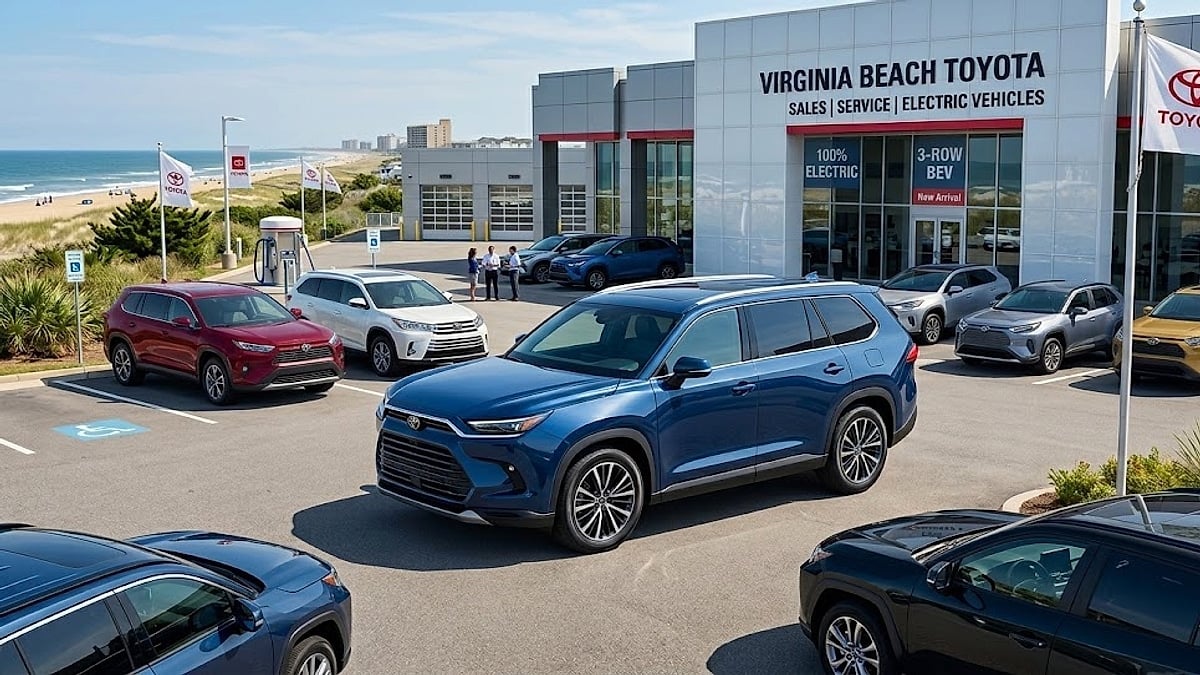
According to an industry analysis published by the automotive market intelligence firm Electrek, the manufacturer finalized an $800 million investment to expand electric-vehicle capabilities at its Georgetown, Kentucky, hub. This facility is tasked with building the first series-production three-row electric sport utility vehicle under the historic Highlander nameplate.
Concurrently, a two-hundred-million-dollar allocation was directed to the Princeton, Indiana, plant to ramp up assembly of the larger Grand Highlander. This structural separation proves that the standard model is not being dropped into an abyss; its mechanical identity is being fundamentally altered while its larger sibling assumes total responsibility for fossil-fuel operations.
This factory restructuring explains why standard gas variants are entering their final months of assembly. Dealerships are fully aware that the allocation numbers for the internal combustion versions are tightening. According to data tracked by the vehicle pricing authority Edmunds, a corporate spokesperson confirmed that for the upcoming model cycle, if customers want a battery electric vehicle, they have the Highlander; if they prefer a gas, hybrid, or Hybrid Max, they have the Grand Highlander.
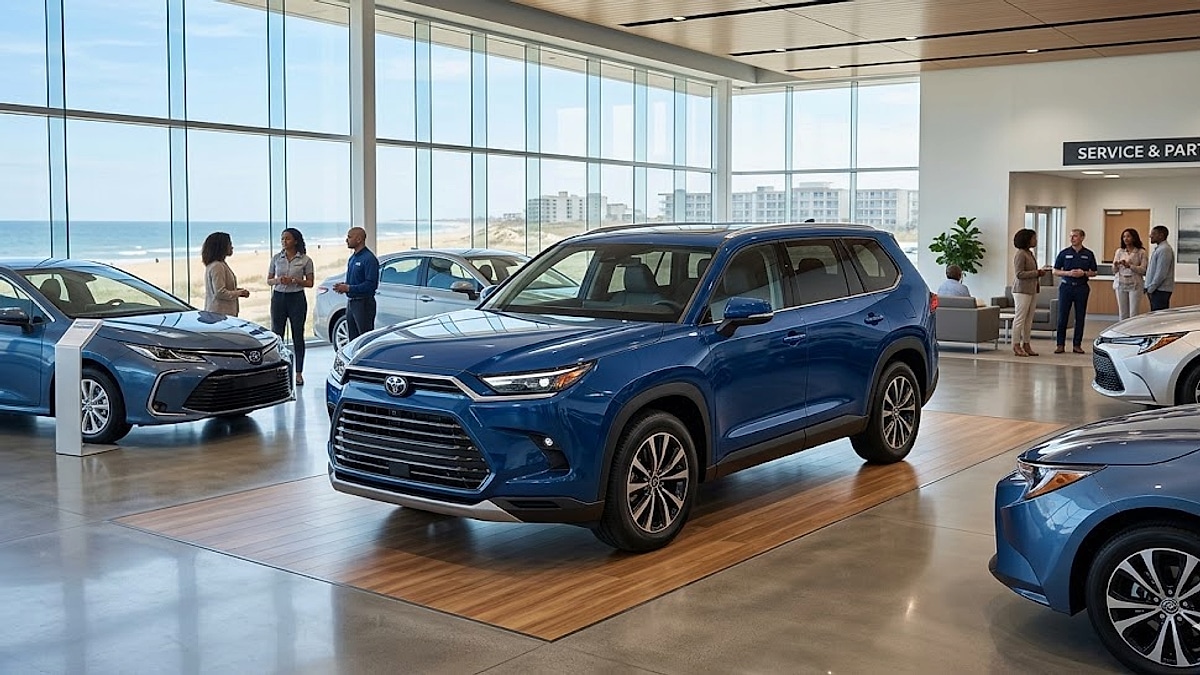
This corporate policy means that the two variations will no longer overlap in their engine offerings. Salespeople are taking this strict powertrain boundary and misrepresenting it as a total discontinuation of the nameplate to drive up immediate transaction prices.
This manufactured scarcity is causing direct financial harm to everyday buyers who simply want a reliable family vehicle. In my thirty years of working under hoods and advising buyers on fleet acquisitions, I have learned that when a dealer senses confusion about a future model change, they will always frame the future as a threat to your wallet. They want you to believe that if you do not buy the vehicle sitting on their asphalt today, you will be priced out of the market tomorrow.
Analysis of the Floor Level Strategy
The structural reality of this transition becomes clear when analyzing the underlying mechanical changes between these model years. The standard chassis cannot simply accommodate a massive battery array without a complete floorpan redesign. The outgoing version uses the traditional internal-combustion variant of the TNGA-K architecture, which features a central exhaust tunnel and fuel tank packaging that restricts placement of the flat battery.
The upcoming version requires a completely flat floor profile to support a 95.8-kilowatt-hour battery module. The physical changes required for this shift mean that running both gas and electric variants on the same standard wheelbase is financially unviable for the factory.
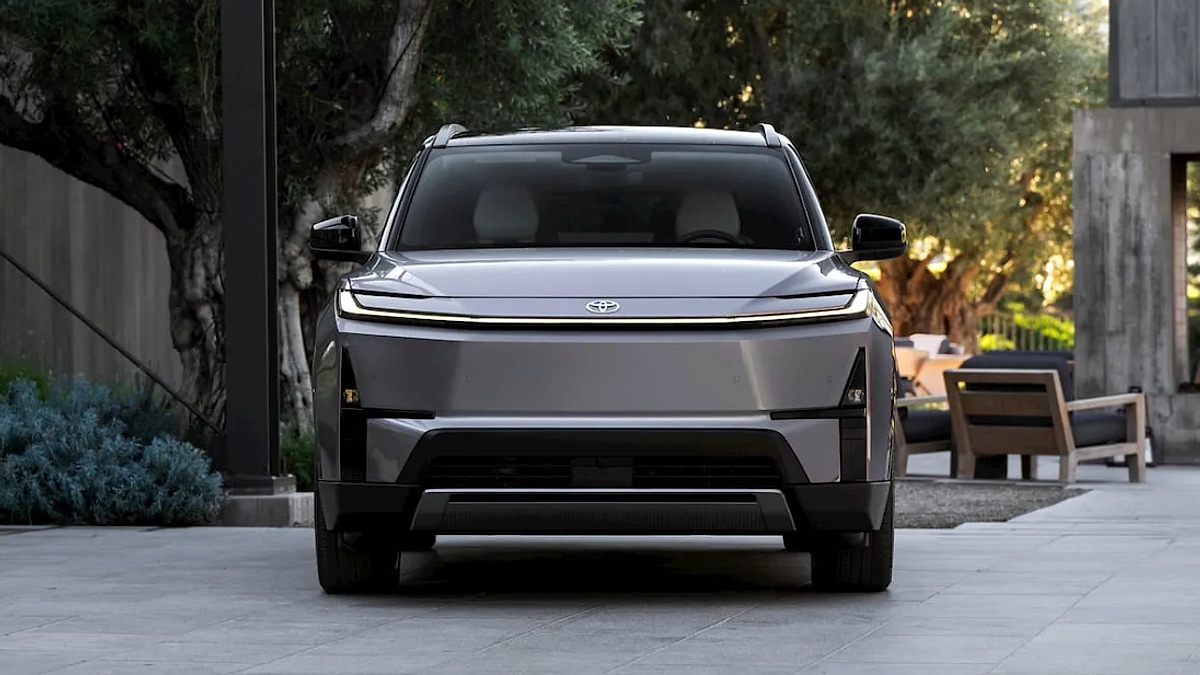
By shifting the standard model to a pure battery platform and sending it to Kentucky, the Indiana plant frees up structural capacity to churn out the larger, heavier variant. This variant brings a significantly higher manufacturer-suggested retail price. A standard base trim vehicle regularly leaves the lot thousands of dollars cheaper than a comparably equipped larger model.
When a salesperson convinces a buyer that the standard size is disappearing forever, they are effectively pushing that customer into a larger footprint that costs more upfront, carries higher insurance premiums, and demands a greater operational budget.
Field Observations From Owner Communities
The friction caused by this transition is spilling over into major automotive tech forums across the internet. On enthusiast subreddits, prospective buyers and current owners are sharing technical data that contradicts what they are being told during sales consultations.
In a recent technical discussion on r/ToyotaHighlander, several owners noted that the upcoming structural changes are catching traditional buyers completely off guard. One forum contributor outlined the structural reality of the situation:
“We already know that the 2027 Highlanders will ONLY be full Electric models and NO HYBRIDS OR Gas will be produced after 2026. For those of you who are still on the fence about getting a 26 Highlander Hybrid or ICE, tick tock, tick tock, the Clock is running out for you,” which you can read in the full discussion on the r/ToyotaHighlander community thread.
From my decades of mechanical experience, this sudden timeline crunch is exactly what leads to hasty buying decisions at the dealership. Buyers panic because they do not want a first-generation battery platform, so they let the dealer dictate terms on a remaining internal combustion unit.
Another owner highlighted the long-term powertrain strategy that many family buyers are factoring into their financial planning, stating: “My 2014 XLE is going strong at 176k miles. Shooting for 300k. The EV thing will be sorted by then,” as documented in that same community workspace.
This mindset demonstrates why the dealer's pitch is so effective yet so deeply frustrating. Mainstream buyers are notoriously risk-averse when it comes to family haulers. They trust the historical reliability of a mechanical platform they know inside and out.
When a salesperson intercepts that consumer's desire for long-term mechanical stability and tells them that their options are limited to a first-year battery setup or a much heavier, more expensive alternative, it creates an environment where the consumer feels backed into a corner.
Key Takeaways
- Identify the sales manipulation strategy by recognizing that the standard nameplate is transitioning to a battery-electric platform rather than being completely discarded by corporate planners.
- Compare real vehicle transaction sheets to ensure you are not being unnecessarily up-sold into a premium three-row footprint when a standard size meets your operational requirements.
- Verify local allocation sheets through independent inventory search systems before believing a showroom representative's claim that zero internal combustion variants remain available for order.
- Evaluate your long-term ownership horizon to decide whether securing a late-production internal combustion variant outweighs waiting for the finalized domestic battery architecture.
Will Insurance and Maintenance Costs Skyrocket on Late-Model Gas Vehicles?
The immediate concern for shoppers facing this inventory split is how the secondary market will value the final run of conventional family haulers. Many buyers are worried that if they purchase a current conventional variant, parts availability will dry up or repair costs will escalate as manufacturing lines pivot to battery assembly.
The mechanical reality provides a reassuring answer. Because the structural components, engine blocks, and parallel hybrid systems found in these models are shared extensively across the broader corporate lineup, including the RAV4, Camry, and various premium crossovers, the replacement parts pipeline is secure for decades.
Internal service documents show that component normalization ensures that keeping a conventional model on the road will remain highly affordable. The secondary market value of the final run of non-electric standard variants will likely see a significant retention bonus, precisely because a large portion of the buying public remains hesitant to adopt pure battery power for long-distance family travel.
How to Protect Your Wallet on the Showroom Floor
If you find yourself sitting across from a sales representative who begins running the discontinuation script, you must take immediate control of the transaction. Demand a look at the actual allocation sheet for the region, not just the vehicles parked on their specific lot.
Remember that manufacturing schedules confirm that assembly lines will continue to turn out conventional variants for months to come. Do not let a temporary local inventory gap convince you to pay an adjusted dealer markup or to jump into a higher-premium platform that compromises your household budget.
How About You?
Have you run into this exact high-pressure sales pitch at your local showroom recently? We want to know how your local dealers are handling the transition. Tell us what you think and share your floor experiences by leaving a comment using the red "Add new comment" link below. Your direct feedback helps us track these showroom trends across the country.
What’s Next
In our next reporting segment, we are shifting our focus from the sales floor directly to the service bay. We will deliver a technical forensic breakdown comparing the structural integrity and battery thermal management of the upcoming domestic platform against the mechanical packaging of the larger premium options, giving you the exact diagnostic layout you need to make an informed choice. Check out the full report here.
About The Author
Denis Flierl is a 14-year Senior Reporter at Torque News and a member of the Rocky Mountain Automotive Press (RMAP) with 30+ years of industry experience. Explore his full investigative reporting archives and technical guides at DenisFlierl.com. Based in Parker, Colorado, Denis leverages the Rockies' high-altitude terrain as a rigorous testing ground to provide "boots-on-the-ground" analysis for readers across the Rocky Mountain region, California EV corridors, the Northeast, Texas truck markets, and Midwest agricultural zones. A former professional test driver and consultant for Ford, GM, Ram, Toyota, and Tesla, he delivers data-backed insights on reliability and market shifts. Denis cuts through the noise to provide national audiences with the real-world reporting today’s landscape demands. Connect with Denis: Find him on LinkedIn, X @DenisFlierl, @WorldsCoolestRides, Facebook, and Instagram.
Photo credit: Denis Flierl
Set Torque News as Preferred Source on Google
Follow us today...




Comments
Just buy a used Highlander,…
Permalink
Just buy a used Highlander, especially if you don't drive a lot. I paid $37k for my 2019 XLE with 0% interest and will not pay $60k at 5.9%. Better off buy China's BYD models when they become available at $20k less
Grand highlander and…
Permalink
Grand highlander and highlander were almost the same price when I purchased last year.
Here is the cleaned-up…
Permalink
Here is the cleaned-up version of your text. I fixed the grammar, replaced the ellipses (...) with appropriate periods or commas, capitalized proper nouns, and smoothed out the sentence structures while keeping your exact voice and perspective intact.
What this tells me is that there is still a robust market for the regular Highlander. A lot of people do not want an EV-only Highlander that gets only 300 miles of range, especially with a US charging network that still leaves a lot to be desired unless you charge exclusively at home overnight.
I think the EV-only Highlander is going to fail. Toyota's goal is to push you towards the Grand Highlander, and people bought into it hook, line, and sinker. Now, there are a lot of them on the used car market for a reason. They are built in the US and have a number of issues from the factory that would never have made it out of Japan (you can scan this group for those yourself).
The regular Highlander has a built-in transmission issue that Toyota has known about since 2020. You could get 50k to 100k miles with zero issues if it was bought new and cared for, or you could get the transmission whine at 50k to 75k miles. The class-action lawsuit on those is currently pending, and Toyota is definitely going to lose because the transmission has been broken open and the specific issue has been found. Toyota basically pushed the design too far to optimize both power and comfort with the minimum possible tolerances. It is sad because they have a whole bulletproof parts bin of transmission choices they could have just dropped in instead.
I have been lucky so far with a 2021 model bought new. It is the most reliable, comfortable, capable, and durable car I have ever owned, and the Toyota dealer service has been exemplary. It came with ToyotaCare, and I bought Toyota Guard for $699 for a total of four years of free oil changes, rental cars, and rotations, plus other benefits. Within the first month, I had the weatherstripping under the front hood replaced to stop wind noise, it has been whisper-quiet since then, and the driver's seat was adjusted to fix a clicking sound that has never returned. I've had zero issues since year one.
I will be waiting for the 2027 EV-only Highlander to be a sales failure and for Toyota to build a hybrid version, or for them to clean up the Grand Highlander bugs. Until then, I'll just keep enjoying my trouble-free regular "Lander." Oh, and the dealership is still trying to buy it back from me.
my dealership has asked me…
Permalink
my dealership has asked me three times already about selling/trading my 2022 Highlander. they seem to desperately want my Highlander. im good for now & my Highlander is paid off.
Despite the potential…
Permalink
Despite the potential transmission issue, at this point we are going to probably hang onto our 2023 Gas Highlander until we no longer need a 3 row SUV. Figure we will downsize to a RAV 4 in 3-4 years.
We really wanted a hybrid Highlander but they were/are hard to find so we settled with the gas model.
I wanted a 4RUNNER for…
Permalink
I wanted a 4RUNNER for several months for size, towing, and utility. In the year or so I was looking, they went from being reasonably priced to selling them used, tens of thousands of miles, and years older at that point for more than MSRP was. Not just private sellers but dealers too. The new 4RUNNER sucks with its shrimpy motor and Toyota knows this. Nothing Toyota has done in the past several years has been for the better it seems.
I had been a loyal Toyota…
Permalink
I had been a loyal Toyota Highlander fan since my first one in 2006. I kept that thing for 17 years. In 2023 I bought a brand new one, I'm not exactly happy. So when I needed a commuting car, I ended up buying a Buick Envision and I am much happier. I gave the Highlander to my husband.
Sienna is a better choice…
Permalink
Sienna is a better choice for the vast majority of buyers anyway. EV is a superior choice, Chinese ones are going to dominate anyway.
The price of Grand vs…
Permalink
The price of Grand vs regular are very close, if not the same, UNLESS you go for a Grand hybrid MAX.
We test drove a Grand…
Permalink
We test drove a Grand Highlander a couple years ago. It was like driving a truck compared to the Highlander.
if that's so....we don't…
Permalink
if that's so....we don't want an electric vehicle and the Grand Highlander is too big to fit in our garage along side my Tundra. So I guess we'll be shopping for something else. Looking at our local dealer's website, they have 9 Highlanders either in stock or on the way. Course they put $3k of dealer installed crap on them.
A lot of hard work to be…
Permalink
A lot of hard work to be very wrong in this article. Highlander availability has been very limited for a while now. Yes, there are some Highlanders still being built and allocated. My dealership has ONE that is two months away and already sold. We have nothing else coming down the pipeline, and we have been told to expect the EV model as early as this fall. The ones that are allocated right now? A good 90% of them are already sold, with more people on the waitlist. This is NOT a "dealership tactic." We don't want to take someone's deposit for a car they probably won't get and have them wait months for NOTHING. The price difference between a Highlander and a Grand Highlander is extremely minimal for what you're getting, and as dealerships the margin is really no different. So stop spreading fear that we're trying to push people to buy more expensive cars out of greed. We're trying to be up front with people about their expectations. It would be sleazy to tell them we can get them one and take their money.