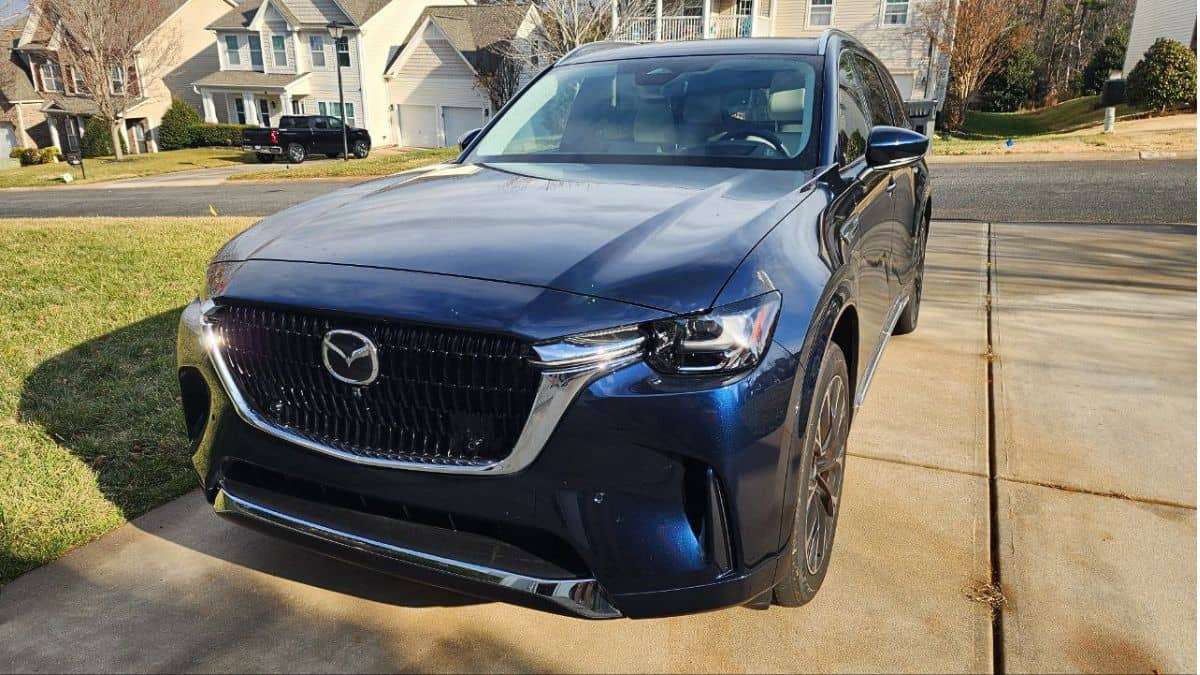

For the past week, I drove the 2026 Mazda CX-90 S Premium Plus around the Charlotte, North Carolina area. Highways. Tight suburban roads. Stop-and-go traffic. Rainy mornings. Long family errands. And I came away impressed - not in a loud, overhyped way - but in a steady, confident way that builds over time.
I’ve been covering the automotive industry for 15 years at Torque News. I’ve driven everything from body-on-frame SUVs to full EV three-row crossovers. The three-row SUV segment is crowded. It’s competitive. It’s unforgiving. If you miss the mark in one area - power, ride comfort, tech, interior quality - buyers move on fast.
The 2026 Mazda CX-90 S Premium Plus doesn’t try to dominate with one flashy trick. Instead, it quietly outclasses many of its competitors in three key areas:
- Powertrain refinement and performance
- Interior design and material quality
- Driving dynamics and road feel
And that combination matters more than you might think.
The Competitive Landscape: Where the CX-90 Fits
Before diving deep, let’s zoom out.
The Mazda CX-90 competes with vehicles like the Toyota Grand Highlander, Hyundai Palisade, Kia Telluride, Honda Pilot, and even entry-level luxury SUVs like the Acura MDX.
According to Car and Driver’s overview of the CX-90, Mazda’s move to a rear-wheel-drive-based platform and an inline-six turbocharged engine was a major shift for the brand. That matters. Most mainstream three-row SUVs are front-wheel-drive-based.
Mazda didn’t just refresh the CX-9. They re-engineered the formula.
And in my opinion, that’s the biggest story here.
Advantage #1: The Inline-Six Turbo Powertrain
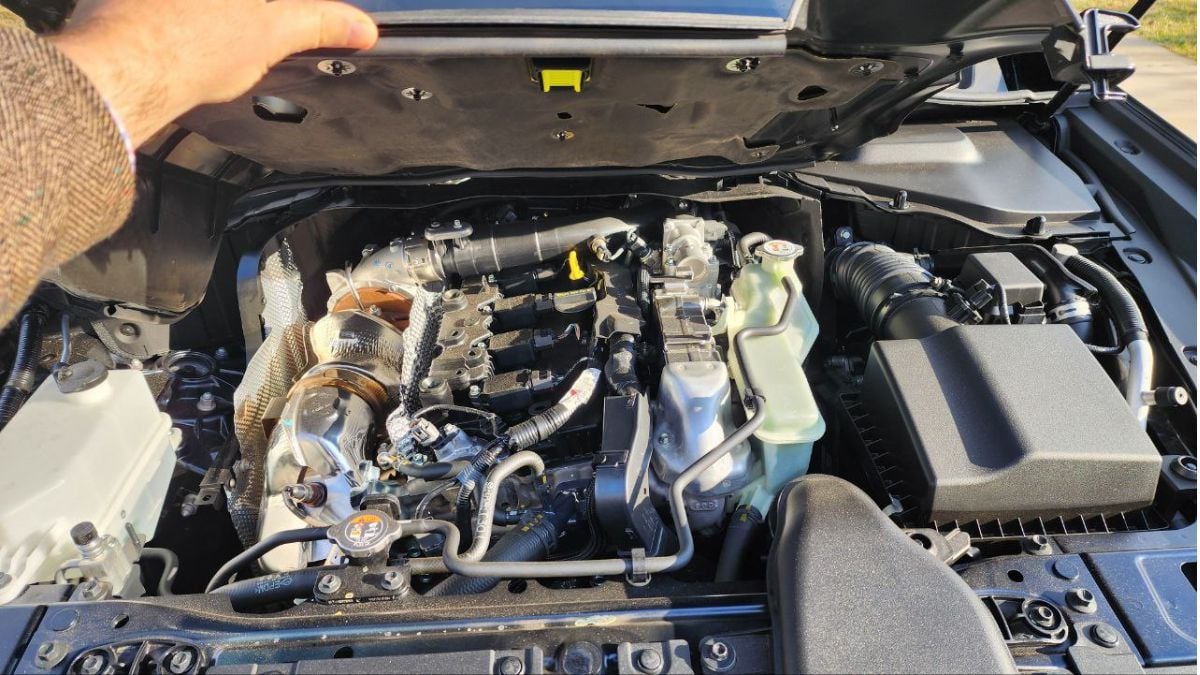
The S Premium Plus trim uses Mazda’s turbocharged 3.3-liter inline-six engine. It’s paired with a mild-hybrid system and an eight-speed automatic transmission. Output is strong. In the upper 300-horsepower range depending on configuration, which puts it at the top of the mainstream segment.
But numbers don’t tell the whole story.
On I-485 around Charlotte, merging felt effortless. There’s no strained engine noise. No high-RPM screaming like some naturally aspirated V6 competitors. Instead, you get smooth, linear acceleration. The torque comes on early. It feels relaxed at speed.
The inline-six layout, something you typically see in BMWs, inherently delivers smoother power compared to many V6 engines. You feel that refinement.
Compared to something like a Toyota Grand Highlander Hybrid MAX, the Mazda feels more mechanical and connected. Compared to the Honda Pilot, it feels more premium and composed at higher speeds.
This is not just about going fast. It’s about how the power is delivered.
And in this class, that matters.
Advantage #2: Interior Design That Punches Above Its Price
Let’s talk interior quality.
Mazda has been on a mission to move slightly upmarket. You see it clearly in the CX-90 S Premium Plus. The materials. The stitching. The metal accents. The layout. It doesn’t feel like a typical $50,000 three-row SUV.
When I first sat inside, I noticed the restraint. It’s not overloaded with flashy screens. It’s not drowning in piano black plastic. It feels deliberate.
The dashboard is horizontal and clean. The seats are supportive and comfortable over long drives. In this top trim, the leather quality feels genuinely upscale.
Compared to Hyundai Palisade and Kia Telluride, both excellent in their own right, the Mazda interior feels more driver-focused and European in character. Less lounge-like. More cockpit-like.
And for buyers who still enjoy driving, that distinction matters.
Mazda calls this their premium design direction. From my week with the CX-90, it’s not marketing fluff. It’s noticeable.
Advantage #3: Rear-Wheel-Drive-Based Platform and Handling
This is where Mazda separates itself.
The CX-90 is built on a rear-wheel-drive-based architecture. That changes the balance. Steering feel is more natural. Weight distribution is improved.
Driving through the winding roads outside Charlotte, the CX-90 felt composed. It doesn’t drive like a large SUV. It feels tighter. More controlled.
The steering is precise. Body roll is well-managed. It feels lighter than it is.
Compared to a front-wheel-drive-based three-row SUV, you can feel the difference in cornering confidence.
Now, let’s be clear. This is still a family SUV. It’s not a sports sedan. But among mainstream three-row options, it’s one of the most engaging to drive.
And for many buyers, especially those downsizing from sedans, that matters more than they realize.
Exterior Design: Confident Without Being Loud
Mazda’s design language is subtle. The 2026 CX-90 continues that theme.
The long hood hints at the inline-six layout underneath. Proportions look balanced. The front grille is bold but not aggressive. LED lighting is sharp and modern.
In Charlotte traffic, it doesn’t scream for attention. But it gets noticed.
Compared to the Kia Telluride’s boxier presence or the Hyundai Palisade’s bold grille, the Mazda feels more refined and understated.
Personally, I appreciate that. It feels like a vehicle designed to age well.
If you want even more background on the CX-90’s character and how Mazda tuned this platform from day one, I dug into the original 2025 model in a review last year, where I came away calling it “a remarkably actual driver’s car that’s also a spacious hauler.” That earlier review digs deep into Mazda’s overall design strategy, how the mid-engine layout benefits packaging and balance, and what real owners were saying about its blend of comfort and utility. It’s a great companion piece if you want a broader view of how Mazda’s three-row SUV evolved from the first model year into this 2026 S Premium Plus.
Interior Space and Comfort
Now let’s talk practicality.
The CX-90 seats up to eight, depending on configuration. The S Premium Plus trim often features captain’s chairs in the second row.
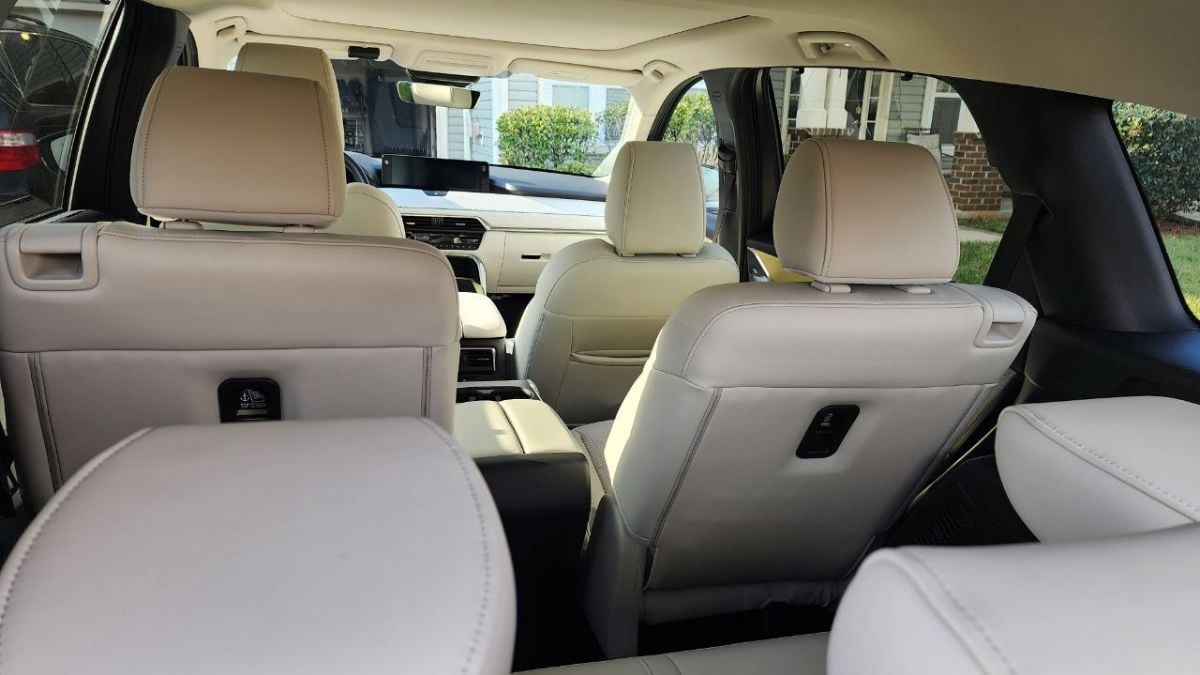
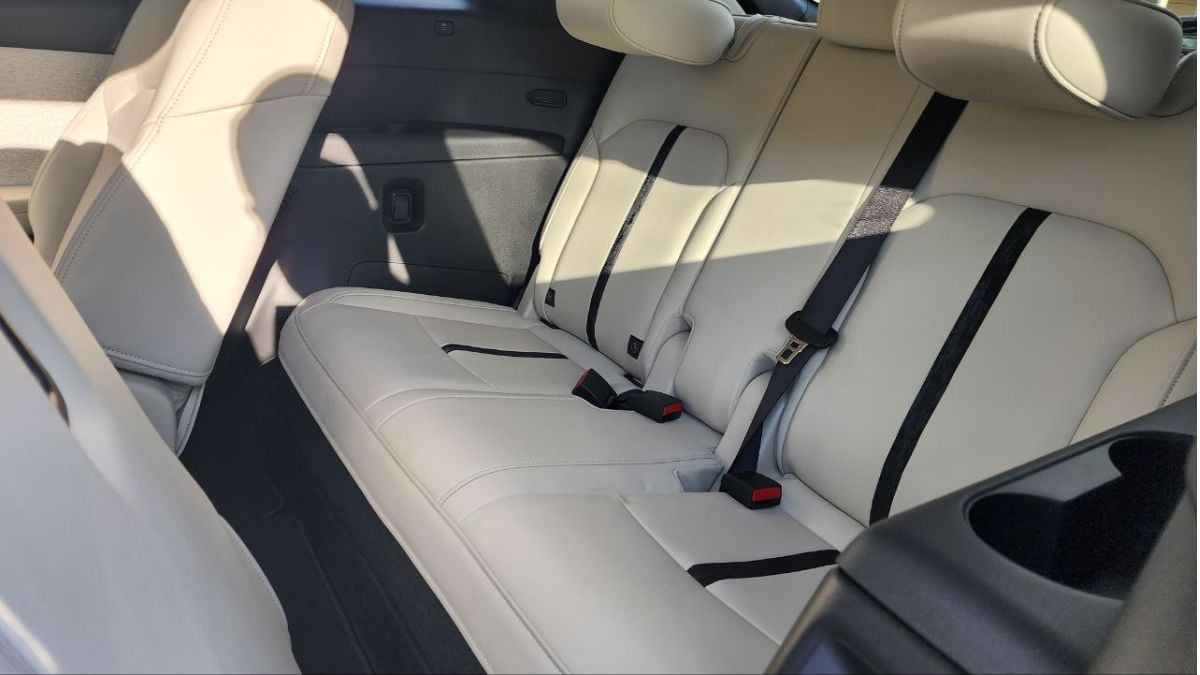
Second-row space is generous. Adults fit comfortably. Access to the third row is reasonable, though like most in this segment, the third row is best for kids or shorter adults on longer drives.
Cargo space behind the third row is competitive for the class. Fold the third row down, and it becomes genuinely usable for Costco runs or weekend trips.
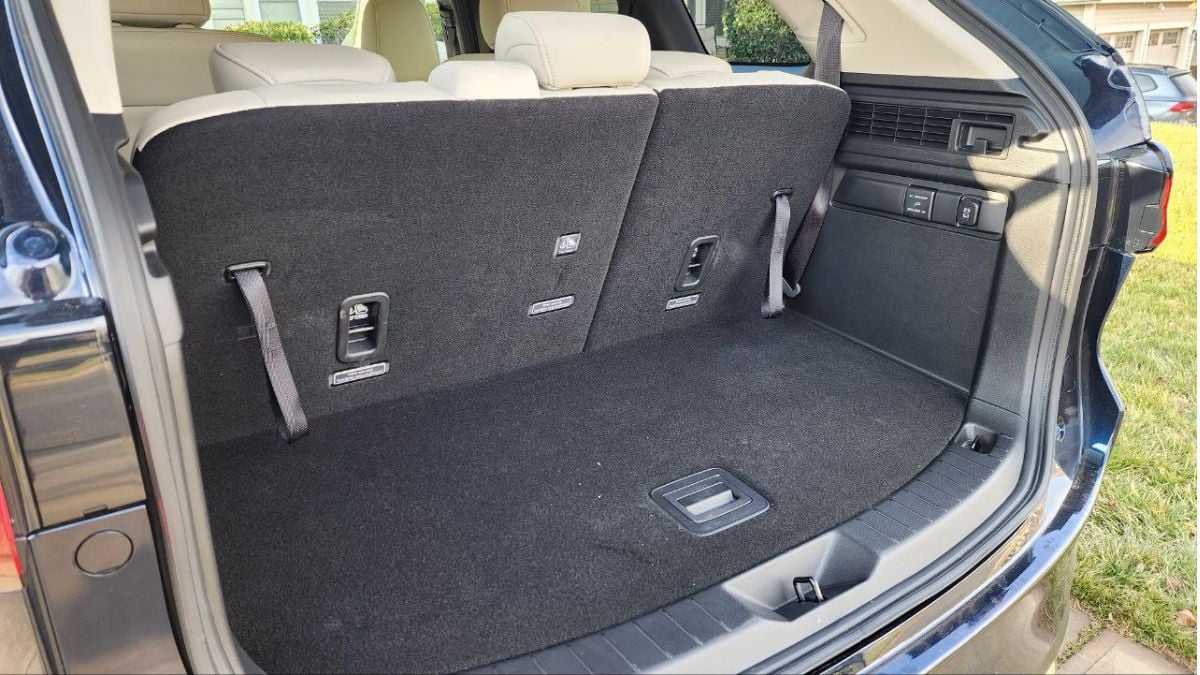
During my week of driving, loading groceries, camera gear, and family items was never a challenge.
It may not lead the segment in pure cubic feet compared to something like the Toyota Grand Highlander, but it’s very practical in real-world use.
And that’s what matters.
Infotainment and Technology
Mazda uses a large center display controlled primarily by a rotary dial, though touchscreen functionality is available in certain scenarios.
This is one area where buyers may have strong opinions.
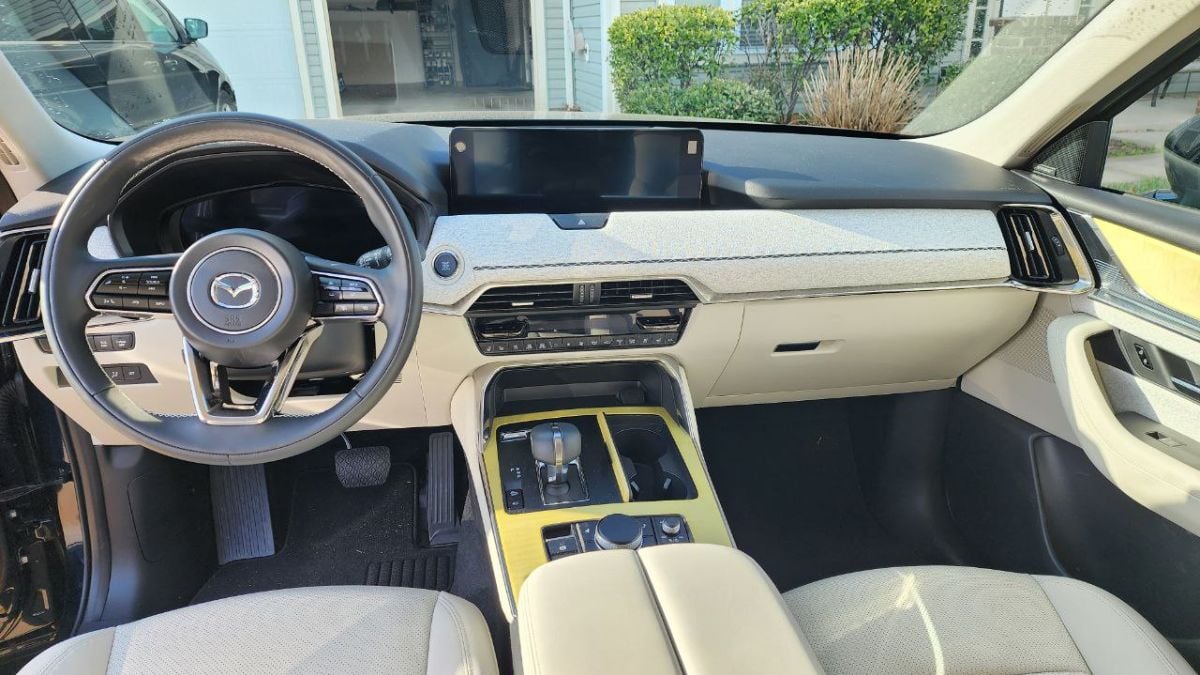
Personally, I’ve grown to appreciate Mazda’s dial-based interface. It reduces fingerprints. It keeps you from reaching forward constantly. It encourages keeping your eyes closer to the road.
Wireless Apple CarPlay and Android Auto are available. The digital instrument cluster is clear and easy to read.
Is it as flashy as some competitors with giant panoramic screens? No.
But it feels intentional and less distracting.
In a world where screens keep growing larger and more complex, Mazda takes a slightly more conservative approach.
I think that’s smart.
Ride Comfort and Road Manners
Charlotte roads are not perfect. Patches. Expansion joints. Uneven surfaces.
The CX-90 handled them with composure.
Ride quality strikes a balance between firmness and comfort. It’s not floaty. It’s controlled. Highway cruising is quiet. Wind noise is minimal. Engine noise is refined.
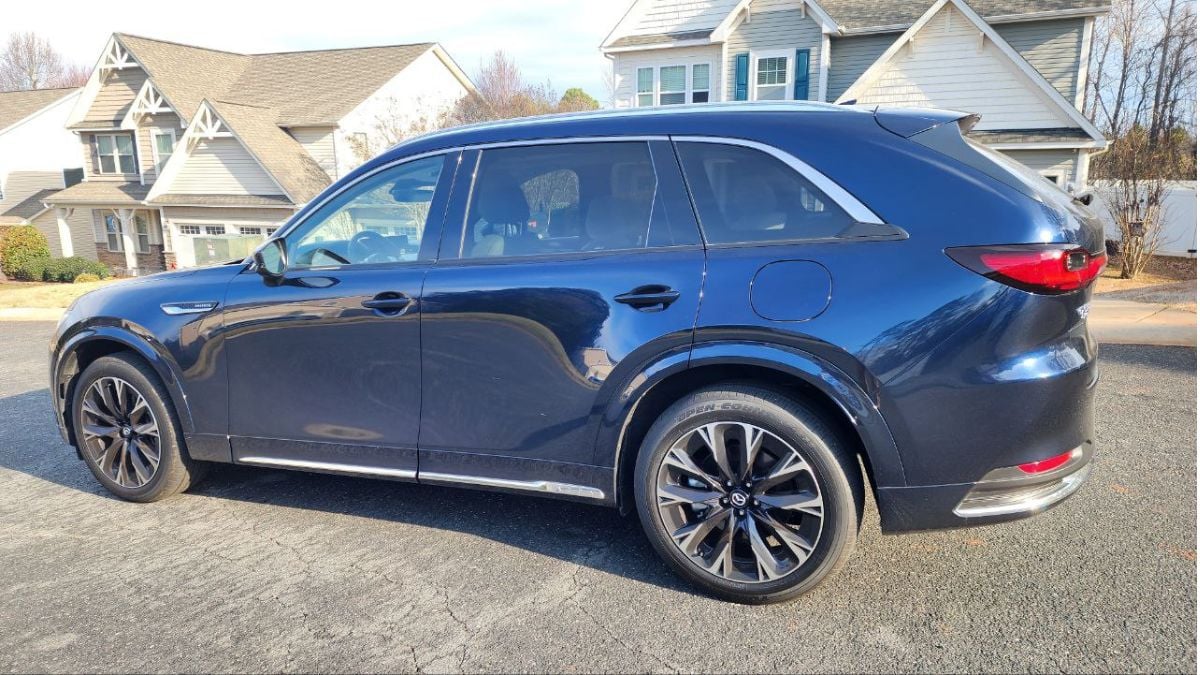
Compared to softer competitors like the Palisade, the Mazda leans slightly sportier. But it never feels harsh.
It feels engineered.
And over a week, that consistency builds confidence.
Fuel Economy and Efficiency
For a turbocharged inline-six, fuel economy is respectable. The mild-hybrid system helps smooth start-stop transitions and supports efficiency.
It’s not a hybrid-focused SUV like a Toyota Grand Highlander Hybrid. But it delivers solid real-world MPG for its performance level.
If maximum fuel savings is your priority, a hybrid competitor may win.
If balanced performance and refinement are your priority, the Mazda makes a strong case.
One real-world data point that might surprise those on the fence about fuel efficiency: over at Torque News, a CX-90 PHEV owner reported averaging 50 MPGe in daily driving while still enjoying sports-car-like handling, and then dug into what the catch really is in everyday use. That owner’s experience shows just how flexible the CX-90 platform can be, whether you’re focused on efficiency, performance, or something in between. If MPG matters to you as much as driving feel, that PHEV perspective adds another useful layer to the conversation.
Why Choose the 2026 Mazda CX-90 S Premium Plus?
If you are shopping for a three-row SUV and care about:
- Driving feel
- Powertrain refinement
- Premium interior materials
- Balanced ride and handling
- Understated design
The CX-90 deserves serious consideration.
It doesn’t try to win with gimmicks. It wins with engineering.
Mazda made a bold decision moving to a rear-wheel-drive-based platform and an inline-six engine. That decision separates the CX-90 from its mainstream competitors.
It feels like a bridge between mainstream and entry-level luxury.
And after a week behind the wheel in real-world Charlotte driving conditions, I can say this confidently: it’s one of the most satisfying three-row SUVs to drive in its price range.
Safety and Driver Assistance Technology
One area that deserves attention is Mazda’s i-Activsense safety suite. In the 2026 CX-90 S Premium Plus, you’re getting a full package of advanced driver assistance systems - adaptive cruise control with stop-and-go, lane-keep assist, blind-spot monitoring, rear cross-traffic alert, and automated emergency braking. In daily Charlotte commuting traffic, adaptive cruise control worked smoothly. It didn’t brake aggressively or feel overly reactive. The system maintained natural spacing and didn’t constantly hunt for lane positioning the way some competitors do.
What stood out to me most was how unobtrusive the systems felt. There’s a fine line between helpful and annoying when it comes to driver assistance. Some SUVs overwhelm you with chimes and alerts. The CX-90 strikes a better balance. It intervenes when necessary but doesn’t constantly remind you it’s there. For families prioritizing safety ratings and advanced safety tech in a three-row SUV, the CX-90 holds its own against segment leaders like the Honda Pilot and Toyota Grand Highlander. And importantly, it delivers those features without making the driving experience feel artificial.
Towing Capacity and Real-World Utility
Another area worth discussing is towing capability. The 2026 Mazda CX-90 S Premium Plus, with its turbocharged inline-six, offers competitive towing capacity for the class. For buyers who occasionally tow a small boat, utility trailer, or lightweight camper, this matters. Not everyone shopping for a three-row SUV needs full-size truck capability. But many families want flexibility.
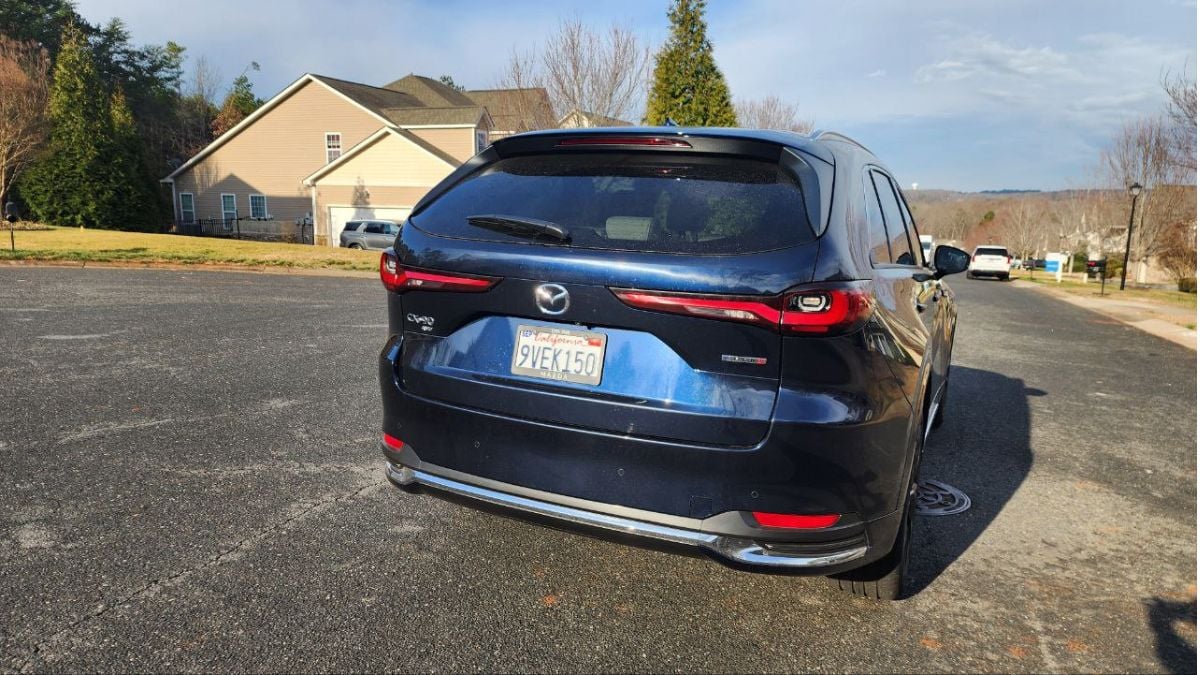
What I appreciate about the CX-90 is how stable it feels under load. Even without towing during my test week, the underlying rear-wheel-drive-based platform gives confidence. The powertrain feels robust enough to handle additional weight without strain. Compared to smaller turbo four-cylinder competitors, the inline-six simply feels more relaxed when pushed. For buyers in North Carolina who may be hauling gear to the mountains or towing something to Lake Norman, this SUV offers genuine versatility without stepping into body-on-frame SUV territory.
Ownership Experience, Reliability Expectations, and Brand Direction
Mazda’s long-term brand direction is another factor buyers should consider. Over the past several years, Mazda has positioned itself slightly above mainstream competitors, focusing on premium materials and more sophisticated engineering. The CX-90 represents that shift clearly. But Mazda still retains a reputation for solid reliability and relatively reasonable ownership costs compared to luxury brands.
From an ownership perspective, this is important. Buyers considering stepping into an Acura MDX or entry-level BMW X5 may find the CX-90 delivers 80 to 90 percent of the premium feel without the same long-term maintenance expectations. That value proposition is powerful. Mazda is carving out a niche: premium design and driving dynamics without luxury-brand pricing overhead. For families who want something that feels upscale but still dependable and practical, the CX-90 fits that middle ground in a compelling way.
Torque News Take
The 2026 Mazda CX-90 S Premium Plus is not perfect. Some buyers may want more third-row space. Others may prefer a larger touchscreen interface. And those prioritizing maximum fuel economy may lean hybrid.
But if you want a three-row SUV that still feels like it was built by people who enjoy driving, this is one of the best options available.
It’s refined. It’s balanced. It feels thoughtfully engineered.
And that’s something you feel every single day you own it.
Now I’d like to hear from you.
If you’re shopping for a three-row SUV, what matters more to you - interior luxury, driving dynamics, or fuel economy?
And if you’ve driven the Mazda CX-90 or one of its competitors, what stood out most in your real-world experience?
Armen Hareyan is the founder and Editor-in-Chief of Torque News. He founded TorqueNews.com in 2010, which since then has been publishing expert news and analysis about the automotive industry. He can be reached at Torque News Twitter, Linkedin, and Youtube. He has more than a decade of expertise in the automotive industry with a special interest in Tesla and electric vehicles.
Set Torque News as Preferred Source on Google
Follow us today...