
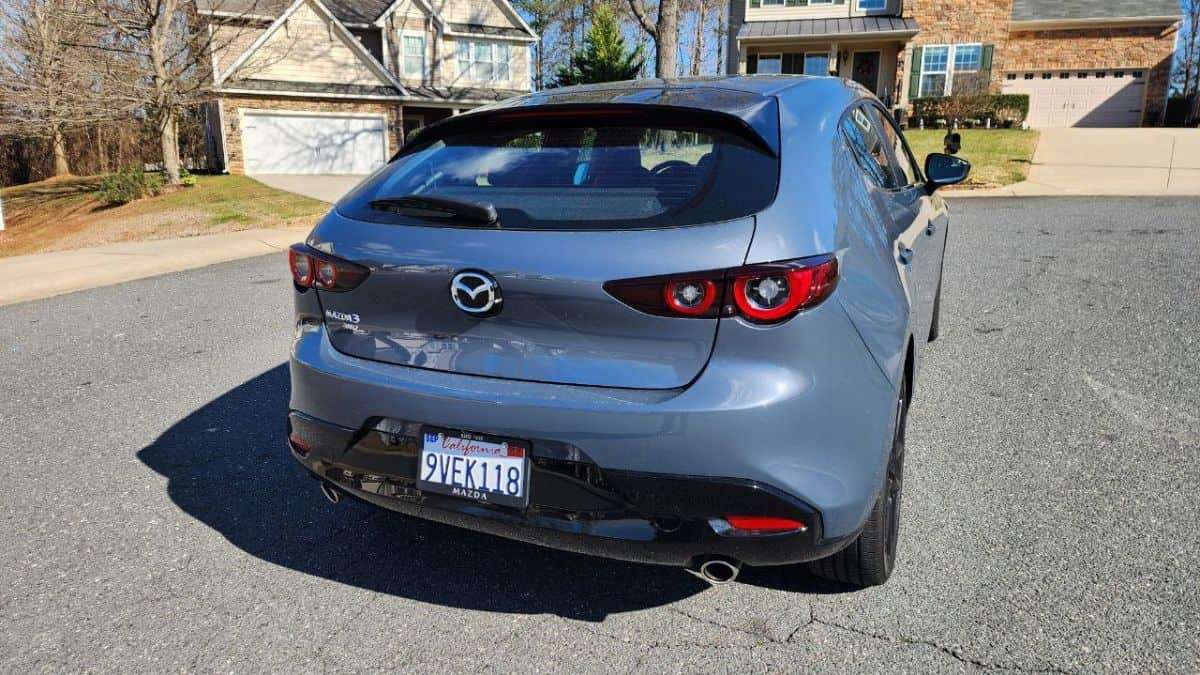

Is the 2026 Mazda 3 Carbon Hatchback overpriced for a compact car, or is it quietly one of the smartest $30,000 near-luxury buys on the market right now?
After 15 years of covering the automotive industry, test-driving everything from entry-level sedans to six-figure EVs, I’ve learned that the spec sheet rarely tells the whole story. Some cars look impressive on paper but feel hollow in motion. Others - like this 2026 Mazda 3 Carbon Hatchback I recently drove through the streets of Charlotte, North Carolina and Indian Land, South Carolina - don’t shout for attention, but deliver something much more valuable: composure, refinement, and a genuine premium feel without the premium badge markup.
Let’s talk about why that matters, and whether the “dated infotainment” complaint actually matters at all.
Exterior Design of The 2026 Mazda 3 Hatch Is an Understated Confidence
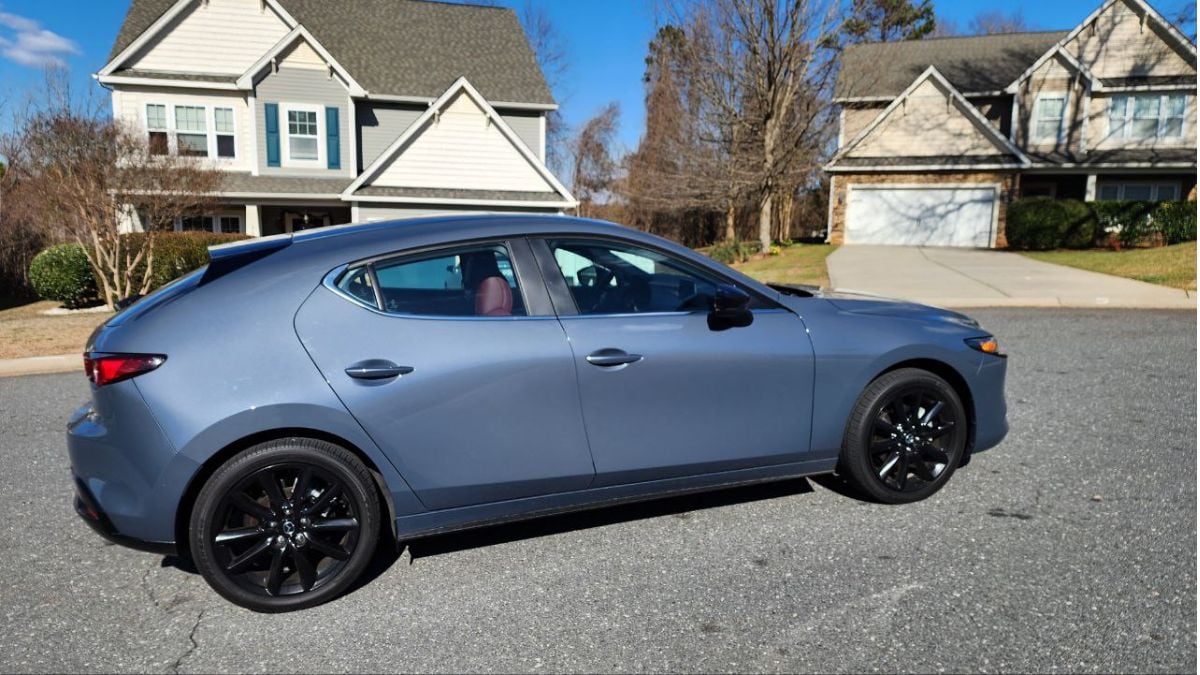
Mazda’s Kodo design language has matured beautifully, and the 2026 Mazda 3 Carbon Hatchback proves that Mazda still knows how to sculpt sheet metal better than most mainstream brands.
The Carbon trim adds subtle dark accents and unique wheels that give it a slightly more athletic presence without looking try-hard. In person, the proportions are tight and balanced. The hatchback silhouette gives it a European flavor, like a more Audi A3 Sportback than economy commuter.
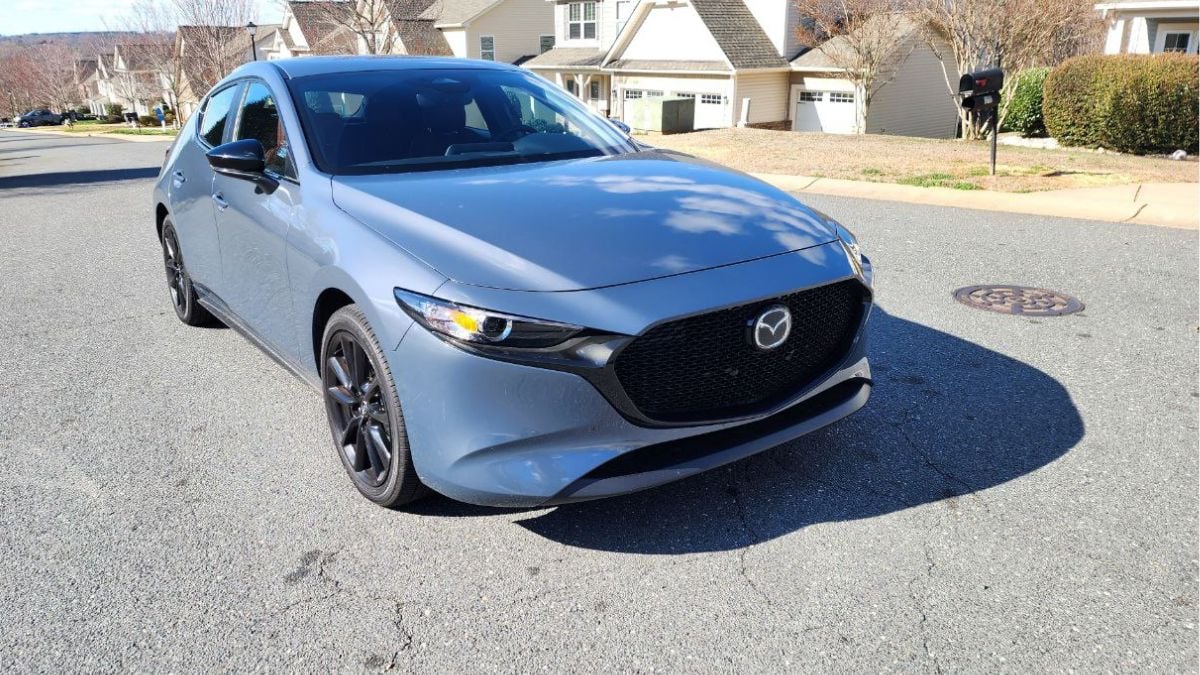
Driving it through South Charlotte traffic, I caught more than a few sideways glances. Not because it’s flashy, but because it looks expensive. That long hood, short rear overhang, and minimal body creases give it a premium stance.
This is not a Corolla. And it doesn’t want to be.
Powertrain: Smooth, Quiet, and Mature
Under the hood of the Carbon trim sits Mazda’s naturally aspirated 2.5-liter four-cylinder engine paired with a six-speed automatic transmission.
On paper, this doesn’t sound thrilling. But on the road? It’s refined in a way that makes you stop thinking about horsepower numbers.
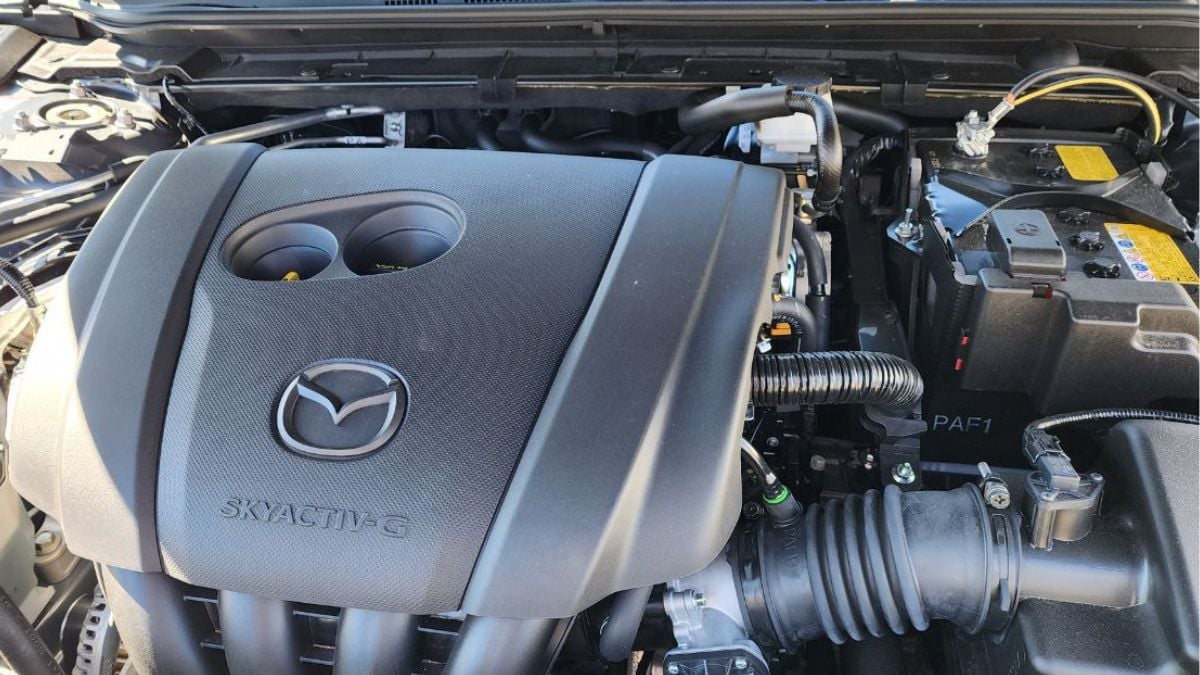
The engine is smooth and impressively quiet at highway speeds. Around Indian Land’s two-lane roads, the transmission shifts seamlessly - no abrupt gear hunting, no rubber-band CVT feel. That alone separates it from several competitors.
What stood out most during my drive was the composure. At 65–70 mph on I-77, wind and road noise were impressively muted for this class. It genuinely feels like a segment above.
Real-world fuel economy?
- Owners report seeing mid-34 mpg on the highway.
- Around town, about 25 mpg is realistic (but it depends on the trim).
Is it hybrid-level efficiency? No. But for a non-hybrid 2.5-liter engine delivering this level of smoothness, it’s competitive.
And importantly - it doesn’t sound strained doing it.
Safety matters just as much as performance and feel, and the 2024 Mazda 3 and CX-30 both earned the highest possible safety rating from the IIHS, underscoring Mazda’s commitment to real-world crash protection. While official 2026 ratings aren’t posted yet, that accolade sets strong expectations for the Mazda 3 Carbon’s safety profile: especially for buyers who want confidence alongside refinement.
Where Mazda 3 Justifies Its Price Is Handling and Ride
Mazda has always leaned into driving dynamics. The 2026 Mazda 3 still carries that DNA, but in a more refined package.
Steering is precise and well-weighted. It’s not artificially heavy; it’s confident. Through Charlotte’s suburban roundabouts and tighter backroads, the car feels planted and balanced.
Fans have long debated what it would take for Mazda to build a true hot hatch, and in our piece on the Mazda Never Made a New Speed3 - Here’s How Little It Takes the Current Model to Become One, I explained that the existing 3 platform already has the bones of a sportier machine. While the 2026 Mazda 3 Carbon isn’t a full-blown Speed3 successor, its poised handling, well-weighted steering, and refined chassis show Mazda isn’t far from building a compact car that blends daily usability with genuine performance thrills.
An Edmunds owner recently wrote that compared to his 2012 first-generation Skyactiv Mazda 3, the new one has a noticeably more refined ride and improved handling. I agree. Mazda has traded a bit of raw “zoom-zoom” energy for maturity, and that’s a good thing.
The suspension absorbs imperfections without feeling floaty. On rougher pavement, you feel the road, but not harshly. It’s controlled.
This is the kind of car that makes daily commuting less stressful.
Interior Is Why The 2026 Mazda 3 Feels Like a Luxury Car
Here’s where the Mazda 3 Carbon truly separates itself.
The cabin materials are excellent for this segment. Soft-touch surfaces, tight stitching, solid panel fitment. It feels closer to an entry-level luxury vehicle than a mainstream compact.
After 15 years in this industry, you develop a sixth sense for interior cost-cutting. Hard plastics. Cheap switchgear. Loose trim.
The Mazda 3 doesn’t feel like that.
The front seats are comfortable and supportive, with lumbar adjustment and memory settings. On my drive, the cushioning struck a perfect balance between firmness and comfort.
In my latest Torque News review of the 2025 Mazda 3, I wrote that the car “looks and feels much more expensive than it actually is,” thanks to design cues and interior refinement that rival vehicles costing significantly more. That sentiment holds even truer in the 2026 Mazda 3 Carbon, where Mazda doubled down on quiet, premium feel and material quality without dramatically inflating price or losing the fun-to-drive character that long-time fans love.
One owner described the seat as having a subtle shock-absorbing quality, and that’s accurate. On uneven roads, the seat and suspension work together to isolate harshness. It’s not a “truck seat,” of course, but it has a resilience that reduces fatigue over longer drives.
Rear seat space is tighter compared to some rivals. If you regularly carry tall passengers, you’ll notice it. But if you’re like many compact buyers - single, couple, or small family - it’s manageable.
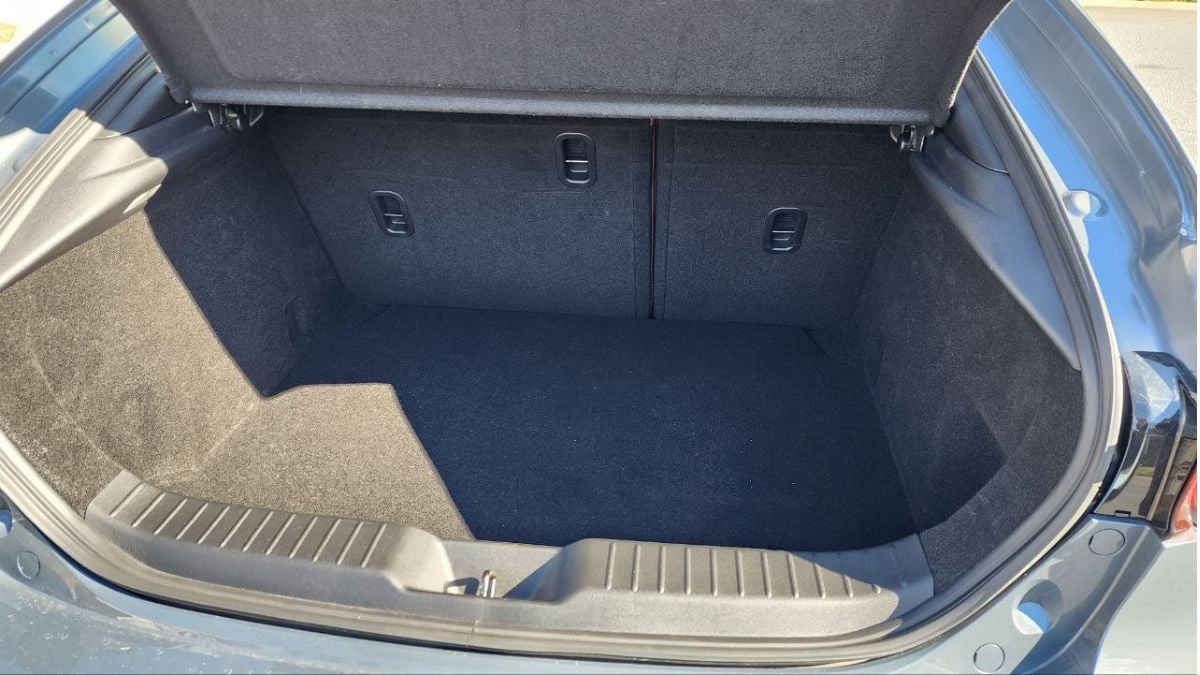
Cargo space in the hatchback is practical. Fold the rear seats down, and you get a flexible load area for grocery runs, sports equipment, or small furniture. It’s not an SUV, but it’s usable.
The “Dated” Infotainment: Spec Sheet Complaint or Real Issue?
Let’s address the elephant in the room.
Yes, the infotainment system isn’t cutting-edge. It doesn’t have the massive tablet-style touchscreen competitors are chasing.
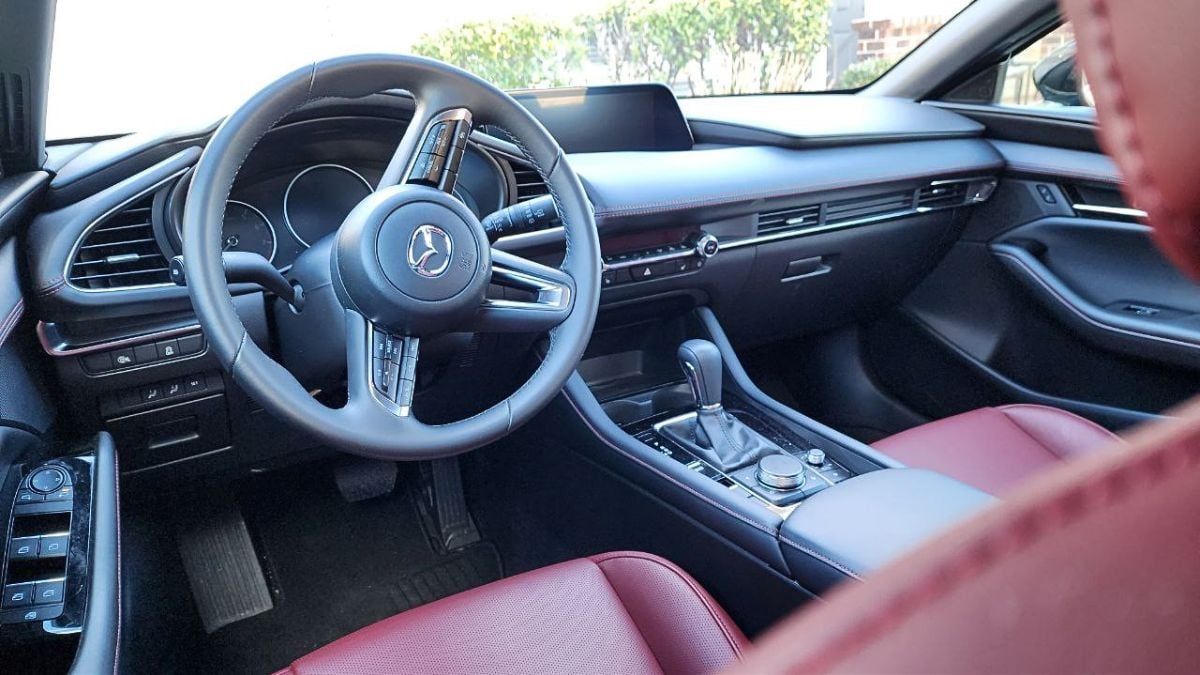
But here’s the thing: once you live with it, it works.
Mazda uses a rotary controller rather than relying entirely on touchscreen inputs. While some reviewers call it dated, I find it intuitive and less distracting while driving.
Wireless Apple CarPlay and Android Auto integration handle most daily needs anyway.
In my time with the car, the system responded quickly and didn’t crash. That’s more than I can say about some flashier setups in more expensive vehicles.
Is it visually futuristic? No.
Is it functionally frustrating? Not at all.
And for $30,000, I’d rather have premium materials and quiet road manners than a giant screen with cheaper plastics around it.
Trims and Value Positioning
The Mazda 3 lineup spans multiple trims, from more affordable base models to higher-end turbo variants. In fact, the 2026 Mazda 3 comes six trims: Base, Select Sport, Preferred, Carbon Edition, Premium, and the Turbo Premium Plus.
The Carbon trim sits in an interesting sweet spot:
- Premium feel
- Strong feature set
- Distinctive styling
- Without jumping into luxury-brand pricing
Yes, sticker shock exists. Some buyers feel $30,000 is high for a small car.
But here’s the counterpoint: compare it to similarly equipped versions of competitors like the Honda Civic Sport Touring or Toyota Corolla XSE. Once you factor in materials, refinement, and driving feel, the Mazda makes a strong argument.
You’re paying for experience, not just transportation.
Cost of Ownership of The Mazda 3 and Reliability Outlook
Mazda has built a solid reputation for reliability in recent years. Naturally aspirated engines and conventional automatic transmissions typically age better than small turbocharged engines or CVTs under heavy use.
Insurance costs are generally lower than luxury brands.
Maintenance is straightforward.
Fuel economy is respectable.
If long-term dependability matters to you - and it should - the Mazda 3’s conservative engineering may actually be an advantage.
Who Is the 2026 Mazda 3 Carbon Really For?
This is not the most spacious compact.
It’s not the cheapest.
It’s not the flashiest tech leader.
It’s for someone who values:
- Driving feel
- Interior craftsmanship
- Quiet highway cruising
- Subtle, upscale design
It’s for the buyer who doesn’t need an SUV but wants something that feels special every time they sit behind the wheel.
After driving it around Charlotte and Indian Land, I came away thinking this: Mazda understands something many brands have forgotten - how a car makes you feel matters as much as what it does.
The New Mazda 3 Is a Premium Vehicle Without the Premium Tax
The 2026 Mazda 3 Carbon Hatchback delivers a near-luxury experience at roughly $30,000. Yes, the infotainment may look dated next to newer competitors. Yes, rear seat space isn’t class-leading.
But when you focus on what you experience every day - ride quality, cabin serenity, steering feel, material quality - the Mazda 3 punches above its weight.
In a market obsessed with bigger screens and hybrid badges, Mazda has built a compact car that feels thoughtfully engineered rather than trend-chasing.
And that might be exactly why it stands out.
Now I’m curious about your take:
Would you prioritize premium driving feel and interior quality over having the largest screen and most rear legroom in a compact car?
And at around $30,000, do you think the Mazda 3 Carbon represents strong value, or is it priced too high for the segment?
Share your thoughts in the comments below. I’d love to hear where you stand.
Armen Hareyan is the founder and Editor-in-Chief of Torque News. He founded TorqueNews.com in 2010, which since then has been publishing expert news and analysis about the automotive industry. He can be reached at Torque News Twitter, Linkedin, and Youtube. He has more than a decade of expertise in the automotive industry with a special interest in Tesla and electric vehicles.
Set Torque News as Preferred Source on Google
Follow us today...




Comments
I went to your review…
Permalink
I went to your review because I am at my wits end with this infotainment nightmare. How can you say it works? In order to navigate through screens you need to sometime turn the dial to line up with the funtion you want, while sometimes the cursor becomes invisible. Every switch between Android Auto and the Mazda system requires reconnecting the bluetooth. The Alexa voice control is just silly. Its easier for me to turn the temp dial up if needed than to repeatedly tell her what to do. Android Auto with google Gemini NEVER finds the right song I am requesting, so I am forever trying to scroll through my music streamer. This is the most distracting inane system I have ever seen. There is way too much dialing and cllcking needed to do simple things like change the sirius XM station. Awful!!!!!