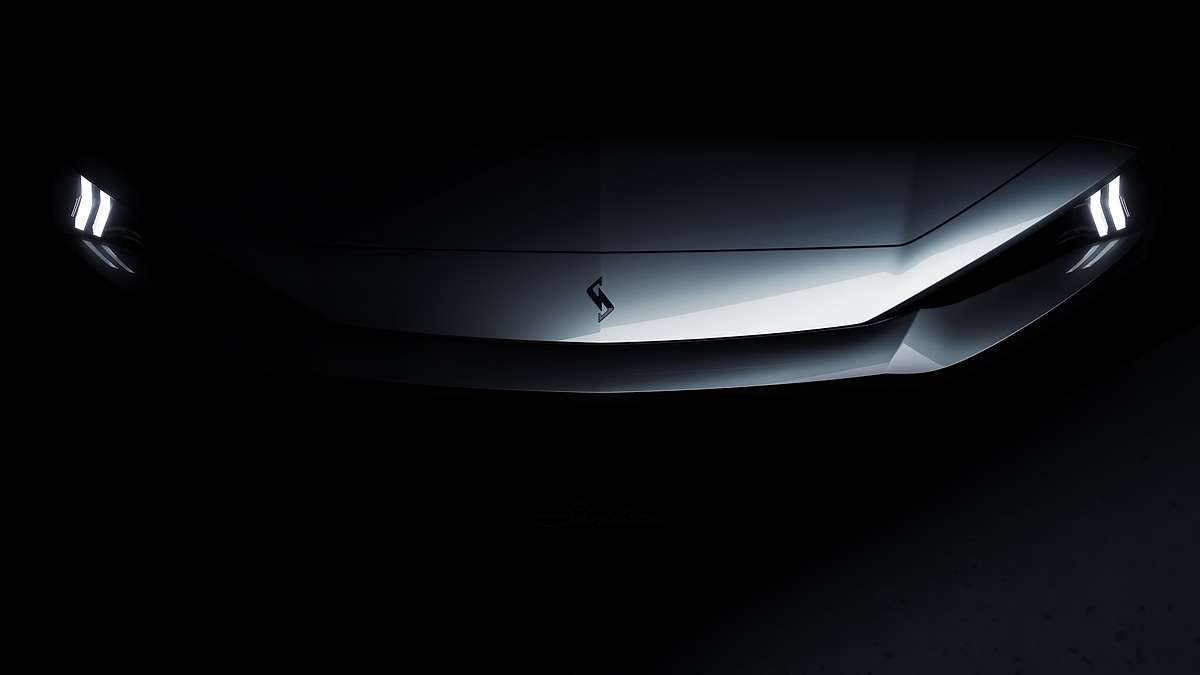

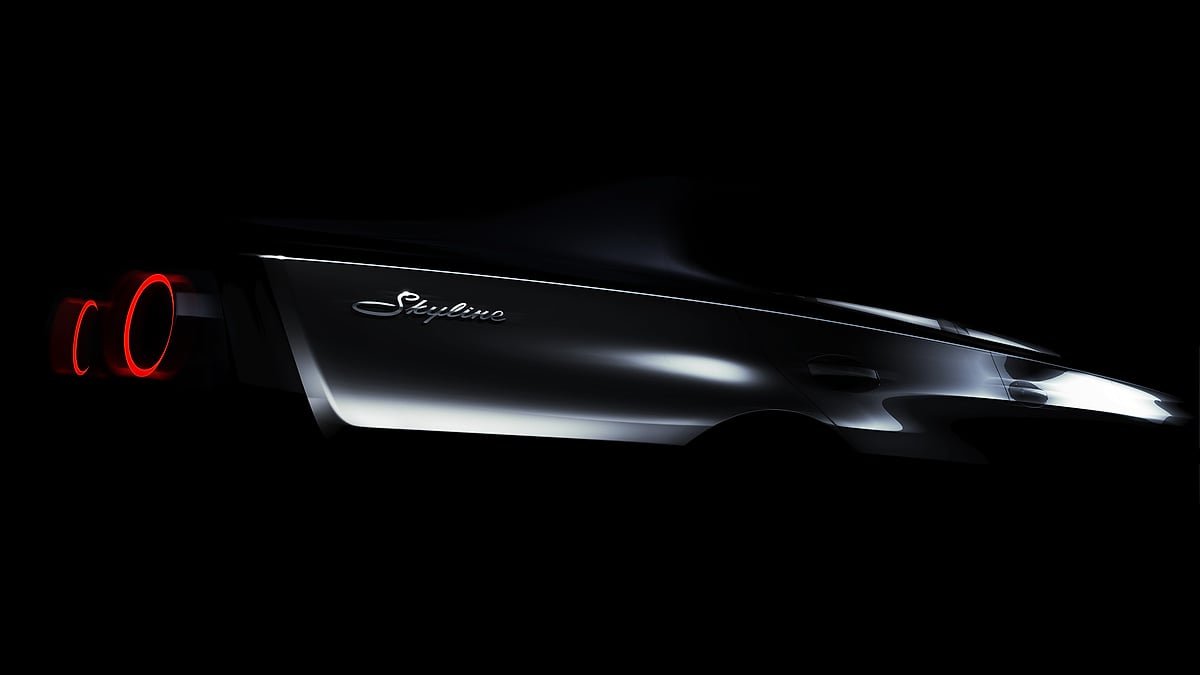
Nissan’s latest global strategy introduces a new Skyline for Japan, a reduced lineup, and a broader shift toward hybrids and AI-driven features. But taken together, the plan signals something more significant: Strip away the stage lights and the cleaner reading is harsher. Nissan is no longer behaving like a company with one global product vision. It is breaking itself into regions and giving each market whatever seems most likely to keep the lights on. Japan gets the Skyline back as a “heartbeat model for Japan, delivering performance, precision, and driver-focused character,” while the global lineup is being cut back sharply under the new “Mobility Intelligence for Everyday Life” plan.
That is why the Skyline matters, and not for the sentimental reason Nissan would probably prefer, according to reporting from Carbuzz. The return of that badge after 14 years is not the story of a company bursting with confidence. It is the story of a company reaching for one of the last pieces of emotional capital it still owns, and keeping it at home. Nissan’s own framing calls the Skyline a heartbeat model for Japan, which is revealing. If the car that embodies your identity is reserved for the domestic market while your second-largest market gets crossovers and truck-based utilities, then your identity is no longer global. It is regional, defensive, and fragmented.
The sharper signal is not the Skyline itself. It is what sits beside it in the plan. Nissan says it will streamline its global lineup from 56 models to 45, exit low-performing products, and push AI driving technology across 90 percent of the fleet over time. Reuters reported the same strategy and noted that Nissan is targeting annual sales of 1 million vehicles each in the U.S. and China, plus 550,000 in Japan by fiscal 2030. Those are not the moves of a company expanding into new white space. Those are the moves of a company trying to shrink its complexity fast enough to survive its own ambitions.
The Ariya is the clearest evidence that Nissan’s electric ambitions have already been marked down in America. Reported coverage last year said the Ariya would be discontinued for the 2026 model year in the U.S. after just three years on sale. By the first quarter of 2026, Cox Automotive data showed Ariya sales had collapsed to 56 units from 4,148 a year earlier, a 98.6 percent drop. However Nissan wants to narrate its future, which signals a significant pullback in the market that was supposed to validate the company’s post-Leaf EV relevance.
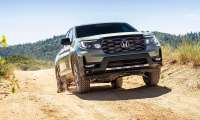
And what replaces that failed flagship EV in America is telling. The plan indicates the U.S. lineup will shift toward a Rogue hybrid and new body-on-frame models, including the possible return of the Xterra. Infiniti is promised a boost by 2028, potentially including a rear-drive manual V6 sports sedan. That is not an EV-led second act. That is Nissan reaching backward toward the kind of metal that sold in the 1990s and early 2000s, hoping familiarity will do what innovation did not.
Seen that way, the plan is less a product offensive than a geographic triage exercise. America gets hybrids and rugged utilities because those are still saleable, margin-friendly, and easier to explain to dealers and mainstream buyers. China gets more EVs and PHEVs because China now demands them. Japan gets the symbolic car, the one that keeps the faithful emotionally engaged and lets Nissan say it still remembers who it is. The company is no longer pushing one technological answer across the world. It is serving three different political and commercial realities at once.
That regional split is especially striking because Nissan once had a credible claim to being ahead of the curve. In 2023, Reuters reported Nissan was aiming to have seven EV models by 2026 and make 80 percent of its lineup electric by 2030. Three years later, the center of gravity has plainly shifted. The new plan talks about more powertrains, more hybrids, and a sharper pruning of the lineup. In practice, this looks like a move away from EV-first positioning and toward a hedge-heavy portfolio built to minimize risk in uneven markets.
The AI language in the new plan only makes that contrast starker. Nissan says AI Drive technology will spread across 90 percent of the lineup, with the first vehicle to get the next-generation ProPilot system being the Elgrand van in Japan, and it is talking about “end-to-end autonomous technologies” by the end of fiscal 2027. That may sound futuristic, but it also arrives in a period when most of the industry has learned, painfully, that software promises are cheaper to make than hardware successes are to deliver. When an automaker is cutting models, backing away from a U.S. EV flagship, and leaning harder on hybrids, lofty autonomy language reads less like confidence than compensation.
There is another insult buried in the Skyline decision, and American enthusiasts will recognize it instantly. The U.S. was once the place where Skyline DNA paid real bills for Nissan through Infiniti. The G35 and G37 were not niche curiosities. They were central to Infiniti’s identity at its best. Now Nissan is reviving the actual Skyline for Japan while dangling the possibility that Infiniti could get a rear-drive manual V6 sports sedan by 2028. That is not a product plan buyers can touch. It is a promise about a maybe-car, two years out, from a company that just killed its main U.S. EV.
That is why the most interesting part of this story is not whether the Skyline is cool, because of course it is. The interesting part is what Nissan thinks each region deserves. Japan gets heritage, identity, and the emotional flagship. America gets rationalized volume vehicles, a hybrid Rogue, truck-based SUVs, and possibly an Infiniti consolation prize down the road. China gets the more aggressive electrified push because China is where Nissan still has to prove it can compete in the present tense. What emerges is not a unified company marching into a new era. It is a company carving itself into separate answers for separate fears.
The blunt conclusion is that Nissan has not found a clean road back to relevance. It has found a way to reduce exposure. Cutting the lineup, restoring an old nameplate at home, swapping U.S. EV ambition for hybrids and body-on-frame vehicles, and dressing the whole thing in AI language is not the profile of a company that believes it is winning the next era. It increasingly looks like a company focused on stabilizing its position rather than aggressively expanding into the next phase of the market. The Skyline’s return does not contradict that. It confirms it. Nissan is using nostalgia where it still has meaning, and retreating from the markets and technologies where the fight got too expensive.
Image Sources: Nissan Media Center
About The Author
Noah Washington is an automotive journalist based in Atlanta, Georgia, covering sports cars, luxury vehicles, and performance culture. His reporting focuses on explaining the engineering, design philosophy, and real-world ownership experience behind modern vehicles.
Noah has been immersed in the automotive world since his early teens, attending industry events and following the enthusiast communities that shape how cars are built and driven today. His work blends industry insight with enthusiastic storytelling, helping readers understand not just what a car is, but why it matters.
Noah is also a member of the Southeast Automotive Media Association (SAMA), a professional organization for automotive journalists and industry media in the Southeast.
His coverage regularly explores sports cars, luxury vehicles, and performance-driven segments of the automotive industry, including the evolving culture surrounding Formula Drift and enthusiast builds.
Read more of Noah's work on his author profile page.
You can also follow Noah here:
Set Torque News as Preferred Source on Google
Follow us today...