
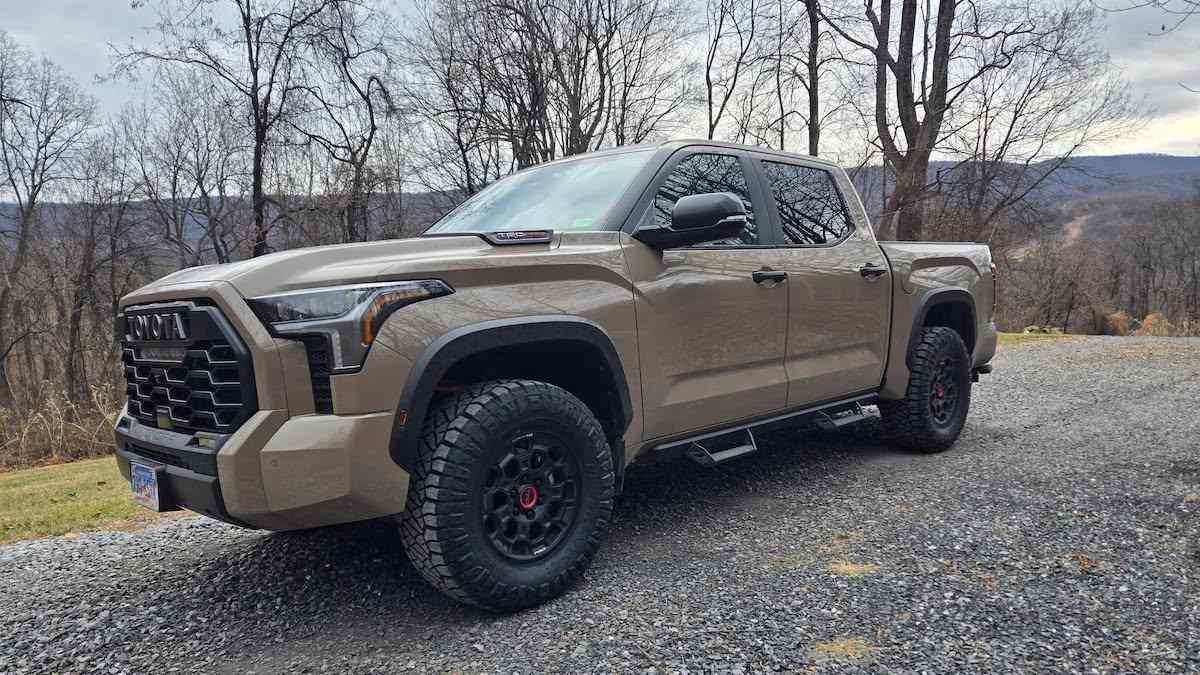

He built the ultimate 2025 Toyota Tundra with 35s and no rub, but a terrifying discovery in the engine oil might bring the whole dream to a grinding halt.
Imagine the sheer satisfaction of finally dialing in your dream rig, seeing those beefy 35-inch Nitto tires filling the wheel wells with a perfect, rub-free fit that makes every turn feel like a victory. You envision years of mountain passes and highway hauls in a truck that looks as tough as it performs, only to have that vision shattered by a shimmering silver tint in your oil pan. This owner’s heart-wrenching discovery perfectly captures the bittersweet reality of the current Tundra dilemma: a world-class chassis betrayed by a microscopic manufacturing nightmare.
Scott Edward on the 2023-2026 Toyota Tundra Owners Facebook page says,
“It’s the new year, and here is my 2025 Toyota Tundra TRD Pro with 35 Nitto's.. Zero rub.. (Barely). If it weren't for these metal shavings shredding my main bearing, I would drive this truck for years!!”
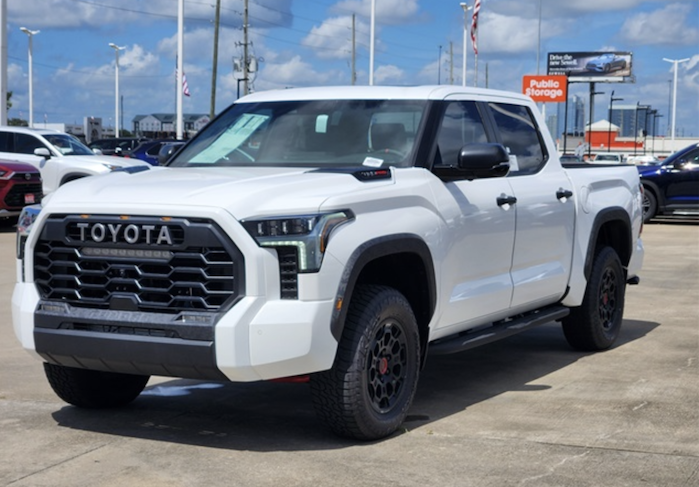
Why New 2025 Models Are Facing Main Bearing Failure
As a senior reporter for Torque News with over 30 years in the automotive trenches, I have seen brands rise and fall on the strength of their powertrains. I have spent decades testing everything from vintage farm trucks to high-tech hybrids, and Toyota has always been the gold standard for "bulletproof" reliability. However, what we are witnessing with the 2022-2025 Toyota Tundra V35A engine issues is a rare and painful fracture in that legendary reputation.
The story of Scott Edward is becoming hauntingly familiar. Here is a guy who did everything right, choosing the top-tier TRD Pro and outfitting it with the best rubber in the business. But no amount of aftermarket excellence can compensate for machining debris in Toyota Tundra engines, a problem that was supposed to be a ghost of the past.
Understanding the "Swarf" Nightmare
The technical term for these metal shavings is "swarf." During the manufacturing process at Toyota’s engine plants, tiny metal particles from the machining of the engine block were not properly cleared out. In a perfect world, these bits would be caught by the oil filter. In the 3.4L twin-turbo V6, however, they are finding their way into the tight tolerances of the crankshaft main bearings.
Once those shavings get trapped, they act like sandpaper, shredding the bearing material and leading to a catastrophic "spun bearing." This causes an audible knocking sound, a loss of oil pressure, and eventually, a total engine seizure. It is the kind of failure that usually takes 300,000 miles to see, not 3,000.
I recently covered a similar heartbreak in my report, The New Toyota Tundra Engine Recall Doesn’t Include the Hybrid, But a 2024 Tundra Hybrid Just Blew an Engine, where I dive into how these failures are crossing over into the newer models and hybrid powertrains that were initially thought to be safe from the machining debris disaster.

Is the 2025 Tundra Safe From the Recall?
Toyota initially claimed that the debris issue was localized to 2022 and 2023 models. They assured the public that production changes in early 2024 had "purified" the assembly line. Yet, as we move into 2026, the evidence from the front lines suggests otherwise. Owners of the 2025 Toyota Tundra have mounting reliability concerns because the failures continue.
When you see a 2025 model with metal shavings in the oil, it forces us to ask a difficult question: Was it really just "debris," or is there a deeper Toyota Tundra V6 engine design flaw involving oil flow or bearing metallurgy? As someone who has analyzed thousands of service bulletins, the "debris" explanation starts to feel like a convenient umbrella for a more complex engineering hurdle.
For many, the financial hit is just as bad as the mechanical one. I detailed this in my article, My Toyota Tundra Suddenly Lost Power, and I Need a New Engine, I've Been to the Dealer Countless Times, Now They Say My $60,000 Truck Is Only Worth $35K, which highlights the devastating depreciation that follows these engine failures.
Advice for Current Tundra Owners
If you are sitting in a new Tundra, don't panic, but do be proactive. You cannot change the past manufacturing of your engine, but you can control how you monitor it.
1. The 1,000-Mile Oil Flush: I don't care what the manual says about 10,000-mile intervals. If you have a new Tundra, change that oil at 1,000 miles. Look for any shimmer in the oil.
2. Blackstone Oil Analysis: For about $35, you can send a sample of your oil to a lab. They will tell you exactly how much copper, lead, and aluminum (bearing materials) are present. This is your "early warning system."
3. Document Everything: If your truck hesitates, makes a faint "ticking" sound when cold, or shows a dip in oil pressure, get it to the dealer and ensure it is written on a service RO (Repair Order).
The stress of modern truck ownership is real, especially when the brand you trusted is under fire. I explored this sentiment in I Took My '25 Toyota Tundra For Its First Oil Change at 1,500 Miles, and the Dealer Tried Hard to Convince Me To Do Them At 10K, For an Engine Known To Have Problems Early On, where the conflict between factory recommendations and real-world survival becomes clear.
Key Takeaways for Tundra Owners
- Production Overlap: Evidence suggests 2024 and 2025 models may still be susceptible to bearing issues despite Toyota's initial recall dates.
- Early Detection is Key: Metal shavings in the oil pan are the "smoking gun." Regular oil analysis can save you from a highway stall.
- The Hybrid Factor: While many failures involve the standard i-FORCE, the i-FORCE MAX hybrids are not immune, though their electric motors can sometimes mask early symptoms.
- Resale Value Impact: "Engine replacement" on a Carfax can significantly hurt your trade-in value; keep all maintenance records to prove the truck was cared for.
What Tundra Owners Are Saying
The community is currently a mix of die-hard loyalty and growing frustration. On Reddit, the conversations are blunt and revealing.
"I suspect the debris issue was never 100% resolved, and they are just calling it different things now. My 2025 has 1,000 miles, and the light is already on for 'engine debris'." Reddit User OkChallenge8647
"The hybrid system allows you to get out of the way when the engine lets go, but Toyota is avoiding recalling the hybrids despite having the same inherent debris flaw." Reddit User brandon0228
"I found rather large debris in a brand new unused short block from within the recall period. The failure rate is higher than they suggest." Reddit User dylanx300
In The End
Toyota is at a crossroads with the Tundra. While the truck remains a powerhouse of towing capability and off-road tech, the "heart" of the vehicle is currently in question. For owners like Scott, the frustration is understandable, given that the rest of the truck is so good. A rub-free 35-inch tire setup is a dream, but it means nothing if the engine underneath can't go the distance. Toyota must expand its transparency and support for 2025 owners if it wants to maintain the trust it has spent half a century building.
It's Your Turn: Have you found any metal shavings in your 2024 or 2025 Tundra's oil, or has your truck been the picture of reliability? Let us know your build and your mileage in the comments below.
Next Up: Think the engine is the only thing to watch? Check out my report on the latest drivetrain concerns: My 2025 Toyota Tundra’s Rear Diff With 1,800 Miles Is Whining, the Dealer Brushed Me Off, But Later Found Metal Shavings and Now Has To Replace It.
With over 30 years of industry experience, Denis Flierl brings an insider’s perspective to Torque News, where he has been a Senior Reporter since 2012. Before picking up the pen, Denis consulted for the automotive industry's biggest brands and honed his skills as a test driver. He cuts through the noise to deliver the latest auto news, compelling owner stories, and the expert analysis necessary to navigate today's changing automotive market.
Have a tip or question? Follow me on X @DenisFlierl and @WorldsCoolestRides, or connect with me on Facebook, Instagram, and LinkedIn.
Photo credit: Denis Flierl via Scott Edward
Set Torque News as Preferred Source on Google
Follow us today...






