
Physics doesn’t care about your truck badge, your loyalty, or your showroom window sticker.
Pulling a heavy box through a concrete wall of air at highway speeds will instantly turn your high-tech pickup into a terminal fuel-guzzler.
I’ve spent 30 years diagnosing vehicle drivetrains and towing at high-altitude, and I can tell you that the numbers don’t lie.
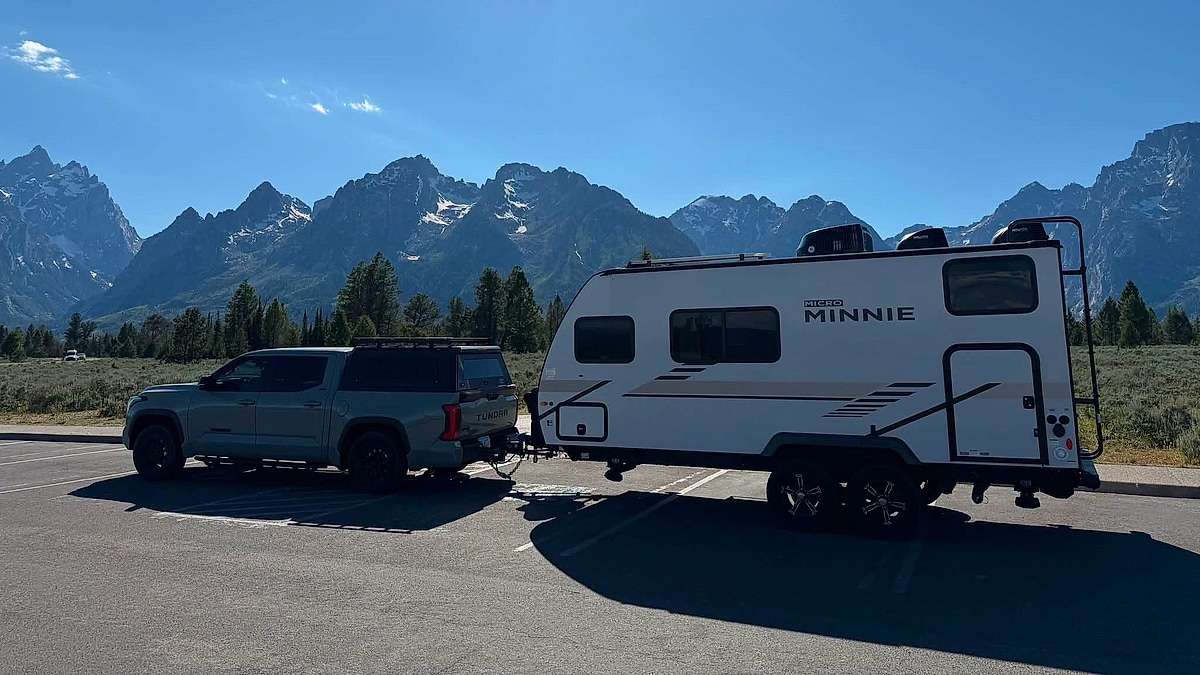
A modern truck owner just proved exactly how brutal the penalty is when real-world conditions meet official government testing loops. Andrei Cunitin from Panama City Beach, Florida, recently posted his cross-country tracking data to the 2023–2027 Toyota Tundra Owners Facebook page.
He wrote, “I just wrapped up an over 5,000-mile round trip in my 2024 Toyota Tundra going from Florida to Montana & Wyoming and back. It performed super well with my 18’ Winnebago camper mini about 5,500lb. My average was 7.5 MPG. I was driving above 70 MPH for most of the trip, so that probably didn’t help.”
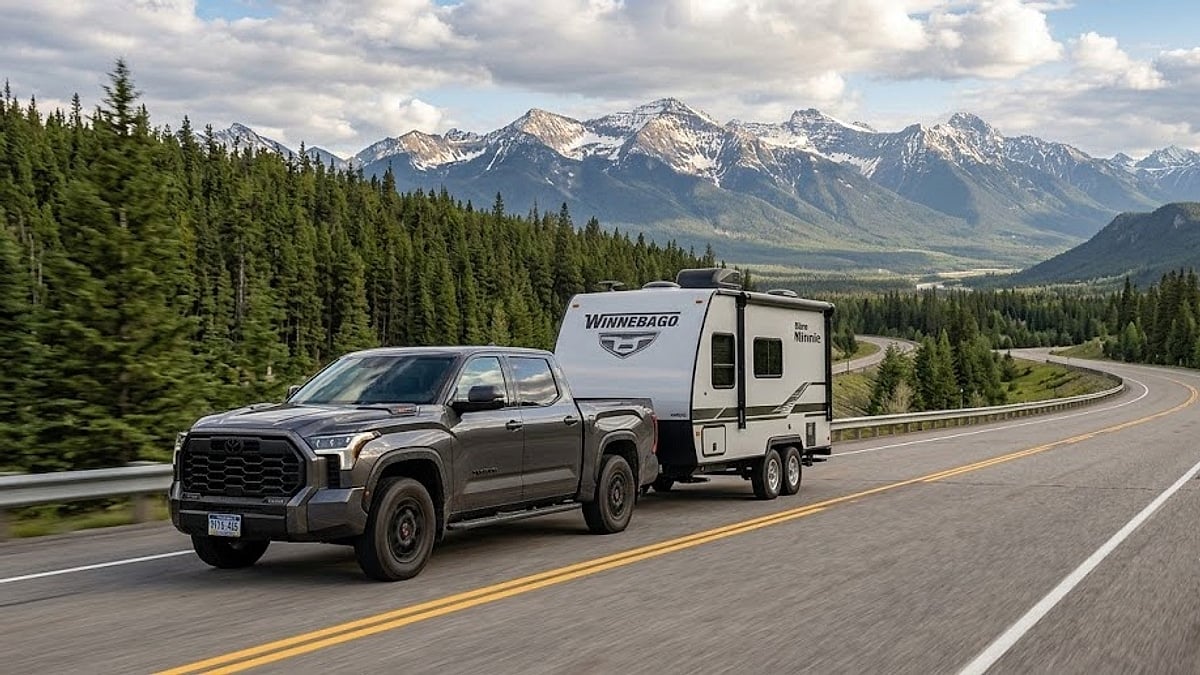
The Shocking Deficit Between Laboratory Stickers And The Open Highway
Dropping down to single-digit fuel efficiency is an absolute shock to the system for any buyer who bought a third-generation Tundra expecting the frugality of a modern V6. According to verified test data published by Fueleconomy.gov, a standard 2024 Toyota Tundra 4WD is officially rated up to 20 MPG on the highway under normal operating conditions.
That means this cross-country hauling run resulted in a staggering 62.5% drop in efficiency relative to the vehicle's unladen baseline.
The mainstream media loves to look at these massive efficiency drops and blame the manufacturer or point to an imaginary vehicle defect.
However, independent test data published by automotive reference authority HowStuffWorks confirms that "at highway speeds, more than 50 percent of engine power must be used to conquer drag," an aerodynamic penalty that scales aggressively the faster you try to run.
When you add a massive, flat-faced travel trailer to the equation, you are essentially doubling the front surface area that the truck has to push through the air.
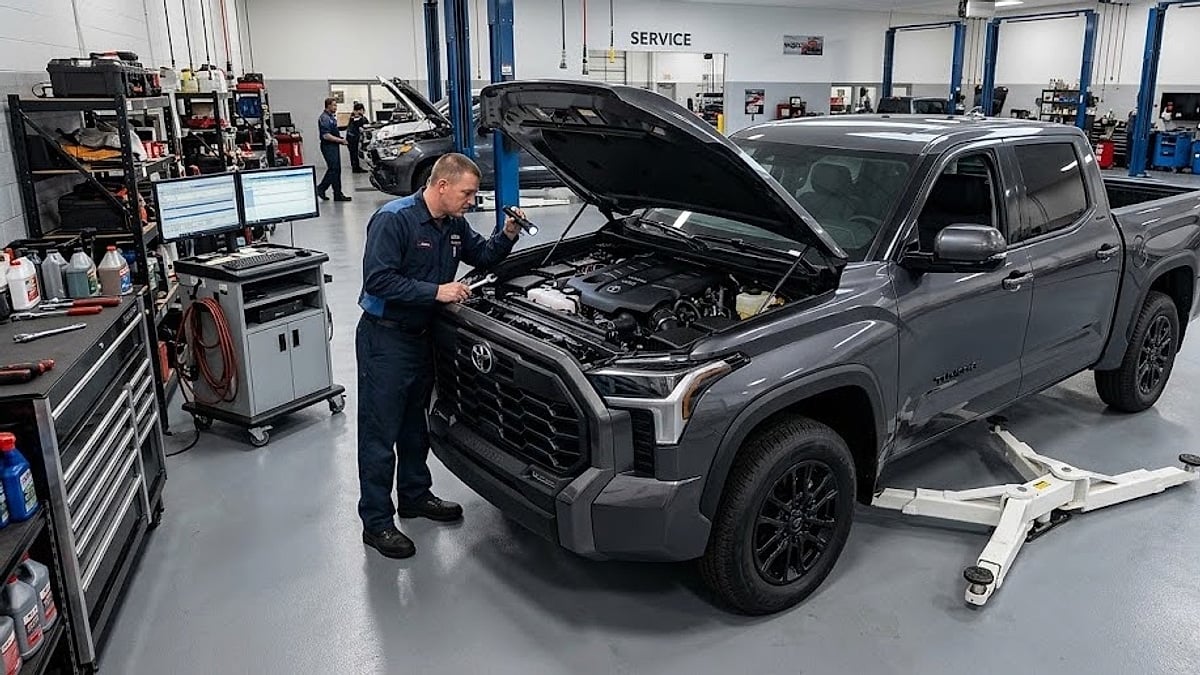
Inside The Engine Bay: Why The Twin-Turbo V6 Drinks Like A V8 Under Heavy Load
The real technical root cause of this massive efficiency drop comes down to the fundamental design philosophy of the Tundra’s V35A-FTS 3.4-liter twin-turbo V6 engine.
In my analytical reporting on the Toyota Tundra, I detailed how this high-output powertrain platform operates under extreme thermal stress when subjected to high-altitude or heavy-load aggravation.
When a small-displacement downsized engine is cruising without a load, it stays out of boost and sips fuel precisely like the EPA laboratory test dictates.
But the moment you hook up a 5,500-pound Winnebago and climb up to 70 MPH, the engine control module forces the turbochargers to produce sustained, big boost to maintain that high speed.
To keep internal cylinder temperatures safe and prevent engine knock under continuous boost, the computer pours extra fuel into the combustion chambers, thereby destroying your fuel economy.
As I documented in another recent Toyota Tundra powertrain assessment, these late-model builds are fine machines, but their downsized turbo configurations offer zero margin for error when forced to work hard for extended periods.
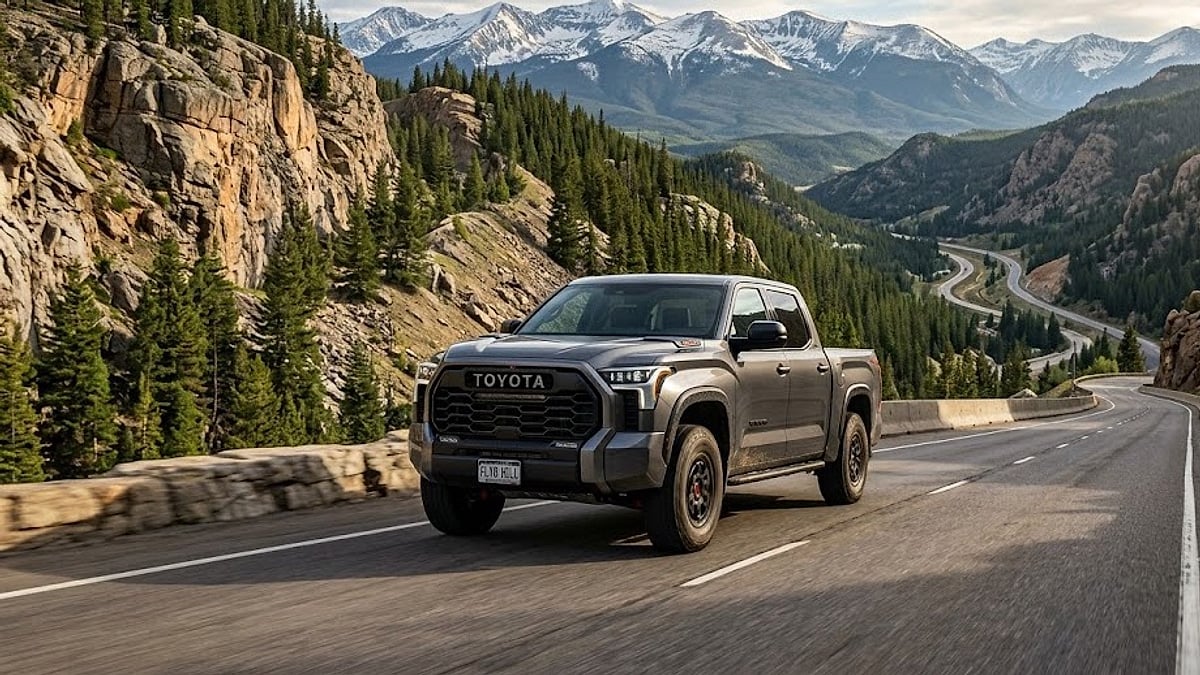
The Exponential Penalty Of Pushing Past The 62 MPH Aerodynamic Wall
The owner's admission that he was driving above 70 MPH for most of the trip is the exact mechanical smoking gun explaining the 7.5 MPG baseline. Aerodynamic drag does not increase linearly with speed; it increases exponentially with velocity squared.
Engineering data show that the aerodynamic power required to move a truck and trailer at 70 MPH is nearly double that required to move the same load at a conservative 60 MPH. When you push a full-size truck and a tall camper past 62 MPH, you cross an invisible threshold where wind resistance completely overrides mechanical efficiency.
This specific aerodynamic penalty becomes even more severe in high-altitude towing environments
Such as climbing Floyd Hill in the Rocky Mountains or tackling the approach to the Eisenhower Tunnel in Colorado.
While the thinner mountain air slightly reduces total aerodynamic drag, the extreme elevation forces a twin-turbo engine to work twice as hard to compress enough oxygen to maintain highway speeds under load.
The mechanical strain of fighting steep 7% grades at high speeds will drop even the most advanced hybrid or diesel platforms into the single digits.
The Next Question: Will Towing in Tow/Haul Mode Save Your Fuel Economy?
The very next logical question most truck owners ask when facing single-digit efficiency is whether activating the factory Tow/Haul mode will help rescue their fuel mileage on long trips.
The short answer is no, because Tow/Haul mode is fundamentally engineered to protect your transmission and brakes, not your fuel budget.
Activating the system recalibrates the electronic shift points to hold lower gears longer, keeping the engine safely inside its primary power band and preventing the transmission from constantly "hunting" between overdrive gears.
While this prevents dangerous spikes in transmission fluid temperature and protects your internal clutches from premature wear, running at higher RPMs means the engine will continuously consume more fuel, making a single-digit MPG average completely unavoidable at high speeds.
Final Technical Analysis
Real-world towing efficiency is governed by the unyielding laws of physics and aerodynamics rather than the pristine estimates printed on an EPA window sticker. Pushing a twin-turbo platform to maintain 70 MPH while hauling a 5,500-pound travel trailer will always force the powertrain into high-boost fuel enrichment cycles.
How About You? Have you ever tracked your real-world fuel economy while hauling a travel trailer across the country with a modern downsized turbo truck? Leave a comment in the red “Add new comment” link below and share your numbers with the community.
There’s More To Come Tomorrow…Also check out my Torque News Home Page for more of my informative Toyota Tundra news articles.
About The Author
Denis Flierl is a 14-year Senior Reporter at Torque News and a member of the Rocky Mountain Automotive Press (RMAP) with 30+ years of industry experience. Explore his full investigative reporting archives and technical guides at DenisFlierl.com.
Based in Parker, Colorado, Denis leverages the Rockies' high-altitude terrain as a rigorous testing ground to provide "boots-on-the-ground" analysis for readers across the Rocky Mountain region, California EV corridors, the Northeast, Texas truck markets, and Midwest agricultural zones.
A former professional test driver and consultant for Ford, GM, Ram, Toyota, and Tesla, he delivers data-backed insights on reliability and market shifts. Denis cuts through the noise to provide national audiences with the real-world reporting today’s landscape demands.
Connect with Denis: Find him on LinkedIn, X @DenisFlierl, @WorldsCoolestRides, Facebook, and Instagram.
Photo credit: Denis Flierl via Andrei Cunitin
Set Torque News as Preferred Source on Google
Follow us today...