
While you might think you are buying bulletproof reliability, a hidden maintenance trap is forcing a massive civil war among Toyota RAV4 owners.
If you are blindly following the factory glovebox manual, you are actively participating in the slow destruction of your own powertrain.
You bought a RAV4 because you wanted a crossover that would effortlessly cross the 200,000-mile mark without breaking a sweat.
Then you opened the factory glovebox manual and discovered a corporate maintenance schedule that seems to prioritize marketing spreadsheets over actual mechanical longevity. Now, a massive civil war is brewing in owner circles over an ignored under-the-hood reality that could quietly destroy your engine.
The battle lines are clearly drawn on public enthusiast spaces.
In an extensive technical analysis on modern engine maintenance in the r/Toyota Maintenance Archive, an automotive diagnostic professional noted that the 10,000-mile interval is designed primarily to lower the advertised total cost of ownership index for fleet buyers during the initial warranty phase. This calculated corporate metric has driven seasoned owners to take matters into their own hands.
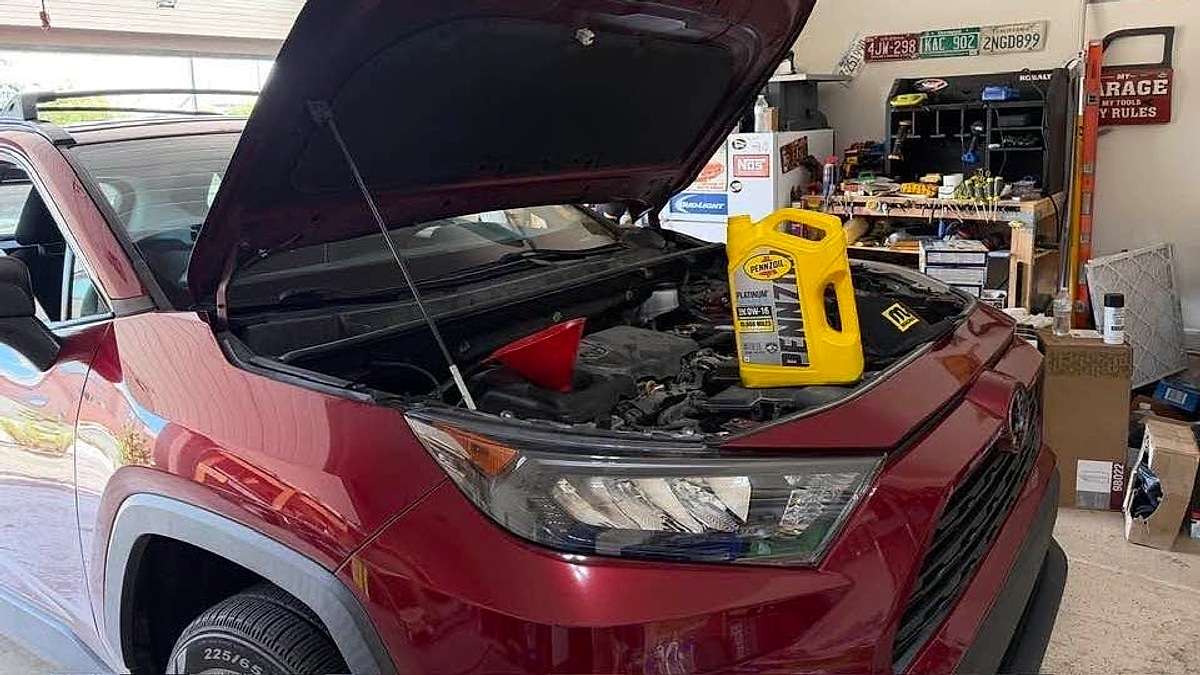
On the popular Toyota RAV4 Discussion Group Facebook page, high-mileage owner Chris Larkin revealed his real-world strategy, stating that he has 100,000 miles on his 2020 RAV4 and uses 0W-16 oil and a fresh filter every 5,000 miles for just $32 as cheap insurance.
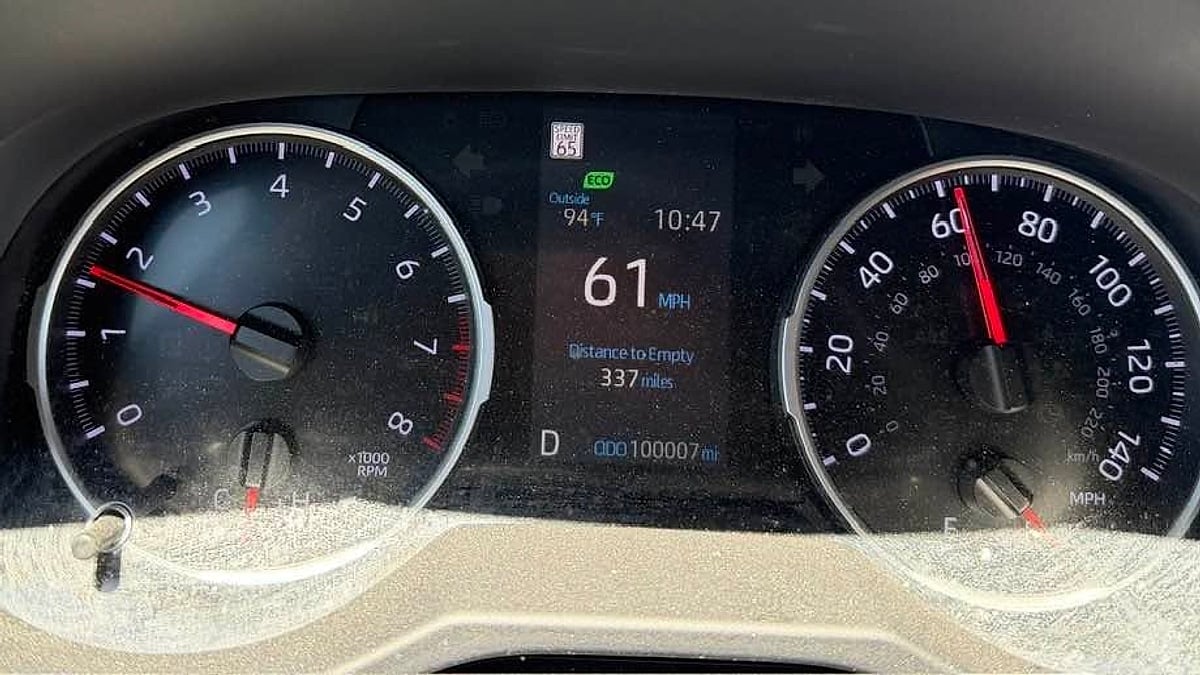
Yet this proactive $32 protection plan has given rise to a secondary, far more dangerous maintenance habit among budget-conscious DIYers. In that same RAV4 discussion space, owner Ishan Trivedi raised a common dilemma, asking whether it is safe to swap the thin synthetic fluid every 5,000 miles while extending the oil filter's lifespan to a 10,000-mile operating cycle.
Trying to save $10 by leaving a saturated, dirty filter on your engine while pouring in fresh, ultra-low-viscosity oil is a catastrophic gamble.
According to a field advisory report published by automotive reliability group Juke Auto, prolonged 10,000-mile operating cycles ask even the highest-grade synthetic oils to operate at the absolute limits of their chemical effectiveness, leaving engines vulnerable to accelerated soot contamination, metal particulates, and fuel dilution.
When you dump fresh fluid into an engine but leave the old filter in place, you are instantly compromising the entire system.
The Secret Trap Hidden in Modern 0W-16 Synthetic Oil
The hidden story that mainstream automotive media outlets completely ignore is how modern, water-thin 0W-16 synthetic oils chemically interact with a dirty filter.
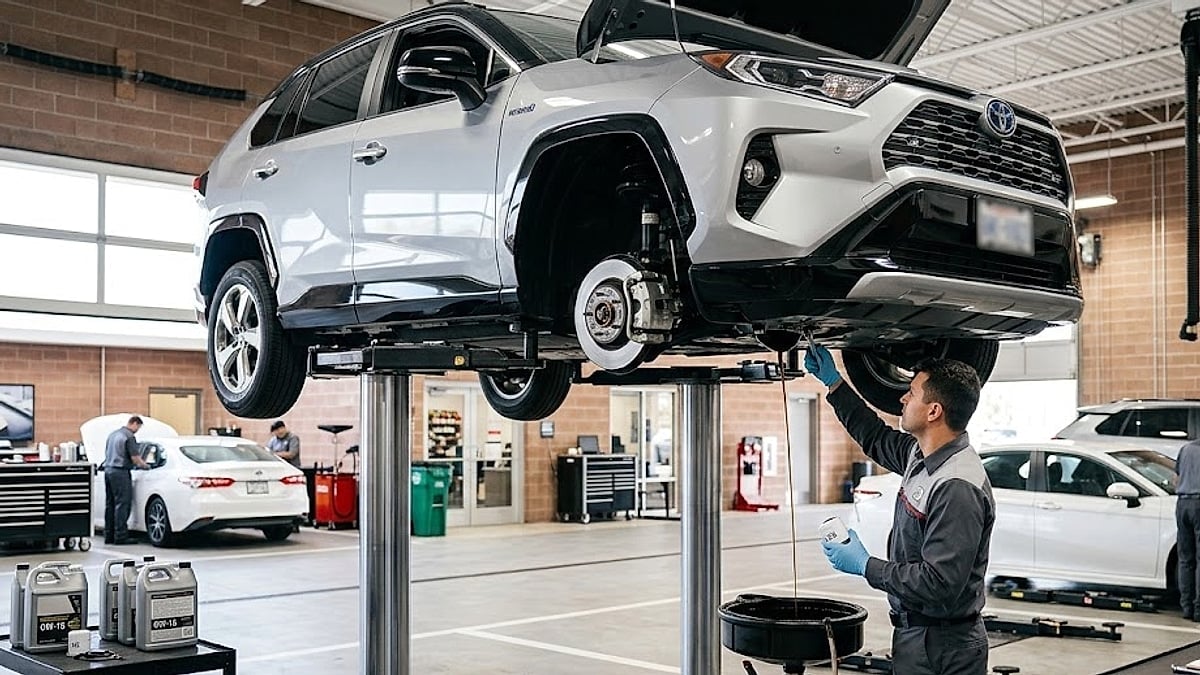
In a deep investigative dive on extended service intervals, I revealed that strict regulatory mandates require the use of ultra-low-viscosity fluids to maximize fuel economy ratings, though these thin oils exhibit a highly vulnerable boundary layer under severe thermal stress. This means the oil relies heavily on chemical detergents to keep abrasive carbon particles suspended in solution.
If you reuse an old oil filter, its internal paper pleats are already clogged with carbon deposits from the previous 5,000 miles.
The fresh detergents in your new 0W-16 oil will immediately attack that trapped sludge inside the old filter, loosening the packed debris and sending it right back into the engine block.
The Bypass Valve Nightmare That Blindsides Owners
What happens next is a mechanical chain reaction that standard dashboard warning lights are completely incapable of detecting until it is far too late.
Every modern factory Toyota filter features an internal, spring-loaded safety bypass valve. This valve is designed to open when the paper filtration media becomes fully saturated with debris, ensuring the engine does not starve for oil.
When that bypass valve stays forced open during a second 5,000-mile cycle, your engine is running on completely unfiltered oil.
This dirty, abrasive fluid is pumped directly into the micro-passages of the variable valve timing (VVT-i) actuators and hydraulic chain tensioners. Without a clean boundary layer of protection, these high-precision components suffer from severe friction wear, resulting in stretched timing chains and catastrophic piston-to-valve contact.

High-Altitude Torture: The Colorado Extreme-Use Variable
This maintenance blindspot becomes significantly more dangerous if you operate your vehicle outside of perfect, flat-land laboratory conditions.
Writing about regional reliability factors in my ongoing Toyota durability studies, Denis Flierl notes that high-altitude operations, such as climbing Colorado's grueling Vail Pass or dealing with extreme Rocky Mountain temperature swings, accelerate oil degradation and fuel dilution at twice the normal rate.
Under these high-load mountain driving conditions, the engine runs richer, dumping unburnt gasoline directly into the crankcase.
This localized fuel dilution thins out the 0W-16 oil even further, stripping its ability to protect vital internal components.
For drivers navigating mountain passes or harsh winter climates, running an oil filter for 10,000 miles transforms from a questionable cost-cutting measure into absolute mechanical negligence.
In fact, I documented real-world frustrations when a 2025 Toyota RAV4 Hybrid owner's first maintenance alert came on at 5,000 miles, only for the dealer to refuse to perform an oil change, forcing him to wait until the factory 10,000-mile mark.
Next Question: Does Changing Your Oil Every 5,000 Miles Void the Toyota Factory Warranty?
The next logical question for many new crossover buyers is whether performing intermediate oil changes at home will inadvertently run afoul of dealership service managers. The short, definitive answer is absolutely not. Federal law specifically protects your right to maintain your own vehicle at shorter intervals than what the corporate marketing schedule recommends.
The foundational legal guardrail protecting consumers is the Magnuson-Moss Warranty Act, which prohibits a franchise dealership from denying powertrain warranty coverage based on intermediate maintenance intervals, provided you keep your receipts and document the correct fluid specifications.
The Final Verdict on the $10 Filter Gamble
Attempting to save the price of a fast-food meal by skipping a fresh oil filter during a 5,000-mile service is one of the most short-sighted financial decisions an automotive owner can make. Spending an extra $10 for a fresh filter every single time you change your ultra-thin 0W-16 synthetic oil is the only proven way to guarantee your RAV4 survives to see high-mileage glory.
How About You? Are you currently following Toyota's official 10,000-mile maintenance schedule, or are you like Chris, playing it safe with a strict 5,000-mile routine? Please leave a comment in the red "Add new comment" link below and share your real-world mileage and maintenance habits with us!
Come back tomorrow… or check my Torque News Home Page for more of my informative Toyota RAV4 news articles.
About The Author
Denis Flierl is a 14-year Senior Reporter at Torque News and a member of the Rocky Mountain Automotive Press (RMAP) with 30+ years of industry experience. Explore his full investigative reporting archives and technical guides at DenisFlierl.com.
Based in Parker, Colorado, Denis leverages the Rockies' high-altitude terrain as a rigorous testing ground to provide "boots-on-the-ground" analysis for readers across the Rocky Mountain region, California EV corridors, the Northeast, Texas truck markets, and Midwest agricultural zones.
A former professional test driver and consultant for Ford, GM, Ram, Toyota, and Tesla, he delivers data-backed insights on reliability and market shifts. Denis cuts through the noise to provide national audiences with the real-world reporting today’s landscape demands.
Connect with Denis: Find him on LinkedIn, X @DenisFlierl, @WorldsCoolestRides, Facebook, and Instagram.
Photo credit: Denis Flierl via Chris Larkin
Set Torque News as Preferred Source on Google
Follow us today...