
A broken interior door handle sounds like a small problem until the door becomes the only way out.
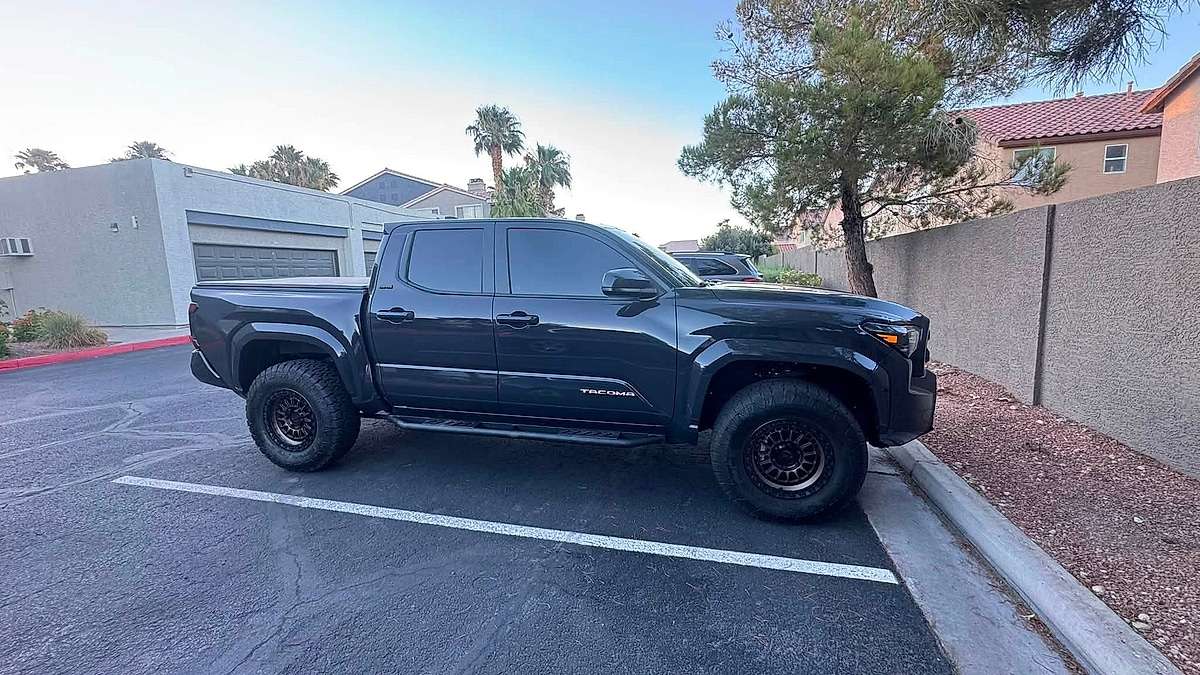
Ryan Mark Manuel has owned his 2025 Toyota Tacoma for a little over six months. The rear passenger door handle has already failed from the inside. The door can still be opened from outside, or by rolling down the window and reaching for the exterior handle, but the interior release no longer does its job.
- Document the issue immediately with photos or video showing the handle failing to return or open the door, as this strengthens your warranty claim and helps avoid disputes later.
- Ask the dealer if a temporary fix or adjustment is possible while waiting for parts, especially if the door still partially functions but shows early signs of failure.
- Check online owner forums or groups for part numbers or revised components, as some owners report updated versions that may resolve the issue more permanently.
Now the front passenger handle is beginning to act the same way. It still opens the door, but it clicks and does not return cleanly to its resting position.
That is how a trim nuisance becomes an exit concern.
According to the Facebook post, the dealer told him there are more than 700 requests for the part and wanted to keep the truck, with no clear timeline. Manuel does not want to leave a modified Tacoma parked somewhere for an unknown number of days or weeks while a replacement handle sits in a parts queue.
I understand why.
A service department wants to treat a non-working interior release as a safety issue. The owner wants to keep using a truck that still drives and already has personal money for modifications. Both sides have a point. The part shortage is the unacceptable piece.
This Is Bigger Than A Clicky Handle
The failed rear door changes how a passenger exits the truck.
That alone changes the tone.
A door that opens only from the outside may be manageable in a driveway. It becomes ugly after a crash, in a fire, in water, in a parking-lot emergency, or with a child, elderly passenger, dog, or injured occupant in the back seat. Nobody should need to lower a window to escape a new truck.
The Tacoma is still inside Toyota’s basic warranty period unless mileage has already run past 36,000. A 2025 model with a failed interior release should be handled as a warranty repair, documented as a safety-related concern, and assigned a parts order immediately.
The owner should not be asked to surrender the truck for an unknown wait unless Toyota or the dealer can explain why it cannot be driven safely during the backlog.
That explanation needs to be written down.
If the truck truly cannot be released because the door handle creates an egress problem, then the dealer should provide a loaner and keep the case moving. If the truck can be driven until parts arrive, then the dealer should order the parts, note the condition, and schedule the repair when inventory lands.
The middle ground is simple: document the defect now, repair when the parts arrive, and stop making the owner guess.
The Pattern Is Starting To Look Familiar
Other Tacoma owners in the discussion reported similar failures. One said his driver-side handle was replaced under warranty. Another said he waited around two months because of a backorder. A Missouri owner said parts arrived within a week. Manuel says he has already waited a month on the rear door, and now the front passenger handle is showing early symptoms.
That spread tells me the problem may be regional in parts availability rather than universal repair difficulty.
The comments also line up with what has started surfacing outside the thread. NHTSA complaint data already includes at least one 2025 Tacoma report where the interior driver-side handle mechanism failed, and the owner could only exit by opening the window and using the exterior handle.
One complaint does not make a recall.
Several owners describing the same failure mode should get Toyota’s attention quickly.
This is the kind of part that should be boring. Interior handles are ancient automotive hardware. Toyota does not need a lecture on how to design a door release. The concern is that a plastic pivot, cable interface, or return mechanism may be too fragile in real use, especially if revised parts are already circulating through the service network, as some owners claim.
Toyota needs to get ahead of that perception before “my Tacoma door handle broke” becomes a standard fourth-generation Tacoma search phrase.
What Owners Should Ask The Dealer For
The owner should not leave the service drive with only a verbal promise.
Ask for the repair order to state the exact failure:
“Rear passenger interior door release inoperative. The door opens only from the exterior handle. Front passenger interior door release clicks and does not fully return.”
Then ask for the part number, whether a superseded or revised part exists, whether the repair is warranty-approved, whether all four door handles should be inspected, and whether Toyota has issued internal guidance. If the dealer claims the truck cannot be released safely, ask for that statement in writing and request a loaner immediately.
If the dealer wants to keep the truck only because it creates an open repair line, that is a different conversation.
A modified truck sitting on a dealer lot for weeks is a reasonable concern. Wheels, suspension parts, lighting, racks, audio work, and other additions complicate storage risk. The owner should photograph the entire truck, mileage, interior, and modifications before leaving it anywhere.
If the dealer can order parts without holding the vehicle, that is the cleaner option.
Do Not Let Mods Become A Distraction
Aftermarket door speakers came up in the comments because one owner had a door-handle issue after working inside the panel.
That is a fair diagnostic question. A cable can be misrouted. A clip can be left loose. A trim panel can bind a lever. Door work can create door problems.
Manuel’s case involves multiple doors on a nearly new truck and a reported parts backlog. That makes a simple installer error less likely unless both affected panels were modified. The dealer should inspect the mechanism, not start by blaming unrelated upgrades.
A lift, wheels, rack, bumper, tint, bed gear, or tune has nothing to do with an interior handle release.
Toyota can deny a warranty repair if an aftermarket modification caused the failure. Toyota still has to connect the modification to the failed part. “Modified truck” is not a diagnosis.
Owners should keep photos and receipts for any door-panel work. If no door-panel work was performed, say that clearly.
The Fix Needs To Include All Four Doors
One failed handle is a repair.
Two failing handles on the same six-month-old truck should trigger a broader inspection.
If the rear passenger handle has failed and the front passenger handle is clicking, the driver-side handles deserve a check while the truck is in the bay. A service advisor may resist replacing parts that have not failed. Inspection costs little. Catching a cracked pivot or weak return early saves another appointment and another part's wait.
The owner should also test the child lock position on the rear door so nobody confuses a child-lock setting with a handle failure. That does not explain the front passenger handle, but it removes one easy deflection.
Then test each door from inside and outside with the windows up. Listen for clicking. Check return action. Make sure the latch releases fully. Document everything on video before the dealer visit.
A good video is hard to argue with.
What Toyota Should Do
Toyota should identify whether the revised handle exists, publish clear service guidance, and protect owners from long vehicle holds when parts are backordered.
If the failure is limited to a specific run of parts, say so through dealer channels and replace them. If the part has already been strengthened, get the new version into owners’ trucks before a second handle breaks.
A Tacoma owner should be thinking about trails, payload, tire pressure, and fuel economy.
He should not be planning NASCAR-style window exits from a six-month-old pickup.
Tacoma Owners, Check Your Handles Today
Sit in the truck with the windows up and test every interior handle. Open each door from inside, then outside. Listen for clicking, slow return, binding, or a loose plastic sound. If one handle feels wrong, record video and open a warranty claim before it fails completely.
Owners with replaced handles should share the model year, mileage, part number, wait time, and whether Toyota installed a revised design.
Share your story in the comments; your input could help other owners spot the problem early or push for a faster fix.
First image by Ryan Mark Manuel
About The Author
Noah Washington is an automotive journalist based in Atlanta, Georgia, covering sports cars, luxury vehicles, and performance culture. His reporting focuses on explaining the engineering, design philosophy, and real-world ownership experience behind modern vehicles.
Noah has been immersed in the automotive world since his early teens, attending industry events and following the enthusiast communities that shape how cars are built and driven today. His work blends industry insight with enthusiastic storytelling, helping readers understand not just what a car is, but why it matters.
Noah is also a member of the Southeast Automotive Media Association (SAMA), a professional organization for automotive journalists and industry media in the Southeast.
His coverage regularly explores sports cars, luxury vehicles, and performance-driven segments of the automotive industry, including the evolving culture surrounding Formula Drift and enthusiast builds.
Read more of Noah's work on his author profile page.
You can also follow Noah here:
Set Torque News as Preferred Source on Google
Follow us today...