
Gary Brown’s frustration does not need much translation.
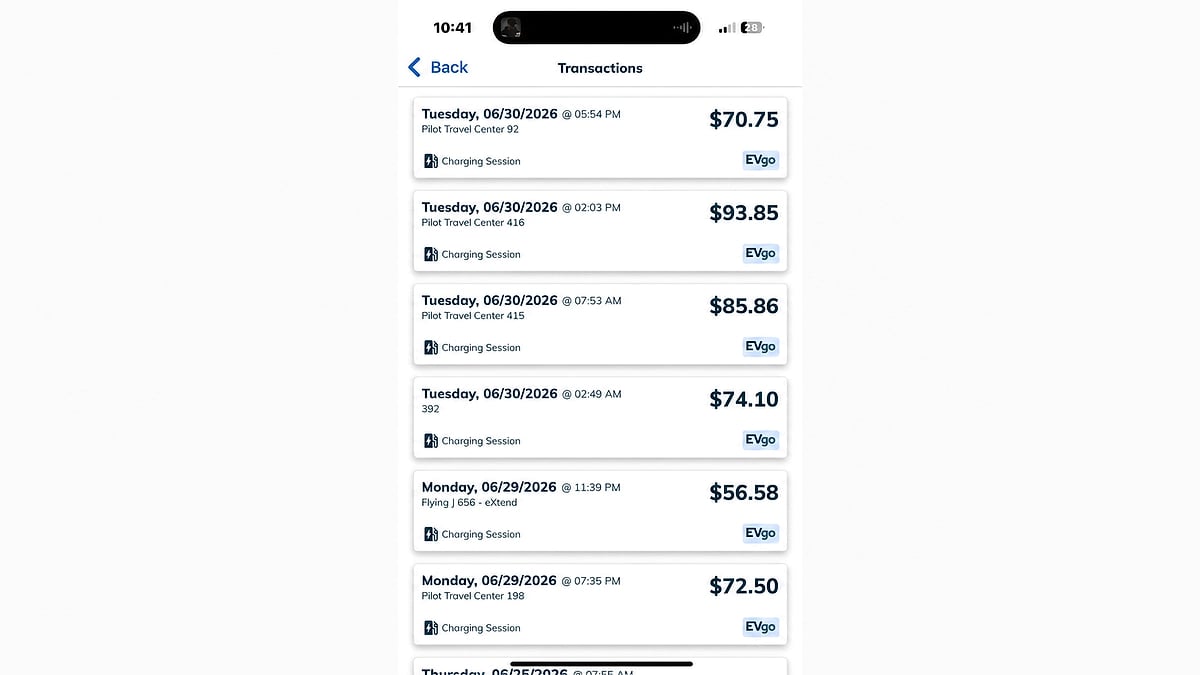
He drove a 2026 GMC Sierra EV AT4 from Florida to Muskegon, Michigan, roughly 1,300 miles, and came away angry at the cost of public fast charging. The screenshot from his charging account shows six EVgo sessions at Pilot and Flying J locations:
- $72.50
- $56.58
- $74.10
- $85.86
- $93.85
- $70.75
That visible total is $453.64.
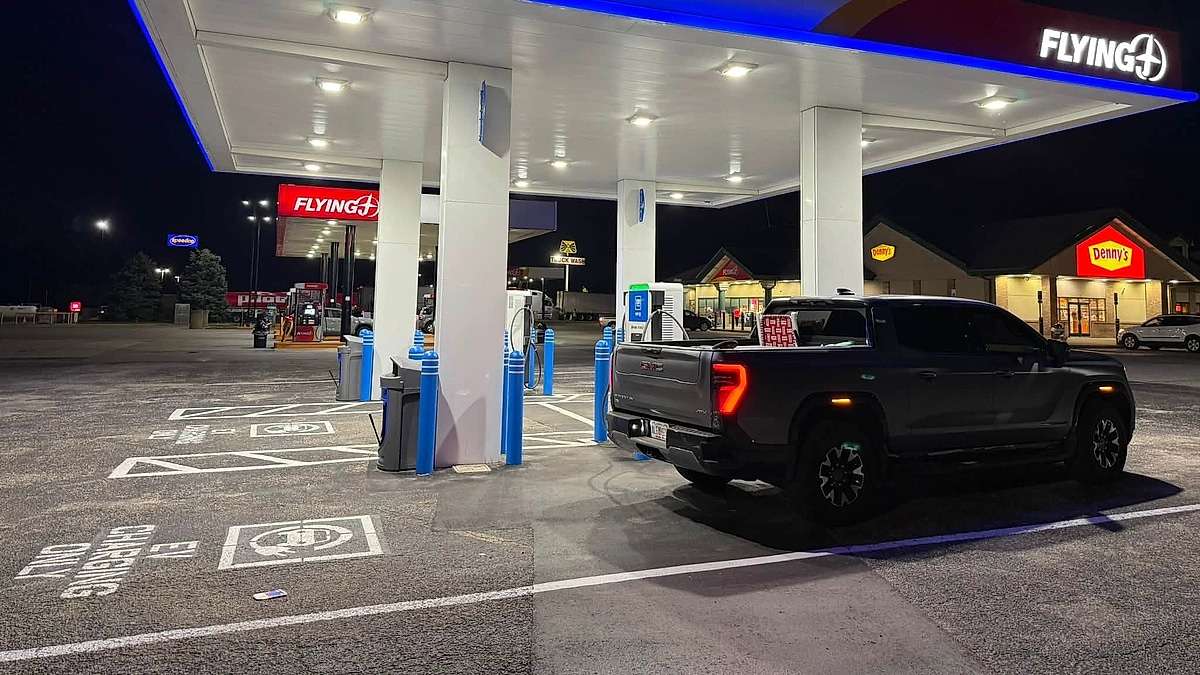
The charger photo shows exactly the kind of site GM, Pilot, and EVgo promised: a GM Energy-branded, Pilot Flying J unit, powered by EVgo eXtend, with CCS connectors labeled up to 350 kW.
The hardware looks right.
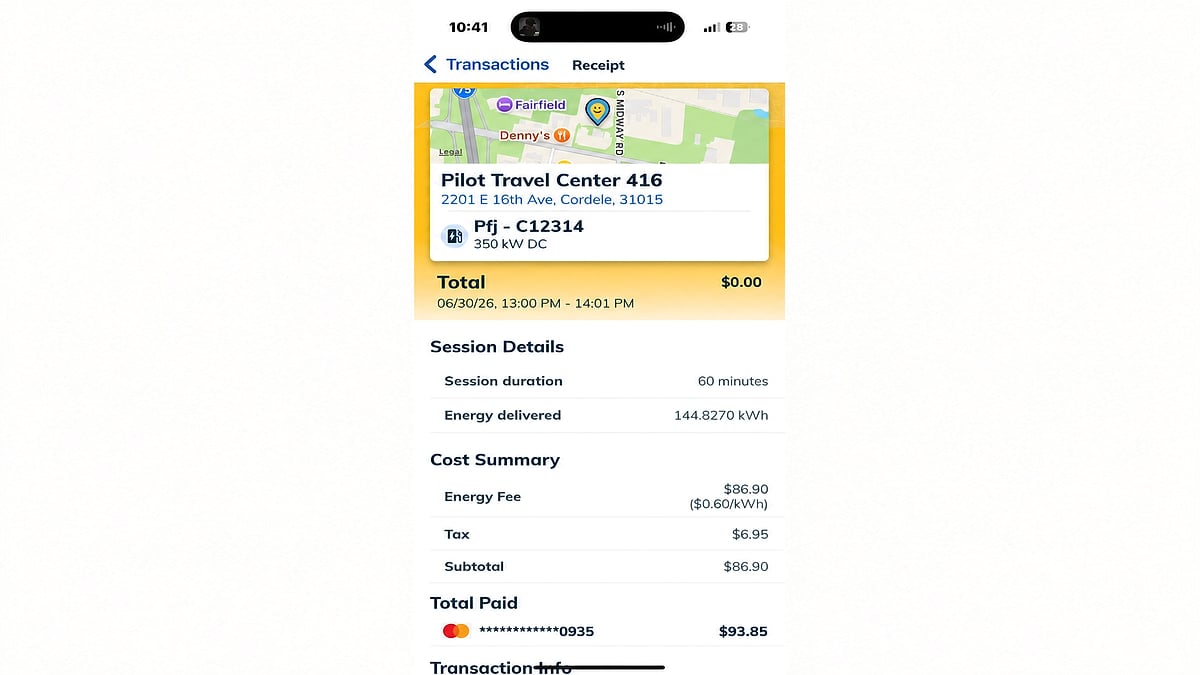
The receipt hurts.
Brown says that if he made the trip again, he would take his Tesla and save around $500 in power. I cannot verify that figure from the visible transactions alone.
- Public fast charging costs can vary dramatically by location and network, so checking pricing ahead of time can prevent unexpected expenses
- Larger EVs like electric trucks consume significantly more energy per mile, which amplifies the impact of high per-kWh charging rates
- Using route-planning apps that factor in both charger availability and pricing can help reduce total trip cost without adding much travel time
The screenshot may not show the full trip. It also does not show kWh delivered at each stop, membership pricing, starting state of charge, ending state of charge, route, weather, or whether he paid walk-up rates. The visible math still makes the larger point. A big electric truck can be cheap at home and expensive on the road.
The Six Visible Sessions Have Already Changed The Conversation
Use only the visible transactions and the 1,300-mile trip claim.
$453.64 divided by 1,300 miles equals about 34.9 cents per mile.
That is pickup-truck money.
If the Sierra averaged 1.8 miles per kWh, as Brown said in the comments, the drive itself required about 722 kWh of battery energy. Divide the visible $453.64 by 722 kWh, and the implied average cost is about 63 cents per kWh, assuming those sessions represent the energy used for the trip.
That assumption may be imperfect. The owner may have started full, ended with a charge remaining, or used additional sessions not shown. Charger energy also includes losses and sometimes idle or session quirks.
Still, the number lands where many road-tripping EV truck owners now live: public DC fast charging can cost 50, 60, or 70 cents per kWh, depending on the network, location, and payment method.
At those rates, the Sierra EV’s home-charging advantage disappears until it returns to the garage.
The Truck Was Not The Only Expensive Part
Brown blamed the charging prices, and EVgo’s own Pilot/Flying J page explains why those stops can vary. Pilot Company sets pricing at each station, and EVgo pricing plans may not apply.
That is a crucial detail.
A driver sees EVgo branding and may assume an EVgo membership rate. A GM owner sees GM Energy and may expect a GM-friendly price. A Pilot customer sees a travel center and expects fuel-station logic. The actual rate belongs to the site and payment path.
Public charging still carries too many small traps:
- Which app started the session?
- Did Plug and Charge apply?
- Did the station use Pilot pricing?
- Did any discount apply?
- Was there a membership rate?
- Did the truck charge past the efficient part of the curve?
- Did the owner stop more often than needed because the charger map felt uncertain?
A diesel pump is brutally simple by comparison. Price per gallon sits on a sign tall enough to be seen from the interstate. EV charging often reveals the true bill after the session ends.
That opacity creates anger.
Brown’s screenshot is not just a receipt. It is a complaint about trust.
Stopping Every 200 Miles May Have Cost Him More
Brown said he stopped around every 200 miles because pushing farther invites trouble.
I understand the instinct. A Sierra EV AT4 is a giant, expensive truck with a giant battery, and nobody wants to learn charger spacing the hard way at 3 percent. A conservative route feels sane when the map is unfamiliar.
That caution can raise costs.
A Max Range Sierra EV is advertised at up to 478 miles under GM’s estimate for the AT4 Max Range configuration. The real-world highway number can be much lower depending on speed, tires, weather, elevation, and payload. Brown said he averaged around 1.8 mi/kWh, which is not crazy for a large electric truck on the interstate.
Even at 1.8 mi/kWh, a truck with a very large pack can often run longer than 200 miles if it starts from a high state of charge and the next charger is reliable. Another commenter claimed he regularly runs much longer legs in good weather.
This is where trip planning becomes a pricing tool.
Short legs can force more sessions. More sessions create more opportunities to hit expensive sites. Charging higher than needed at each stop can push the battery into slower, pricier minutes if billing or time constraints enter the picture. Stopping where the network is expensive because it is convenient can add hundreds of dollars over a long trip.
The cheapest mile may require skipping the obvious charger.
That does not mean Brown planned poorly. It means EV truck route planning now needs a price layer, not just a range layer.
Tesla May Have Been Cheaper For Two Different Reasons
Brown said his Tesla would have saved money.
That could mean two things.
First, Tesla Supercharger pricing may have been lower on the same corridor, especially with membership pricing or better site selection. Several owners in the comments said Tesla chargers were cheaper for their GM trucks once they used an adapter.
Second, a Tesla vehicle would likely have used fewer kWh over 1,300 miles. A Model Y, Model 3, or Model S consumes far less energy than a Sierra EV AT4. Even at the same cents-per-kWh price, the Tesla would cost less because it needs less electricity.
Those are separate savings.
One is the network price.
The other is vehicle efficiency.
A Sierra EV AT4 buys capability: truck bed, huge cabin, off-road trim, available 478-mile Max Range battery, towing ability, mass, ride comfort, and hardware no sedan or crossover can match. That capability carries a road-trip energy bill.
The truck can still make financial sense for an owner who charges cheaply at home most of the year. A few expensive road trips may be outweighed by months of low-cost commuting and local driving.
Brown’s trip shows the uncomfortable edge case: long highway distance, public fast charging, large battery, truck efficiency, and premium travel-center locations.
That mix can produce a nasty recipe.
The Pilot/Flying J Sites Are Good The Price Still Needs Work
I like these stations.
They are covered. They are lit. They sit at travel centers with bathrooms and food. Many locations are designed with larger vehicles and towing in mind. The chargers can deliver up to 350 kW, and the sites fit the way Americans already travel.
That physical experience is a big step forward.
Pricing now needs the same maturity.
If GM wants electric trucks to feel natural on interstate trips, a Sierra EV owner should be able to see clear pricing in the truck navigation before arrival. The route planner should show total expected cost, available discounts, membership options, adapter-compatible Tesla alternatives, IONNA pricing, ChargePoint pricing, and whether the cheaper charger sits three miles off-route or thirty.
Range anxiety is giving way to receipt anxiety.
That is progress of a kind. Greg Brance in the comments had the right instinct: the infrastructure has improved enough that owners can now argue about price instead of basic availability.
Fine.
Now fix the price visibility.
What I Would Do Before The Next 1,300-Mile Run
I would plan the route twice.
First pass: fastest reliable chargers.
Second pass: cheapest reliable chargers.
Then compare the time penalty.
If Tesla Superchargers along the route are cheaper and accessible with the GM-approved adapter, use them. If IONNA offers better pricing and a GM discount nearby, add those stops. If Pilot/Flying J gives the best physical layout but costs more, reserve those locations for sections where speed, safety, food, bathrooms, or trailer access justify the price.
I would also avoid charging to a round number unless the next leg demands it. Big packs are tempting. A driver sees 350 kW, a comfortable travel center, and a long road ahead, then stays longer than needed. That can lock in expensive kWh when a cheaper station 120 miles ahead would have done the job.
The Sierra EV gives owners options because the battery is huge.
The owner has to use that range to shop, not just to survive.
Sierra EV Owners, Post The Receipts
If you road-trip a Sierra EV, Silverado EV, Hummer EV, or Escalade IQ, share miles driven, mi/kWh, total kWh purchased, total charging cost, networks used, and whether Tesla, IONNA, EVgo, ChargePoint, or Pilot/Flying J gave the best value.
Drop your numbers in the comments.
One image by Gary Brown
About The Author
Noah Washington is an automotive journalist based in Atlanta, Georgia, covering sports cars, luxury vehicles, and performance culture. His reporting focuses on explaining the engineering, design philosophy, and real-world ownership experience behind modern vehicles.
Noah has been immersed in the automotive world since his early teens, attending industry events and following the enthusiast communities that shape how cars are built and driven today. His work blends industry insight with enthusiastic storytelling, helping readers understand not just what a car is, but why it matters.
Noah is also a member of the Southeast Automotive Media Association (SAMA), a professional organization for automotive journalists and industry media in the Southeast.
His coverage regularly explores sports cars, luxury vehicles, and performance-driven segments of the automotive industry, including the evolving culture surrounding Formula Drift and enthusiast builds.
Read more of Noah's work on his author profile page.
You can also follow Noah here:
Set Torque News as Preferred Source on Google
Follow us today...