
Rolling off a dealership lot with a fresh oil change should give you absolute peace of mind for the open road.
Instead, a technician's simple five-second memory lapse can instantly turn a $75,000 luxury truck into a ticking mechanical time bomb.
Toyota's high-tech V35A-FTS twin-turbo V6 engine requires flawless oil purity.
This nightmare scenario is a harsh reality for one California Toyota Tundra owner, whose recent visit to the dealership turned into a cross-country mechanical horror story. The incident uncovers a massive hidden gap in modern automotive service standards that traditional auto media completely ignores.
A Crucial Mistake On The Long, Dusty Road To Dallas
What was supposed to be a stress-free house-hunting trip quickly spiraled into a high-stakes lesson in engine vulnerability. According to a detailed post shared on the 2023-2027 Toyota Tundra Owners Facebook page, owner Raymond Guzman of Yuba City, California, faced a mechanical catastrophe.
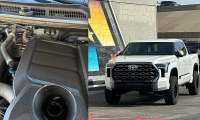
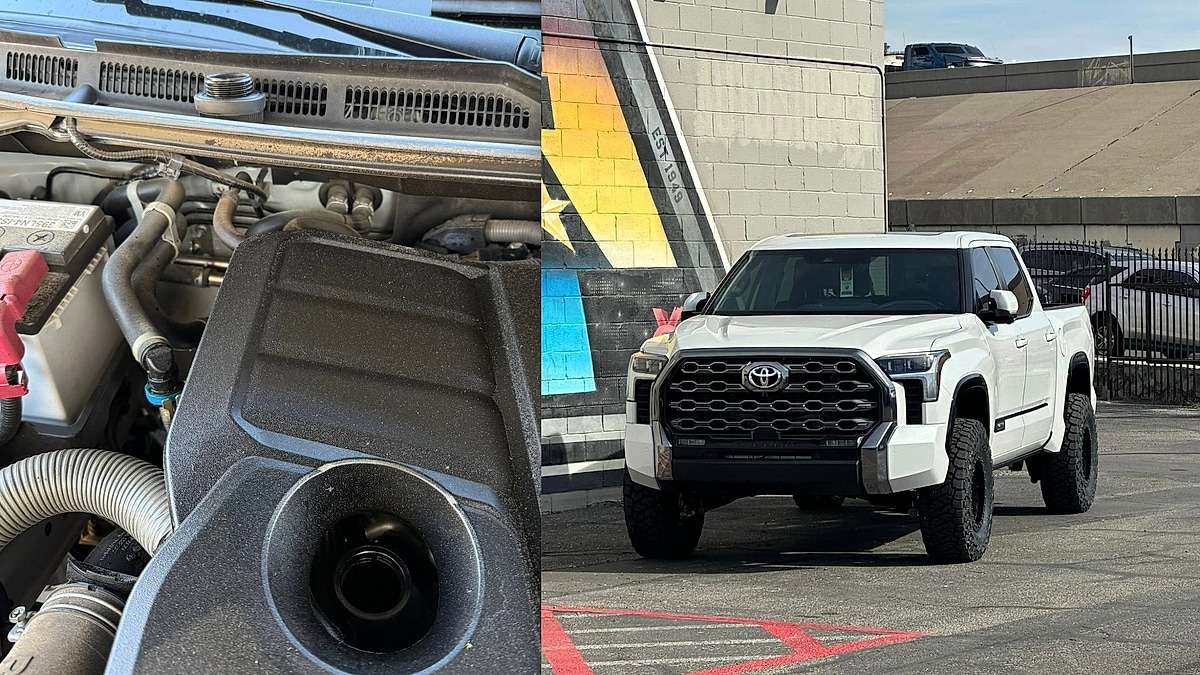
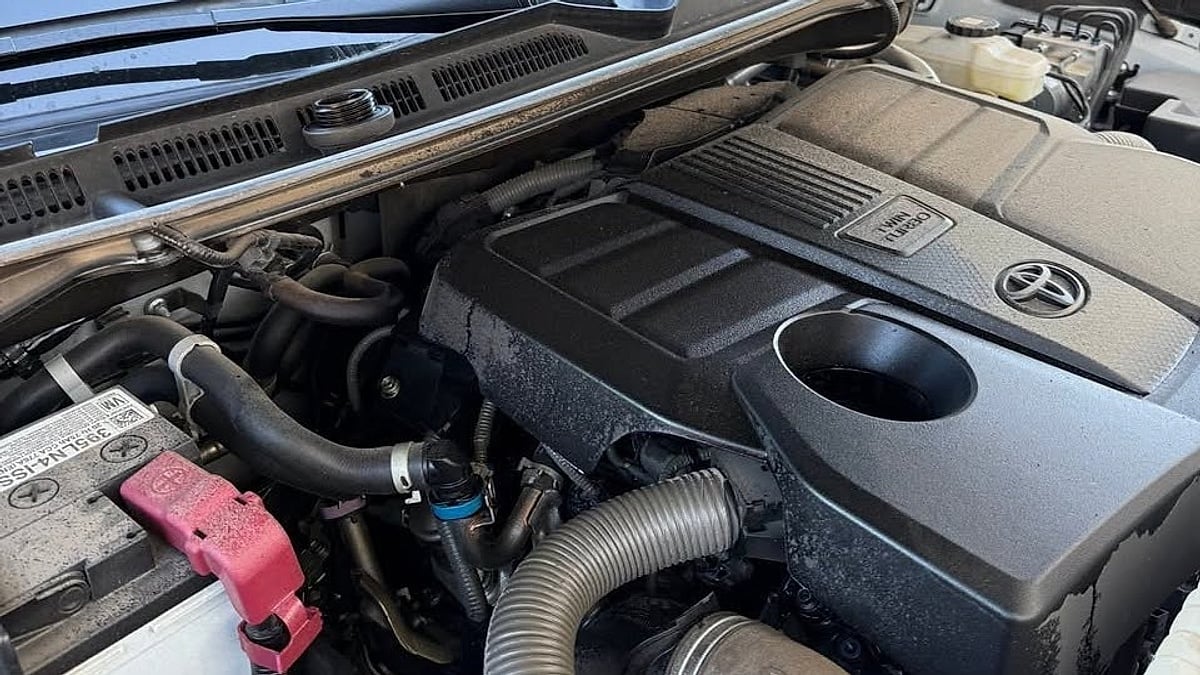
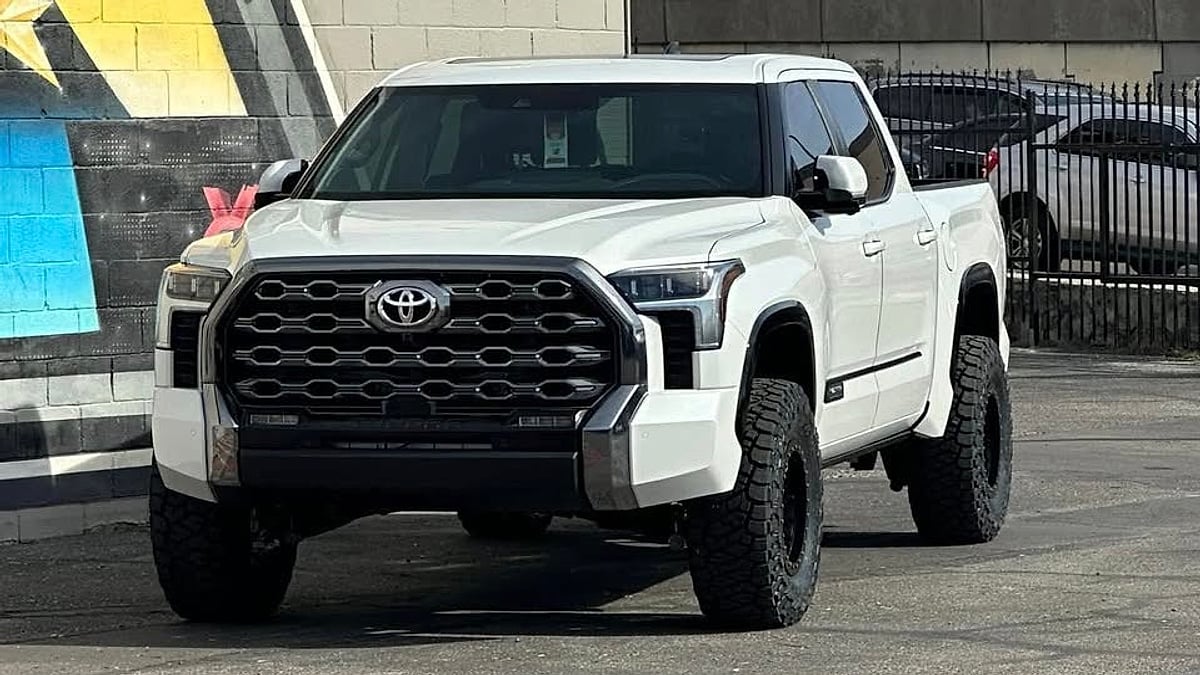
Guzman explained that he drove his 2024 Toyota Tundra Platinum for a solid 1,500 miles on a road trip to Dallas, Texas, immediately following a dealer oil change. The owner noted that after smelling a distinct burning rubber odor, he popped the hood and found his engine oil fill cap was completely missing.
His concern skyrocketed because his route forced him to drive directly through severe, blinding dust storms and pouring rain.
While the dealership quickly offered to change the oil again, replace the filter, and degrease the engine bay, Guzman left wondering whether his twin-turbo V6 would genuinely be okay.
The Microscopic Invaders Turning Oil Into Sandpaper
Most drivers believe that if an engine looks clean on the outside after a quick detail spray, the internal crisis is completely resolved. Unfortunately, mainstream automotive reporting fails to address the underlying physics of an open crankcase flying down a highway at 80 miles per hour.
An engine operating without a sealed oil cap generates an aggressive internal vacuum that acts like an industrial suction pump. This vacuum draws airborne road debris, ambient moisture, and fine environmental particulate directly into the engine's beating heart.
When fine Texas dust enters an unprotected oil filler neck, it completely bypasses the vehicle’s high-efficiency engine air filter. According to a specialized automotive tribology report hosted by the Society of Automotive Engineers, microscopic silica dust behaves like an aggressive grinding paste when suspended in hot motor oil.
This abrasive contaminant immediately travels through high-pressure oil galleries, posing a direct threat to the engine’s ultra-smooth internal surfaces. As noted by oil analysis authorities at Blackstone Laboratories, even minor spikes in airborne silicone levels can rapidly accelerate component wear.
This Isn't Your Old-School, Forgiving V8 Engine
The real hidden story here is how today's ultra-precise powertrain engineering leaves absolutely zero room for human dealership errors. Older, naturally aspirated V8 engines had wider operating clearances that could occasionally tolerate a little bit of road grit or minor fluid neglect.
Modern high-output engines operate with tight tolerances, where even microscopic contaminants can spell instant death for internal components.
As I documented, the margin for error on modern truck platforms has grown incredibly slim due to strict manufacturing changes.
You can discover more about these tight mechanical boundaries in my extensive investigative review: 22,000 Miles, 2 Engines, 1 Transmission: Why a 2024 Toyota Tundra Owner Still Praises the Tundra and Twin-Turbo V6.
Furthermore, that ominous "burnt rubber" smell Guzman encountered on his trip wasn't a slipping serpentine belt or a melting tire. It was atomized engine oil vapor misting out of the open valve cover and baking onto the glowing, superheated exhaust manifolds.
This oily mist creates a dangerous chemical film that can quickly compromise surrounding electrical harnesses and plastic components under the hood.
As I further caution in my analysis of contemporary truck engineering challenges, tracking these complex thermal and lubricant issues is vital for long-term vehicle survival: The 2026 Toyota Tundra V6 Engine Crisis.
Why A Complimentary Oil Flush Is Total Window Dressing
When a dealership leaves an oil cap off, their immediate reaction is to offer a complimentary oil change to sweep the problem under the rug. This fast cosmetic treatment is designed to ease a customer's anxiety, but it fails to address the microscopic damage hiding deep within the steel.
Once fine silica dust enters the oil stream, it targets the engine’s main bearings, connecting rod bearings, and complex turbocharger journals. The hard dust particles wedge themselves into the soft aluminum and lead babbitt material linings of the bearings.
Once these particles are firmly embedded, fresh oil flowing over them simply cannot wash them loose or dislodge them.
Instead, the trapped grit acts like fine-grit sandpaper, continuously scoring the rotating steel crankshaft journals every single time the engine turns over.
A standard dealership flush can remove the loose floating debris, but it cannot fix the microscopic scars already etched onto the internal hardware. Over the next 20,000 to 30,000 miles, this hidden wear can cause premature drops in oil pressure and eventual catastrophic engine failure.
Taking Back Control Over Your Truck’s Future Warranty
If you ever find yourself in this incredibly frustrating situation, you must realize that a handshake agreement with a service writer will not protect you. Dealership personnel frequently rotate, and corporate memory fades the moment a major mechanical component fails down the road.
Your very first step shouldn't be letting the dealer wash away the physical proof before you fully document the scene. Take high-resolution photos of the oil spray patterns, the missing cap, and the specific condition of the engine compartment.
Insist that the service department pulls a formal oil sample from the drained fluid before they pour a single drop of fresh oil into the engine. Send that fluid sample to an independent laboratory to establish a legal baseline document detailing the exact parts-per-million contamination levels.
This independent laboratory report creates an unassailable paper trail that prevents a manufacturer from blaming you for premature bearing failure later in the truck's life. It forces the servicing dealership to take financial accountability for their lack of basic mechanical oversight.
What Would You Do? If a service department left your truck's oil cap off for a grueling 1,500-mile journey through a dust storm, would you be satisfied with a simple engine wash? Or would you demand a corporate extended warranty to guarantee your peace of mind?
Tell Us What You Think! Please leave your thoughts and share your personal dealership service experiences in the red "Add new comment" link below.
What's Next: Check out my follow-up report here: 2026 Toyota Tundra Action Plan: How to Protect Your V6 Twin-Turbo Drivetrain From Hidden Manufacturing Debris Failures
Come back tomorrow… or check my Torque News Home Page for more of my informative Toyota Tundra news articles.
About The Author
Denis Flierl is a 14-year Senior Reporter at Torque News and a member of the Rocky Mountain Automotive Press (RMAP) with 30+ years of industry experience. Explore his full investigative reporting archives and technical guides at DenisFlierl.com.
Based in Parker, Colorado, Denis leverages the Rockies' high-altitude terrain as a rigorous testing ground to provide "boots-on-the-ground" analysis for readers across the Rocky Mountain region, California EV corridors, the Northeast, Texas truck markets, and Midwest agricultural zones.
A former professional test driver and consultant for Ford, GM, Ram, Toyota, and Tesla, he delivers data-backed insights on reliability and market shifts. Denis cuts through the noise to provide national audiences with the real-world reporting today’s landscape demands.
Connect with Denis: Find him on LinkedIn, X @DenisFlierl, @WorldsCoolestRides, Facebook, and Instagram.
Photo credit: Denis Flierl via Raymond Guzman
Set Torque News as Preferred Source on Google
Follow us today...