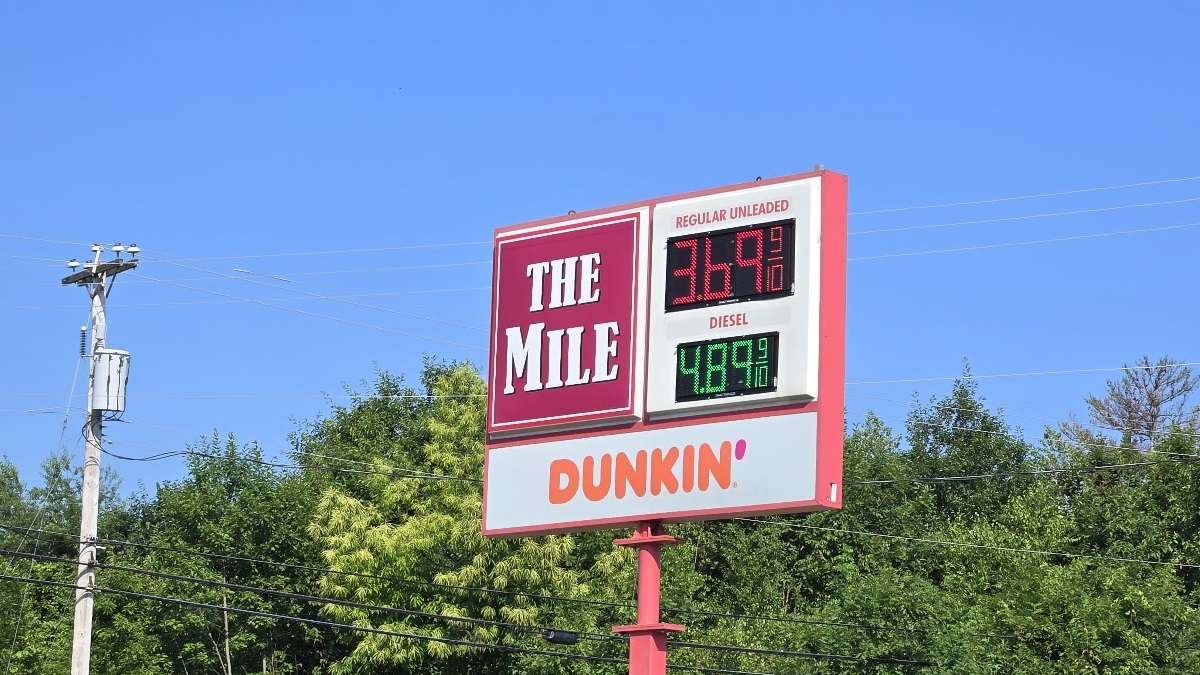

Gas prices are falling rapidly as we approach the busiest driving weekend of the summer. As the July 4th holiday approaches, the national average sits comfortably below the all-time high set three years ago, and it has been falling for a month straight.
National Average Gas Prices Dropping Rapidly
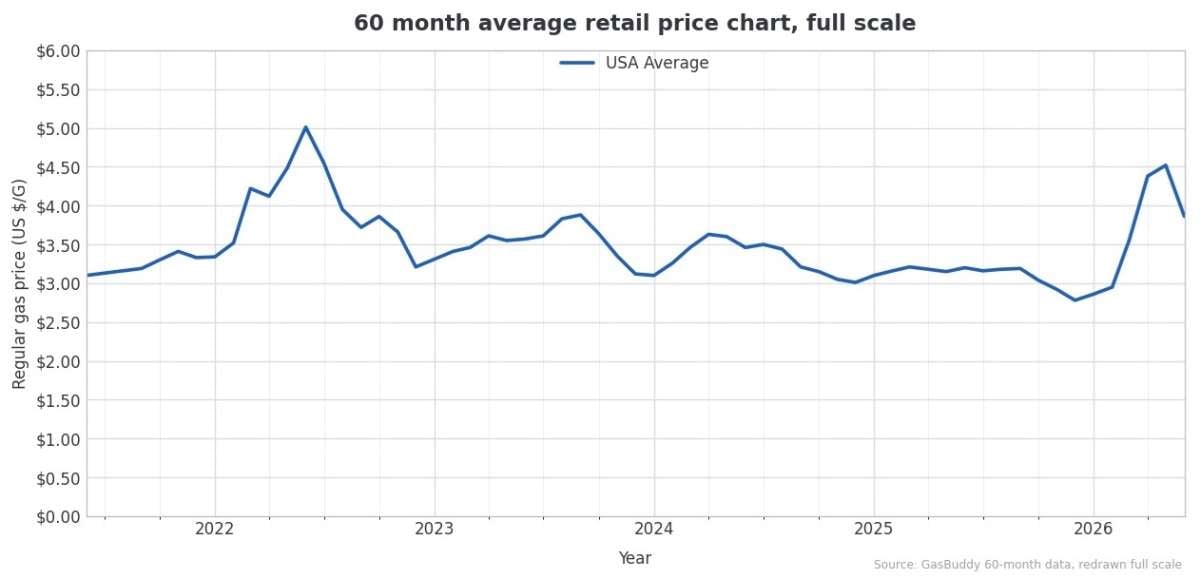
AAA reports the national average for a gallon of regular is $3.847 as of this writing, reflecting the fifth consecutive week of decline. That puts the country well under the record set during the Biden era in June 2022, when the national average crested above $5.00 a gallon, and it leaves prices on track to ease further as families load up their gassers, hybrids, and EVs and hit the highway.
Here’s The Gas Price To Expect This Weekend
Torque News analysts studied the current prices reported by Gas Buddy and AAA, and we estimate that the national average will settle around $3.75 a gallon as drivers fill up for the holiday weekend. That figure would mark a meaningful retreat from the spring, when conflict overseas pushed the average to a 2026 peak of $4.55 in late May. Since then, the direction has been straight down.
Remember, The Outliers Like California Skew Averages Upward
Here is the part that adds local perspective. The average price is skewed by states like California, which take intentional actions to increase their fuel prices. About half of all US states are now expected to sit at or near $3.60 a gallon over the holiday. That $3.60 mark matters because it was the average gas price during the Biden administration, according to Forbes. In other words, roughly half the country is filling up at a price that lines up with the multi-year average, not at the crisis pricing that dominated the fear, uncertainty, and doubt headlines this year. For drivers who spent the spring watching news and social media reports the daily climb in fuel prices last spring, the return to the familiar baseline feels like genuine relief.
Why This 4th of July Is So Unusual For Gas Prices
One factor makes the current fuel price slide very unusual. According to AAA, early summer is normally a season when gas prices rise, not fall. Demand climbs as school lets out, vacation travel ramps up, and refineries shift to costlier summer blended fuel. This set of circumstances typically works against drivers in June and July. This year, the script has flipped. Prices have been falling for more than a month straight, running counter to the seasonal pattern that usually hikes the cost of a summer holiday road trip. AAA has tracked the decline week after week, and the streak has held even as travel volume builds toward the biggest holiday weekend.
Oil Is Below Its Five-Year Average
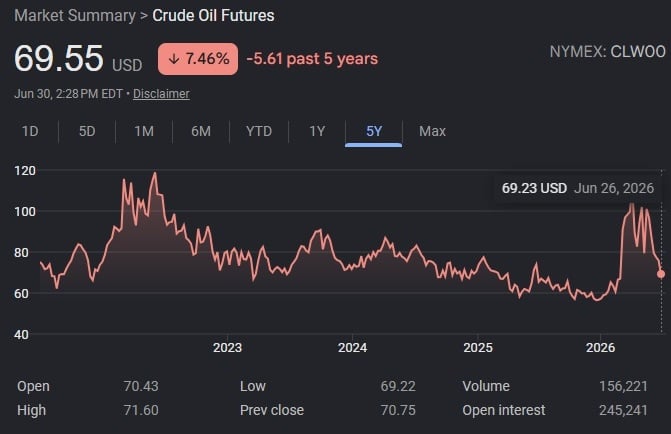
The reason for the relief is the situation in the oil market. As this story is written, crude oil has fallen to below $70 per barrel. West Texas Intermediate, the US oil benchmark, slipped under that level for the first time since early March. To put that in context, the average price of oil over the past five years is approximately $80 a barrel. Crude is currently trading roughly $10 below that five-year average, and oil is the largest single ingredient in what drivers pay at the pump. When the barrel gets cheaper and stays cheaper, gasoline follows, usually with an annoying lag of a couple of weeks. That trusty lag is part of why the pump price keeps drifting lower even after the sharpest moves in the oil market have already occurred.
For the average household, the math is straightforward. A driver filling a 15-gallon tank at $3.75 instead of the spring peak near $4.55 saves about $12 per fill-up. Over a holiday weekend of driving, and across the millions of Americans expected to travel, that adds up to real money staying in wallets rather than going into fuel tanks. With hybrids exploding in popularity, owners of SUVs like the top-selling 43 MPG Toyota RAV4 and the 54 MPG Hyundai Elantra sedan are enjoying extremely low per-mile energy costs.
With luck, this trend will continue. Oil markets remain sensitive to events overseas, and a flare-up in tensions or a supply disruption could pause the slide. Gas prices can climb far faster than they fall, as drivers know all too well. But heading into the July 4th weekend, the picture is about as favorable as it has looked all year. The national average price of fuel is well below the historic peak, roughly half the states are back to the multi-year norm, oil is trading under $70 a barrel, and the usual summer climb has been replaced by prices dropping to new lows each day.
Will you be making a holiday road trip this weekend? Tell us about your plans to manage fuel costs in the comments section below.
About the Author:
John Goreham is a 14-year veteran of Torque News. An accomplished writer and a long-time expert in vehicle testing, Goreham also serves as the Vice President of the New England Motor Press Association and has a growing social media presence. He’s also a 10-year staff writer and community moderator for Car Talk. Goreham holds a B.S. in Mechanical Engineering and an undergraduate Certificate in Marketing. In addition to vehicle and tire content, he offers deep dives into market trends and opinion pieces. You can follow John Goreham on X and TikTok, and connect with him on LinkedIn.
Top of page image by John Goreham taken June 28, 2026 at Country Mile Gas Station Greenville, New Hampshire. Gas price chart courtesy of Gas Buddy June 30, 2026, redrawn to be full-scale (Y axis $0 to $6). Oil price chart courtesy of The New York Mercantile Exchange (NYMEX) and Google.
Set Torque News as Preferred Source on Google
Follow us today...