

I’ve been driving and reviewing trucks for a long time, and the one thing I’ve learned is this: you can’t fake authenticity in a pickup. Either it feels engineered with purpose, or it feels like a marketing department exercise. After spending real seat time in the Toyota Tacoma TRD Pro Double Cab, I came away impressed. Not blown away. Not disappointed. But impressed in a very specific way.
And for 2026? Nothing meaningful has changed. The 2025-2026 Tacoma TRD Pro carries over essentially unchanged, and that’s not a bad thing. The 2025 model year already represented a refined second year of Toyota’s fully redesigned Tacoma, with minor but useful updates like standard front tow hooks on all models, upgraded auxiliary switches now rated at 95 amps (up from 30), and expanded availability of the Terra paint color across TRD trims.
This is a truck that looks fantastic, introduces clever innovations like shock-absorbing seats, and drives better than many people expect. But it also asks buyers to accept trade-offs, especially in powertrain choice and price positioning.
Let’s break it down properly.
Exterior Of The 2025-2026 Tacoma Is Purposeful, Muscular, and Honestly Cool
First impressions matter, and the Tacoma TRD Pro absolutely delivers on presence.
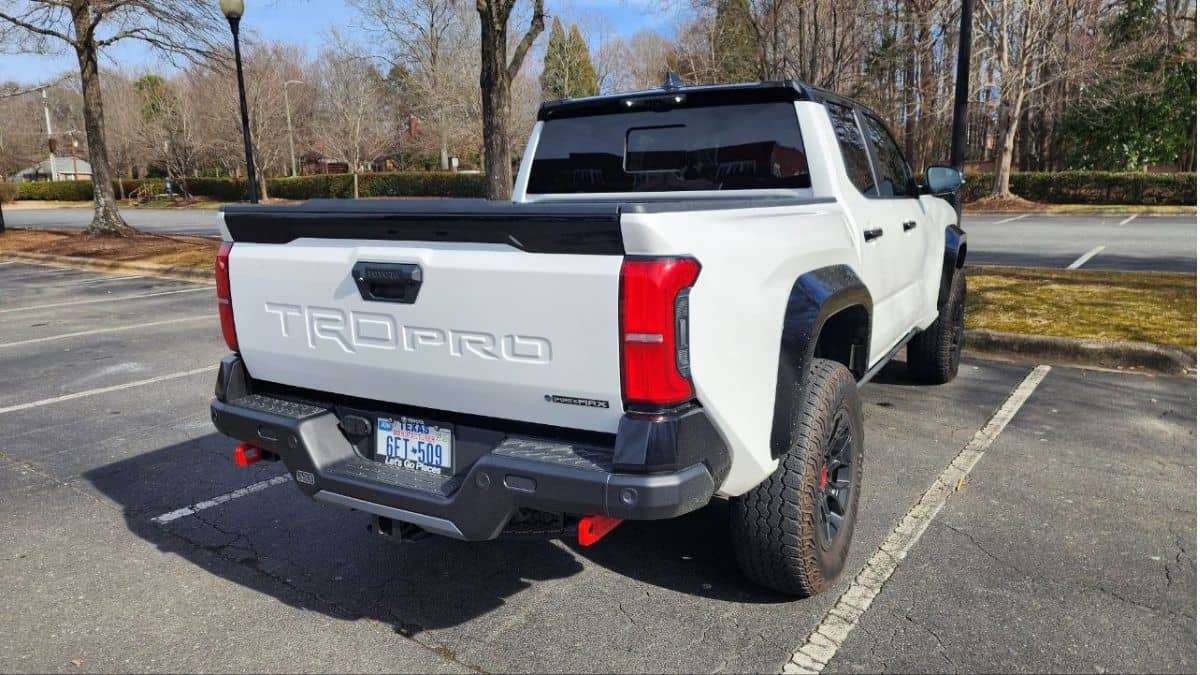
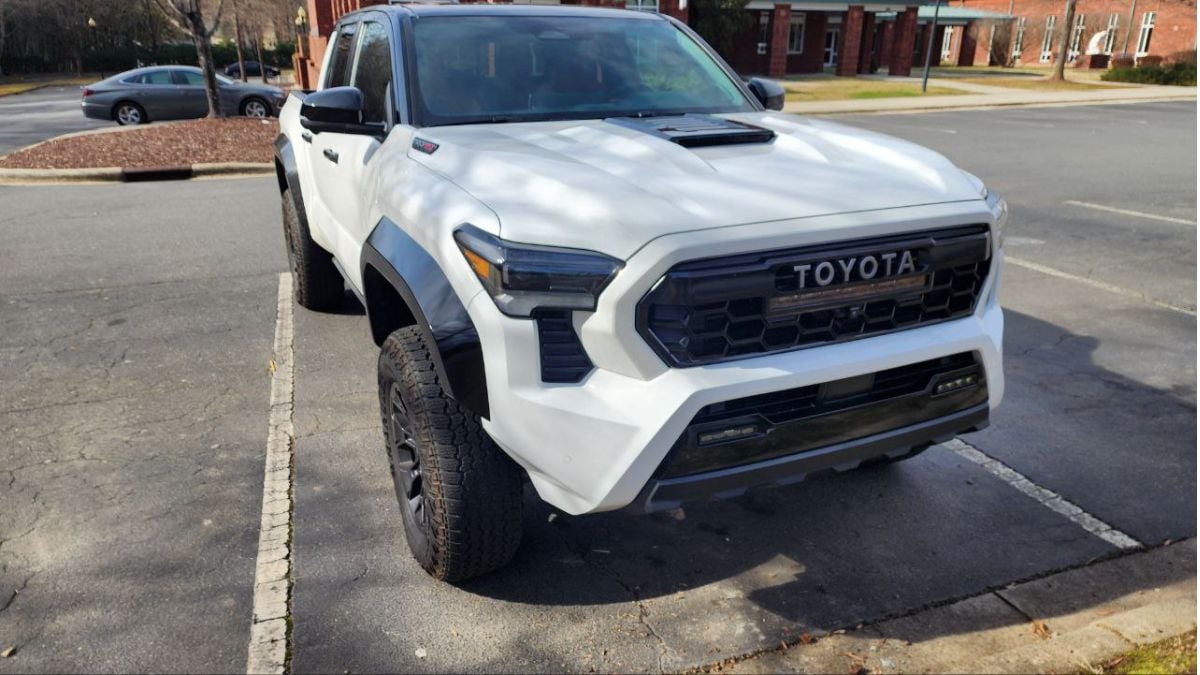
The stance is wide and confident. The TOYOTA heritage grille, aggressive front fascia, and functional skid plates give it real off-road credibility. This isn’t chrome-heavy posturing; it’s purposeful styling. The Terra color - now available more broadly across TRD trims - might be one of Toyota’s best modern truck hues. It adds personality without looking gimmicky.
The proportions feel balanced, especially in Double Cab form. It looks masculine without being cartoonish. Compared to earlier Tacomas, this generation feels more planted and less toy-like. The wheel and tire package fills the arches properly. The underbody protection looks functional, not decorative.
And I’ll say this plainly: the TRD Pro has curb appeal. If you care about how your truck looks in your driveway or at the trailhead, this one hits the mark.
Power and Transmission: The Biggest Debate
Here’s where the conversation gets more nuanced.
The TRD Pro is powered by Toyota’s turbocharged four-cylinder i-FORCE engine. It replaces the outgoing V6 from previous generations. That decision alone has triggered endless debates across forums and YouTube comment sections.
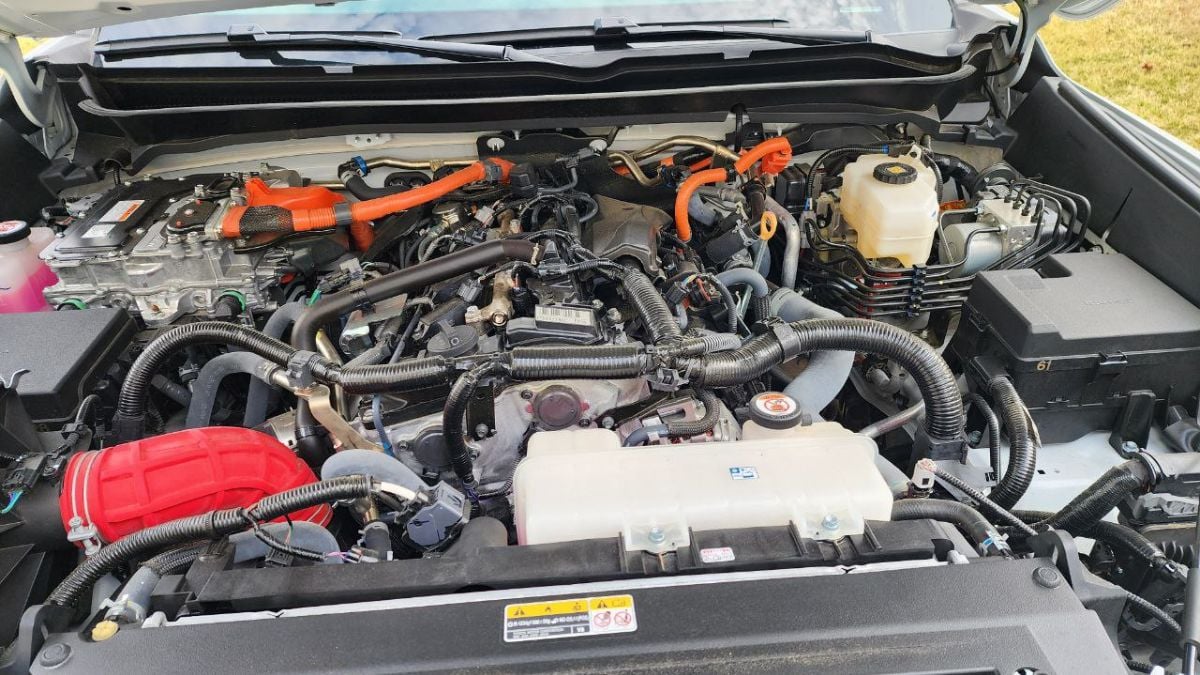
On paper, the numbers are competitive. In real-world driving, the engine feels responsive, with strong mid-range torque. Turbocharging gives it punch off the line and useful passing power. The transmission is smooth and well-calibrated. It works hard to keep the engine in its torque band.
But here’s the honest take: some buyers will miss the V6.
It’s not about raw horsepower. It’s about character and sound. A naturally aspirated V6 has a mechanical smoothness and simplicity that many truck loyalists trust instinctively. Toyota’s move to turbo four-cylinder power aligns with industry trends and emissions goals. It also improves torque delivery where it matters most - low and mid-range.
From behind the wheel, I found it capable and refined. But I understand the emotional resistance from longtime Tacoma owners. The lack of a V6 option removes choice, and choice matters in this segment.
Still, in everyday driving, the powertrain performs competently. It doesn’t feel underpowered. It feels… different.
Interior and Technology: Big Leap Forward
This is where Toyota made one of its strongest improvements.
Older Tacomas were known for durable but dated interiors. The new TRD Pro changes that narrative. The materials feel more substantial. The layout is modern without being overly digital. Physical buttons remain where they matter, which I appreciate.
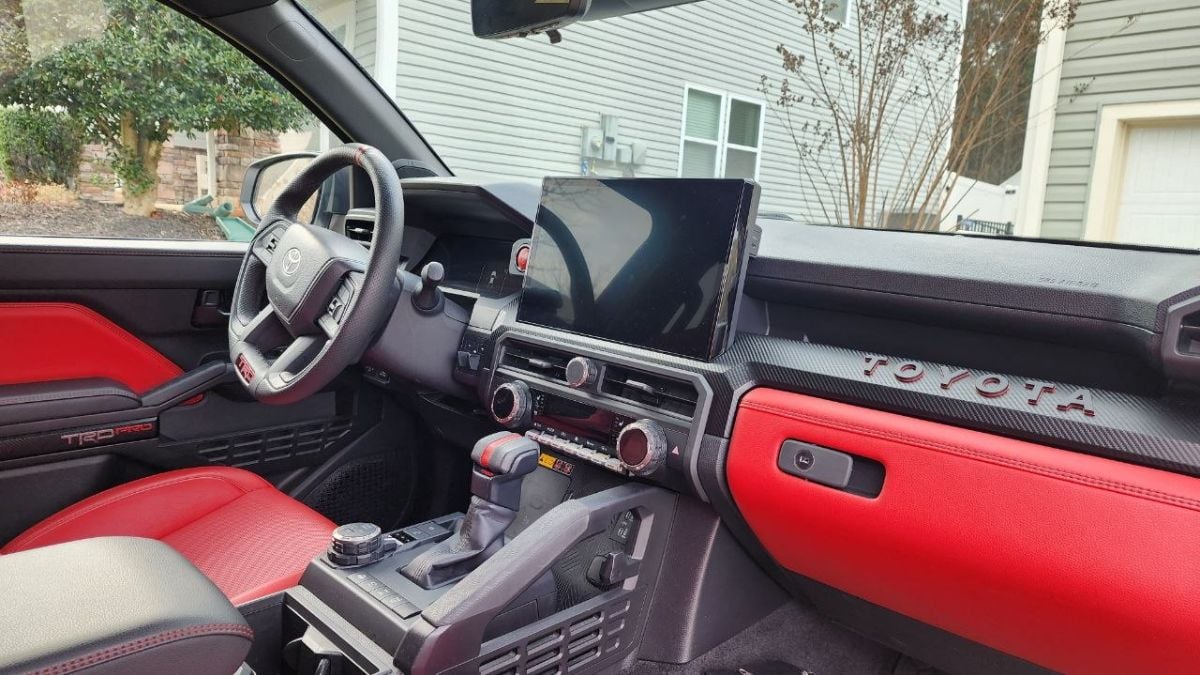
The highlight? The shock-absorbing IsoDynamic Performance Seats.
These seats are genuinely innovative. Designed to reduce vertical body movement during off-road driving, they absorb impact through a mechanical damping system built into the seat structure. It’s not a gimmick. On uneven surfaces, you can feel the benefit.
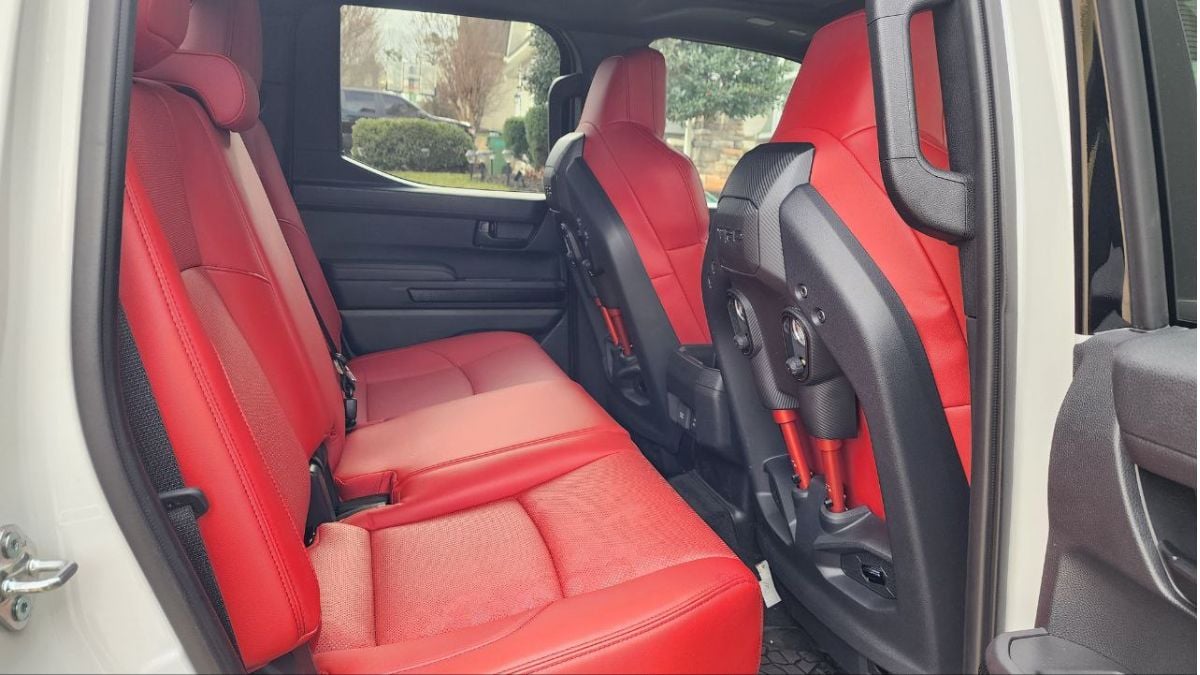
They’re also comfortable during daily driving. Supportive, well-bolstered, and unique. It’s the kind of feature that makes the TRD Pro feel special rather than just upgraded.
Rear seating, however, is a compromise. The Double Cab provides usable space, but it’s not generous. Adults will fit, but not luxuriate. If rear passenger comfort is a top priority, this is something to evaluate carefully.
Technology-wise, the infotainment system is finally competitive. The screen is large and responsive. Wireless Apple CarPlay and Android Auto are standard. The digital gauge cluster is clear and configurable. Toyota Safety Sense remains part of the package, offering adaptive cruise control, lane assist, and emergency braking.
This interior feels like Toyota finally listened to years of criticism.
And it’s not just the big tech upgrades that Tacoma owners are talking about. Some owners are genuinely raving about the new slim, credit-card-style key fob that comes with the latest trucks, calling it a game-changer for active lifestyles and everyday convenience, even joking it’s their favorite part of the truck itself.
Bed, Payload, and Practicality of The 2025-2026 Toyota Tacoma
A truck lives or dies by its utility.
The Tacoma TRD Pro’s bed is durable and functional, with a composite material that resists dents and corrosion. Tie-down points are practical. The upgraded auxiliary switches, which now are rated at 95 amps, are a meaningful improvement for those adding off-road lighting, winches, or air compressors. That jump from 30 amps to 95 amps signals Toyota understands how buyers modify these trucks.
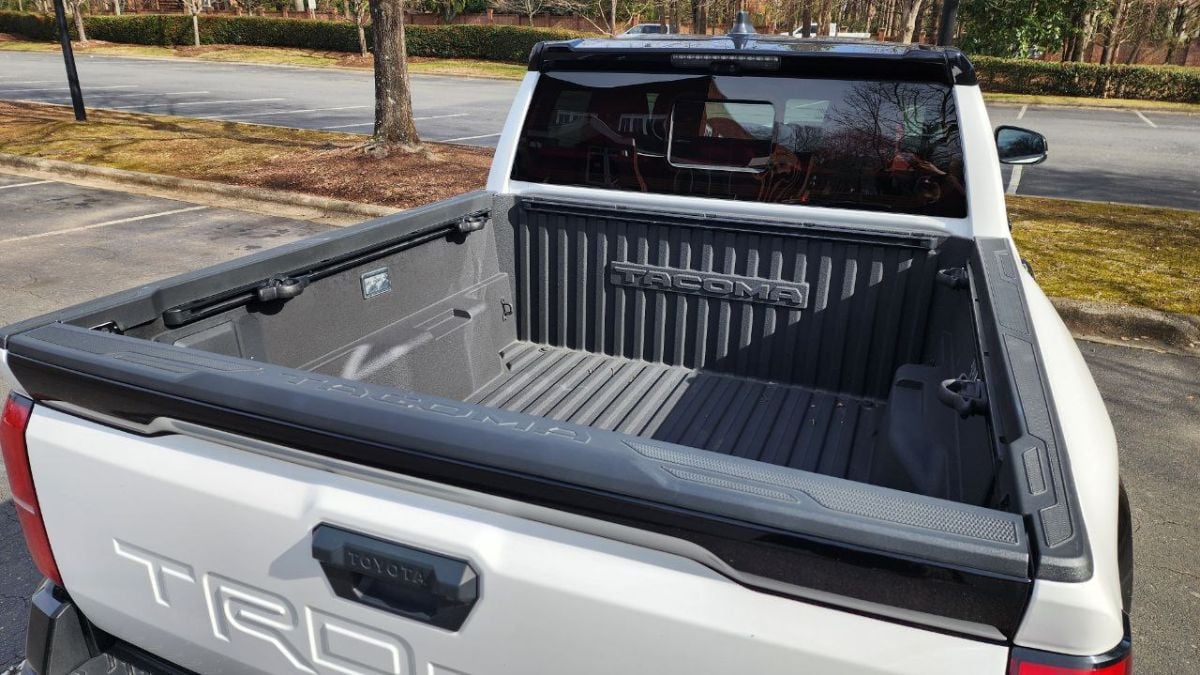
Towing capacity is competitive for the midsize class, though not segment-leading. Payload capacity is adequate but slightly reduced compared to lower trims due to the TRD Pro’s specialized suspension.
In other words, it’s capable, but if maximum payload is your primary goal, other Tacoma trims might serve you better.
On-Road and Off-Road Handling
Multiple reviewers have noted that the new Tacoma platform rides better than previous generations, and I agree.
The TRD Pro suspension, with its performance-tuned dampers, strikes a balance between off-road compliance and on-road control. It’s firmer than a base trim but not punishing. Highway stability is noticeably improved over the outgoing generation.
Steering feels precise for a body-on-frame truck. Body roll is controlled. It doesn’t feel top-heavy or unsettled.
Off-road, the hardware speaks for itself. Crawl control, multi-terrain select, skid plates, and that upgraded suspension allow it to tackle uneven terrain confidently. This isn’t just an appearance package. It’s legitimately capable.
But again, unless you’re pushing extreme trails, you might question whether the TRD Pro premium is necessary compared to a TRD Off-Road trim.
Trims and Positioning
The Tacoma lineup ranges from practical SR models to more lifestyle-focused TRD variants. The TRD Pro sits near the top.
That positioning brings exclusivity, unique features, and off-road tuning, but also price escalation.
Which leads us to the elephant in the room.
Toyota’s broadened Tacoma lineup even includes a version that’s all about on-road excitement: the 2025 Tacoma GR-Sport, which boldly aims to give you the feel of a sports car with a truck bed attached. And it underlines how Toyota is trying to appeal to very different kinds of buyers within the same model family.
Price and Cost of Ownership of The Tacoma in The United States
The TRD Pro is not inexpensive.
Transaction prices frequently land well into the $50,000 range depending on configuration and dealer adjustments. That’s serious money for a midsize truck.
The value proposition depends on what you prioritize.
Tacomas traditionally hold resale value exceptionally well. Insurance costs are reasonable compared to full-size trucks. Maintenance historically has been straightforward. Toyota’s reputation for reliability remains strong.
But initial purchase price is real. If you’re stretching financially, there are lower trims that deliver 80% of the capability at a significantly lower cost.
And while the TRD Pro offers a lot to love, real-world pricing can be a curveball as one Tacoma buyer found when walking into a dealership and encountering what he described as “crazy Toyota tax markup nonsense.” This is a reminder that strong demand can complicate negotiations.
The TRD Pro is a want purchase as much as a need purchase.
But Look at The Big Picture Where Innovation Meets Compromise
After driving it, here’s my balanced conclusion.
The 2025-2026 Tacoma TRD Pro is the most refined, most modern Tacoma Toyota has built. It looks fantastic. The IsoDynamic seats are innovative. The chassis feels more mature. The auxiliary switch upgrade showds attention to enthusiast needs.
The compromises? No V6 option. Rear seat space that’s adequate but not generous. A price that pushes into territory once reserved for larger trucks.
Yet despite those trade-offs, I genuinely liked it. See how nice this truck looks.
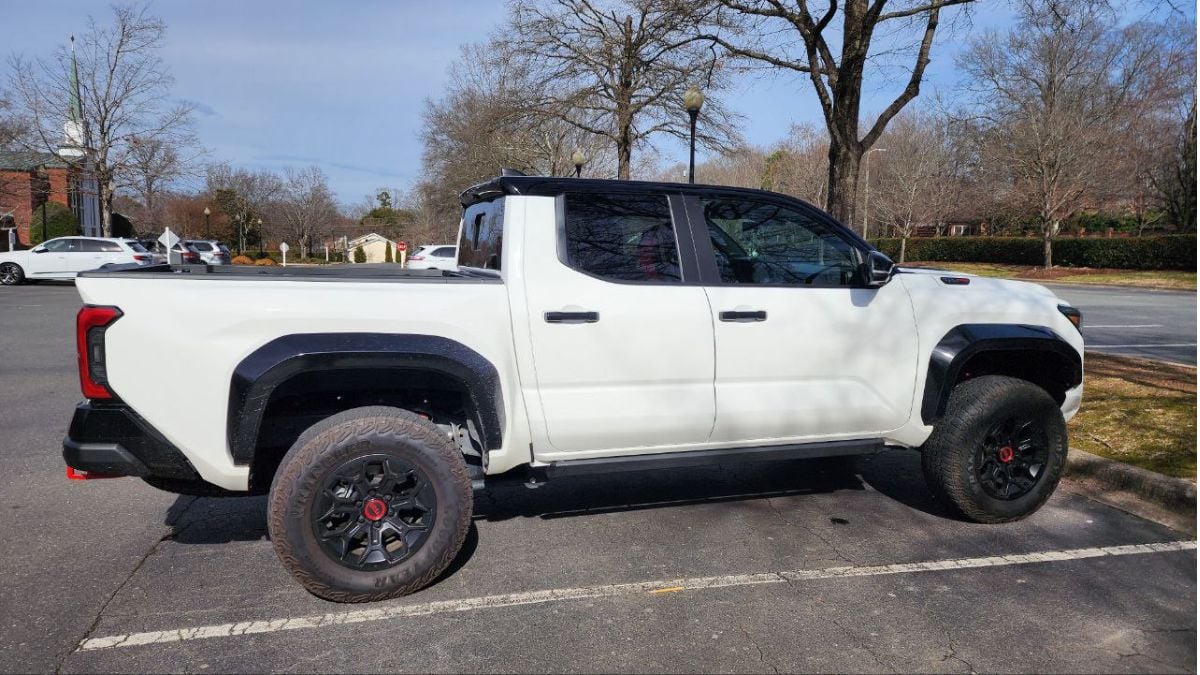
It feels engineered with intention. It feels cohesive. And importantly, it feels like Toyota is evolving the Tacoma without abandoning its core identity.
Would I recommend it? Yes - to the right buyer.
If you value off-road capability, distinctive styling, resale strength, and clever engineering touches, the TRD Pro makes sense. If you’re chasing maximum power per dollar or maximum rear-seat comfort, you might hesitate.
That’s the honest take after real seat time.
And sometimes, the best trucks aren’t the ones that win every category. They’re the ones that deliver character, confidence, and capability in a package that feels authentic.
The Tacoma TRD Pro does exactly that.
Armen Hareyan is the founder and Editor-in-Chief of Torque News. He founded TorqueNews.com in 2010, which since then has been publishing expert news and analysis about the automotive industry. He can be reached at Torque News Twitter, Linkedin, and Youtube. He has more than a decade of expertise in the automotive industry with a special interest in Tesla and electric vehicles.
Set Torque News as Preferred Source on Google
Follow us today...




Comments
You can have it first off it…
Permalink
You can have it first off it’s built in Mexico and everything looks cheap and as for the turbo 4 it’s going to beat itself up from the inside out face it turbo engines are not meant for rolling high miles on them I’ll take my second gen with the 4.0 L any day I had 399,000 miles on that motor before deciding to pull it out still running and I built up a supercharged version call it a mid life crisis at 50 any way I’m not impressed at all with these trucks but that is just my personal opinion.