
For the better part of three decades, the voice command button on your steering wheel has been little more than a "frustration trigger." Since the early 2000s, when systems like Mercedes-Benz's LINGUATRONIC and Ford’s Sync first promised a hands-free future, drivers have been locked in a losing battle with rigid syntax. If you didn't bark exactly the right incantation—"Climate: Temperature: 72 Degrees"—you were met with the digital equivalent of a blank stare: "I’m sorry, I didn't get that."
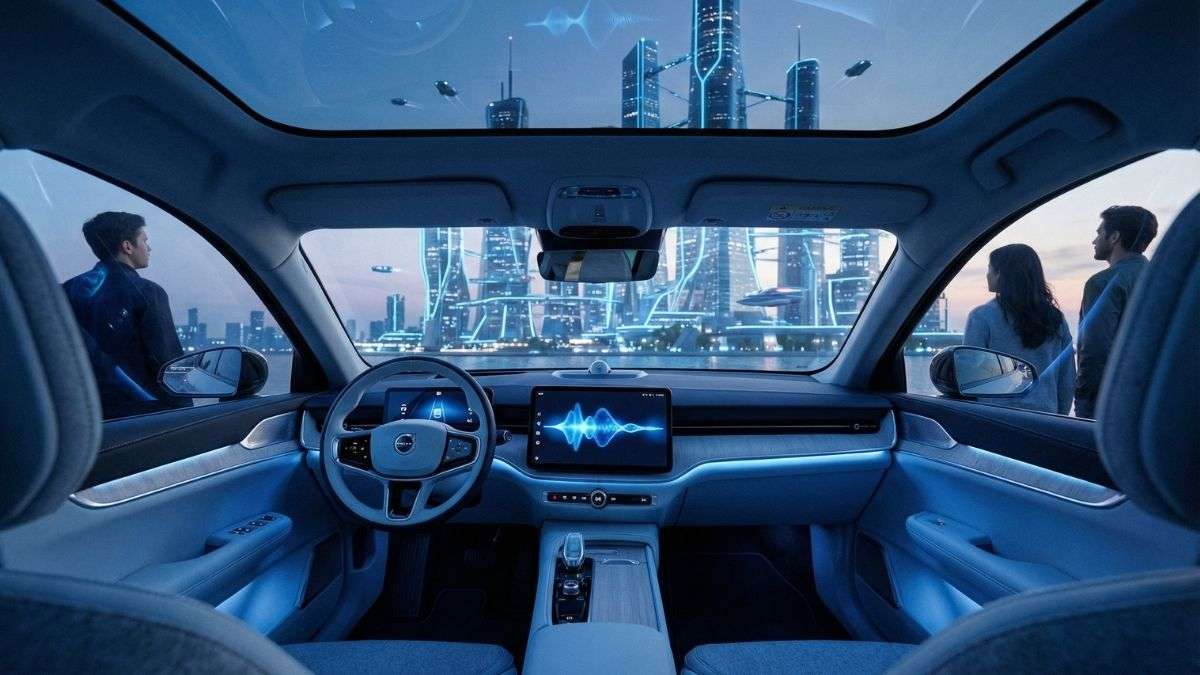
But Volvo just changed the game. In a move that feels less like a software patch and more like a fleet-wide brain transplant, Volvo announced a massive over-the-air (OTA) update that integrates Google’s Gemini AI into every Volvo running Android Automotive from model years 2021 through 2026. This isn't just a slightly better assistant; it is the death of the "command" and the birth of the "conversation."
The Long, Cold Winter of In-Car Voice Recognition
To understand why the Gemini update is such a milestone, we have to acknowledge why in-car voice control has sucked for so long. Historically, these systems relied on "Finite Grammar" models. They weren't listening for meaning; they were listening for specific acoustic triggers matched to a local database. If there was road noise, a crying child, or a slight accent, the system would fail.
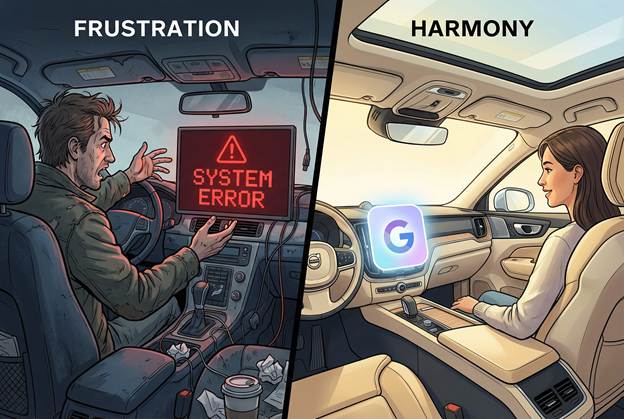
Early attempts at "talking cars" in the 1980s were even worse, famously nagging drivers that "the door is ajar." By the 2010s, we moved to the cloud, but latency and poor Natural Language Processing (NLP) meant you’d often wait five seconds for the car to tell you it couldn't find the Starbucks you were currently parked in front of. Until now, the most reliable voice assistant in a car was usually the phone in your pocket, not the car itself.
Gemini: Translating "Idiot Lights" into English
The core of the Volvo-Gemini integration is its ability to handle multi-turn, contextual dialogue. You no longer need to memorize a manual. In fact, Gemini is the manual. One of the most significant upgrades is the ability for the AI to interpret vehicle telemetry and "idiot lights" on the fly.
If a mysterious amber symbol appears on your dash, you don't have to pull over and dig through the glovebox. You can simply ask, "Hey Google, what does that orange light shaped like a wavy thermometer mean?" Gemini can cross-reference the sensor data, explain that your coolant is low, and—crucially—offer to navigate you to the nearest service center or even check your calendar to see when you have time for a maintenance appointment. It turns the car’s cryptic warnings into a helpful dialogue.
The "Old Car" Miracle: Why Volvo’s Strategy is Different
In the traditional automotive world, if you wanted the newest tech, you had to buy the newest car. Manufacturers typically used hardware limitations as an excuse to "gate" software features, forcing upgrades. Volvo’s decision to push this update to 2.5 million existing vehicles—some dating back to 2021—is a radical departure from the "planned obsolescence" model.
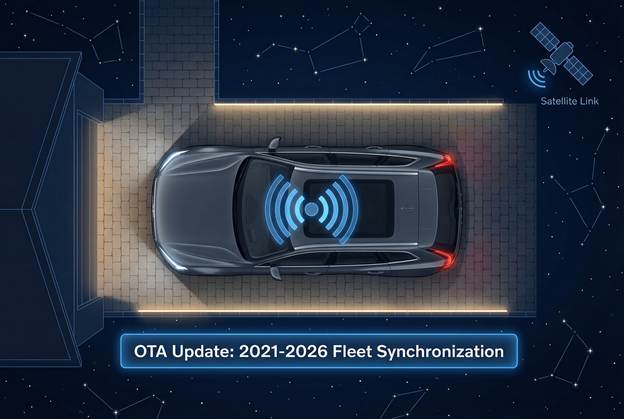
This is possible because Volvo leaned into Android Automotive OS (AAOS) early. By treating the car as a software platform rather than a static piece of hardware, they’ve enabled "continuous improvement." It is a move that mimics the smartphone industry rather than the legacy auto industry, significantly boosting the resale value and longevity of older Volvos.
The 2030 Horizon: Where Car AI Goes Next
As we move through the rest of the decade, Gemini will evolve from a passive assistant to a proactive co-pilot. By 2028, we expect to see "Multimodal AI" in Volvos, where the system can use cabin cameras to see where you are looking. You could point at a building and ask, "What is that restaurant?" and Gemini will read the menu to you.
Furthermore, we will see deeper integration with the Google ecosystem. If you’re running low on charge, the AI won't just find a charger; it will find a charger near a grocery store because it knows you have "milk" on your Google Keep shopping list. The car will stop being a tool and start being an executive assistant that happens to have wheels.
The Competition: A Crowded Cockpit
Volvo isn't alone, but it is currently the most "native" implementation of Google’s tech. Other manufacturers are taking different paths:
- General Motors: Also adopting Gemini for its 2026 fleet but currently struggling with the transition away from Apple CarPlay.
- Mercedes-Benz: Integrating ChatGPT through its MBUX system, though it often feels like an "add-on" rather than a core system update for older cars.
- Tesla: Using its own proprietary "Grok" AI, which is witty but lacks the deep integration with world data (Maps, Calendar, Email) that Google provides.
Volvo’s advantage is the seamlessness of the Google built-in ecosystem. Because the car is the Google account, there is no friction between your digital life and your driving life.
The "Killer App" We Didn't Know We Needed
Is conversational AI the "killer app" for cars? For anyone who has ever wrestled with a touchscreen while driving at 70 mph, the answer is a resounding yes. High-quality voice control is a safety feature disguised as a luxury. By removing the need to look at screens or memorize menus, Volvo is returning the driver's focus to the road.
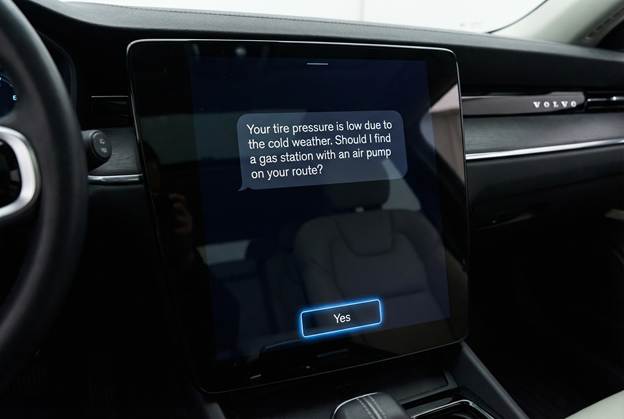
Once you experience a car that actually understands you—one that can summarize your emails, explain its own faults, and adjust the seat heaters because you said "I'm a little chilly"—going back to buttons or rigid voice commands feels like going back to a rotary phone.
Wrapping Up
Volvo’s OTA update bringing Gemini to the 2021–2026 fleet is a watershed moment for the automotive industry. By fixing the long-standing "suck factor" of voice commands and providing meaningful, real-time explanations for vehicle controls and warnings, Volvo has turned their existing fleet into the most intelligent cars on the road. This transition from static hardware to evolving software platforms not only preserves vehicle value but sets a new standard for driver safety and convenience. The "talking car" is finally here, and this time, it actually has something smart to say.
Disclosure: Images rendered by Artlist.io
Rob Enderle is a technology analyst at Torque News who covers automotive technology and battery developments. You can learn more about Rob on Wikipedia and follow his articles on Forbes, X, and LinkedIn.
Set Torque News as Preferred Source on Google
Follow us today...