
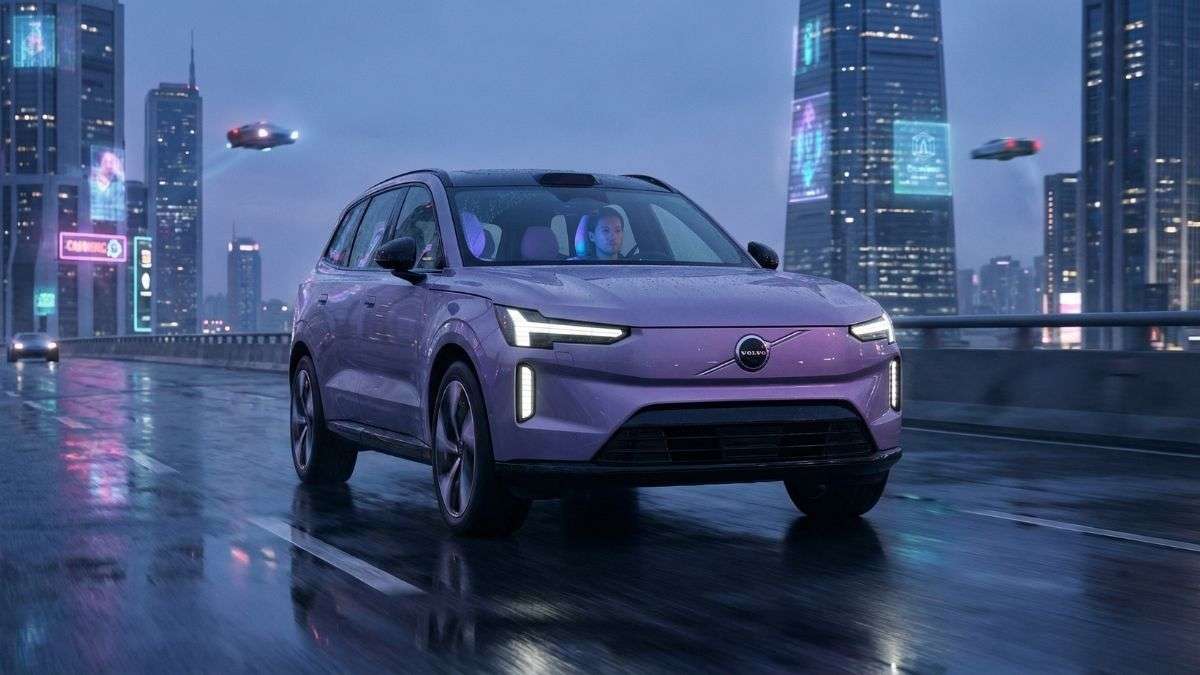

The automotive industry has been promising "smart" cars for decades, but until now, that intelligence has been largely performative—clunky voice command systems that fail to understand natural speech, navigation systems that require precise inputs, and "infotainment" that feels outdated the moment it leaves the lot. That era officially ended. With the reveal of the Volvo EX60, we are witnessing the first true integration of a Large Language Model (LLM) into the core of a vehicle's operating system. This isn't just a new feature; it is the beginning of the AI-defined vehicle.
The inclusion of Google’s Gemini in the EX60 is not merely a better voice assistant; it is a fundamental shift in how humans interact with machines. By leveraging the immense processing power of the new NVIDIA DRIVE Orin and Qualcomm Snapdragon Cockpit platforms, Volvo has created a vehicle that doesn't just obey commands—it understands intent, context, and nuance. This shift will ripple through the industry, forcing every other manufacturer to abandon legacy software stacks or risk obsolescence.
From Command-Line to Conversation: The New Driving Experience
For the last twenty years, interacting with a car has been a series of discrete, often frustrating commands: "Call Mom," "Navigate to Starbucks," "Play The Beatles." If you deviated from the script, the system failed. The integration of Gemini changes the interaction model from a command line to a conversation.
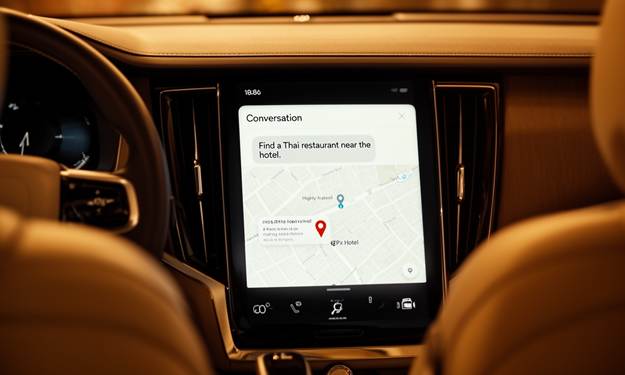
In the EX60, the driving experience becomes collaborative. You can now ask the car, "I’m heading to that hotel I booked for next Tuesday, can you pull up the address from my email and find a good Thai restaurant on the way that’s open until 10 PM?" In a traditional car, this is a three-step nightmare involving a smartphone, a stopped vehicle, and frustration. With Gemini, it is a single, natural sentence. The car parses the request, accesses your Google Workspace data (with permission), cross-references it with real-time navigation and business hours, and presents a solution.
This capability transforms the vehicle from a passive tool into an active concierge. The cognitive load on the driver is significantly reduced. Instead of fighting with a touchscreen interface while doing 65 MPH—a known safety hazard—drivers can keep their eyes on the road and delegate complex tasks to the AI. This is the realization of the "software-defined vehicle," where the hardware is merely a vessel for an ever-improving digital intelligence.
Enhancing Safety Through Contextual Awareness
While the convenience of a conversational assistant is the headline, the safety implications of embedding a model like Gemini into the Volvo HuginCore system are profound. Safety has always been Volvo’s north star, and AI is the next frontier of occupant protection.
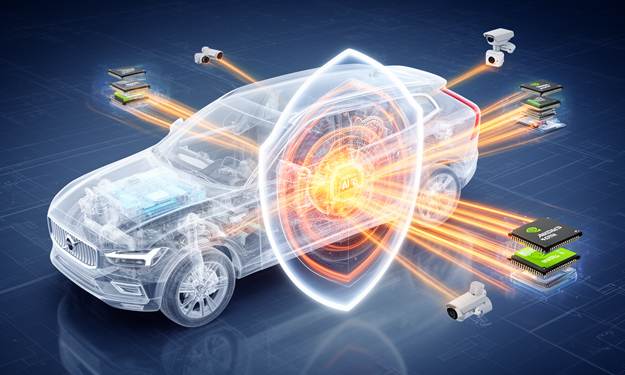
Current driver assist systems are reactive or rules-based. They see a line and keep you within it; they see an obstacle and brake. An AI-integrated system can be predictive and contextual. By understanding the driver's state and the environmental context, Gemini can adjust its interactions. If the vehicle’s sensors—processed by the NVIDIA AGX Orin—detect heavy traffic, snow, or erratic behavior from other drivers, the AI can intelligently suppress non-critical notifications. It knows now is not the time to read you a text message or suggest a podcast.
Furthermore, the "emotional intelligence" of future vehicle AI will play a critical role in safety. Road rage and drowsy driving are major causes of accidents. An integrated AI could detect signs of stress or fatigue in the driver’s voice or driving patterns and intervene not just with a beep, but with a conversation. "You sound tired; there is a charging station with a coffee shop three miles ahead. Shall we stop?" This level of empathetic intervention is only possible with the advanced natural language understanding that Gemini brings to the table.
The Productivity Shift: The Car as a Third Space
As we move toward 2030, the distinction between the office, the home, and the car will blur. For millions of commuters and business professionals, the car is a "dead zone" of productivity. Gemini changes this. The Volvo EX60 effectively becomes a rolling office.
Drivers can use their commute to brainstorm ideas, draft emails via dictation that actually works, or summarize meetings they are listening to. You could say, "Gemini, summarize the key points from that last call and email them to the team." The car handles it. This capability turns the commute from wasted time into found time. For real estate agents, sales professionals, and field engineers, this is a game-changer. The vehicle becomes a highly capable administrative assistant that travels with you.
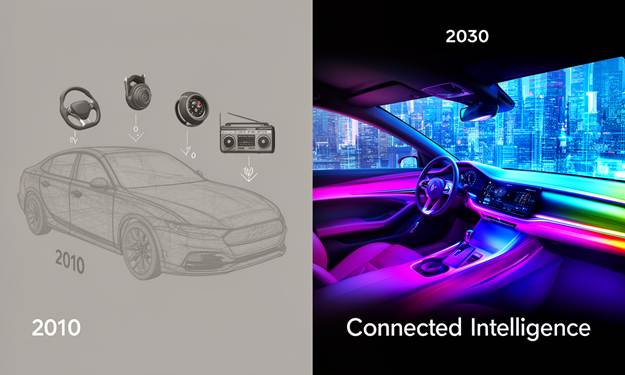
Forecast: The AI Adoption Curve and Buying Behavior
When will this be standard? We are looking at a rapid adoption curve, similar to the transition from feature phones to smartphones. Volvo is the first mover with the EX60 in 2026, but the competitive pressure will be immense. By the 2028 model year, we can expect a "Gemini-class" AI assistant to be table stakes for any premium vehicle. By 2030, it will likely be standard across economy models as well, driven by the plummeting costs of inference and the commoditization of Qualcomm’s digital chassis.
Will this influence buying behavior? Absolutely. Once a consumer experiences a car that intuitively understands them, going back to a "dumb" car will feel like trading an iPhone for a rotary phone. The differentiation in the automotive market is shifting away from horsepower and cornering speed—metrics that have long since surpassed the needs of the average driver—toward digital competence.
Buyers will start asking, "How smart is this car?" before they ask, "How fast is this car?" Manufacturers who fail to integrate a competent LLM will find themselves unable to move metal, much like phone manufacturers who resisted the touchscreen revolution. The Volvo EX60 proves that the technology is ready; the market will now decide the pace of adoption, and it will likely be blistering.
Wrapping Up
The arrival of Google’s Gemini is a watershed moment for the automotive industry. It signals the end of the era where cars were disconnected, static machines and the beginning of an age where our vehicles are intelligent, evolving partners. This integration fundamentally improves the driving experience by reducing cognitive load, enhancing safety through context-aware interaction, and unlocking new levels of productivity. As AI becomes the primary differentiator in automotive sales, manufacturers will race to integrate these capabilities, making the "dumb" car a relic of the past by the end of the decade. The EX60 is not just a new electric SUV; it is the blueprint for the future of mobility.
Disclosure: Images rendered by Artlist.io
Rob Enderle is a technology analyst at Torque News who covers automotive technology and battery developments. You can learn more about Rob on Wikipedia and follow his articles on Forbes, X, and LinkedIn.
Set Torque News as Preferred Source on Google
Follow us today...






Comments
Android Auto has supported…
Permalink
Android Auto has supported Gemini since last fall, no?