

With EVs commonly reaching ranges north of 400 miles, it’s hard to justify the added complexity and cost of hybrid vehicles. The consensus seems to be that automakers unwilling to recognize that consumers want electric vehicles risk winning the future. Along with Toyota, Volvo seems to be clinging to the past with their newly announced 100-Mile plug-in hybrids project. Social media was quick to respond with comments from all directions including this thread on the r/electricvehicles subreddit where SnakeJG posted:
“I have a PHEV and a BEV. I need to plug in the PHEV after every trip, not just every day, so I take the kids to school, grab a coffee, and plug in. Pick the kids up from school, plug in. If I don't plug in after the morning or afternoon school run, it might switch to gas if I have to go further than just to/from school in the next trip.
My Chevy Bolt, on the other hand, gets plugged in about every three days. I'm literally plugging in my PHEV 6 times as often.”
MWH1980 made the reasonable comment:
“It would be nice to break through the EV range ceiling PHEV’s currently have, but I don’t see many rushing to move beyond the 30-to-50-mile range currently in place.”
Ivajl summed up sentiment about plug-in hybrid vehicles compared to the ease of EVs:
“Well, I have a PHEV, and charge it every day. When I replace it with an EV, I will only plug it in in the weekends, because I hate having to plug it in every day.”
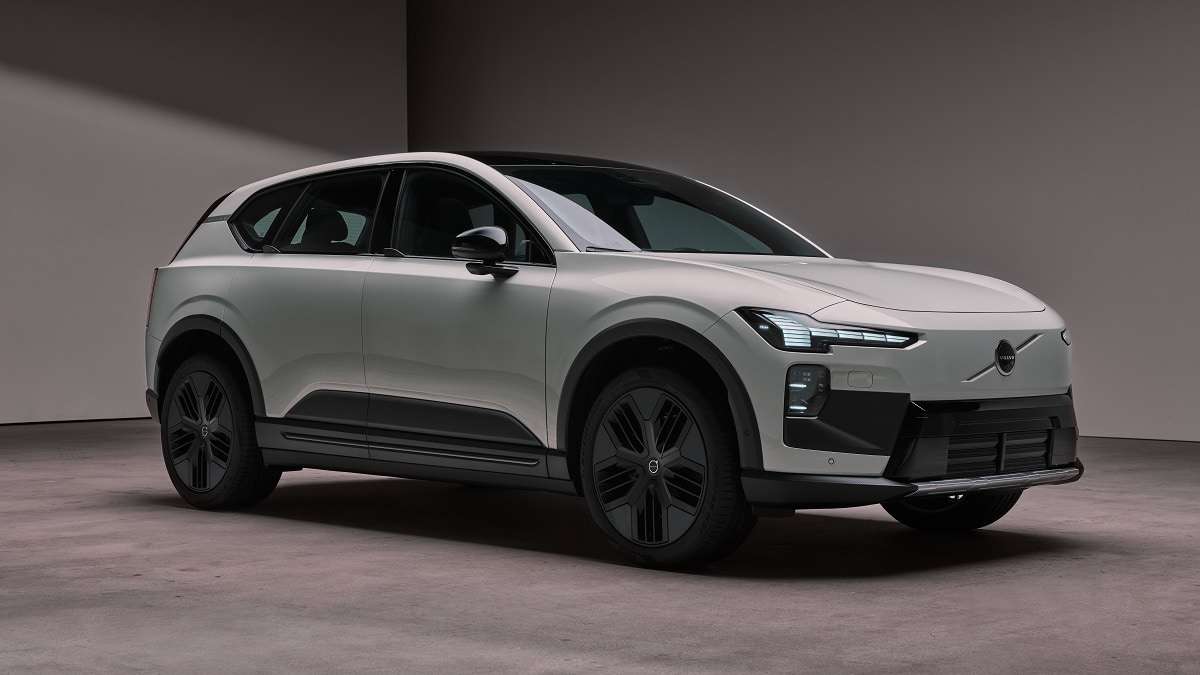
Volvo has revealed plans for a new XC70 designed primarily for the Chinese market, at least initially. The SUV slots neatly between the XC60 and XC90 in size and is positioned as a long-range plug-in hybrid rather than a full battery electric vehicle. While China is the launch market, Volvo has not ruled out expanding availability to other regions at a later date.
The upcoming XC70 pairs a 1.5-liter four-cylinder gasoline engine with either a 21.2 kWh or a much larger 36.9 kWh battery pack. Those battery sizes are notable because they rival or exceed some small city EVs. Under China’s CLTC test cycle, Volvo claims up to 124 miles of electric only range. Real world expectations are likely closer to 100 to 110 miles, which is still far beyond the roughly 50 miles offered by most current plug-in hybrids sold in Europe and the US.
Unlike many plug-in hybrids, the XC70 is expected to support DC fast charging as standard equipment. Volvo says the battery can be charged to around 80% in about 28 minutes when connected to a suitable fast charger. The vehicle is also expected to support bidirectional charging, adding another layer of flexibility for owners.
For drivers with access to home charging, a long-range plug-in hybrid like the XC70 could cover most daily driving without using the engine. Average daily driving in the U.S. sits at about 30 miles, which would be easily handled in electric mode. Even longer commutes could often be completed without burning fuel, leaving the engine for road trips or unexpected long journeys.
High public charging prices have slowed enthusiasm for full EVs. When fast charging costs rival or exceed gasoline prices, the economic case weakens. A long-range plug-in hybrid allows drivers to avoid expensive highway charging by switching to gasoline when needed, then recharging later at cheaper destinations or at home.
Recent analysis by Transport and Environment, a non-profit advocacy group, paints a less flattering picture of plug-in hybrids. Using real world data from 800,000 vehicles registered in Europe between 2021 and 2023, researchers found PHEVs emitted nearly five times more CO2 than official laboratory figures suggested. In practice, PHEVs were only about 19% cleaner than gasoline or diesel vehicles, far from the 75% reductions assumed in testing.
The gap largely comes down to overly optimistic assumptions about how often drivers use electric mode. Official testing assumes about 84% of driving is electric, while real world data shows closer to 27%. Even when operating in electric mode, engines often assist because electric motors alone are not powerful enough, resulting in fuel use for nearly one third of supposed EV driving.
The emissions mismatch has major policy implications. Researchers estimate that underestimated PHEV emissions allowed major automakers to avoid more than $7 billion in fines between 2021 and 2023. Drivers also paid roughly $700 more per year in operating costs than official figures implied.
Bottom Line
Volvo’s XC70 shows how far plug in hybrid technology has evolved, offering electric range that genuinely rivals early EVs while preserving long distance flexibility. At the same time, real world data highlights how poorly many PHEVs perform when not used as intended. Long-range plug-in hybrids can reduce emissions and costs when charged consistently, but without disciplined usage, they risk delivering far less benefit than advertised.
What Do You Think?
If you’ve owned both a PHEV and a full EV, which one actually felt easier to live with day to day, and why?
At what electric range does a PHEV stop making sense and a full EV become the obvious choice?
Chris Johnston is the author of SAE’s comprehensive book on electric vehicles, "The Arrival of The Electric Car." His coverage on Torque News focuses on electric vehicles. Chris has decades of product management experience in telematics, mobile computing, and wireless communications. Chris has a B.S. in electrical engineering from Purdue University and an MBA. He lives in Seattle. When not working, Chris enjoys restoring classic wooden boats, open water swimming, cycling and flying (as a private pilot). You can connect with Chris on LinkedIn and follow his work on X at ChrisJohnstonEV.
Photo credit: Volvo media
Set Torque News as Preferred Source on Google
Follow us today...







Comments
This article misses the…
Permalink
This article misses the point. We’ve been driving model 3’s for 8 years. If you can charge an EV at home and for many road trips they’re fantastic- almost no maintenance and despite the bs on the internet incredibly reliable, guilt free use especially around town which is where gas cars are particularly bad, not to mention just how much fun a sedan that does a sub 3 second 60 time is to drive. We love electric and will never go back to pure gas and we’ve had 4 Porsches and a lot of great cars so we’re not Prius driving weenies.
But evs don’t do everything well. We have a trailer and EV’s just don’t work for trailer road trips at least not now, and it’s not really range - most current high voltage chargers are pull in not pull through like gas stations and unhooking your trailer to fuel up is unreasonable. And we spend a lot of time in a cold snowy environment and a snow covered ev after a couple days sitting is no fun not to mention real off-road ice capable ev’s are rare
So our second car is a nasty capable PHEV SUV with well over 55 EV miles range. We go months without going to a gas station literally but when we need to tow or romp in the snow it’s raring to go on gas. Yes you have to plug it in everyday as opposed to once a week for the Tesla but boohoo if that’s a problem for you your life must be pretty simple.
So no for some uses Phevs are fantastic. Our beastly SUV could be easily repackaged as an F150 or Ram1500 and it would be faster, have more torque, while doing everything the truck guy needs only better and a tenth as much gas used over a year.
Don’t dis Phevs, for heavy duty use they’re amazing
PHEVs are better for towing…
Permalink
PHEVs are better for towing longer distances for now as chargers are generally not set up well for towing and towing uses more energy. I have an early generation PHEV with only 25 km EV range now. I plug in all the time at home but generally don't public charge even on L2 as it is so expensive and my charging is so slow and it is charged time based. About 40% is EV driving in a year.