
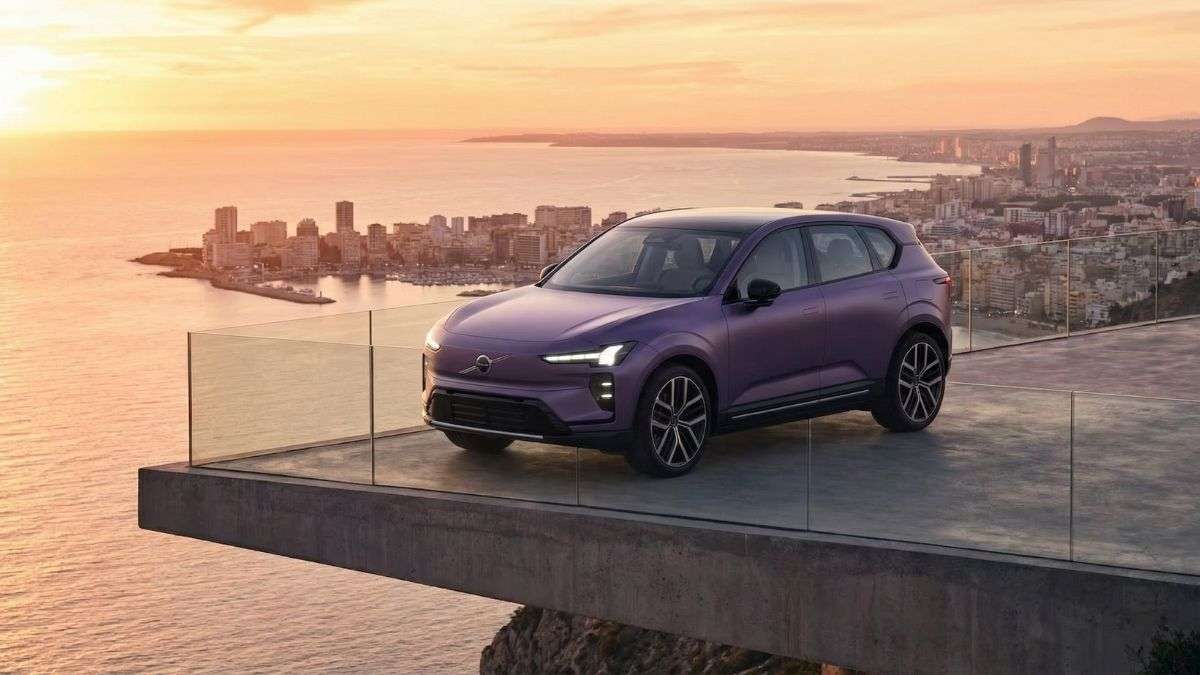

As a technology analyst who has spent decades watching industries collide and transform, I have seen my fair share of "game-changers." Usually, that term is marketing hyperbole, a shiny wrapper on an incremental update. But today, Volvo did something that doesn't just move the needle; it snaps it.
I recently shared that I had pulled the trigger and ordered a 2026 Volvo XC60 Recharge. It is a fantastic car—arguably the best plug-in hybrid on the market. But after witnessing the global launch of the all-electric Volvo EX60 today, I’m doing something I rarely do: I’m calling my dealer and changing that order. The EX60 is so fundamentally more advanced that keeping the XC60 would feel like buying a top-of-the-line typewriter the day the word processor arrived.
Here is why the Volvo EX60 is the most important vehicle to hit the market this decade.
The SPA3 Architecture: A Masterclass in Systems Engineering
The secret sauce of the EX60 isn't just that it’s electric; it’s how it is built. Most legacy automakers are still struggling with "Frankenstein" platforms—ICE (Internal Combustion Engine) frames modified to hold batteries. Even Volvo’s own EX90 was a bridge. But the EX60 is the debut of the SPA3 architecture, and it represents a massive leap in manufacturing efficiency.
Volvo is utilizing "mega-casting"—a process where massive sections of the car’s floor are cast as a single piece of aluminum. This replaces hundreds of individual parts, reducing weight significantly while increasing structural rigidity. When you combine this with their "cell-to-body" battery integration, the car stops being a frame with a battery inside and starts being a battery that serves as the frame.
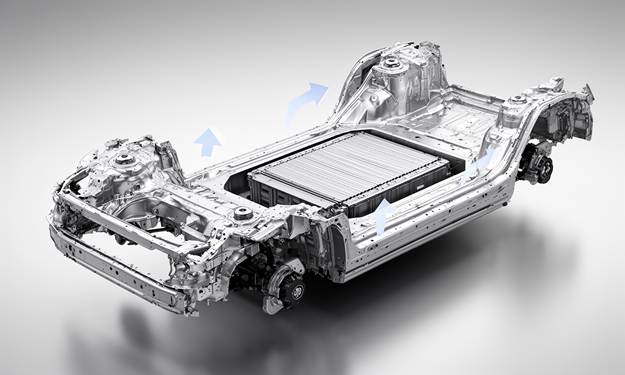
This integration provides a massive advantage in energy density. By making the battery pack a load-bearing member of the chassis, Volvo has managed to lower the center of gravity further than almost any SUV in its class. This translates to a car that handles like a sports sedan but retains the utility of a mid-sized SUV. It’s the kind of systems-level thinking I used to see back in my IBM days—optimizing the hardware to such a degree that the software can perform miracles.
Killing Range Anxiety and Charging Frustration
Let’s talk about the numbers, because they are staggering. The flagship P12 AWD variant of the EX60 is pushing a range of up to 400 miles (EPA) or over 500 miles (WLTP). In the world of EVs, that is the "no-excuses" threshold. Whether you are driving from Bend to Seattle or across the UK, that 400-to-500-mile buffer means you aren't planning your life around the car; the car is fitting into your life.
But range is only half the battle. Charging speed is the other. The EX60 utilizes an 800-volt architecture that supports DC fast charging up to 370kW. Volvo claims you can add roughly 173 miles of range in just 10 minutes. That is the time it takes to walk into a Starbucks, order a latte, and use the restroom. By the time you’re back, you’re ready for another three hours of highway driving.
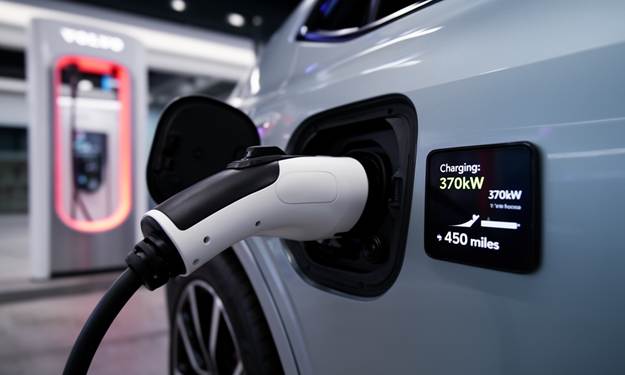
Furthermore, Volvo has finally moved to the Native NACS port in North America, giving owners direct access to over 25,000 Tesla Superchargers without fiddling with adapters. This level of convenience is what will finally move the "laggards" into the EV camp.
A Brain Powered by NVIDIA and Google Gemini
The EX60 is essentially a rolling supercomputer. At its heart lies the "HuginCore" system, which utilizes the NVIDIA DRIVE AGX Orin platform. This isn't just for lane-keeping; it provides over 250 trillion operations per second. This much compute power allows the car to "learn" from every mile driven, improving its safety algorithms and efficiency over time via over-the-air (OTA) updates.
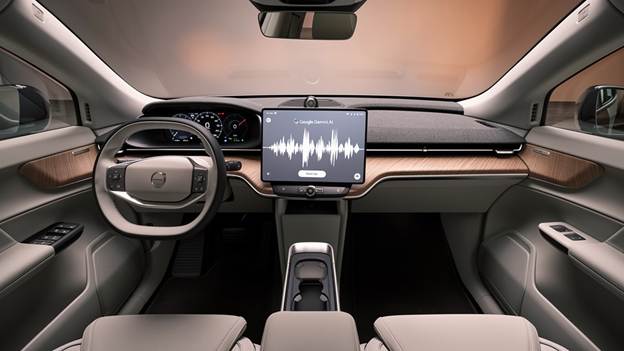
Perhaps more exciting for the daily user is the integration of Google Gemini. This is the first production car to feature Gemini as a built-in AI assistant. We’ve all struggled with car voice commands that can’t understand a simple request. Gemini changes that. You can have a natural, multi-turn conversation with the car. You can ask it to find a hotel booking in your email, check if a specific item you just bought will fit in the trunk, or brainstorm road trip ideas. It’s an interface that feels human-centric rather than tech-centric.
Design: Honoring the XC60 While Embracing the Future
Visually, the EX60 is a masterclass in Scandinavian minimalism. It carries the "Thor’s Hammer" headlight DNA that made the original XC60 a design icon, but it has been smoothed out for the electric era. The car achieves a drag coefficient of just 0.26 $C_d$, which is incredibly slippery for an SUV.
The interior is where the EX60 really pulls away from the pack. Instead of the cluttered dashboards we see from many US manufacturers, Volvo has created a "living room" feel. They’ve used sustainable materials like Nordico (a recycled textile) and tailored wool blends that feel far more premium than traditional leather. The centerpiece is a 15-inch curved OLED display that looks like it belongs in a high-end gallery.
One unique touch is the "multi-adaptive safety belt." Using internal sensors, the car detects the body shape and position of the occupant—whether it’s a small child or a large adult—and adjusts the tension and deployment strategy in real-time. It’s a reminder that while Volvo is now a tech company, they haven't forgotten that they are, first and foremost, a safety company.
The Competitive Landscape: Europe, the US, and China
How does the EX60 stack up?
- Against the US: Compared to the Tesla Model Y or the Ford Mustang Mach-E, the EX60 feels significantly more luxurious. Tesla pioneered the tech, but Volvo has perfected the "human" element. The build quality in the pre-production models I've seen is leagues ahead of what comes out of Fremont.
- Against Europe: The BMW iX3 and Mercedes GLC Electric are the primary rivals. While those are excellent cars, they often feel like "electric versions" of gas cars. The EX60 feels like it was born electric. Volvo’s 800V system and 400-mile range give it a technical edge over the current German offerings in this price bracket.
- Against China: This is the real battlefield. Chinese brands like NIO and BYD are producing incredible hardware at low prices. However, Volvo has a massive advantage in brand trust and service infrastructure. Because Volvo is backed by Geely’s manufacturing scale but retains its Swedish engineering soul, it can compete on price (starting in the low-to-mid $50,000 range) while offering the safety and reliability Western consumers demand.
Wrapping Up
The Volvo EX60 is the first EV that feels like it has no compromises. It offers the range of a long-haul diesel, the charging speed of a coffee break, the intelligence of a high-end workstation, and the safety of... well, a Volvo.
I’ve spent my career analyzing the "next big thing," and it’s rare that a product lives up to the hype on day one. But the EX60 does. It is the vehicle that bridges the gap between early adopters and the mass market. If you were considering a mid-sized luxury SUV—electric or otherwise—stop. Wait for this. I certainly am.
Disclosure: Images rendered by Artlist.io
Rob Enderle is a technology analyst at Torque News who covers automotive technology and battery developments. You can learn more about Rob on Wikipedia and follow his articles on Forbes, X, and LinkedIn.
Set Torque News as Preferred Source on Google
Follow us today...







Comments
Riiiiight. Let's see how…
Permalink
Riiiiight. Let's see how this rolling supercomputer is faring after 10 or 20 years of daily service
I am a huge Volvo fan and…
Permalink
I am a huge Volvo fan and owner. But the author's comment regarding Volvo being "first and foremost, a safety company" is not correct. Volvo has always been a manufacturing company primarily building trucks, buses, construction equipment, cars and suvs. They are admirable for incorporating appropriate and sometimes leading-edge levels of safety into their products. But they are a machinery manufacturer.
Someone must have paid you…
Permalink
Someone must have paid you to write that...not a single thing makes any consumer sense....so it's made out of stamped aluminum?....Translation, if you ever get a fender bender the whole thing is toast. Gemini AI....guaranteed not ready for cars yet so for sure problems.....800 volt charging....no infrastructure yet......Car will be learning as it goes, good luck catching up with Tesla's data history.
Bought a XC60 Polestar plug…
Permalink
Bought a XC60 Polestar plug in 4/25 and love it. Now a little miffed that EX has everything that prevented me from considering fully electric as many of my trips are long distance. Hope it's as good as you think