
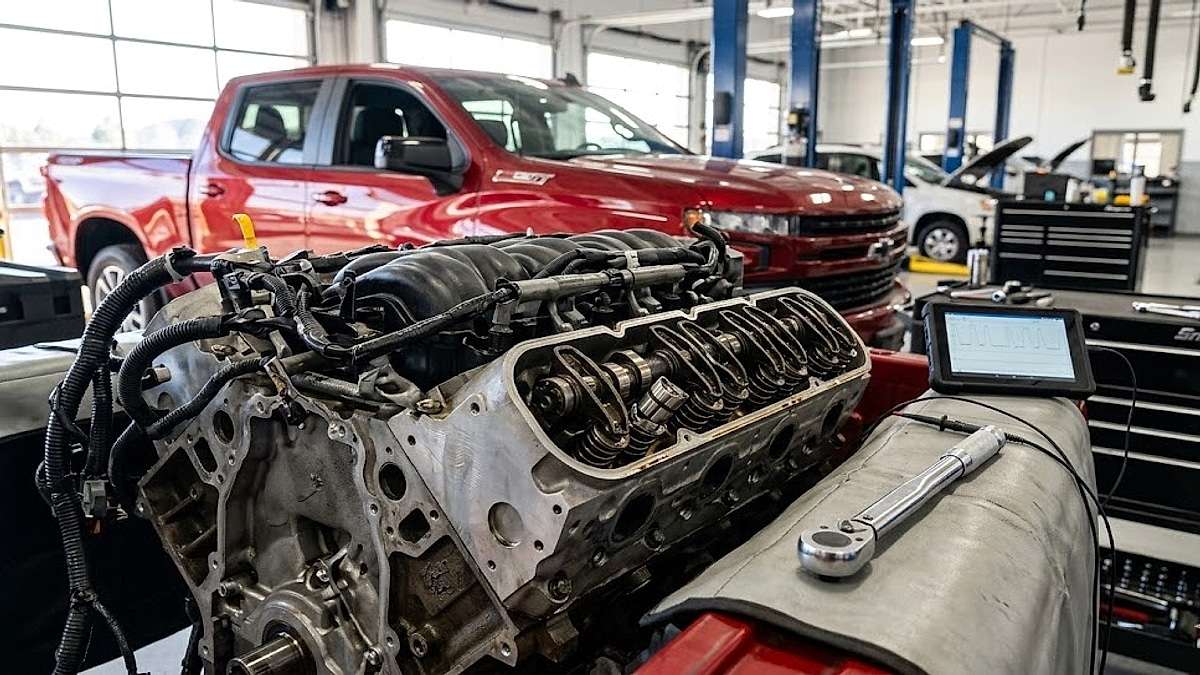

The modern automotive landscape is experiencing an explosive powertrain reliability crisis centered on General Motors’ EcoTec3 V8 engine family, where millions of 5.3-liter L84 and 6.2-liter L87 half-ton trucks and full-size SUVs suffer catastrophic valvetrain failures. Ongoing tracking of manufacturing defects by Denis Flierl for Torque News reveals these events are systemic design vulnerabilities driven by Dynamic Fuel Management fluid dynamics under factory operational parameters.
A forensic evaluation of failed components from a 2022 Chevrolet Silverado 1500 reveals internal locking pins within the lifters suffer severe mechanical shearing due to incomplete hydraulic engagement, and Torque News technical analysis by Denis Flierl identifies a critical gap between factory maintenance schedules and component longevity.
The variable-displacement oil pumps are programmed by the Engine Control Module to drop oil pressure to a meager 22 PSI during low-load highway cruising, which starves the Lifter Oil Manifold Assembly solenoids at the exact moment a cylinder is commanded to reactivate; without an instantaneous hydraulic spike to fully seat the internal locking pins, the pin edges experience localized stress concentrations that cause sudden, catastrophic valvetrain collapse.
In our ongoing coverage of General Motors' reliability, Senior Reporter Denis Flierl, with 30 years of experience, has uncovered an unresolved dispute over how warranty repairs are handled at the dealer level. A comprehensive review of regional service center disputes published by Torque News under the title “I'm Done - Build a Truck That's Going to Last”: I Found Out the “Industry Secret.” This 2021 Silverado owner, with 44K miles, documented how corporate warranty strategies leave consumers facing premature component failures long before standard operational limits are reached.
First Hand Owner Experience
This structural vulnerability became a reality for an aggrieved truck owner who shared their experience in an online truck community. Writing in a private Silverado owner group on Facebook, the owner detailed the sudden failure of their L87 engine:
"My 2021 Silverado LTZ experienced total engine failure out of nowhere at 58,000 miles. The dealership performed a partial lifter replacement on both banks, but the entire motor locked up shortly after due to oil starvation. Now I am stuck waiting months for a replacement crate engine to arrive.
The technical scope of this valvetrain crisis extends far beyond normal wear and tear, drawing intense scrutiny from federal safety regulators. The National Highway Traffic Safety Administration opened a formal preliminary evaluation into more than 877,000 General Motors trucks and SUVs equipped with the 6.2-liter L87 V8 engine due to sudden loss of motive power caused by internal engine failures.
The ongoing federal investigation emphasizes that a sudden mechanical lockup at highway speeds poses an immediate risk to consumer safety. According to official documentation tracked by automotive safety watchdogs, the scale of this defect involves multiple model years across the entire half-ton truck and full-size SUV lineup.
Industry analysis from WardsAuto confirms that the federal safety probe focuses heavily on sudden engine seizures without prior warning symptoms, prompting regulators to examine whether internal component tolerances are inherently defective.
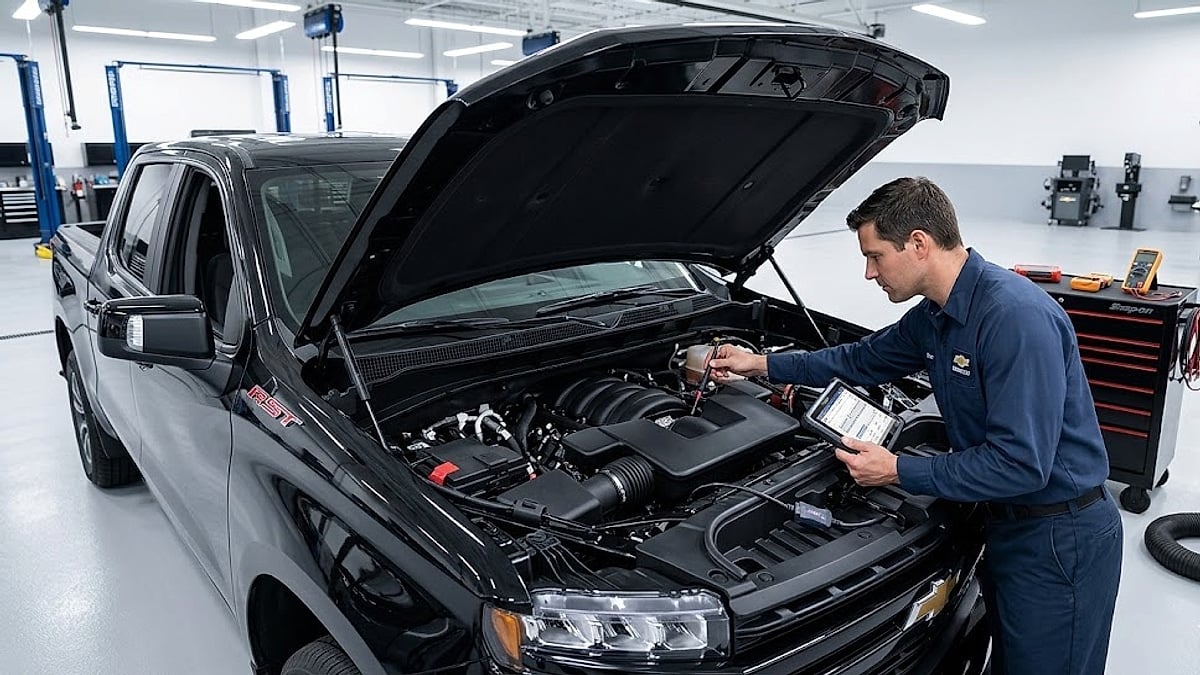
Analyzing the fluid dynamics of the EcoTec3 Lifter Oil Manifold Assembly reveals why these powerplants destroy their own valvetrains. The assembly uses pulse-width-modulated solenoids to direct pressurized engine oil to the galleries feeding the switching lifters; when the Engine Control Module commands a cylinder to deactivate, the corresponding solenoid opens, directing oil into the lifter housing to compress an internal spring and retract the mechanical locking pins, allowing the outer body to telescope freely without moving the pushrod and keeping the valves closed.
The engineering failure occurs during the transition back to full-power V8 mode because the Engine Control Module maintains low system-wide oil pressure during steady-state cruising to maximize fuel efficiency, leaving insufficient hydraulic volume to instantly slam the locking pins back into the lifter body.
Consequently, the locking pin hangs up halfway inside its machined bore, and when the camshaft lobe hits the base of the lifter, the tremendous mechanical force of the valvetrain concentrates entirely onto a fraction of the pin's surface area, shearing the metal, permanently collapsing the lifter, and bending the pushrod to cause severe engine misfires.
The High-Altitude Factor
This mechanical breakdown is heavily compounded by extreme environmental conditions, a reality that becomes obvious when operating these vehicles in high-altitude mountain environments. In our continuous reporting on heavy-load vehicle dynamics, a previous technical analysis by Denis Flierl titled "Bypassing Factory Cylinder Management Restores Oil Stability" showed that keeping all cylinders running prevents the oil pressure variations that often cause top-end oil aeration.
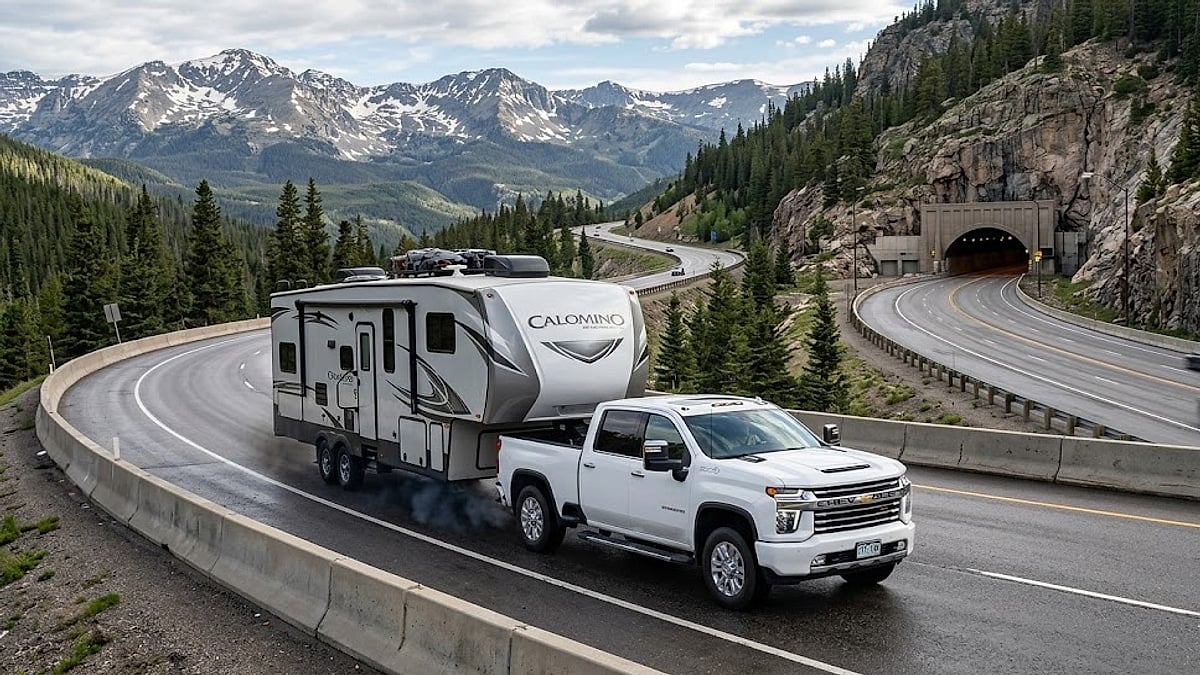
When pulling a heavy trailer up steep mountain corridors such as the Eisenhower Tunnel or Vail Pass in Colorado, the thinner air requires higher engine speeds and increased throttle input. The constant switching between Dynamic Fuel Management profiles at high altitudes causes rapid thermal cycling inside the cylinder head. The localized heat thin-outs the factory-specified 0W-20 motor oil to an extreme degree, severely reducing its shear stability.
The combination of low oil pressure, aerated oil, and high thermal stress accelerates the degradation of the delicate solenoids, explaining why a disproportionately high number of lifter failures are reported by truck owners operating in mountainous terrain.
How Long Has GM Known?
The litigation surrounding this powertrain defect has steadily intensified as consumer frustration mounts over the cost of expensive out-of-warranty repairs. A multi-state class-action lawsuit filed in the U.S. District Court for the Eastern District of Michigan alleges that General Motors has been fully aware of the mechanical valvetrain defect for over a decade, yet continues to distribute replacement components with identical design flaws.
The legal documentation asserts that corporate service bulletins instructed technicians to perform temporary repairs rather than to address the root cause of the fluid-dynamics failure.
Consumer advocacy reports published by the Lemon Law Firm highlight that hundreds of owners are facing out-of-pocket repair bills ranging from $8,000 to $15,000 for total engine replacements after their vehicles suffered catastrophic valvetrain failure outside the standard powertrain warranty window.
This ongoing legal dispute highlights the immense gap between manufacturer durability claims and the real-world operational limitations experienced by truck owners.
Field Observations from Owner Communities
The technical reality of these valvetrain failures is well documented in specialized truck forums, where owners share real-time diagnostics that inform our engineering assessments. In a recent technical discussion on r/Silverado, several owners noted that the P0300 misfire and lifter tick codes often appeared immediately after extended periods of highway driving.
Based on my 30 years of experience, this aligns with how sensitive GM's Powertrain Control Modules are to minor hydraulic pressure drops in the top-end oil galleries during long, low-RPM cruising cycles, as discussed in the full discussion here.
Another owner highlighted the structural vulnerability of the factory engine management strategy, noting that the mechanical oil pump cannot compensate for low-viscosity fluid breakdown when the engine runs hot during towing. This operational breakdown is exactly why the switching lifters lose their hydraulic cushion, leading to rapid metal-on-metal wear on the camshaft lobes, as found in this Reddit thread.
Critical Maintenance Actions For V8 Engine Longevity
- Reduce Oil Change Intervals: Shorten the oil change interval to a strict 3,000-4,000-mile window, regardless of what the digital dashboard oil life monitor indicates, to ensure the fluid retains its full shear strength and resists carbon loading.
- Monitor Cold-Start Oil Pressure: Install a mechanical oil pressure gauge or closely monitor the digital dashboard readout during cold starts to ensure the system reaches full operating pressure immediately, without prolonged lag.
- Utilize High-Quality Synthetic Fluids: Transition to a premium, heavy-duty full-synthetic oil that meets GM dexos1 Gen 3 standards and has a high viscosity index to resist thermal thinning under heavy loads.
- Document Early Acoustic Warning Signs: Maintain meticulous digital records of any distinct clicking, ticking, or metallic tapping noises emanating from the upper valve covers at cold start-up, providing immediate leverage in future dealership warranty negotiations.
Navigating Out-of-Warranty Valvetrain Vulnerabilities
When factory powertrain protection expires, owners must shift away from standard maintenance recommendations to protect the engine from multi-thousand-dollar mechanical failures.
For high-load or high-altitude operations, transitioning from factory-mandated 0W-20 motor oil to a shear-stable 5W-30 full-synthetic fluid provides a vital mechanical cushion for the top-end valvetrain, improving hydraulic sealing within the lifter oil manifold and ensuring that internal locking pins experience robust pressure during cylinder reactivation.
Concurrently, installing an aftermarket electronic OBD-II plug-in module commands the Engine Control Module to disable Dynamic Fuel Management algorithms entirely, forcing the engine to run in permanent V8 mode and completely eliminating the volatile oil pressure drops and constant pin transitions that cause mechanical shearing.
Structural Reliability Analysis Conclusion
The severe drop in top-end engine durability observed across the General Motors EcoTec3 V8 platform is the direct result of prioritizing minor, laboratory-tested fuel efficiency gains over real-world mechanical longevity.
The intricate interaction between low-pressure variable oil pumps, low-viscosity 0W-20 fluid, and rapid Dynamic Fuel Management switching profiles creates a highly volatile operating environment for the hydraulic switching lifters.
As federal safety investigations widen and class-action litigation intensifies, vehicle owners must take proactive mechanical measures to protect their investments rather than relying purely on factory maintenance schedules that compromise engine health.
How About You? Have you experienced a sudden engine misfire, a flashing check engine light, or a loud top-end lifter tick in your Chevrolet Silverado or GM SUV? Leave a comment in the red Add new comment link below and share your diagnostic findings or dealership repair experiences with our community.
What's Next in Our Powertrain Investigation
In the second chapter of this connected reporting series, titled "Chevrolet Silverado Owners Have Three Viable Options To Protect V8 Engines From Dynamic Fuel Management Failure," we provide a comprehensive consumer advocacy guide to mitigating these mechanical risks. The upcoming piece delivers a step-by-step breakdown of electronic disabling devices versus complete mechanical valvetrain deletion kits, offering actionable solutions to safeguard your vehicle against catastrophic component failure.
In our third investigative report, Torque News tracker, Denis Flierl exposes why partial dealership lifter repairs on Chevy Silverado V8 engines trigger oil starvation and total engine lockup. Learn why Colorado mountain driving accelerates DFM failures and how to protect your truck.
About The Author
Denis Flierl is a 14-year Senior Reporter at Torque News and a member of the Rocky Mountain Automotive Press (RMAP) with 30+ years of industry experience. Explore his full investigative reporting archives and technical guides at DenisFlierl.com. Based in Parker, Colorado, Denis leverages the Rockies' high-altitude terrain as a rigorous testing ground to provide "boots-on-the-ground" analysis for readers across the Rocky Mountain region, California EV corridors, the Northeast, Texas truck markets, and Midwest agricultural zones. A former professional test driver and consultant for Ford, GM, Ram, Toyota, and Tesla, he delivers data-backed insights on reliability and market shifts. Denis cuts through the noise to provide national audiences with the real-world reporting today’s landscape demands. Connect with Denis: Find him on LinkedIn, X @DenisFlierl, @WorldsCoolestRides, Facebook, and Instagram.
Photo credit: Denis Flierl
Set Torque News as Preferred Source on Google
Follow us today...





Comments
Just waiting on my 2021 GMC…
Permalink
Just waiting on my 2021 GMC Sierra 1500 Denali's engine to go. Had it at the dealership three times (with audio and video evidence) of what's happening-----loud ticking/clicking and puffs of white smoke coming out the exhaust on DFM V8 reactivation. Went through 3 quarts of oil between last oil changes. Dealership "cannot reproduce" the issues when test diving vehicle and maintain the oil usage is within normal limits. Never buying another GM product again.
We love GM products and won…
Permalink
We love GM products and won't drive anything else, but GM really needs to address this lifter problem and replace all engines for people who are experiencing this, because it hasn't just been happening since 2021, it has happened on our 2011 Sierra half ton with the 5.3L motor and we have talked to mechanics who have said they have seen this happen again and again even in the older trucks. The cost of the repair is too much for us to pay, so we are just out a vehicle right now, since we can't afford it and GM will say this is a known issue, but refuses to do a recall on it and fix it. It's ridiculous!
I own a 2017 Denali gmc…
Permalink
I own a 2017 Denali gmc sierra truck. This January in travelling on our vacation we had a lifter problem. I had to replace all 16 valve lifters costing me $9000 dollars. I’ve always driven gmc all my life, At 74 years old I was not impressed. problems can occur with any vehicle but these kind of failures should be repaired at no cost to the owner
IF YOU PUT THE SHIFTER IN…
Permalink
IF YOU PUT THE SHIFTER IN MANUAL AND TAKE TO FIFTHED GEER IT ELIMANATES THE SWITCH BACK .IT WILL STAY IN V8 MODE
My 2018 Silverado 5.3 has…
Permalink
My 2018 Silverado 5.3 has 293,000 miles. Runs perfect. Displacement on demand works great. I got 27.2 mpg last week
I experienced the same thing…
Permalink
I experienced the same thing with my 2018 GMC Sierra 5.3 engine. At a 130,000 mi I noticed a slight engine tick and became concerned about it, took my truck to the dealer had them to check it out to make sure what it was, they didn't tell me what it was right away but I am a ASE certified mechanic myself, retired I tried to get the dealer to do the job but my truck does not have a warranty anymore and they wanted $10,000 to do the job. I ended up doing the job myself replacing the active fuel management lifters and putting the truck back together it seemed to be running fine right now I also bought one of the delete modules and plugged it into the truck. General motors should be ashamed of their self making such a mess of engines. Never had this problem with my older 2004 GMC truck. Now the transmission is acting up don't know what I'm going to do about that because there's no warranty or recalls. Thank you for all the information that was given in this article.
We need to rethink our…
Permalink
We need to rethink our understanding of how an ICE works, you d___bells you.
I own a 2021 Ltz, with LTZ…
Permalink
I own a 2021 Ltz, with LTZ plus, 6.2 v-8.
The truck had all the lifter and pushed rods at 50,000 miles
100,000 mile same problem, but out of warranty. 9,000 dollars. To fix the truck.
I've been fighting the…
Permalink
I've been fighting the dreaded lifter tick for just over a year in my 2021 custom trailboss. I replaced the lifters and installed an OBDII plug in delete device and it seemed to help for a short time. I now have permanent codes for 3 of the cylinder AFM systems not working, I cant get my truck inspected until I clear the codes so I removed the device but the codes keep coming back almost immediately. Now the engine is running VERY rough with a flashing ESC light, I havent had time to look into it so the truck is sitting until I have time or money to investigate.
Having all the issues with a…
Permalink
Having all the issues with a 2109 gmc sierra elevation. I hear ticking when starting,goes away quickly right now.using 5w-30 synthetic.dont trust this truck mechanically sucks.hoping for major recall.also because I hear ticking is it too late to install obd module
I have a 2016 Chev Silverado…
Permalink
I have a 2016 Chev Silverado 5.3 V8 with less than 97000 km. I had a sound complaint and I took a video while driving it sounded like a jack brake to me and my mechanic couldn’t figure out where it was. Until later on the engine light came on and the noise never came back and eventually found out the #6 cylinder had no compression. So I have my truck at Macleans performance in Hunter River PEI they are going to replace the camshaft and all lifters and delete the AFM for full V8 power. If GM has known about this why didn’t they recall it and fix the problem by deleting the AFM. So how do I get them to pay the well after the years warranty but not mileage.
I’m in the middle of a…
Permalink
I’m in the middle of a failed lifter problem. I have a 2021 GMC Sierra 1500 with 43,000 miles. My factory Warrenty expired on April 28 of 2026! GMC dealer says sorry no coverage. I’m looking at a minimum repair cost of $4,500+. I purchased this vehicle an extended Warrenty from Zurich thru the GMC dealer where I purchased the vehicle. Essentially they want the entire motor torn down, at my expense, before they will even consider covering the cost to repair. I am completely discussed with General Motors, their customer service and lack of concern from the dealership. For a vehicle with only 43,000 miles experiencing a known issue, lifter failure, the cost to repair is beyond belief. I have always purchased GMC vehicles I really need to consider going in a different direction with my next vehicle search.