
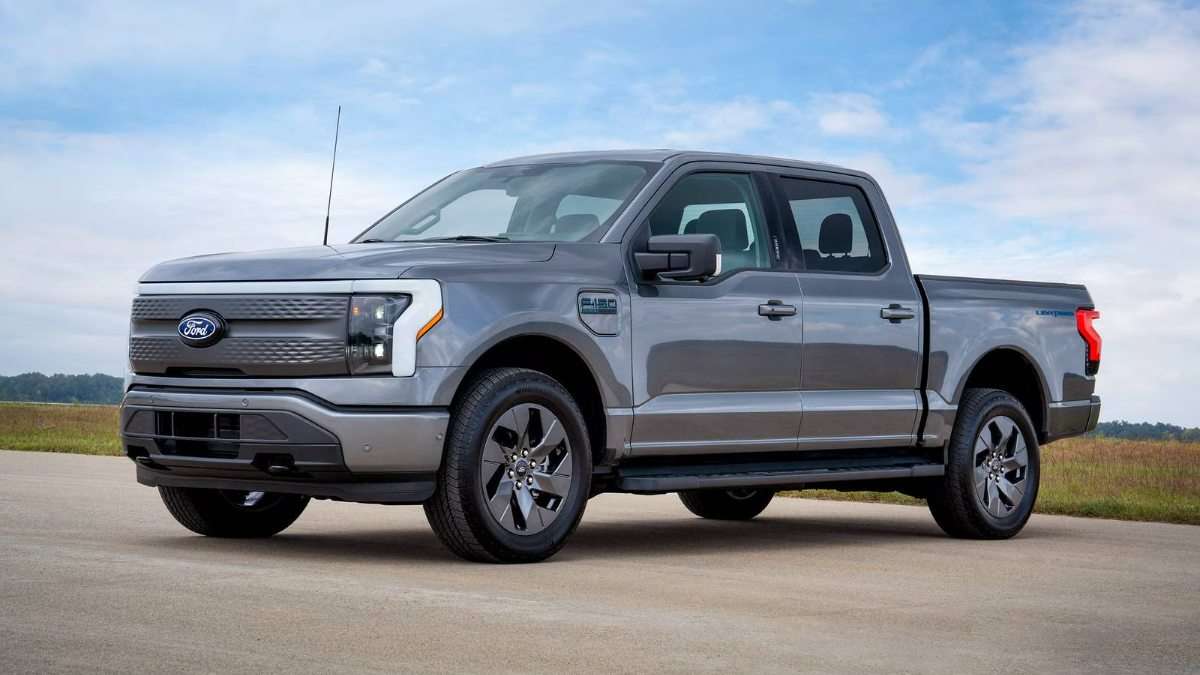

Somewhere between the nostalgic snarl of a big-block V8 and the clean surge of electrons through copper lies the truth of the modern pickup truck. And that truth was tested recently on the Island of Hawai‘i, where an F-150 Lightning owner named Ron Richardson did what truck owners have done for generations: he towed. Only this time, the cargo wasn’t just heavy, it was elemental: a 10,000-pound boat and trailer hauled from Hilo to Kona across the island’s 6,600-foot volcanic spine.
What unfolded wasn’t a lab test or a marketing stunt, but a real-world testament to what an electric truck can do when asked to do a truck’s job.
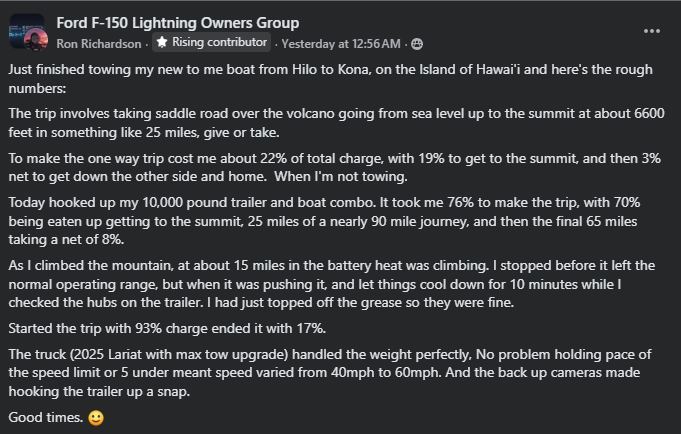
"Just finished towing my new-to-me boat from Hilo to Kona, on the Island of Hawai'i, and here's the rough numbers:
The trip involves taking saddle road over the volcano, going from sea level up to the summit at about 6600 feet in something like 25 miles, give or take.
The one-way trip cost me about 22% of the total charge, with 19% to get to the summit, and then 3% net to get down the other side and home when I'm not towing.
Today hooked up my 10,000-pound trailer and boat combo. It took me 76% to make the trip, with 70% being eaten up getting to the summit, 25 miles of a nearly 90-mile journey, and then the final 65 miles taking a net of 8%.
As I climbed the mountain, at about 15 miles in, the battery heat was climbing. I stopped before it left the normal operating range, but when it was pushing it, and let things cool down for 10 minutes while I checked the hubs on the trailer. I had just topped off the grease, so they were fine.
Advertising
Started the trip with 93% charge, ended it with 17%.
The truck (2025 Lariat with max tow upgrade) handled the weight perfectly. No problem holding pace of the speed limit, or 5 under meant speed varied from 40mph to 60mph. And the backup cameras made hooking the trailer up a snap.
Good times."
There’s something refreshing about how matter-of-fact Richardson’s account is. No preaching, no performance theater, just numbers, a cooling stop, and a report of how the truck “handled the weight perfectly.” In an era where towing with electric vehicles is still treated like a moonshot, Richardson’s post reads like a quiet declaration of competence. He drove from sea level to sky, over one of the most demanding roads in the Pacific, and his truck did exactly what he asked it to. That’s the essence of the pickup ethos, whether it burns gasoline or runs on electrons.
Other owners quickly took notice. Fellow Lightning driver David John Bunevith commented, “Funny, I have this boat!! And a 2022 Lariat extended range.” He wanted to know if the tanks were full. Richardson replied that they were holding about 90 gallons of fuel, a heavy addition to an already formidable tow. That detail matters because it confirms this wasn’t some featherweight test. The man was hauling real-world weight, with real-world expectations, up a real mountain. And the truck responded with calm authority, using its dual-motor power and torque to maintain a steady 40–60 mph climb through 25 miles of continuous ascent.
The Ford Rumor Mill
- Reports indicate that Ford is “considering” discontinuing the F-150 Lightning electric pickup, as it has become a loss leader for the company and sales have fallen far short of initial expectations (for example, Ford once projected up to 150,000 units per year, but only sold ~33,000 in the last year).
- One trigger for the reconsideration is a fire at an aluminium supplier’s plant, which interrupted production, and Ford chose to redirect aluminium capacity toward more profitable gas/hybrid F-150 and Super Duty trucks rather than prioritize the Lightning EV version.
- While no formal decision to kill the model has been announced, production at Ford’s Rouge Electric Vehicle Center (which builds the Lightning) is reported to be idled, and executives are said to be analysing whether to resume full production or replace it with a more cost-efficient EV platform.
- Ford’s official stance remains terse: it declined to comment on speculation, and emphasised only that it “does not comment on speculation about future product plans”. Meanwhile, industry observers are watching whether the Lightning will be offered for the 2026 model‐year or not.
Mike Henderson, another owner in the group, pointed out an often-overlooked part of the electric towing equation: regenerative braking. “We often have people complain about towing uphill, but they never acknowledge all the regen captured when going downhill,” he wrote. It’s a key point. While an internal combustion truck spends that descent riding its brakes, wasting energy as heat, the Lightning turns gravity into stored power. Richardson’s data reflects that, showing only an 8% net loss of charge over the remaining 65 miles after cresting the summit. The truck didn’t just climb efficiently; it made smart use of physics on the way down.
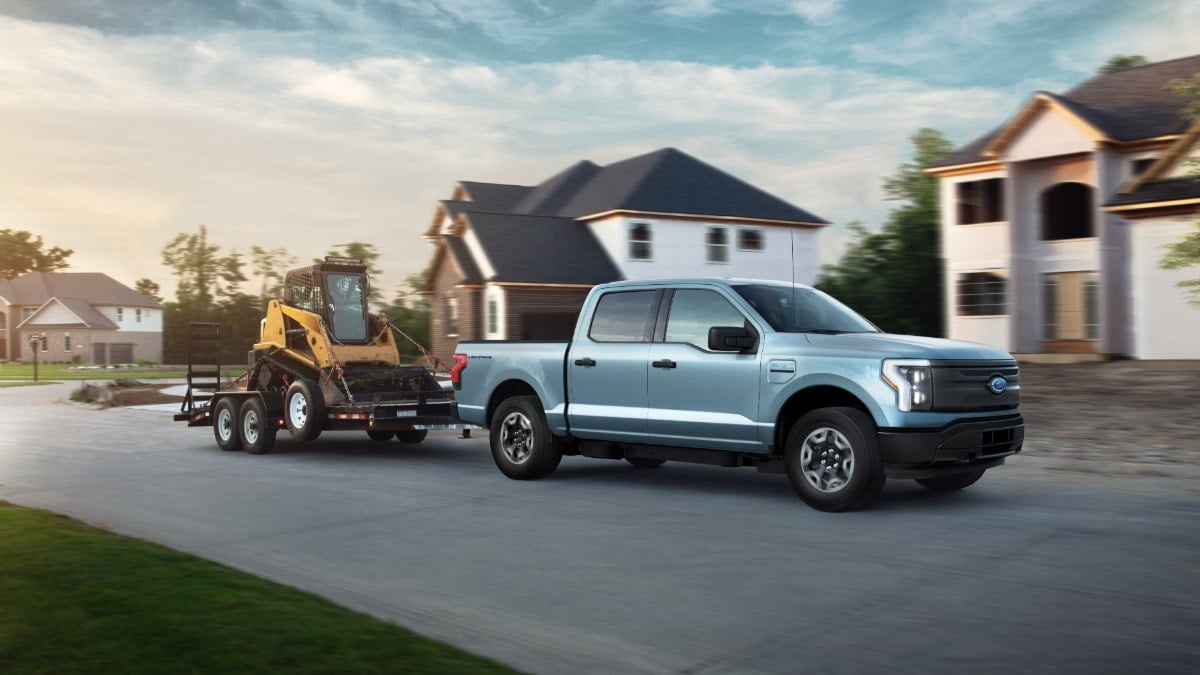
The climb itself provided a different kind of insight. About 15 miles in, the battery temperature began to rise. Richardson pulled over, checked the hubs, and let the system cool for ten minutes before continuing. No panic, no failure, just common sense and good vehicle management. This moment demonstrates something important: electric trucks don’t need coddling, but they do benefit from an attentive hand, just like their gas-burning ancestors did on steep grades in summer heat. The Lightning’s thermal systems did their job, and so did its driver.
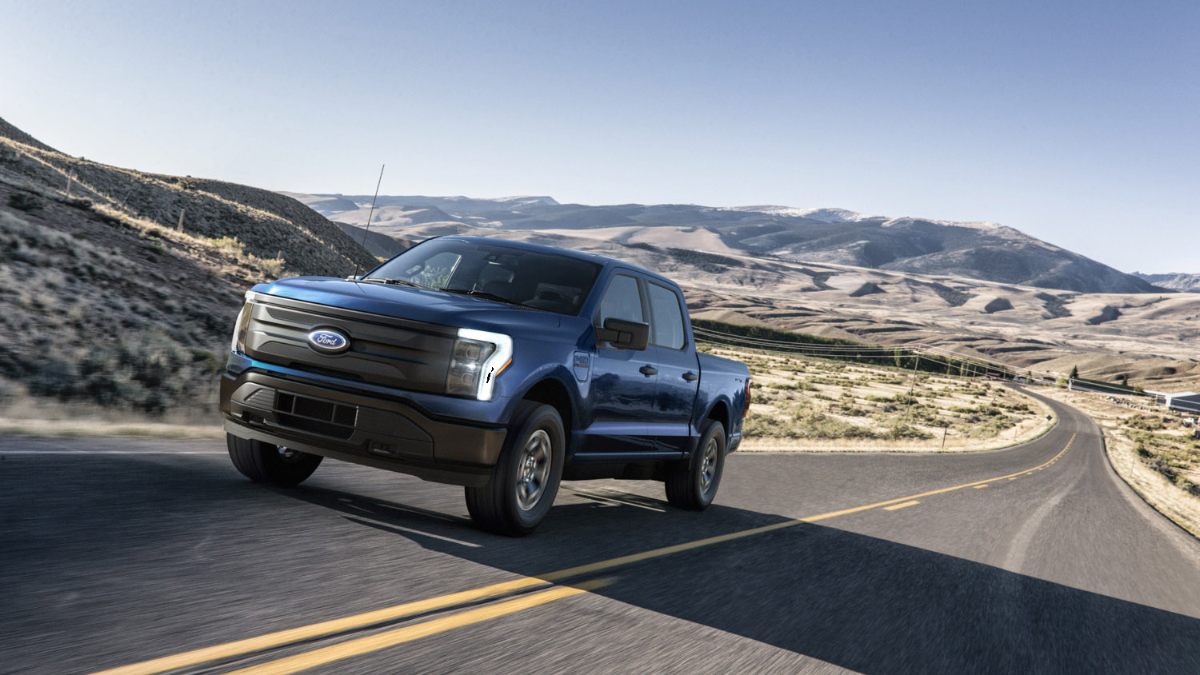
What stands out most in the conversation around Richardson’s trip is how it transformed the tone of the discussion among owners. Commenters like Neil Simmons expressed genuine admiration: “Wow! Amazing... I personally think 60 mph was pushing it. I was going to stay between 40 and 50 mph.” These aren’t fanboys repeating marketing slogans, they’re seasoned drivers comparing notes, testing limits, and recognizing a machine that earns respect the old-fashioned way: by showing up and performing.
When you look past the voltage and the novelty, this story isn’t about an electric truck at all. It’s about a pickup that did its job without hesitation. Ford’s 2025 F-150 Lightning Lariat with the Max Tow package proved that capability doesn’t need to roar to be real. It can whip up a volcano, haul five tons of watercraft, manage its temperature, recapture energy, and finish the day with 17% left in the tank, or battery, as it were.
Image Sources: Ford Media Center
Noah Washington is an automotive journalist based in Atlanta, Georgia. He enjoys covering the latest news in the automotive industry and conducting reviews on the latest cars. He has been in the automotive industry since 15 years old and has been featured in prominent automotive news sites. You can reach him on X and LinkedIn for tips and to follow his automotive coverage.
Set Torque News as Preferred Source on Google
Follow us today...



Comments
The gas powered f150 wouldn…
Permalink
The gas powered f150 wouldn't need to stop to cool down. Also, this isn't summertime, so you can't use that excuse. Had the uphill portion been 10-15 miles longer, the f150 lightning would most likely have a dead battery. While I know this is Hawaii, what if this same trip was taken somewhere cold, like the Rockies? Same incline and everything, except now you add cold temperatures to the mix. The lightning is not going to make that trip. Same trip in the rain at nighttime and same results (since the hvac will be running for defrost as well as the headlights). It wont make it without a charge. It's a nice truck that can do trucky things, but I don't think the infrastructure is up to par for it to be viable just yet. If you run this thing out of battery, it has to be towed, and you risk possible battery damage as well.
Wow....how many brain cells…
Permalink
Wow....how many brain cells sacrificed themselves for this story! I love AMERICA!
BRILLIANCE...Pulitzer nomination coming up for this one. Diminished.
Not the most economical way…
Permalink
Not the most economical way to get a trailer towed. A ICE Truck would have been the better choice
3.5 powerboost driver. I tow…
Permalink
3.5 powerboost driver. I tow a 23ft travel trailer that gets 8 mpg. This is driving mostly flat roads. I'm not real happy about the mileage but the truck never complains. The power is amazing especially when getting onto the highway.
How hard people will look to…
Permalink
How hard people will look to find a diamond in a large turd confounds me. Stopping to let the battery cool? 76% battery gone in 25 miles? Sorry but this truck is a dog with too many fleas and the lack of sales just proves this.
So it's good for short haul?…
Permalink
So it's good for short haul? My son had a Ford 3.5 and would have to pull over and let it cool down as well. Looks like the Fords aren't really work trucks. More of a grocery getter and novelty.
Owned a Lightning with 98kWh…
Permalink
Owned a Lightning with 98kWh battery... Fun vehicle, but unable to safely travel 138 miles from Los Angeles to Big Bear at freeway speeds plus altitude gain of over 6000 ft.. Went into limp mode and this was unladen and no HVAC in use... Powerful motors, but useless for long distance towing or even freeway driving... Went 200 miles in city driving... Sold within 3 months of purchase... RAM is bringing an EREV to market in 2026 which should solve the range problem...