
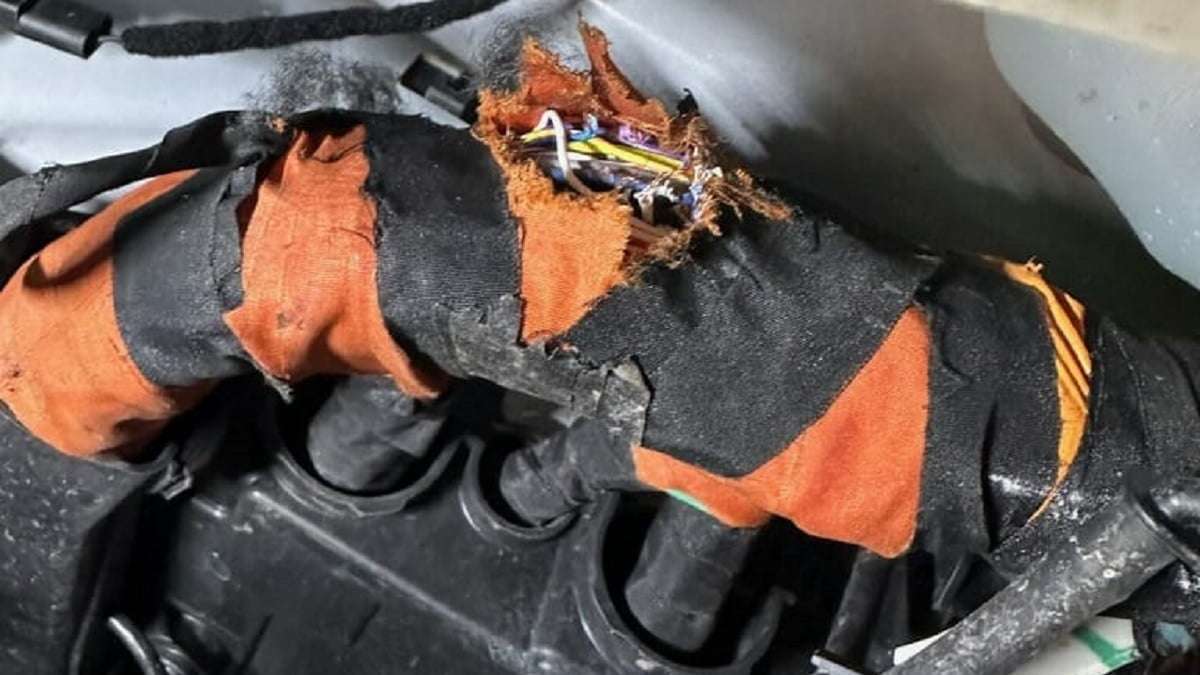

Rodents can become an unexpected and expensive headache for EV owners. Electric cars and pickup trucks provide warm hiding spots and easy nesting areas, which makes them attractive to mice, rats, squirrels, and chipmunks. These creatures often chew on wiring, hoses, and insulation as part of their natural behavior, which can lead to surprising electrical failures and costly repairs. The problem tends to show up without warning, leaving drivers frustrated and unsure why their perfectly running vehicle suddenly will not start.
Social media automotive and truck groups are full of posts about expensive wiring damage from rodents and many suggestions for how to prevent it. Here’s a good post from Scott Poti on the Ford F-150 Lightning Owners Group on Facebook. Scott started by saying:
“Super sad but may need to get rid of my Ford F-150 Lightning. I'm on my 3rd rodent damage claim and can't keep doing this. Either need to find a place for it in the garage or sell it. I've done everything I can think of to prevent this including peppermint oil, noise machines, and baited boxes around the area. My wife's traverse never gets attacked. Why did they make the truck so accessible for critters? Why do they coat the wires? No one seems to have an answer for me at Ford. I’m feeling pretty down about this because it been the best vehicle I ever owned.”
After a week of dialog with Ford customer service, Scott reported back, “I have to commend Ford on their Customer Service. Last week when I had my shop in the garage for the third time with rodent damage I decided to call the main customer service line. I explained to them how it keeps happening and the rep was very receptive and understanding. They even personally called the Ford dealership that was working on my truck to see if she could help. Best of all, they gave 70,000 Ford Reward points (~$350). I still don't agree with the soy based coated wire harnesses but really nice to see them actually try to make it better by giving me the points.“
Eric Perryman responded with a similar experience:
“I don’t think it’s the truck design. It’s probably a bit of bad luck. I had a rat in my garage several years ago that chewed a hole in the wiper fluid reservoir and some wires on my Honda CRV. Probably some merit to the other comments of traps and a cat.”
John S Martinson recommended getting a Grid Guard:
“I have a Rivian Truck and had a lot of rodent damage. I tried everything others mentioned. Nothing worked. Modern automobile wiring for EVs and most ICE vehicles are coated in soy, which attracts all kinds of rodents. I purchased and installed the Grid Guard. That was a year ago. No more issues.”
We are happy to report that Scott has found a place to garage his F-150 Lighting and hasn’t had any rodent damage since.
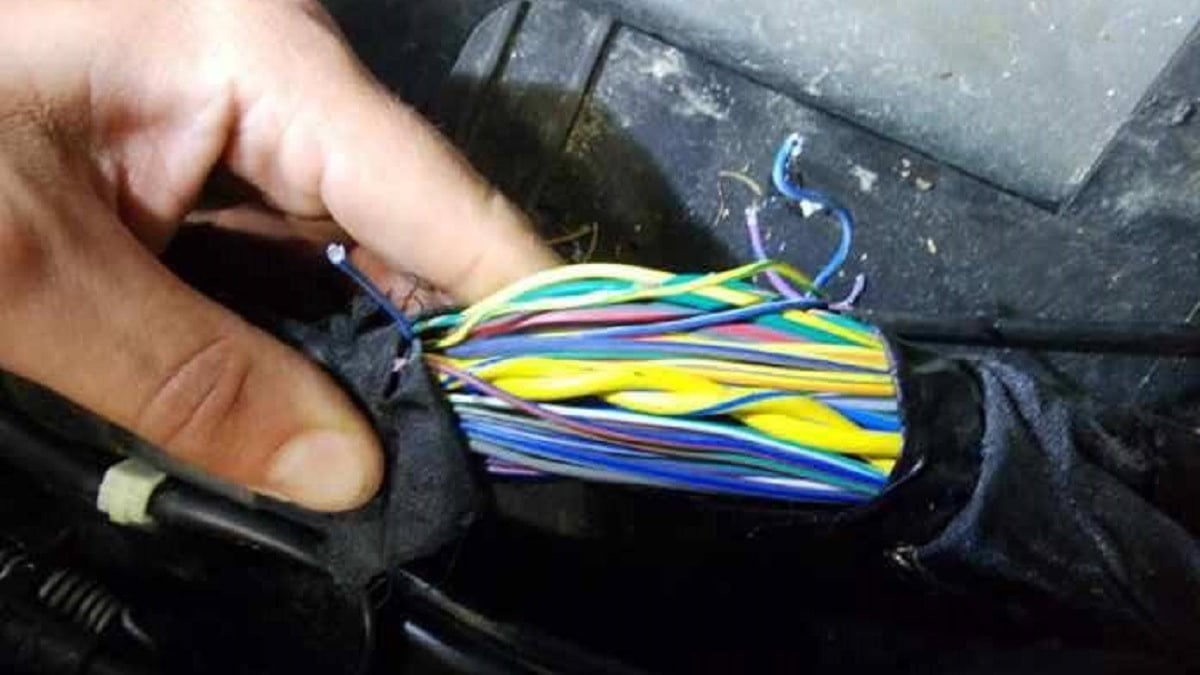
The Soy-Based Wiring Argument
Many modern vehicles use soy-based material for wire insulation as part of a shift toward more environmentally friendly manufacturing. This plant-based coating is renewable and biodegradable, which sounds appealing for sustainability goals. There is a catch for EV owners, since rodents can chew through these wires and cause expensive damage to the electrical system.
Legal challenges have tried to prove that soy-based wiring attracts rodents more than traditional materials, although courts have dismissed these cases because the evidence has not been strong enough. Rodents chew because their teeth must stay worn down, not necessarily because they prefer a certain coating. Repair bills for chewed wiring can run from a few hundred dollars to several thousand dollars, and insurance coverage is not guaranteed when the damage looks like neglect or a repeat infestation. Over on the Box-Kat blog, they have a list of automakers that use soy-based wiring.
Challenges With Common Rodent Control Methods
Many traditional rodent control techniques turn out to be messy or unreliable. Poisons can harm pets or children, and poisoned rodents often die in hidden areas which produces terrible smells for weeks. Sticky traps can be dragged away by both mice and rats, leaving no trace except a missing trap. Other trap styles sometimes fail to hold bait or allow rodents to escape. These recurring challenges encouraged the speaker to refine the three methods that consistently work the best.
Improved Use of Classic Snap Traps
The simple snap trap remains one of the most effective rodent prevention tools. The key is learning how to make the bait difficult for mice to steal. Peanut butter works better than cheese because it can be packed into the openings on the trap’s trigger. Forcing the mice to work harder releases the mechanism more reliably. A small amount of peanut butter on the metal latch increases the chances even more. Placement plays a major role in success. Mice tend to travel along walls and corners, so traps should sit where the wall meets the floor. Setting multiple traps side by side improves the odds of catching several mice in one attempt, especially when they travel in small groups.
Using A Bucket Trap for Higher Volume Catching
The second method is a homemade five-gallon bucket trap. The setup uses a spinning can covered in peanut butter suspended across the top of the bucket. A ramp allows mice to climb up and follow the scent. The can spins when stepped on, which causes the mouse to fall into the water below. This trap can catch multiple rodents in a single night because they repeat the same mistake without learning from one another. A small amount of antifreeze keeps the water from freezing in winter. The trap is usually placed in a corner because corners act like intersections for rodent traffic.
Using Scents and Dryer Sheets
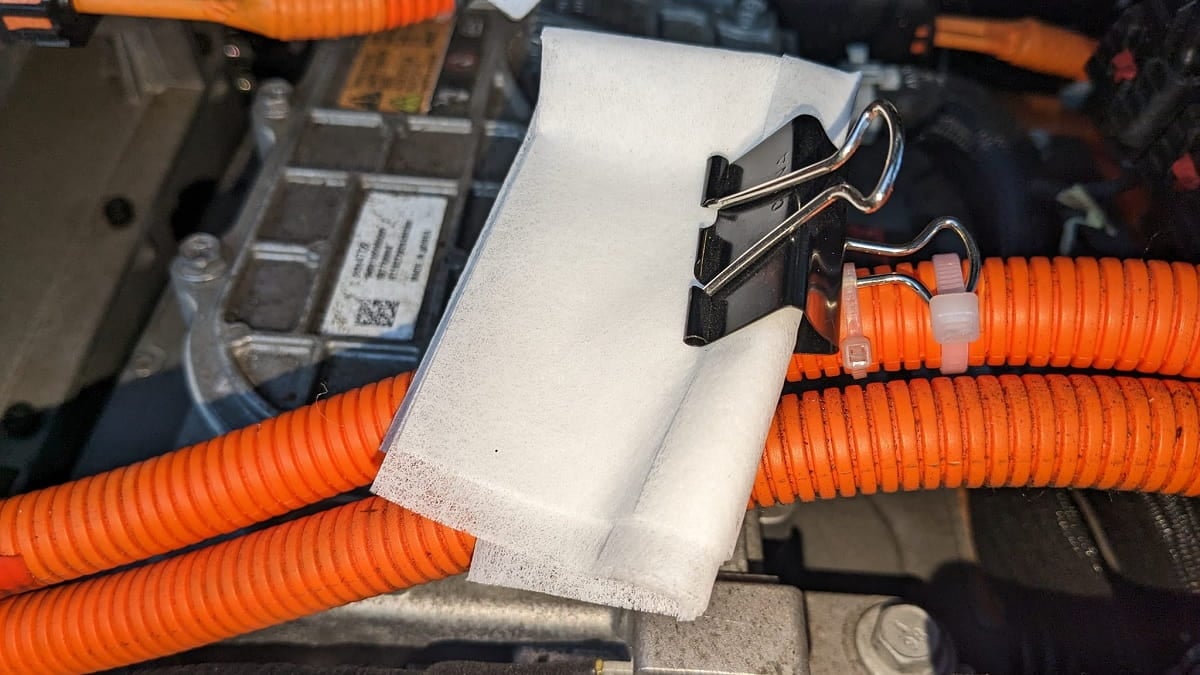
An often recommended rodent deterrent is using sprays like mint or clipping dryer sheets onto exposed wires.
A Surprisingly Effective Prevention Technique
Another solution is simple and creative. Simply leave a radio playing in your garage at all times. Rodents avoid spaces where they sense human presence, so the constant sound of music keeps them away.
The Grid Guard Rodent Control System
A higher tech option is the Grid Guard system. It uses interlocking stainless steel and PVC tiles that create a non-lethal electric barrier that rodents instinctively avoid. Each tile covers about one square foot, which makes the setup flexible for both indoor and outdoor spaces. A small adapter powers the grid and sends a timed pulse through the surface to keep pests away without harming them.
The barrier requires little upkeep and can protect a wide range of spaces including garages, parking areas, and farms. It offers reliable protection for your car while keeping overall costs manageable. The manufacturer claims that Grid Guard is a sturdy and long-lasting way to stop rodent intrusions while offering the reassurance of a one-year warranty.
Bottom Line
Rodent problems can feel overwhelming, especially when you live or work in spaces that give them many hiding spots. These suggest solutions combine improved trapping techniques with a clever prevention strategy that reduces the number of rodents entering the area in the first place. Many people struggle with ineffective traps or messy poisons, so these practical ideas can offer relief and better results.
The Ford F-150 Lightning
The Ford F-150 Lightning is a fully-electric, full-size pickup that debuted in 2021 and entered production in April 2022. What makes it stand out is that it gives truck-owners all the power and utility expected from a pickup but with electric-vehicle smoothness, instant torque from its dual motors, and all-wheel drive as standard. It can tow and haul like a traditional truck, and also offers EV-specific perks like quiet running, refined ride, and advanced onboard technology for convenience. Overall, the F-150 Lightning delivers the familiarity and capability of a classic pickup while embracing the future of electric driving.
What Do You Think?
What was the most surprising or expensive wiring damage you ever discovered from rodents?
Have you noticed rodents attacking one vehicle in your household but not another?
Chris Johnston is the author of SAE’s comprehensive book on electric vehicles, "The Arrival of The Electric Car." His coverage on Torque News focuses on electric vehicles. Chris has decades of product management experience in telematics, mobile computing, and wireless communications. Chris has a B.S. in electrical engineering from Purdue University and an MBA. He lives in Seattle. When not working, Chris enjoys restoring classic wooden boats, open water swimming, cycling and flying (as a private pilot). You can connect with Chris on LinkedIn and follow his work on X at ChrisJohnstonEV.
Photo credit: Spencer Purves (with permission), Andrew Dawson (with permission)
Set Torque News as Preferred Source on Google
Follow us today...







Comments
For my money, the main…
Permalink
For my money, the main reason rodents are attracted to cars is because their owners eat food in them, leaving crumbs and larger bits of food debris whose smell attracts the rodents. Once 'in residence' they then start doing their natural behaviour thing, chewing pretty much anything to hand to keep their teeth short (if they stop doing this their teeth continue to grow which would ultimately cause them to stop being able to chew at all and they would starve). Stop consuming food in your car and you will find the problem disappears (or never happens in the first place).
Another theory relating to rats particularly, is that the poison often used to kill them does so by causing them to dehydrate, ultimately until they die of dehydration and they therefore become very thirsty and look for sources of water - windscreen washer bottles and hoses being a potential supply. Another is that a lot of cheing scenarios are where wires, ducts and hoses pass through a metal bulkhead or similar and the rat wants to get to the other side of the bulkhead (because it can smell food, etc) and chews through the much easier material merely to gain access. This is often a potential scenario for rodent damage in houses too where cables etc pass through joists and masonry.
The 'bucket trap' my be effective but it's a bit too inhumane solution for many people as, once the rodents fall into the trap, they die a rather slow death and cruel, swimming (amongst the bodies of their already dead kin) until they become exhausted and drown.
MW
Isle of Colonsay
Scotland
My dad struggled with this…
Permalink
My dad struggled with this on my stepmom’s Honda Civic. Turns out the wiring harness is insulated with soy based material. Rats love it. He had to build an electrified corral to stop them from coming.
The soy coated wires are…
Permalink
The soy coated wires are from China. Older cars didn’t get their wires chewed because they were petroleum coated, but we export soy to China and that’s what they use to coat wires with. Rodents are a big fan!
It’s the soy based materials…
Permalink
It’s the soy based materials in the wiring loom & insulation that’s attracting them.
There’s a tape (both Honda p/n 4019-2317 IIRC or Toyota dealers should have it) specifically for this issue that has capsaicin in it w/ a few other repelling essences. I’ve been very successful with it in preventing wiring harness damage on farm equipment. Believe there’s also a spray version, the dealers will know exactly what it is especially if you live in a rural area.
Used a product called Mouse…
Permalink
Used a product called Mouse Free on RV worked like a champ! Check it out, made a believer out of me. Used at my facility and house.
Soy coated wires? Wow…
Permalink
Soy coated wires? Wow.
Honestly, my first question would be to ask how often the car gets driven. There's nothing harder on a car, or makes it more accessible to rodents, than sitting.
That’s a great point! It’s…
Permalink
That’s a great point! It’s not something many EV owners think about, but rodents can definitely pose a serious problem. Their tendency to chew on wiring and insulation can lead to frustrating and costly repairs. It’s especially concerning in electric vehicles, where the complex wiring and electronics are more exposed than in traditional cars. The warm hiding spots under the hood make EVs an inviting target, but it’s a big headache when it leads to electrical failures. It's a reminder that even with all the advanced tech in EVs, we still need to be mindful of these unexpected challenges. Hopefully, manufacturers will look into better protection or deterrents to help prevent this issue.