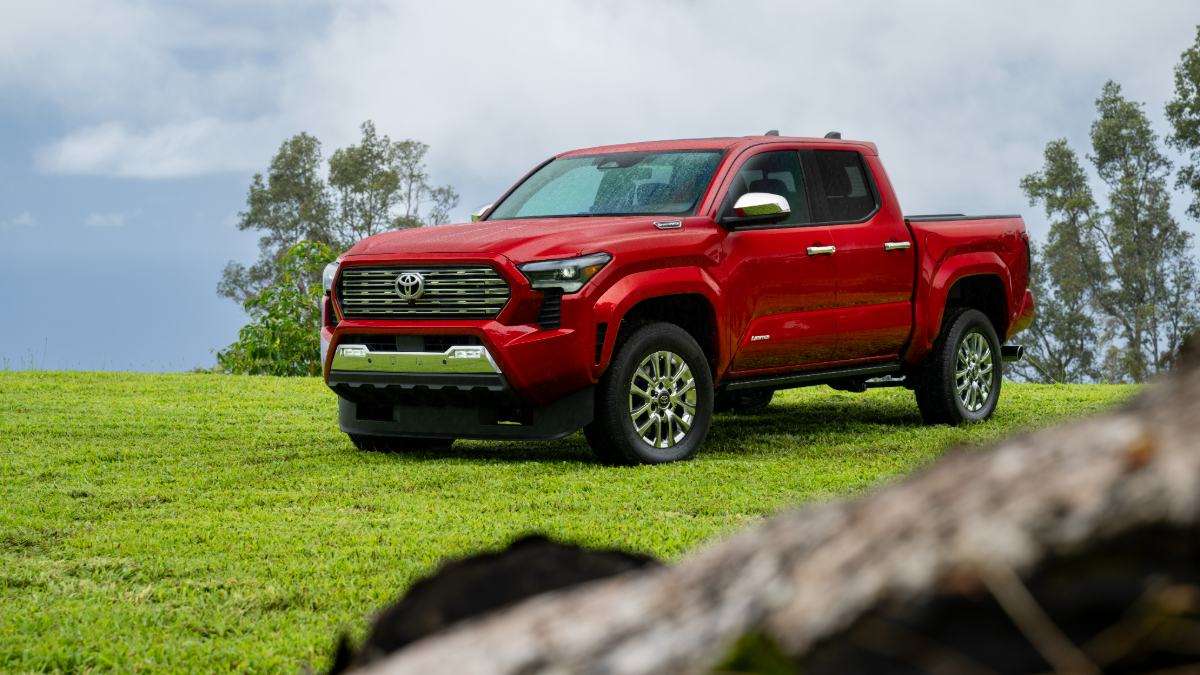

Design studios can anticipate nearly everything. They can account for harsh climates, altitude, payload extremes, and even the absentminded reach of a driver fishing for a misplaced phone. What they cannot fully prepare for is the curious precision of a dog’s paw in the cabin of a modern pickup. That truth surfaced again this week when a Toyota Tacoma owner found his quiet freeway cruise transformed into a fully illuminated dashboard drama. It was the sort of moment that reminds us that real-world driving has a rhythm and personality of its own, and no design review, no matter how meticulous, ever captures every unlikely but very possible scenario.
The account appeared in the 4th Generation Toyota Tacoma Owners Group on Facebook, courtesy of Renato Pimenta, who shared the following post exactly as written:
“My dog stepped on the button when I was going 75 miles on the freeway, and this happened. Any good advice before taking it to the dealership?”
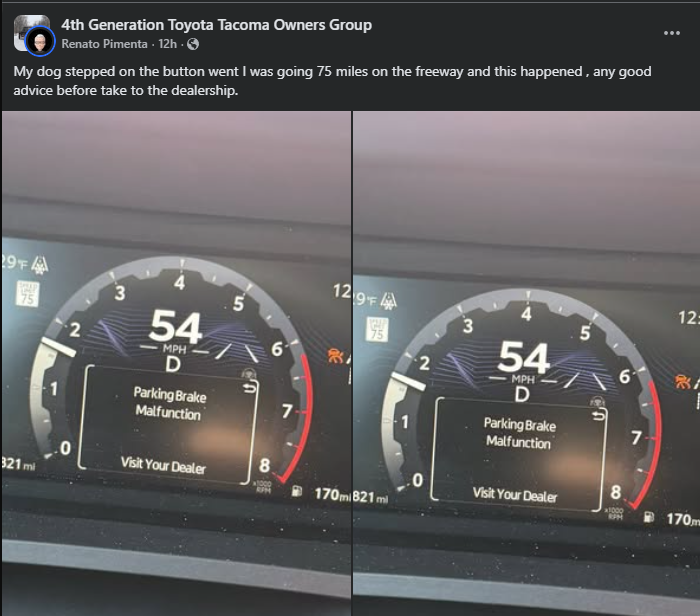
It is difficult to read that without picturing a sudden quiet in the cabin, followed by the unmistakable glow of a warning cluster intent on getting someone’s attention.
Within minutes, the comments began to fill in, starting with the practical suggestion from David Lopez, who recommended cycling the ignition. His advice represents a classic first step in modern fault clearing. With the Tacoma’s sprawling network of control modules, a quick restart sometimes resolves transient glitches. Drivers of contemporary trucks know this well. A modern pickup may be rugged where it counts, but its electronic core relies on coordination among systems that occasionally appreciate a momentary reset.
Toyota Tacoma: Chassis, Engine, Interior, and Off-Road Features
- The latest Tacoma benefits from a modernized chassis that improves ride comfort and control while preserving the durability that has defined the model for decades.
- Its turbocharged engine options deliver strong low-end power, giving the truck confident acceleration on steep grades and a responsive feel during everyday use.
- The cabin layout blends rugged design cues with modern technology, offering a large central display and user-friendly controls that suit both work and recreational driving.
- Off-road capability remains a core strength, supported by available features such as terrain management, multi-stage traction settings, and suspension tuning that adapts well to rough or uneven surfaces.
The discussion grew more reflective when Mark Raelynn Argo weighed in. He pointed out that a parking brake button on the center console sits in a spot where nearly anything can brush across it. His remark about earlier under-dash designs touched on a broader point. As cabins have become cleaner and more streamlined, space once reserved for robust mechanical hardware has yielded to switches placed for convenience and packaging efficiency. There is a balance between intuitive placement and inadvertent activation, and incidents like this remind us that priorities in interior layout have shifted significantly.
Then came Marc Oster, who admitted he had triggered the same function while reaching for his phone. His comment revealed how sensitive some of these systems can be. The Tacoma and Tundra platforms integrate electronic parking brakes that interface with stability management and powertrain control. What appears to be a simple switch carries with it a cascade of safety protocols ready to intervene. These systems work beautifully when prompted intentionally, yet can surprise drivers when engaged unexpectedly by an object, a motor, or, in this case, an enthusiastic traveling companion.
For those seeking a more involved remedy, Schochot Meers provided a technical approach involving battery disconnection and a system discharge interval. While this remains a time-honored method for clearing persistent electronic faults, it also reflects how interconnected today’s trucks have become. Every accessory, every modification,tion and every removed part has the potential to communicate with several modules at once. Meers mentioned similar alerts following the removal of grille shutters for a winch bumper, illustrating that even thoughtful upgrades can require recalibration or clearing procedures.
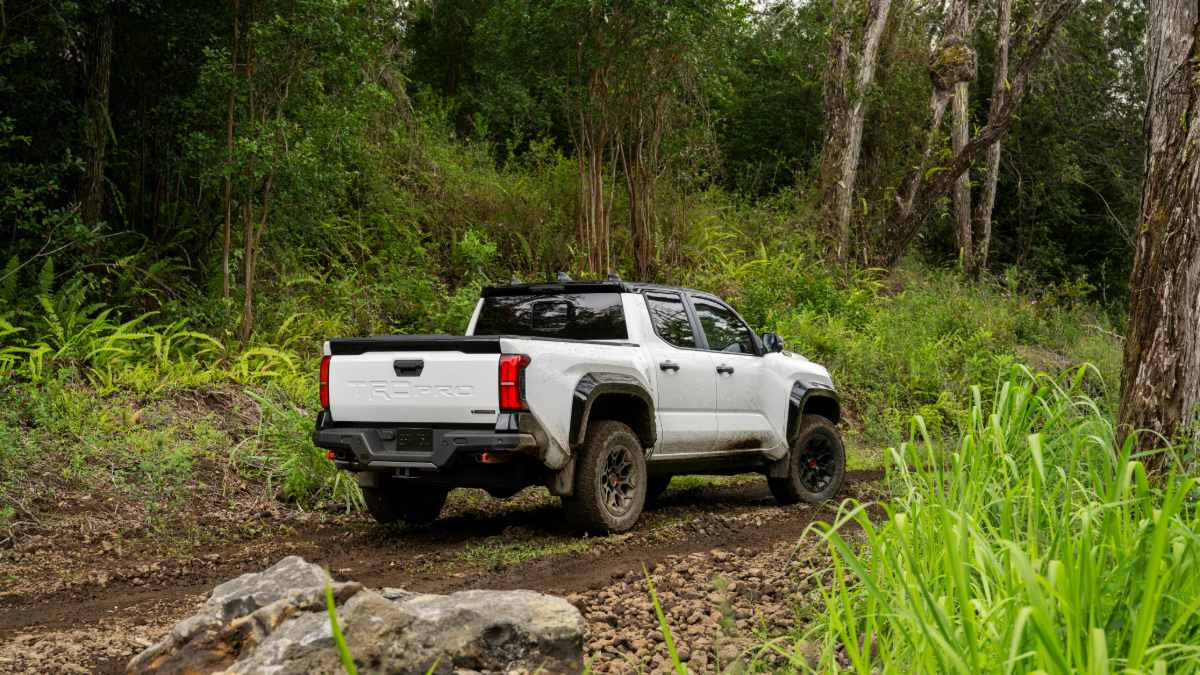
This episode invites a closer look at the expectations placed on modern trucks. The Tacoma blends robust underpinnings with an extensive electronic architecture, designed to assist its driver in countless situations. Yet these systems rely on clear and intentional input. A paw on a switch at freeway speeds creates a scenario no engineer prioritizes in simulations. The truck reacted as it was designed to do by issuing a caution and entering a protected state. The driver, in turn, did exactly what many do today and sought the collective expertise of an owner community that has seen nearly every surprise the model can deliver.
The story ends not with frustration but with cooperation. A group of owners offered workable solutions, practical experience, and steady reassurance. The Tacoma at the center of the story remains a capable machine, and the unexpected moment it endured serves as a reminder of the complexity inherent in contemporary vehicle design. Systems grow more advanced each year while still sharing the cabin with pets who approach every surface as potential exploration material. The result is an anecdote that combines technology, chance, and the steady resourcefulness of those who rely on their trucks every day.
Image Sources: Toyota Media Center
Noah Washington is an automotive journalist based in Atlanta, Georgia. He enjoys covering the latest news in the automotive industry and conducting reviews on the latest cars. He has been in the automotive industry since 15 years old and has been featured in prominent automotive news sites. You can reach him on X and LinkedIn for tips and to follow his automotive coverage.
Set Torque News as Preferred Source on Google
Follow us today...