
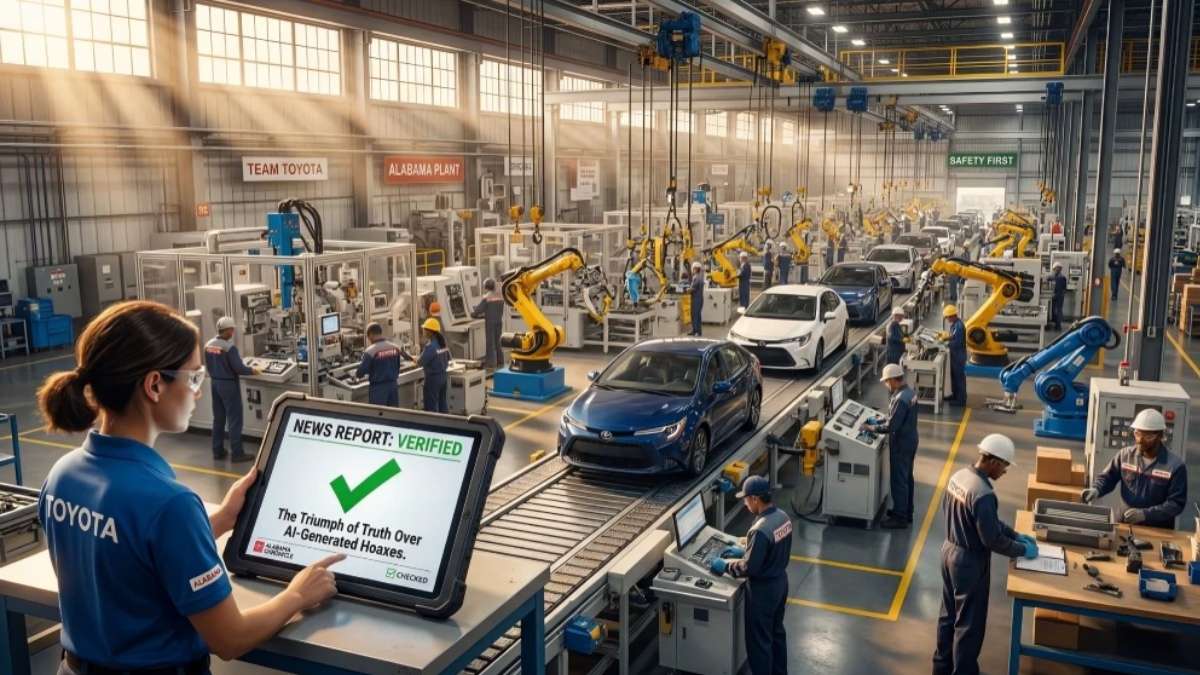

In the last 48 hours, social media platforms X and Threads were set ablaze by a narrative that seemed almost too perfectly timed for the current political climate. A series of posts, bolstered by AI-generated images of futuristic factories and professional-looking "leaked" documents, claimed that Toyota was abruptly canceling a $9 billion investment in Alabama to relocate the project to Ontario, Canada.
The story tapped into a deep-seated anxiety regarding North American manufacturing and trade tensions. By the time the sun set yesterday, the primary post had amassed over 100,000 likes and tens of thousands of shares. It wasn't just a rumor; it was a digital wildfire. However, the smoke was entirely synthetic.
Today, Toyota officially broke its silence. As reported by BNN Bloomberg, the automaker issued a "Fact File" explicitly stating that the story was a total fabrication. There is no $9 billion move. The Alabama investment remains secure, and the "Canada relocation" was the product of a sophisticated AI disinformation campaign.
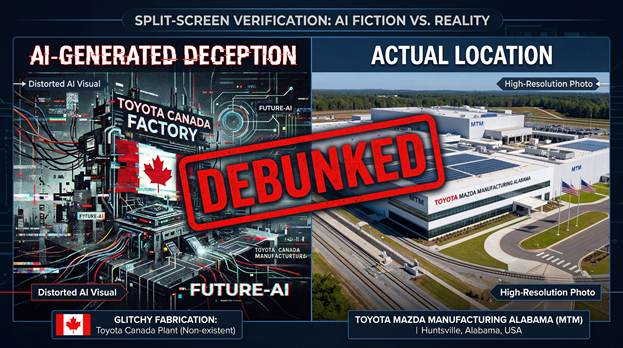
Why the Hoax Stuck: The Psychology of Misinformation
Why did 100,000 people hit the like button on a lie? The "Toyota to Canada" hoax succeeded because it leveraged "confirmational bias" regarding current economic anxieties. In an era of shifting trade alliances and high-stakes automotive electrification, the idea of a major manufacturer fleeing the U.S. felt "plausible" to many, even if it wasn't true.
The use of AI-generated assets made the deception even more potent. We have entered an era where "seeing is no longer believing." The fabricated documents used Toyota’s corporate font and branding with such precision that casual observers, and even some amateur news aggregators, failed to spot the inconsistencies. This event serves as a grim milestone in how AI can be weaponized to destabilize corporate reputations and influence public sentiment overnight.
The Reality: The Current State of Toyota and the United States
To understand why this hoax was so damaging, one must look at the actual relationship between Toyota and the U.S. economy. Toyota is not fleeing; in fact, it is deeper in the "Heart of Dixie" than ever before.
The Toyota Alabama plant recently celebrated significant production milestones and remains a cornerstone of the company’s internal combustion and hybrid engine strategy. Far from pulling out, Toyota has been consistently pouring billions into U.S. electrification efforts, including the massive Toyota Battery Manufacturing North Carolina (TBMNC) facility.
The tension that the hoax exploited stems from the logistical challenges of the transition to EVs and the complex requirements of the Inflation Reduction Act (IRA). While Toyota has occasionally voiced concerns about the pace of the EV transition, their capital remains firmly rooted in American soil.
Tariffs and Trade: How Policy Shifts Change the Game
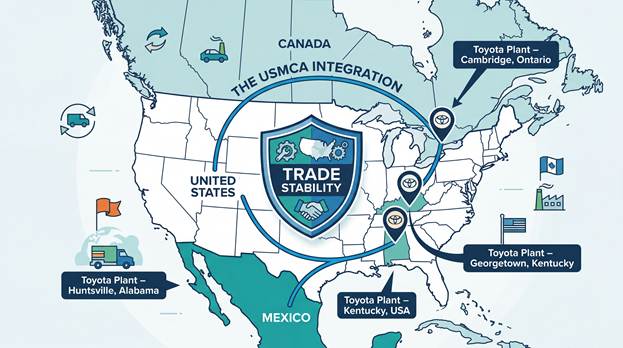
A significant driver of the anxiety that fueled this hoax was the specter of global tariffs. For years, the automotive industry has lived under the shadow of Section 232 investigations and the potential for broad, executive-led global tariffs that could disrupt the highly integrated US-Mexico-Canada (USMCA) supply chain.
However, a shift is occurring. The proposed and ongoing elimination of certain global tariff powers is a game-changer for the automotive market. Note that it also essentially moves the power of trade levies back to more traditional legislative oversight or multilateral agreements.
When global tariff powers are curtailed, the "volatility premium" of investing in the U.S. drops. Manufacturers like Toyota can plan 10 to 20 years into the future without fearing that a sudden executive order will tax their Canadian-made parts at 25% or block their Mexican-assembled components. This stability makes the "exit" scenario - the very thing the hoax claimed was happening - far less probable. A stable trade environment encourages "onshoring" not out of fear, but out of economic efficiency.
The Cost of Deception: Damage to the U.S. and Toyota
While the story was fake, the damage is real. For the U.S. government, such hoaxes create an atmosphere of economic instability that can spook other foreign investors. If the public believes a "blue chip" company like Toyota is leaving, it can affect local real estate markets, job seeker confidence in Alabama, and even state-level economic planning.
For Toyota, the damage is a matter of brand trust. They were forced to divert corporate resources to fight a ghost. Furthermore, these stories can impact stock prices or cause unnecessary friction with labor unions and local governments who might wonder if there is "smoke where there is fire."
Clearing the Air: What Needs to Happen Now
To prevent a repeat of this incident, both Toyota and the U.S. government need to adopt a "Radical Transparency" model.
- Toyota's Role: Toyota needs to move beyond "Fact Files" and utilize more interactive, "behind-the-scenes" digital storytelling. By showing the literal pouring of concrete in Alabama and North Carolina through live-streamed milestones or frequent video updates, they can create a "truth baseline" that AI-generated images cannot easily mimic.
- The U.S. Role: The Department of Commerce and state-level agencies should establish rapid-response "Verification Hubs" for major industrial investments. When a story involving a $9 billion shift breaks, there should be a government-backed portal that can confirm the status of permits and investments in real-time.

The New Rules of News Consumption
As AI becomes more sophisticated, the burden of verification increasingly falls on the reader. To ensure you aren't misled by the next viral automotive hoax, follow these steps:
- Check Official Pressrooms: Major companies like Toyota publish every significant investment move on their own sites (e.g., pressroom.toyota.com). If it’s not there, it’s likely not real.
- Look for Multiple Primary Sources: A story of this magnitude would be covered by Reuters, Bloomberg, and the Associated Press simultaneously. If the "news" is only on X or a fringe blog, treat it with extreme skepticism.
- Analyze the Imagery: Look for the "AI tell" - warped logos, strange finger counts on people in the background, or text that looks like gibberish when zoomed in.
- Verify with Fact-Checkers: Use dedicated resources like Snopes or the FactCheck.org automotive sections.
The "Toyota to Canada" hoax is a wake-up call for the automotive industry and the public alike.
While the story of a $9 billion flight from Alabama was a total AI-generated fabrication, it highlighted the fragile state of public trust in the digital age. By understanding the real, stable investment Toyota has made in the U.S., and recognizing how the reduction of trade volatility through tariff reform strengthens our domestic market, we can see through the smoke of disinformation.
In the future, the best defense against a viral lie is a well-informed audience and a commitment to transparency from the giants of industry. Toyota isn't going anywhere, except toward a more electrified, integrated North American future.
About The Author
Rob Enderle is a highly recognized technology analyst and automotive journalist with decades of experience providing deep-dive insights into the intersection of personal technology, artificial intelligence, and the future of transportation. Based in Bend, Oregon, Rob has spent his career dissecting complex industry trends for both enterprise and consumer audiences. He is a frequent presence at major global events like CES, where he evaluates the latest breakthroughs from industry giants such as Lenovo, Intel, HP, and AMD. You can learn more about Rob on Wikipedia and follow his articles on TechNewsWord, as well as Rob Enderle on X.
Set Torque News as Preferred Source on Google
Follow us today...




Comments
Most people have no clue why…
Permalink
Most people have no clue why Toyota is in Alabama near the Tennessee River. Northern Alabama is woefully underestimated and underutilized. Vertical integration of materials supply chains that support rockets AND a logistical hub connecting shipping to trains.
Well said!
Permalink
In reply to Most people have no clue why… by Edwin Pope (not verified)
Well said!