
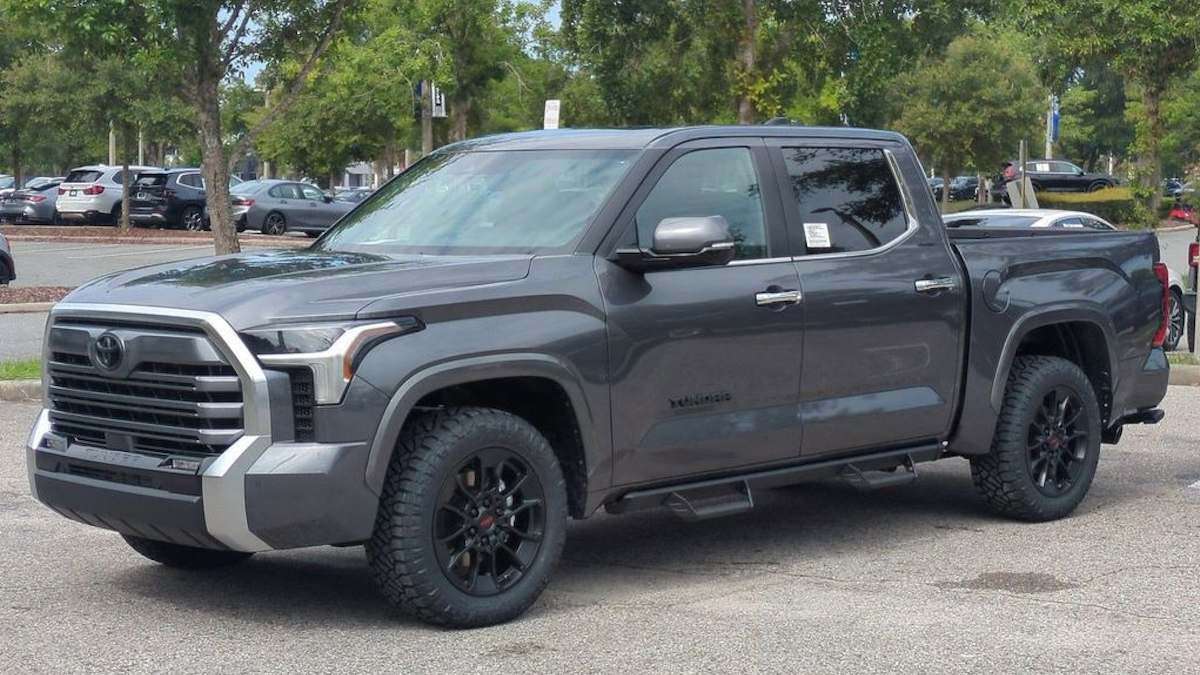

Is Thomas Forthofer's decision to bypass Toyota's 10,000-mile oil change recommendation and switch to a 5,000-mile interval a wise insurance policy against potential Tundra engine issues, or an expensive overreaction?
The debate over extended oil change intervals rages on in the truck world, but for one brand-new 2025 Toyota Tundra owner, the answer is clear: better safe than sorry. This decision is fueled by reports of ongoing engine reliability concerns with the new Tundra V6 design, which I've covered extensively in this space. The need for owners to be proactive is a major theme highlighted in my report about an owner's 2024 Tundra that lost oil pressure and began knocking at 54k miles.
Thomas Forthofer, posting on the 2023-2026 Toyota Tundra Owners Facebook page, sparked a lively discussion by outlining his plan to ignore the manufacturer's official recommendation of 10k oil changes despite his dealer's persistence.
"I'm bringing my 2025 Toyota Tundra Platinum in for its first service. It's due for the media screen recall, so I thought, why not give it an early oil change at 1,500 miles and do the recall at the same time? The dealer tried hard to convince me to do 10,000-mile oil changes."
Just Look at the History
The heart of Forthofer's concern lies in the history of the Tundra's powertrain, which has seen some documented issues in earlier model years. While the 2025 model is the latest iteration, the memory of those problems clearly influences his maintenance strategy.
"It just seems excessive to wait 10,000 miles for a first oil change on an engine that is known to have problems in earlier years. I can't control the issues it might have in the future, but if I can give it an early oil change, I will. I plan on sticking to 5,000 miles after the first early oil change. I'm not taking Toyota's recommendation for 10k."
Forthofer's move to an early 1,500-mile first change, followed by a switch to a 5,000-mile synthetic oil change interval, is a common practice among seasoned mechanics and conscientious owners, especially for turbocharged engines like the Tundra's twin-turbo V6. His concerns are backed by widespread reports of engine issues with the new Tundra generation, which continue to raise serious questions about the long-term durability of the Toyota Tundra.
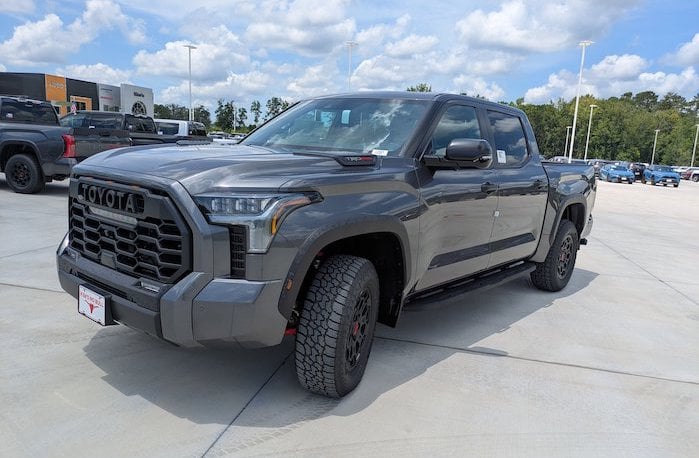
Tundra Owner Anxiety Is Real
The twin-turbocharged V6 engine (known as the i-FORCE) that powers the current generation Tundra (2022-2025) has been the subject of several high-profile issues and recalls, which directly inform Forthofer's decision to play it safe with his oil changes:
Major Engine Recall: Toyota issued a significant recall affecting hundreds of thousands of 2022-2023 Tundra and Lexus LX vehicles for a manufacturing defect. The issue was attributed to "machining debris" left in the engine block during production. This debris could damage crankshaft bearings, causing engine knocking and potential engine failure. In many affected cases, Toyota's remedy has been to replace the entire engine.
I covered the severity of the ongoing problem in my story, which highlights how engine problems, even in non-recalled years, are fueling the debate over Toyota Tundra i-FORCE V6 maintenance.
Continued Failure Reports: While Toyota stated the machining debris issue was resolved for later production models (including the 2025 model year), owner reports suggest engine failures, including spun main bearings, have persisted in trucks outside the original recall years. This is why many owners are choosing the best oil change interval for long-term Toyota Tundra reliability over the factory recommendation.
I documented the extreme end of this spectrum in this report about the lingering uncertainty that motivates many owners to adopt more rigorous maintenance schedules.
The 10K Mile Dilemma
Automakers like Toyota have been moving to longer oil intervals (often 10,000 miles) for years, supported by the use of advanced synthetic oils. However, the online community remains skeptical. Forthofer's choice of an early 1,500-mile first change is a strategic move to flush out initial metallic break-in contaminants.
The decision to choose a 5,000-mile vs. 10,000-mile Tundra oil change is often rooted in common sense rather than factory specs. Turbocharged engines, like the Tundra's, place significantly more thermal stress on the oil, which can break down the oil's additives faster than in naturally aspirated engines, making 10,000 miles a risky gamble for those who plan to keep their truck for the expected lifespan of a Toyota Tundra.
For Thomas Forthofer, the slight added cost of more frequent oil changes is a small price to pay for peace of mind and, potentially, extended engine life. His post is a loud signal that many Tundra owners are willing to spend the extra money to go against the factory recommendation, viewing the oil change as cheap insurance against a potential engine failure. This is especially true for those concerned about maintaining their 2025 Tundra engine warranty while being proactive.
Tundra Owners Speak Out
The sentiment expressed by Thomas Forthofer is echoed across various online platforms, showing a consensus among a large segment of Toyota Tundra owners that shorter oil change intervals are a necessary precaution.
- YouTube: "Oil is the blood of the engine. 10k is just asking for problems down the road. I do 5k full synthetic like a religion on my 2023. I'm not risking a $20k engine replacement over $80 in oil."
- Reddit (r/ToyotaTundra): "Dealer tried to upsell me on 10k service, I politely declined and asked for a 5k. They noted it as 'Customer Preference for Severe Driving Conditions.' Which, in a way, is true—I plan on actually using my truck to tow and drive it hard!"
- Quora: "The initial 1,000 to 2,000-mile oil change is critical to get all the manufacturing gunk and seating debris out. If you skip that, you're circulating microscopic metal dust for 10k miles. That's where the damage starts. I changed mine at 1,500 and now follow 5,000."
Conclusion
Thomas Forthofer's proactive decision to perform an early, 1,500-mile oil change and stick to a 5,000-mile interval on his new 2025 Toyota Tundra Platinum is a rational response to the documented reliability issues with the new twin-turbo V6 engine, reflecting a widespread desire among new Toyota Tundra owners to prioritize engine longevity over marginal cost savings.
By going against the 10,000-mile factory recommendation, he is investing in the long-term health of his truck, providing an extra layer of protection against issues like internal debris and oil degradation in a high-stress, turbocharged motor.
What Would You Do?
Given the history of the i-FORCE V6 engine, is a 5,000-mile oil change interval a mandatory measure for all 2023-2026 Toyota Tundra owners seeking maximum engine life, or are you comfortable trusting the factory's 10,000-mile recommendation? Click the red Add New Comment link below and let us know.
I'm Denis Flierl, a Senior Torque News Reporter since 2012, bringing over 30 years of automotive expertise to every story. My career began with a consulting role with every major car brand, followed by years as a freelance journalist, test-driving new vehicles, which equipped me with a wealth of insider knowledge. I specialize in delivering the latest auto news, sharing compelling owner stories, and providing expert, up-to-date analysis to keep you fully informed.
Follow me on X @DenisFlierl, @WorldsCoolestRides, Facebook, Instagram and LinkedIn
Photo credit: Denis Flierl via Toyota
Set Torque News as Preferred Source on Google
Follow us today...







Comments
I change every 5k and always…
Permalink
I change every 5k and always open the filter for inspection. The companies are all overestimating oil life. I also send a sample from my diesel for testing.
Prior to my first new car…
Permalink
Prior to my first new car purchase in 1991, I enthusiastically read whatever I could that would help it to run soundly for many years. One popular suggestion or better yet, a requirement, was to change both the engine oil and the transmission fluid at 1000 miles to remove the accumulation of metal shavings generated by the contact of brand new metal components in both the engine and drivetrain. I did. I sold the car after 12 years and 100,000 miles and would have kept my Honda Accord LX if the body hadn't begun to fail so badly. In short, a first oil and transmission fluid change at 1000 miles of use is still a wise investment!
I think the first oil change…
Permalink
I think the first oil change should be at 500 miles. Then 5,000 miles or even 3,000 miles. This is on any engine. The oil might be good for 10,000 miles but it still gets just as dirty.
I solved this problem…
Permalink
I solved this problem entirely!!
I bought a FORD F150 LIGHTNING!!
Check fluid levels n rotate tires!! NEXT!!!!
0W20 is made for fuel…
Permalink
0W20 is made for fuel economy and not for wear protection of your engine. A turbocharger breaks down oil quickly due to the excessive heat compared to a non turbocharged engine. How many of the manufacturers have had engine recalls in the last 10 years and how long has 0W20 and now 0W16 been around? The recommended wear protection for any turbocharged engine will have an AECA A3/B4 rating. The lowest viscosity oil with that rating is 0W30.
Biught 2022 Tundra i-Force…
Permalink
Biught 2022 Tundra i-Force Max. changed oil at 1500, 3000, 5000. Went to 5k after unless I do a trip. Then I change it before and after. 36k miles I've changed it probably 8 times.