
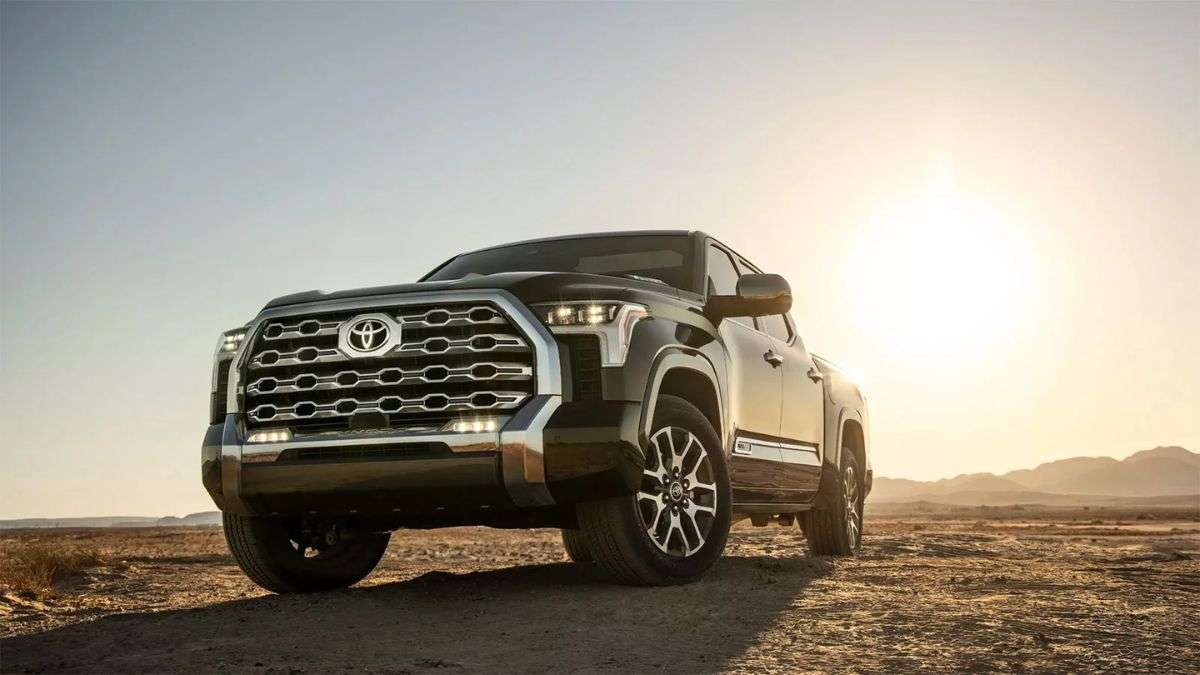

For many drivers, choosing a Toyota truck comes down to one powerful promise the brand has carried for decades: reliability. Toyota built its reputation on making trucks that seemed to outlast nearly everything else on the road. That’s why hearing about a 2022 Toyota Tundra owner who did everything right yet still faced a failed motor grabs attention. It’s not just one story, as it points to a larger conversation about Toyota’s newest generation of pickup trucks. While scrolling through the “2022+ Toyota Tundra Owners” group on Facebook this morning, I came across a post by Michael Tanner that captured this perfectly. His experience highlights exactly how reliability expectations can clash with reality.
Here’s what he had to say: “Well, I made it to 59k on my ‘22 Tundra. The dealer changed the oil every 5,000 miles. 1 month left on the lease and the motor is done. The dealer says ‘yup, it’s part of the recall. There’s no motor even available.’ Apparently, they are doing them in groups. I just signed the odometer statement and turned the keys in. P.S…. no. I’m not interested in a new lease.”
It's the frustration many Tundra owners are beginning to feel. Michael followed Toyota’s recommended service schedule to the letter. Yet when the engine failed, the solution wasn’t immediate. Either you wait until they get you an engine, or park the truck, turn in the keys, and walk away. For a brand that built its name on longevity, this is a tough pill for loyal customers to swallow.

Official Recall Numbers
Toyota has faced an ongoing engine recall affecting 2022 and 2023 Tundras tied to potential issues with the crankshaft bearings that can lead to sudden failure. The recall has been rolled out in waves, meaning not every vehicle gets repaired at the same time. This explains Michael’s note that the dealership said they were “doing them in groups.” The problem isn’t just the defect itself, but the ripple effect on owners who suddenly find themselves without a functioning truck, often with no replacement engine available.
According to Toyota’s official recall announcement from May of last year, about 102,000 vehicles in the U.S. are included in the 2022–2023 Tundra and Lexus LX recall involving machining debris that may cause knocking, rough running, or even complete engine failure. This shows that Micahel isn't alone, as he’s part of a much larger pool of owners now grappling with the same issue.
For those who leased these trucks, the timing can be especially brutal. Imagine making it almost the full lease term only to see the truck fail just before handing it back. That’s exactly the irony in Michael’s case. It makes you wonder how many other owners are quietly facing similar scenarios as Toyota juggles recall logistics and supply chain constraints.
Reactions From the Community
Naturally, other owners chimed in. Richard Curreri asked a practical question: “Did they make you pay the last lease payment?” Michael replied, “I’m still trying to negotiate. Will be glad to update when I find out sir!”
This highlights another complication: when a vehicle fails under recall right before the lease ends, there isn’t always a clear path on who foots the final bill. It raises questions about fairness when the failure isn’t caused by the driver at all.
Another commenter, Mike Angelini, kept it short and sharp: “Smart. Walk away.”
That blunt reaction echoes what many frustrated Toyota customers are starting to feel. Sometimes, the smarter move is simply to cut ties. I've already covered a similar case where an owner decided that walking away was the only real option after an engine failure, so these stories really do point to a broader shift in consumer trust.
Looking at the Bigger Picture
Some owners are even finding troubling signs early on, such as metal shavings in the oil pan of a Toyota Tundra. This a red flag that has been discussed in detail by other frustrated drivers. All of this suggesst the recall may not cover the full scope of potential engine issues.
It's especially concerning when you consider Toyota’s pricing and positioning. The Tundra isn’t a budget truck. Many customers spend well over $60,000 on higher trims like the Platinum or Capstone. So when you’re making that kind of investment, you don’t expect to be left wondering if the engine will make it past 60,000 miles. Others have even fallen outside the scope for the recall, leading to further disappointment when their engines inevitably failed.
Resale Value Concerns
Another point of frustration comes from how dealers handle trade-in values for these trucks. Just recently, we reported on an owner who lost nearly $30,000 in value in under nine months according to a dealer appraisal, which sparked outrage among readers who questioned Toyota’s resale strength in the wake of these engine problems. For a brand once considered the gold standard in residual value, this is a troubling development.
As someone who spends a lot of time talking to owners and following these stories, I think Michael’s experience shows how the reputation of a truck can change faster than people realize. Toyota still has a loyal following, and the Tundra is still a capable, good-looking pickup. But when engines fail before the lease is even up, that changes the conversation from one of trust to one of doubt.
In my opinion, this isn’t just about one person turning in their keys, as it’s about the perception that Toyota might not be taking care of its customers as quickly or thoroughly as it should. That’s the kind of detail that leaves lasting impressions, especially when the competition is stronger than ever.
Key Takeaways
- Engine failure at 59,000 miles despite perfect maintenance is a stark reminder that recalls can strike even well-cared-for vehicles.
- Toyota’s recall process happening “in groups” leaves some owners stranded without engines or clear timelines for repair.
- Lease complications add another layer of stress, raising questions about payments when a truck fails before being returned.
- Resale and trade-in values are being questioned, with some Tundras losing massive value in under a year.
- Toyota’s reputation for bulletproof reliability is under pressure, and stories like this only amplify that perception.
What Do You Think?
Have you or someone you know dealt with a recall that left you stranded? Whether with Toyota or another brand?
And would you still trust a Tundra lease or purchase after hearing these stories? Or do you think Toyota will have a harder time bouncing back from this chapter?
Aram Krajekian is a young automotive journalist bringing a fresh perspective to his coverage of the evolving automotive landscape. Follow Aram on X and LinkedIn for daily news coverage about cars.
Image Sources: Toyota’s gallery.
Set Torque News as Preferred Source on Google
Follow us today...






Comments
Wow. Is there a case of too…
Permalink
Wow. Is there a case of too much oil?
It’s a perfect scenario. You…
Permalink
It’s a perfect scenario.
You’re still within powertrain warranty.
The truck has a known defect that renders it completely unusable.
Replacement engines are on indefinite backorder.
Wait 30 days, file a lemon law case, and get your money back.