
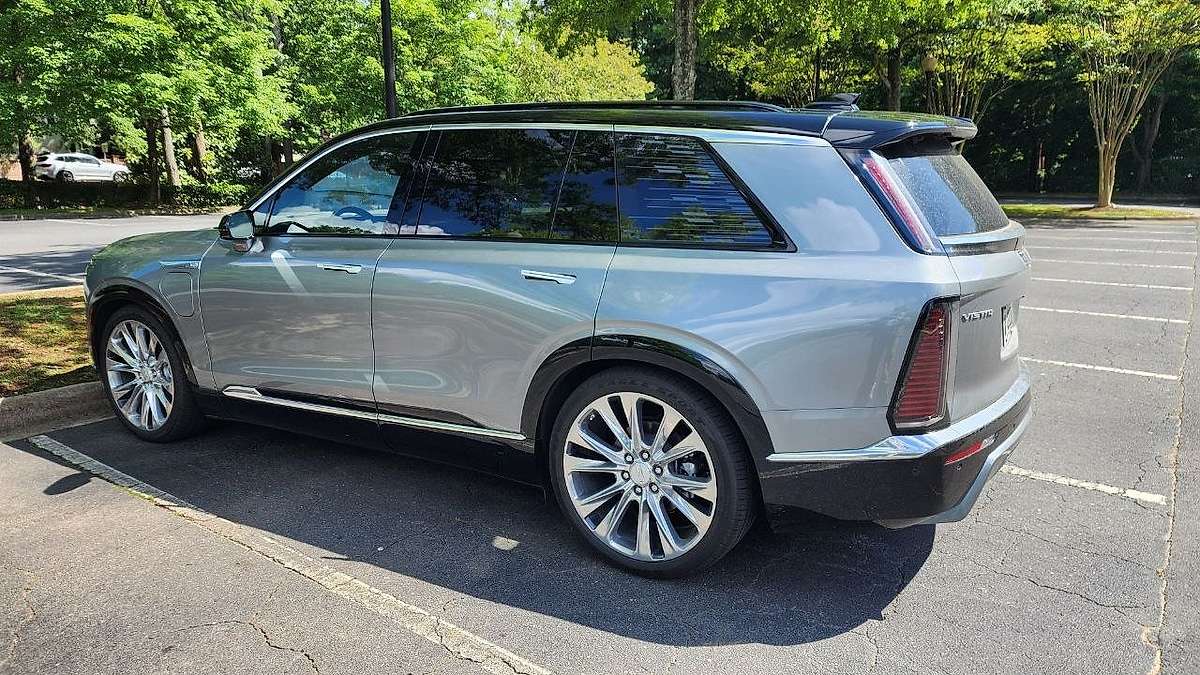

Here's something I've been sitting with since I parked the 2026 Cadillac Vistiq Premium Luxury after seven days behind the wheel: this vehicle exists because the Escalade IQ, for all its magnificence, created a problem. It showed the world exactly what a luxury electric family SUV could feel like, then priced most families out of it.
The Vistiq is Cadillac's answer to that problem, and as I wrote in my full 2026 Cadillac Vistiq Premium Luxury review covering everything from the cabin to the cargo space and how it rides Charlotte-area roads, the answer is genuinely compelling. But what I want to dig into today is the gap the Vistiq fills, why Cadillac needed it, and how it fits into a lineup that has been both Cadillac's greatest strength and, if we're honest, a mild source of confusion for buyers.
I also want to give the Escalade IQ every bit of credit it deserves, because starting tomorrow I begin a full test of the Escalade IQ and I'll be bringing Torque News readers my complete findings next week. So, come back please.
Update: I just published the 2026 Escalade IQ Review this morning (June 16, 2026), which you can see here and note the ambition with which GM Built it.
The Problem Cadillac Created by Building the Escalade IQ First
The Escalade IQ is a genuinely extraordinary machine. When MotorTrend named it the 2026 SUV of the Year, crediting its execution as returning Cadillac to the Standard of the World, that was not a marketing claim. It was a statement earned through one of the most impressive luxury EV packages assembled under one roof. Up to 750 horsepower, a 205-kWh battery delivering an estimated 460 miles of range, a pillar-to-pillar 55-inch display, and an executive second-row seating package that would embarrass a first-class cabin. The Escalade IQ is everything the name promises.
The problem is the bill. The Escalade IQ starts at around $130,000. The extended-wheelbase IQL starts at $132,695. That is Escalade money, which is exactly correct for Escalade buyers. But there is a very large group of luxury SUV buyers, perhaps the largest group in the entire three-row segment, who have been watching Cadillac's EV transformation with real interest and asking a simpler question: is there a version of this that fits in my driveway and my budget? That question went unanswered for longer than it should have. The Vistiq is the answer.
Why the Lyriq Alone Couldn't Bridge This Gap
You might ask: wasn't the Lyriq supposed to be that bridge? It's fair to ask. The Lyriq was always framed as a critical vehicle for Cadillac's all-electric future and the first true proof of the brand's EV intentions, and in that role it has performed admirably. But the Lyriq is a two-row vehicle. Five passengers, no third row, and a sloped wagon-like silhouette that reads more sports car than family hauler. For buyers with three kids, aging parents, or regular road-trip duty, the Lyriq is simply not the right tool. It's excellent at what it does. It just doesn't do everything a growing family needs.
For a while, that left Cadillac with an awkward jump. You had the entry-level Optiq at around $50,000, the Lyriq at roughly $59,000, and then nothing until you reached the Escalade IQ at $130,000. That $70,000 gap in the lineup was not just a pricing hole. It was a family-vehicle-shaped hole. And when luxury buyers with $80,000 to $95,000 to spend on a three-row EV walked into a Cadillac showroom, there was nothing to hand them.
What the Vistiq Actually Is: Not a Smaller Escalade IQ, But the EV Most Escalade Shoppers Should Buy
Here is the reframe that I think Cadillac's marketing hasn't fully leaned into yet, and I think it's the most important story about this vehicle. The Vistiq is not a smaller, cheaper version of the Escalade IQ. It's the three-row luxury EV that most people who walk into an Escalade showroom actually need.
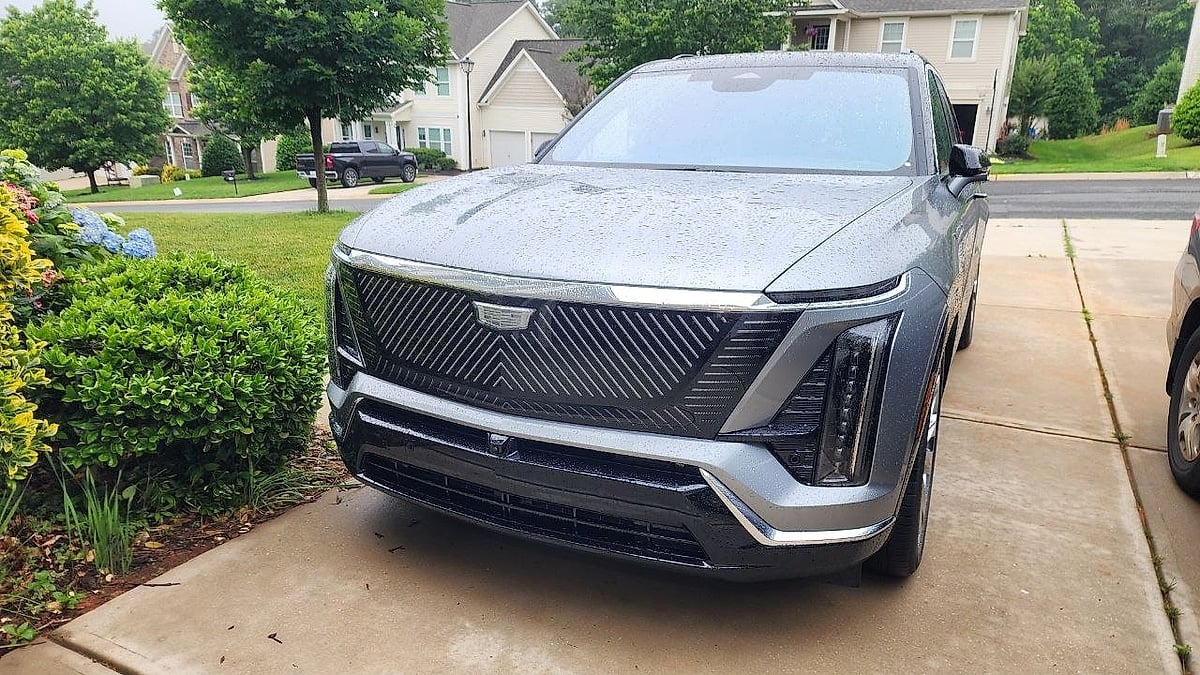
Think about the typical Escalade buyer. They want three rows. They want prestige. They want a commanding ride height and a cabin that makes passengers feel pampered. They want technology that works without a user manual and a sound system that makes Friday morning commutes feel like a concert. What they often don't need is 224 inches of vehicle, a 9,300-pound curb weight that has real charging implications with the massive battery required to move that kind of mass, or six figures on the sticker before destination.
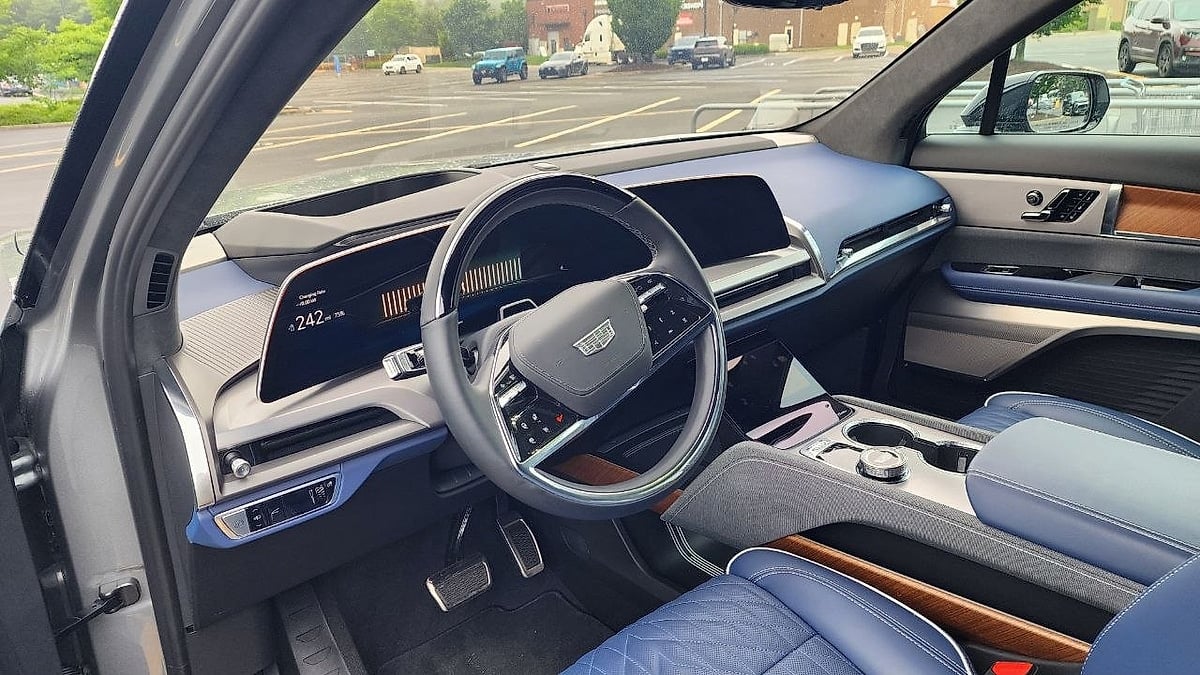
The Vistiq delivers the Escalade IQ experience in a package that is 18.7 inches shorter, nearly 3,000 pounds lighter, and priced starting at $79,090. That is not a compromise. For most families, it's a correction. The Vistiq's 615 horsepower, 305-mile range, 33-inch curved LED display, 23-speaker AKG Dolby Atmos sound system, standard Super Cruise, and available Air Ride Adaptive Suspension are not stripped-down versions of Escalade IQ features. In most cases, they are the same features, delivered in a footprint that a suburban family can actually live with every day.
The Cadillac Lineup Now Makes Sense, But It Took the Vistiq to Complete It
Step back and look at the Cadillac EV family now that the Vistiq has arrived. The compact Optiq captures entry-level luxury buyers who don't need three rows and are coming from European compact SUVs. The Lyriq, now available with a V-Series package that makes it the first EV to earn the prestigious V badge in Cadillac's performance hierarchy, handles the performance-oriented two-row buyer. The Vistiq fills the three-row family sweet spot. The Escalade IQ and the extended IQL, which Cadillac argues could finally be the vehicle that convinces even skeptical buyers to go electric at full size, sit at the top as the flagship family haulers. And the handbuilt Celestiq sedan represents the ultra-luxury halo, though at $340,000 and with only a handful of commissiones sold so far, it occupies a rarefied orbit most buyers will admire from a distance.
That's a complete ladder. Every rung is there. For the first time, a buyer with nearly any luxury budget and nearly any family configuration can find a Cadillac EV built specifically for them. The Vistiq's arrival is what made that ladder coherent.
What the Vistiq Gets Right That the Escalade IQ Can't
There are specific things the Vistiq does better than the Escalade IQ, and they matter to real families. The first is maneuverability. At 205.6 inches long with available Active Rear Steer, the Vistiq navigates suburban parking lots, school drop-off lanes, and multi-level garages in ways that the 224-inch Escalade IQ simply cannot. This sounds mundane until you're doing it twice a day at a school with a narrow approach lane.
The second is charging practicality. The Vistiq's 102-kWh battery, while smaller than the Escalade IQ's 205-kWh pack, is sized exactly right for the typical family's real-world range needs. Three hundred five miles of EPA-estimated range covers essentially every family's longest regular trips with margin to spare. And because the battery is smaller, charging from a 240V home outlet takes seven to eleven hours, which means a normal overnight charge fully replenishes the vehicle. The Escalade IQ's massive battery is an engineering achievement, but it also means you're filling a bigger tank every night.
The third advantage is simply price. At $79,090 to start, the Vistiq enters a bracket where luxury families are actively shopping. It lands below where most luxury three-row gas SUVs like the BMW X7 or Lincoln Aviator top out when fully configured. For buyers used to spending $75,000 to $85,000 on a family hauler, the Vistiq represents a lateral move in budget that delivers a significant forward move in experience.
MotorWeek, one of the most credible long-form automotive testing programs in the country, put it plainly after their road test at MotorWeek.org. Paraphrasing, it says the VISTIQ strikes a great balance of delivering three-row luxury and versatility, with a bonus of notable street performance, without being bulky. With a full portfolio of fully-electric SUVs, Cadillac has quickly turned themselves into the number one luxury EV brand in the U.S.
What the Escalade IQ Still Does That the Vistiq Cannot
Here is where I want to give the Escalade IQ its full due, because it has earned it. The Escalade IQ's 460-mile range is not just a bragging-rights number. It is a psychological and practical threshold that removes range anxiety from the conversation entirely. For families driving long distances, towing a boat or camper, or living in areas with sparse public charging, the extra range buffer is genuinely valuable. The Escalade IQ also offers a 12-cubic-foot eTrunk under the hood that the Vistiq lacks, and its executive second-row seating package with individual 12.6-inch personal screens and massaging chairs creates an interior hierarchy that no mid-size SUV can replicate.
The Escalade IQ's proportions also deliver something the Vistiq's third row genuinely cannot: truly adult-friendly seating in all three rows. The Vistiq's third row, with 30.63 inches of legroom and a high floor position, is best suited for children and teenagers on longer trips, or any passenger on a shorter one. The Escalade IQ's IQL variant adds more than four additional inches of third-row legroom for a genuine 36.7 inches, which is a meaningful difference for a six-foot adult on a four-hour road trip.
The point is not that one is better. The point is that they are designed for different buyers. I'll have a complete firsthand comparison perspective after I spend time with the Escalade IQ starting tomorrow. Stay tuned to Torque News for that full report.
Why This Matters for Cadillac's Broader EV Strategy
Cadillac's bet on electric vehicles is not subtle. The brand now has the Optiq, Lyriq, Vistiq, Escalade IQ, Escalade IQL, and Celestiq either in production or actively selling. That is a full EV lineup by any measure, and it is generating results. Cadillac recently surpassed BMW and Mercedes-Benz in luxury EV market share, which would have seemed like an improbable prediction just three years ago. The Vistiq's role in sustaining that momentum is significant, because it occupies the single highest-volume price bracket in the luxury SUV market.
What's worth watching is whether the Vistiq can convert traditional gasoline-loyal buyers the way the Escalade IQ couldn't, simply because of price. Many buyers who admired the Escalade IQ on paper walked away because of the six-figure sticker. With the Vistiq at $79,000 to $97,000, that same aspirational buyer now has a clear path forward. And that is the unlock Cadillac needed. The introduction of the Vistiq completing Cadillac's three-row EV lineup alongside the Lyriq and Escalade IQ is more than a product announcement. It's the moment Cadillac's EV strategy became complete enough to compete in volume against the German and Japanese luxury brands that have dominated this segment for a generation.
I've spent fifteen years covering this industry, and I can tell you that the luxury family SUV buyer is one of the most deliberate purchasers in automotive retail. They research for months. They cross-shop relentlessly. They want to be confident that every dollar spent was justified. The Vistiq, at its best, makes that decision easy. At its entry Luxury trim, where the standard equipment list includes nearly everything a family needs, it may well be the most compelling value proposition in the segment.
Your turn: Now that you understand where the Vistiq fits in Cadillac's lineup relative to the Escalade IQ, I want to know this: if your family's budget allows for either the Vistiq Premium Luxury at around $93,000 or the Escalade IQ at $130,000, what specific feature or capability would justify spending the extra $37,000 for the flagship? And second: do you think Cadillac should have built the Vistiq before the Escalade IQ, or did launching with the flagship first give the entire EV lineup a credibility it needed to succeed? Tell me your thinking in the comments section below. This is exactly the kind of reader insight that shapes our coverage, and I read every response.
Images by Armen Hareyan.
About The Author
Armen Hareyan is the founder and Editor-in-Chief of Torque News and an automotive journalist with over 15 years of experience writing car reviews and industry news. Now based in the Charlotte region (Indian Land, SC, he founded Torque News in 2010, which since then has been publishing expert news and analysis about the automotive industry. He can be reached at Torque News on X, Linkedin, Facebook, and Youtube. Armen holds three Masters Degrees, including an MBA, and has become one of the known voices in the industry, specializing in the landscape of electric vehicles and real-world stories of actual car owners. Armen focuses on providing readers with transparent, data-backed analysis bridging the gap of complex engineering and car buyer practicality. Armen frequently participates in automotive events throughout the United States, national and local car reveals and personally test-drives new vehicles every week. Armen has also been published as an automotive expert in publications like the Transit Tomorrow, discussing how will autonomous vehicles reshape the supply chain, and emerging technologies in vehicle maintenance.
Set Torque News as Preferred Source on Google
Follow us today...




Comments
I think what is truly…
Permalink
I think what is truly helping Cadillac is the fact that they launched these vehicles during a time when you have a convicted-criminal-in-chief president doing everything he can to make everything less affordable. The war with Iran was a war of choice and it’s pushed gas prices up, and they may not be coming down for some time. The same people who used to make fun of me for buying an electric car and trading in my HELLCAT/Jeep SRT are now asking me all the time about how my electric Cadillac VISTIQ is doing. I am spending just $100 per month in electricity where in my gas guzzling vehicles would be costing me close to $200 per week. That is a huge difference when you’re talking about $5 per gallon premium unleaded fuel.
I think what Cadillac did right with the VISTIQ is dropping the stupid trim level levels.
These cars are supposed to be luxury cars. All of them should have heated/ventilated /massage seats and I’m glad that Cadillac made those things standard in this car. They should do it in the LYRIQ and the OPTIQ as well. The only trim you have to choose from is sport or standard luxury while the higher trims have features that you don’t really need. The air suspension and the rear wheel steering are really not needed in my opinion. This car has a great ride quality without them.
If Cadillac wanted to make a cheaper version of these cars without all of those features for the people who intended to use them as ride shares/Uber vehicles then that’s something that could be done in the same manner that Tesla has made a model 3/model Y “standard“.
The Escalade IQ is probably going to be my next car. Initially, I was considering the Mercedes S class for 2027 but I’m really drawn to the Escalade instead.
The Escalade IQ is magnificent. This thing is gigantic and weighs over 9000 pounds but it has a massive battery with a tremendous range and comes with every single feature that I would expect a luxury car to offer in 2026.
Cadillac made a huge mistake not giving us the options for rear seat entertainment in the LYRIQ and the VISTIQ. You should be able to get heated/ventilated/massage seats in the second row and you should be able to have rear, smart entertainment monitors.
Here in New York City you’ll see Escalade after Escalade after Escalade rolling around – especially in the wealthy areas. The main competitor is the BMW 7 and the Mercedes S class. You’ll barely see Audi A8L here. lately it’s been all about these big trucks.
I personally do not think that the Escalade iq or Vistiq is going to switch buyers of trucks this size to electric simply because these people actually do take road trips and many of them live in places where charging is not easy.
I did a road trip in the Cadillac OPTIQ and having to stop even at a Tesla supercharger on my way home while it was getting dark early because it was a winter month was an absolute headache. I have to add two entire hours to my trip going one way and then going the other way. For those people who live here in New York, who road trip down to Virginia and to Florida: having to add more than six hours to their trip is untenable.
Rich people who are buying a vehicle more than $130,000 aren’t worried about gas prices. They value time more than they value fuel cost.
Information: I hope Cadillac will make the VISTIQ a little bit more like the Escalade IQ in terms of optional add-ons but even if they don’t, they are still great vehicles and I think the Escalade IQ used CPO market is going to sell very well.
My wife drives the vistiq…
Permalink
My wife drives the vistiq and I drive the sierra ev. The escalade iq is actually smaller than the sierra so I think I would actually like it more than the vistiq, but I am 6' 5" and my kids will be the same eventually.
It's so good they are taking…
Permalink
It's so good they are taking some things away for the 2027 model. The realized they gave us too much for the price point. It's just as nice and the Escalade in a more compact package. The only differences are: self closing doors, longer screen, and the range. I don't need self closing doors. The soft close is enough for me. We have the passenger screen in our Mercedes and we never use it so the longer screen doesn't matter to me either. The extra range would be great though.
It'd be a whole lot better…
Permalink
It'd be a whole lot better if the 2026 Vistiq had the range of the Escalade IQ.
I currently have a VISTIQ…
Permalink
I currently have a VISTIQ with the exact same specs as the one in this picture. I upgraded from a 2024 LYRIQ.
I’m thinking that with the lease on my VISTIQ ends that I will buy the Escalade IQ.
The escalate IQ‘s problem is that it’s just too much vehicle for many people. The thing weighs over 9000 pounds and costs over $130,000.
The Escalade, IQ and Escalade/Escalade V have basically become Cadillacs version of the Mercedes S class/Maybach.
But the crazy thing about it is they really shouldn’t cost that much. The VISTIQ could easily have the exact same structure course display screen just like the Lincoln Nautilis and rear entertainment package and not cost over $100,000. But they did their best to Nerf the VISTIQ because they don’t want it to compete with the escalate IQ.