
Key Takeaways Before You Read:
- A first-time Lyriq owner converts from gas instantly but flags one persistent design flaw Cadillac has not corrected.
- Two independent owners in different markets confirm the same seat failure at a $60,000 plus price point.
- Real world efficiency hits projections, but a seat control Cadillac already fixed on newer models still ships broken in the Lyriq.
- Scroll to see the comments or be the first to voice your opinion.
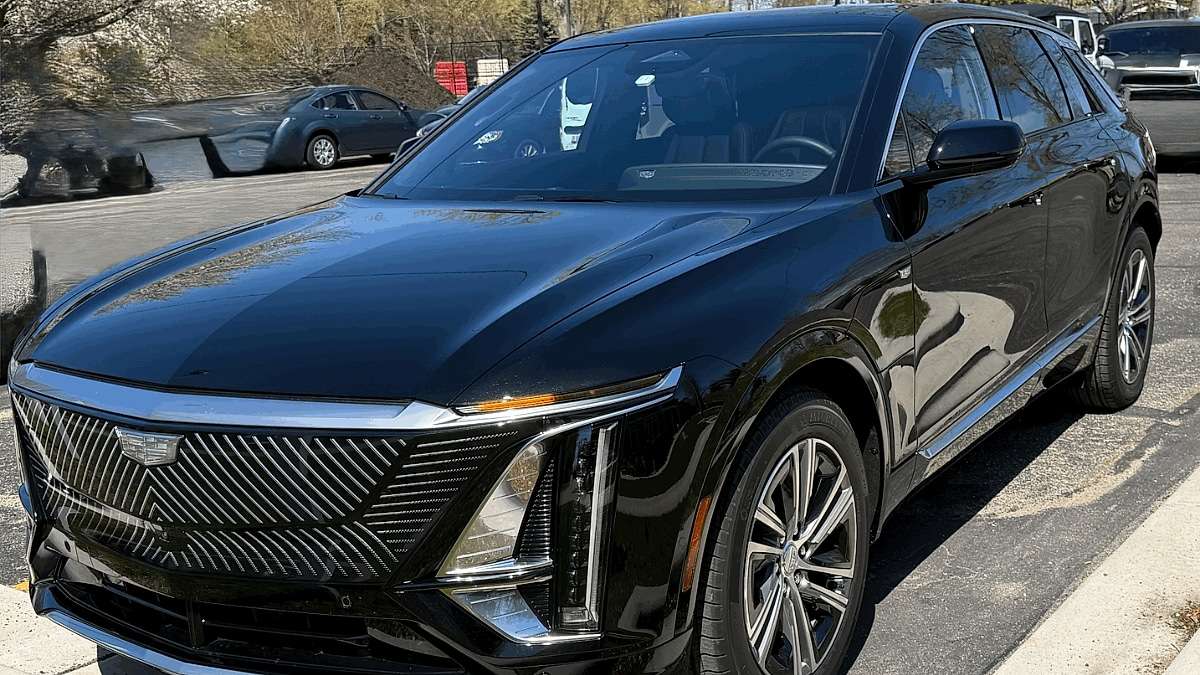
A new Cadillac Lyriq owner from Muskegon, Michigan named Christopher Preuss has delivered one of the most instructive first hand EV ownership reports circulating in LinkedIn right now, and it pinpoints a design flaw that Cadillac has carried across multiple model years without correction.
His account confirms what the Lyriq executes at a world class level. It also exposes the one area where Cadillac engineers failed to match the vehicle's premium ambitions to premium execution. For context on how far the Lyriq has come since its launch, we covered at length why the 2023 Cadillac Lyriq EV was the most important Cadillac in years, carrying enormous pressure to redefine what the brand stood for in an EV era. That pressure makes Christopher's field report, with its unfiltered strengths and frustrations, exactly the kind of accountability ownership journalism that buyers need before committing to a purchase. It is worth noting that GM aggressively slashed Cadillac Lyriq lease prices in recent months, meaning more first-time EV buyers are entering the Lyriq ownership pool right now than at any point in the vehicle's history, which makes real owner accounts like Christopher's more consequential than ever.
Christopher writes in full:
Okay! We're now about three weeks and 600 miles into EV ownership. A couple of thoughts on the whole EV experience:
Driving past the $4.20/gallon gas station is a blessing.
The torque, quietness, and overall drivability are wonderful, superior to any ICE vehicle I've owned or driven, and that's more than I can count or remember.
Charging so far has been a non-issue, and I don't even have my Level 2 home charger installed yet. I've hit the ChargePoint DC fast charger a couple of times when I've dropped below 50 percent state-of-charge and managed to get back to 80 plus percent in about 30 minutes. The rest of the time I use the 6.5 kW Level 2 here at work and keep it topped up.
Specific to the Lyriq:
Best GM vehicle I've ever driven in terms of overall fit, finish, and integration. It's unquestionably soft for the segment, and not violently fast, but way faster than any ICE I've had as a daily driver. At this point in life, and for how I use it, it's just a lovely place to be. Not exactly agile, but certainly not sloppy or floaty either.
The tech package and infotainment have been terrific. Hats off to Google for the Android Auto platform, super fast, with an almost identical UI execution to my Lincoln Aviator. SuperCruise has been pretty good, save one weird instance where it started alerting as if I wasn't watching the road, turned on the hazards, and started to slow down quickly. I was able to disengage, but it wouldn't turn off the hazards. Happened once, hasn't happened again.
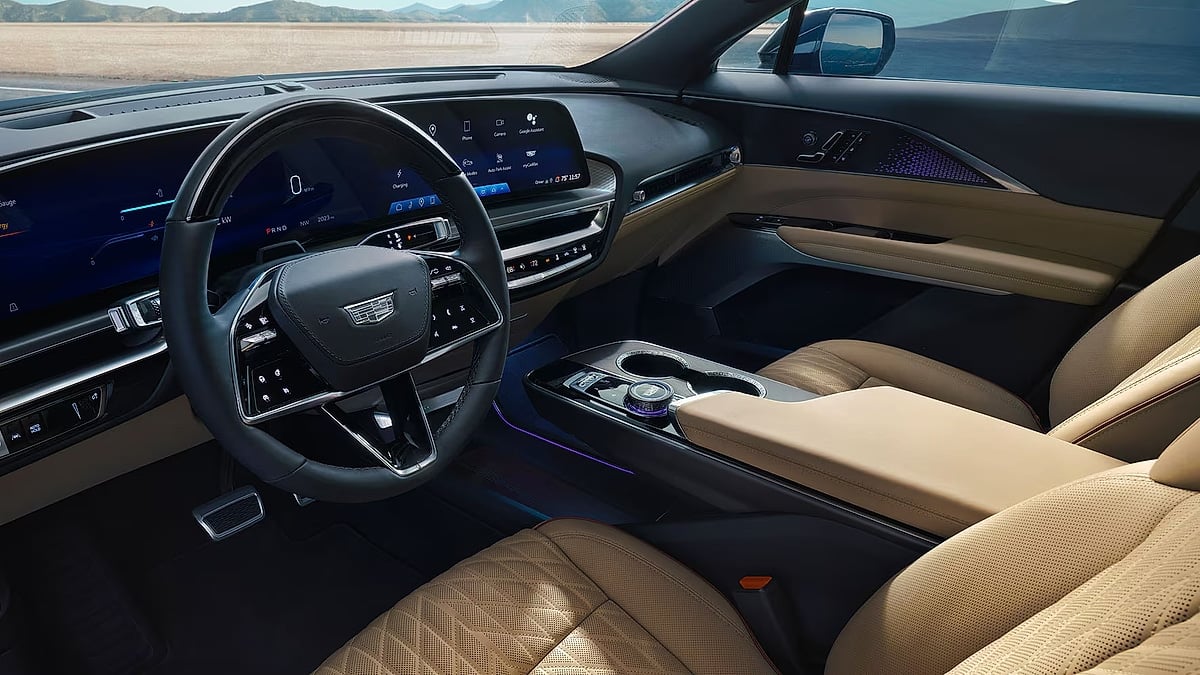
My biggest gripe is the seats. The lack of adjustability at this price point is almost unforgivable. I'm a smaller-framed guy and I rattle around with little side bolster support and no way to dial it in. The side thigh bolsters are also oddly stiff and hard to get past when entering the car. And the rotating button to adjust lumbar and massage is absurdly difficult to use, no matter what you do, it kicks on the massage feature, and getting out of it is crazy. I think that got ditched on the Optiq and Vistiq, hard to believe the design survived the entire development program.
Overall, I love the car and the experience. Efficiency has hovered around 3.0 mi/kWh in the city and around 2.6 mi/kWh on the highway at about 72 mph. I have no basis for comparison, but I'd guess that's only average for the segment.
More updates to come. But so far, I am over-the-moon on this purchase!
Michael Coates Confirms the Pattern
Michael Coates, a PR manager from Redwood City, California, responded directly to Christopher's post and confirmed that these experiences are not isolated. Michael writes:
"All that aligns with my experience with the Lyriq and other Caddy EVs. Have had similar non-consequential but annoying episodes with SuperCruise, but in 100s of miles, maybe 1000s now, it's just that, a minor annoyance. I think you nailed the overall sense of the car. My last review pegged it as 'a premium example for those unsure about EVs.' I thought a regular Cadillac owner could transition into the Lyriq without missing a beat, or missing the gas pump visits."
Two independent owners, different markets, different ownership timelines. The same verdict lands: the Lyriq delivers on its core promise. The seats undermine it. This cross-validation matters particularly for buyers who ask whether the Lyriq's SuperCruise hands-free driving system justifies the premium. We covered in detail how one owner drove his Cadillac Lyriq 1,200 miles round-trip and found that SuperCruise made extra charging time worth every minute, reinforcing that the technology performs reliably across extended use cases when the road conditions qualify. Christopher's single anomalous event, where SuperCruise misread driver attention and activated hazards, fits the same pattern that serious long-distance Lyriq users report: one isolated event, then consistent performance across hundreds or thousands of miles.
The Efficiency Numbers Tell the Whole Story
Christopher's reported efficiency of 3.0 mi/kWh in city driving and 2.6 mi/kWh on the highway at 72 mph tracks precisely with what independent range testing reveals. Owners regularly see the trip computer reporting 3.0 to 3.4 mi/kWh in temperate weather during city and suburban driving, with the EPA crediting the AWD Lyriq around 330 miles of city range. Highway efficiency drops measurably with speed, and in independent testing, highway range for the AWD version has tended to come in around 220 to 240 miles in real world conditions, particularly at higher speeds or in cold weather. Christopher's honest self-assessment that his numbers land "only average for the segment" is accurate. But average for this segment means 300 plus miles of practical daily range, which dissolves the anxiety that defined early EV ownership. The Lyriq launched with Cadillac making exactly this commitment, and when Cadillac announced the 2023 Lyriq would achieve longer range and better charging, that promise has held up for owners using the vehicle as a daily driver and for commuting. Christopher's 600 miles over three weeks, split between DC fast charging and a workplace Level 2 at 6.5 kW, confirms that the charging infrastructure question, which once loomed as the dominant EV purchase barrier, has largely been answered.
What Consumer Reports Said About Seat Controls
The seat control problem Christopher raises is not new, and it is not just an owner forum complaint. Consumer Reports, in its road test of the Cadillac Lyriq Luxury 2 AWD, noted that several controls are less than user-friendly, specifically calling out the infotainment system's controller knob and some of the seat-related functions located on the door. That critique from Consumer Reports appeared in their first serious evaluation of the platform. The fact that Christopher, an independent buyer, lands on the same specific interface flaw after 600 real world miles is a signal that Cadillac received this feedback and chose not to act on it for the current generation. That is the design decision that Christopher accurately identifies as unforgivable at this price point.
The Seat Problem Is Systemic, and That Is the Point
What Christopher surfaces is the detail that formal press reviews consistently underweight. The Cadillac Lyriq's front seat adjustability has generated sustained complaints across multiple model years and trim levels in owner communities. Multiple Lyriq Tech owners have posted that they cannot get the driver's seat set up to achieve consistent comfort, with one owner describing the lower seat back as pushing hard against the backside regardless of lumbar adjustment. Others reported that the front seat bottom length runs short for taller drivers, and that the seat back feels oddly firm through only the lower portion of the torso for someone at 6'1". On the thigh support question specifically, one forum respondent confirmed the answer is, bluntly, that Cadillac offers no thigh extension or bolster adjustment. Christopher adds the detail that is genuinely absent from published reviews. The rotating lumbar and massage control forces the massage feature to activate whenever an owner attempts basic lumbar adjustment. That is a usability failure on a vehicle that starts above $58,000 and markets itself as a sanctuary. The ergonomics gap becomes even more glaring when you consider where Cadillac is positioning the brand. As we reported, the 2026 Cadillac Lyriq V will be the first EV to earn the prestigious V badge, a milestone that carries enormous brand equity expectations. You cannot credibly attach a performance legacy badge to a vehicle while leaving a seat control interface that fights its driver every time they want to adjust lumbar support.
GPS and Software Issues Compound the Ownership Friction
Christopher's report focuses on the seats, but his experience with the SuperCruise attention monitoring anomaly points toward a broader software maturity question that active Lyriq owners are navigating. This context matters for potential buyers doing research. We covered how a frustrated Cadillac Lyriq owner shared OnStar's fix for a persistent GPS glitch involving app cache clearing and infotainment power cycling, revealing that software-level issues in the Lyriq's infotainment suite have required workarounds that no owner of a $60,000 plus vehicle should have to execute. Christopher's SuperCruise event, where hazards activated and would not cancel, fits this same category. One isolated software behavior that resolves and does not repeat, but that erodes confidence in the system. The Lyriq's infotainment strengths, particularly the 33-inch display and Google-integrated navigation, are real and consistently praised. But the gap between the hardware promise and the software stability is a known purchase consideration that buyers deserve to understand before signing. Separately, buyers who encounter dealership friction should know that we have documented the most difficult Cadillac Lyriq dealership purchase experiences that buyers have shared, including a case where final paperwork arrived $10,000 over the agreed price. Do your homework before you walk in.
Three Questions Buyers Search That Most Pages Fail to Answer
First, is charging without a home Level 2 charger actually workable from day one? Christopher's answer: yes. He manages daily driving through a 6.5 kW workplace Level 2 and drops in for a ChargePoint DC fast charge when he falls below 50 percent state of charge, recovering 30 plus percent in roughly 30 minutes. The Level 2 home installation belongs on the to-do list, but it does not block ownership from day one. For buyers navigating that same question in a condo or apartment context, we recently covered how one Cadillac Optiq owner is tackling the challenge of installing Level 2 charging in an Illinois condo with unassigned parking, a scenario that applies equally to Lyriq buyers and illustrates that the charging installation question, while solvable, requires planning.
Second, does SuperCruise actually perform reliably for daily use? Both Christopher and Michael answer yes. Hundreds to thousands of miles logged, one anomalous event each, no repetition. That is a meaningful data point. The system activated incorrectly once per owner in what appears to be a driver monitoring misread, then returned to normal operation. Buyers evaluating whether hands-free highway driving justifies the premium should weigh this against what we have reported about how Cadillac first debuted hands-free driving technology with Ultra Cruise for premium models, a development that gave context to why SuperCruise represents a mature technology lineage rather than a first-generation experiment.
Third, should smaller-framed or differently-built buyers test the seats before signing? This is a firm yes, and it is the question that most Lyriq coverage fails to flag with adequate urgency. Christopher, a smaller-framed driver, rattles around in the seat with no way to dial in lateral bolster support. The thigh extension that some drivers need does not exist on this generation. The lumbar and massage interface conflict each other. This is a physical fit evaluation that a 10 to 15 minute test drive often does not surface, but a 30 plus minute drive in your typical commuting posture will reveal clearly. If you commute more than 30 minutes each way, build that seat evaluation into your test drive before signing anything. For the broader question of what real world ownership looks like when range and usability take priority over performance specs, we covered that debate directly in how one Cadillac Lyriq owner found that what they needed was not 400 horsepower but enough range to get home without charging, a reframe that applies directly to how Christopher is using his Lyriq.
The Larger Question the Lyriq Ownership Moment Raises
Cadillac built the Lyriq to convert traditional luxury car buyers into committed EV buyers. By Christopher's account and Michael's confirmation, the conversion works. The drivetrain, cabin execution, technology integration, and cost per mile all deliver at a level that eliminates purchase regret at the macro level. The seat ergonomics represent the precision gap between a vehicle that converts buyers and a vehicle that builds lasting loyalty. Cadillac has received this feedback across multiple model years. Christopher himself notes that the lumbar and massage interface appears to have been corrected on the Optiq and Vistiq, which means the engineering team registered the problem. Leaving it in place on the Lyriq for an entire development cycle, through a vehicle that now carries the weight of the brand's entire electric future, is the kind of decision that costs Cadillac repeat customers.
What has your seat experience been in the Cadillac Lyriq, and did it factor into your purchase decision? If you already own one, how have you adjusted for the lateral bolster limitation on longer drives?
Images by J Christopher Preuss and Cadillac pressroom.
About The Author
Armen Hareyan is the founder and Editor-in-Chief of Torque News and an automotive journalist with over 15 years of experience writing car reviews and industry news. Now based in the Charlotte region (Indian Land, SC, he founded Torque News in 2010, which since then has been publishing expert news and analysis about the automotive industry. He can be reached at Torque News on X, Linkedin, Facebook, and Youtube. Armen holds three Masters Degrees, including an MBA, and has become one of the known voices in the industry, specializing in the landscape of electric vehicles and real-world stories of actual car owners. Armen focuses on providing readers with transparent, data-backed analysis bridging the gap of complex engineering and car buyer practicality. Armen frequently participates in automotive events throughout the United States, national and local car reveals and personally test-drives new vehicles every week. Armen has also been published as an automotive expert in publications like the Transit Tomorrow, discussing how will autonomous vehicles reshape the supply chain, and emerging technologies in vehicle maintenance.
Set Torque News as Preferred Source on Google
Follow us today...