
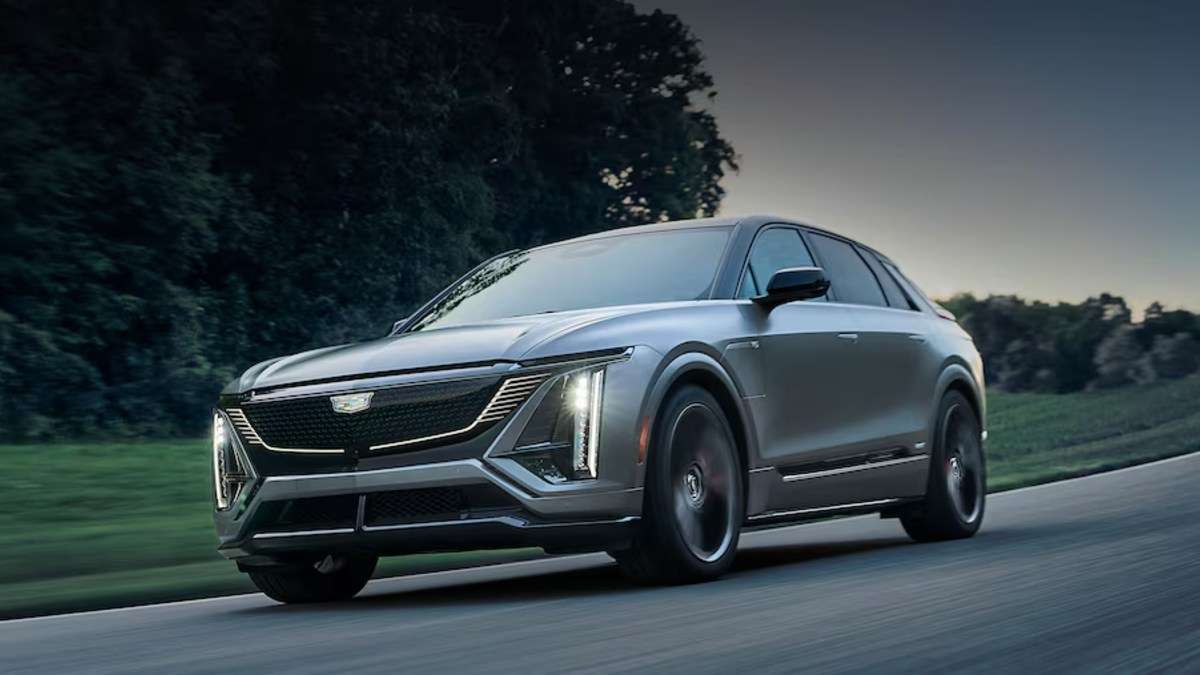

The Cadillac Lyriq, General Motors' luxury electric SUV, continues to face scrutiny over persistent software glitches, with a growing number of owners reporting significant issues with the integrated Google Maps navigation system. What began as isolated complaints has evolved into a pattern of frustration, as drivers find themselves relying on smartphone alternatives despite the Lyriq's sophisticated infotainment suite. The core problem appears to be a systemic failure of the vehicle's GPS to maintain an accurate location, often rendering the built-in navigation useless for practical driving.
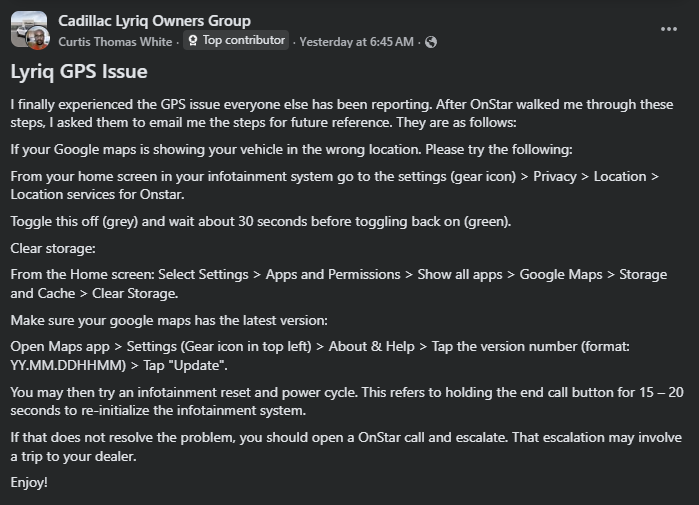
One such owner, Curtis Thomas White, recently shared his experience and the troubleshooting steps provided by OnStar with fellow Lyriq owners. His post, which quickly garnered attention, detailed the frustrating process of attempting to resolve a problem that, for a premium vehicle, should simply not exist:
"I finally experienced the GPS issue everyone else has been reporting. After OnStar walked me through these steps, I asked them to email me the steps for future reference. They are as follows:
If your Google Maps is showing your vehicle in the wrong location. Please try the following:
From your home screen in your infotainment system, go to the settings (gear icon) > Privacy > Location > Location services for Onstar.
Toggle this off (grey) and wait about 30 seconds before toggling back on (green).
Clear storage:
From the Home screen: Select Settings > Apps and Permissions > Show all apps > Google Maps > Storage and Cache > Clear Storage.
Make sure your Google Maps has the latest version:
Open Maps app > Settings (Gear icon in top left) > About & Help > Tap the version number (format: YY.MM.DDHHMM) > Tap "Update".
You may then try an infotainment reset and power cycle. This refers to holding the end call button for 15 – 20 seconds to re-initialize the infotainment system.
Advertising
If that does not resolve the problem, you should open an OnStar call and escalate. That escalation may involve a trip to your dealer.
Enjoy!"
While White's post offered a glimmer of hope by providing official troubleshooting, the subsequent comments quickly extinguished any illusion of a simple fix. The sheer volume of steps required to simply get a navigation system to function correctly in a modern luxury vehicle is, frankly, an indictment of the validation process. This isn't a 1990s aftermarket head unit; it's a core component of a premium EV, and expecting owners to perform a multi-step software reset just to find their way home is an unacceptable burden.
Cadillac Lyriq: Infotainment System Reliability Under Scrutiny
- The Cadillac Lyriq features a 33-inch diagonal advanced LED display that integrates both the instrument cluster and the infotainment system. This expansive screen is powered by Google built-in, offering Google Maps, Google Assistant, and Google Play.
- The vehicle utilizes GM's Ultifi software platform, designed for frequent over-the-air (OTA) updates to introduce new features and address software bugs. However, the effectiveness of these updates in resolving core issues like GPS reliability remains a concern for owners.
- The Lyriq's navigation system typically relies on a combination of GPS satellite data and cellular connectivity for real-time traffic and location services. A failure in either component or their integration can lead to the reported "searching for GPS" or incorrect location issues.
- Cadillac positions the Lyriq as a digitally integrated luxury EV, with its infotainment system being a key selling point. Persistent software glitches, particularly in core functionalities like navigation, directly contradict this premium experience and erode customer confidence.
The feedback from other owners reveals the systemic nature of the problem, suggesting that the provided "fix" is, at best, a temporary band-aid. Will Cornelius highlighted a critical flaw in the proposed solution, stating:
"These directions only work as long as you don’t turn off the car. Once the car is turned off, I go about a block, then it says searching for GPS. Trying the Waze thing that worked, but again on at that start-up. As soon as I make a stop and turn off the car, the GPS is lost again."
Cornelius's experience reveals a deeper architectural flaw in the Lyriq's infotainment system. If the GPS functionality cannot persist across ignition cycles, then the issue is not merely a software bug that can be cleared with a cache wipe; it points to a fundamental problem with how the vehicle's systems initialize and maintain location services.
This isn't just an inconvenience; it's a reliability issue that undermines the very purpose of an integrated navigation system. It's akin to a high-performance engine that requires a full diagnostic reset every time you restart the car – utterly impractical and indicative of a design that hasn't been thoroughly vetted for real-world use.
Another owner, Robert Maurice, echoed the sentiment of futility, confirming that the extensive troubleshooting steps yielded no lasting results:
"I did all those steps, and it still does it. I just open Waze or go to settings apps Google Maps and close them, then open Maps and it works."
Maurice's comment reinforces the notion that the problem lies beyond simple user error or a minor software glitch. The fact that owners are resorting to manually force-closing and reopening the Google Maps application, or abandoning it entirely for third-party solutions like Waze, speaks volumes. For a vehicle positioned as a technological flagship, this level of user intervention to achieve basic functionality is embarrassing. It suggests that Cadillac is pushing the burden of quality control onto its customers, expecting them to navigate complex software workarounds rather than delivering a polished, reliable product from the outset. This approach is a disservice to the brand's luxury aspirations and a betrayal of consumer trust.
The intermittent nature of the problem, as described by Pete Royer, only adds to the frustration and shows the difficulty in diagnosing and resolving such issues effectively:
"Actually, a day after losing my GPS, it came back by itself the next day. I did try Apple CarPlay to make sure I had some GPS."
Royer's observation about the GPS "coming back by itself" suggests a deeper, perhaps hardware-related, intermittent fault or a complex software interaction that defies simple logic.
The reliance on Apple CarPlay, while a functional workaround, defeats the purpose of having a fully integrated Google-based infotainment system. Cadillac needs to address these fundamental integration and reliability issues with the urgency typically reserved for safety recalls. The Lyriq's software woes are becoming its Achilles' heel, tarnishing an otherwise compelling package.
Finally, Mark Madion's brief but potent comment encapsulates the collective exasperation:
"Thanks for all this, but I did all that and still have the issue."
Madion's statement is the automotive equivalent of a flat tire on a brand-new car: it’s a direct, undeniable failure of expectation. The persistent GPS issues in the Cadillac Lyriq are not merely an annoyance; they represent a significant gap in quality control and software validation that is unbecoming of a luxury brand. Cadillac must move beyond offering temporary fixes and instead deliver a robust, reliable navigation experience that matches the vehicle's premium price point and technological promise. Anything less is a disservice to its customers and a stain on its reputation.
Image Sources: Cadillac Media Center
Noah Washington is an automotive journalist based in Atlanta, Georgia. He enjoys covering the latest news in the automotive industry and conducting reviews on the latest cars. He has been in the automotive industry since 15 years old and has been featured in prominent automotive news sites. You can reach him on X and LinkedIn for tips and to follow his automotive coverage.
Set Torque News as Preferred Source on Google
Follow us today...







Comments
While Google Maps not…
Permalink
While Google Maps not connecting to GPS is a serious systemic issue it's not as horrible as it sounds. A momentary switch to Waze or PlugShare and then back to Google Maps connects the system to GPS every time. It's a nuisance but not a catastrophe.