
Cadillac has spent the last two decades performing a masterful act of brand exorcism. They successfully shed the "Grandpa’s Sunday cruiser" image by birthing the V-Series—a line of cars that didn't just compete with BMW’s M and Mercedes’ AMG; they often beat them at their own game on the Nürburgring. From the original CTS-V to the current CT5-V Blackwing, Cadillac proved it could build world-class performance sedans.
But the world is moving to electric, and the 2026 Cadillac LYRIQ-V is the brand’s first attempt to see if that "V" magic translates to electrons. It’s a critical pivot. If they miss here, they risk losing the performance credibility they spent 20 years building. Fortunately, with 615 horsepower and 650 lb-ft of torque, the LYRIQ-V isn't just a styling package—it’s the quickest production Cadillac ever made.
The Electric Performance Pecking Order
In the US market, the LYRIQ-V finds itself in a crowded but oddly stratified field. On one side, you have the Tesla Model X Plaid, which is objectively faster but feels like sitting inside a high-end refrigerator—sterile and devoid of soul. On the other, you have the Porsche Macan EV, which handles beautifully but starts at a price point that makes the LYRIQ-V’s $78,000 MSRP look like a bargain.
The LYRIQ-V occupies the "Sweet Spot." It delivers a 3.3-second 0-60 mph time using its "Velocity Max" mode, which puts it right in the mix with the heavy hitters. However, unlike Tesla, Cadillac understands that luxury isn't just about a 0-60 time; it’s about the mechanical theater. The LYRIQ-V features an "E-Rev" sound experience that provides an orchestrated sonic backdrop to your acceleration, filling the silence that often makes EVs feel like appliances.
Design: Art, Science, and a Lot of Screens
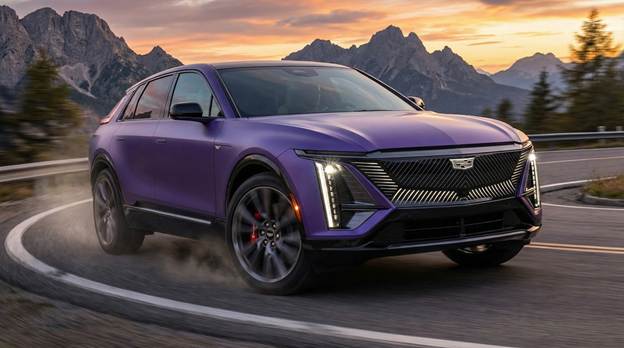
Visually, the LYRIQ-V is a triumph. While most EVs are beginning to look like various flavors of jellybeans to satisfy the wind tunnel, Cadillac stuck to its "Art and Science" guns. The exterior is sharp, with a Black Crystal Shield that puts on a light show every time you approach the car.
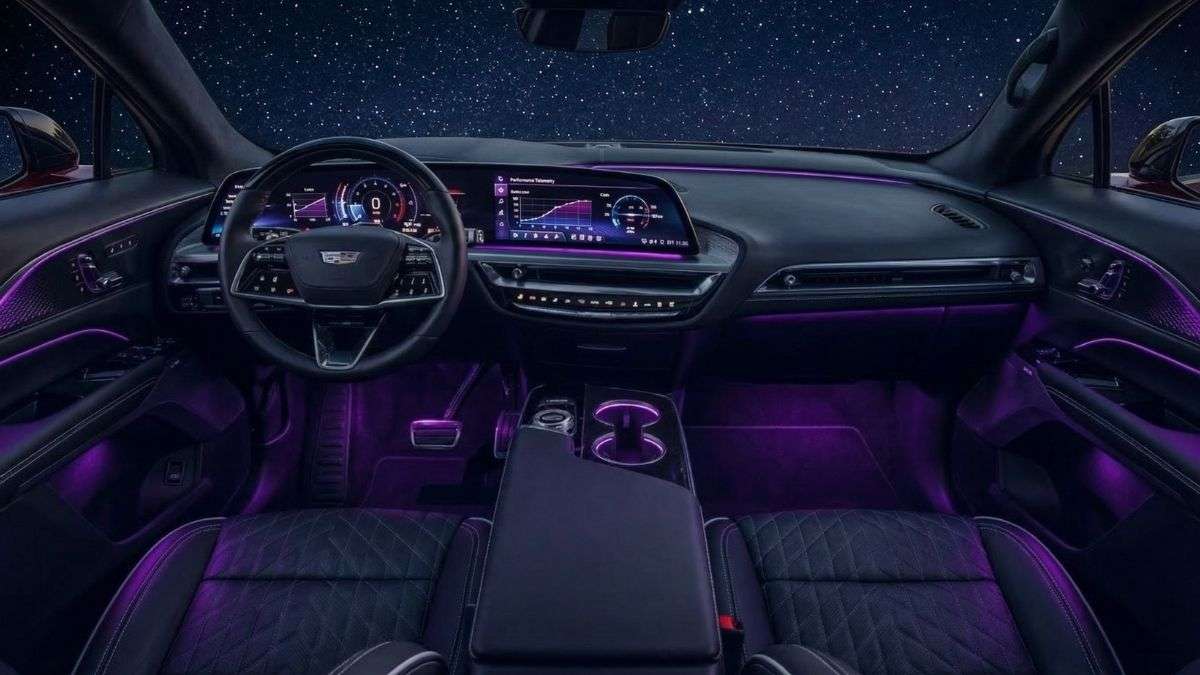
Inside, the story is dominated by a 33-inch curved LED display that is arguably the best-integrated screen in the industry. Unlike the "iPad glued to the dash" look of the Model Y, this feels intentional. The V-Series treatment adds Nappa leather, Oxford Stone accents, and a dedicated V-button on the steering wheel—a physical shortcut to madness that I wish every car had.
The Chinese Elephant in the Room
We need to talk about China. While we are arguing over whether 600 horsepower is enough, brands like Xiaomi, NIO, and Zeekr are launching EVs with 1,000+ horsepower, 800V architectures that charge in under 15 minutes, and software that makes Android Auto look like a Commodore 64.
Cadillac is struggling in China right now because their "luxury" pitch is being drowned out by Chinese "tech-luxury." To compete, Cadillac can't just rely on Brembo brakes and Nappa leather. They need to lead on software-defined vehicle (SDV) features and faster charging. The LYRIQ-V’s 190kW peak DC fast charging is "fine," but in a world where Chinese competitors are hitting 500kW+, "fine" won't cut it for long. Can they do it? Only if GM empowers their software teams to move at "China Speed" rather than "Detroit Speed."
LYRIQ-V vs. My Volvo EX60 Order
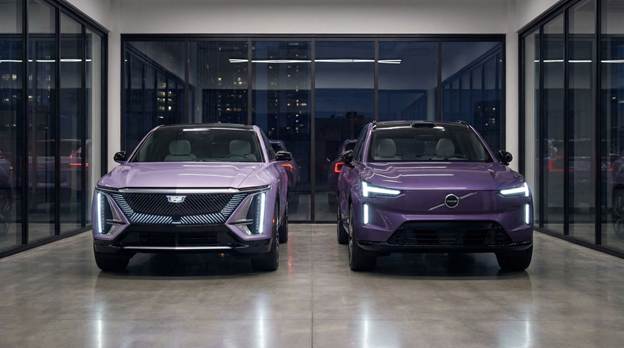
As many of you know, I recently changed my order from a Volvo XC60 to the new EX60. Comparing the two is a study in national philosophies. The Volvo EX60 is the pinnacle of Swedish "Lagom"—just the right amount. It’s safe, minimalist, and designed to disappear into your life.
The LYRIQ-V, by contrast, is designed to be noticed. It is larger, louder (metaphorically), and significantly more powerful than what we expect from the EX60. If the EX60 is a high-end ergonomic office chair, the LYRIQ-V is a leather gaming throne with built-in subwoofers. I value the EX60’s safety tech and Scandinavian efficiency, but there’s a part of me that looks at the LYRIQ-V’s 615 horses and wonders if I’m being a bit too "sensible."
Wrapping Up
The Cadillac LYRIQ-V is a statement of intent. It proves that Cadillac can move its performance heritage into the electric age without losing its identity. It’s faster than almost anything else in its price bracket, it looks stunning, and it offers a level of interior craft that Tesla simply cannot match.
However, the looming shadow of ultra-high-performance Chinese EVs means Cadillac cannot rest. The LYRIQ-V is a great first electric V, but to stay relevant in 2027 and beyond, Cadillac will need to marry this world-class hardware with even faster charging and more aggressive software evolution. For now, if you want an American EV that makes you feel something when you mash the pedal, this is the king of the hill.
Rob Enderle is a technology analyst covering automotive technology and battery developments at Torque News. You can learn more about Rob on Wikipedia, and follow his articles on Forbes, on X, and Linkedin.
Set Torque News as Preferred Source on Google
Follow us today...