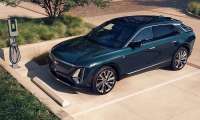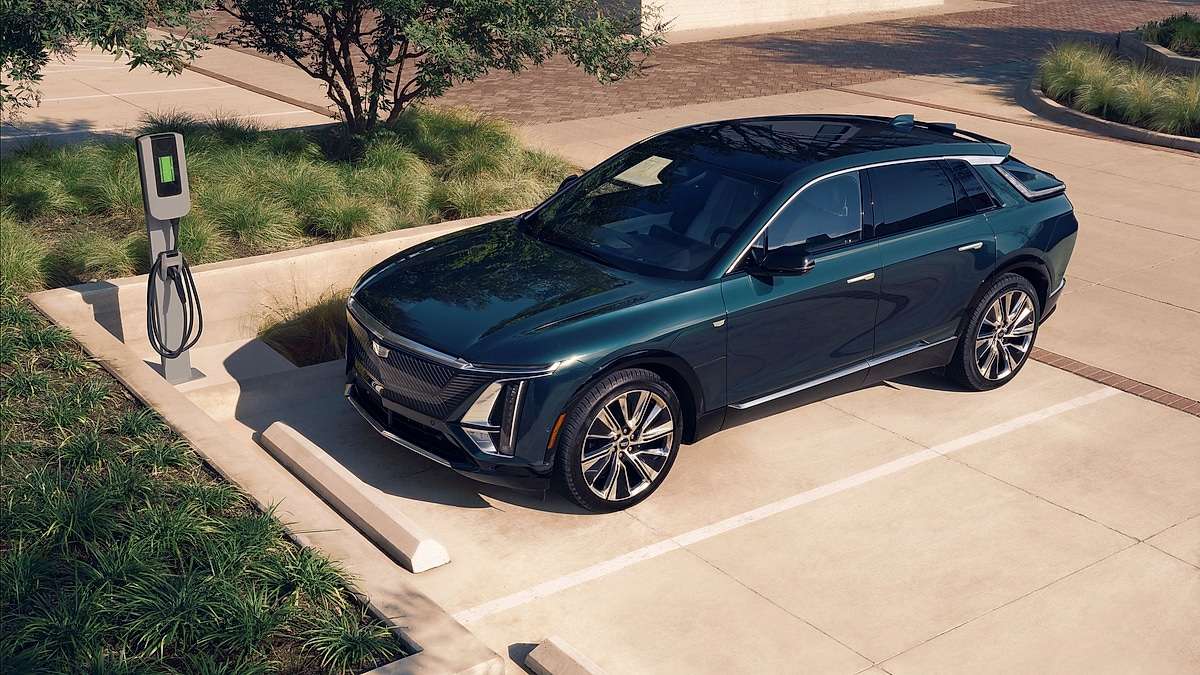

William Gardner’s Cadillac Lyriq did something luxury EVs rarely get credit for: it behaved like a long-distance car rather than a rolling design statement.
His road trip to Crater Lake and the Oregon Coast covered 1,448 miles. The Lyriq’s trip screen showed 3.1 miles per kWh. Gardner hand-calculated 3.3. On the final leg, the display showed 192.3 miles at 3.3 miles per kWh, while his own math produced 3.5. He said that the last leg was 99.5 percent I-5, with traffic allowing about 63 mph for most of the freeway running.
- Sustained efficiency like this is the result of disciplined driving habits, especially maintaining lower highway speeds where aerodynamic drag doesn’t punish range as aggressively.
- The Lyriq’s real-world performance suggests that large luxury EVs can deliver both comfort and efficiency, challenging the assumption that size automatically means compromised range.
- Comparing trip computer data with hand calculations gives owners a clearer picture of true energy use, helping them plan longer trips with more confidence and fewer surprises.
That number grabbed me because the Lyriq is no featherweight commuter pod. It is a quiet, wide, leather-lined Cadillac with a 102-kWh battery platform, a 121.8-inch wheelbase, a 33-inch dashboard display, and enough visual presence to make most EV crossovers look like airport shuttles.
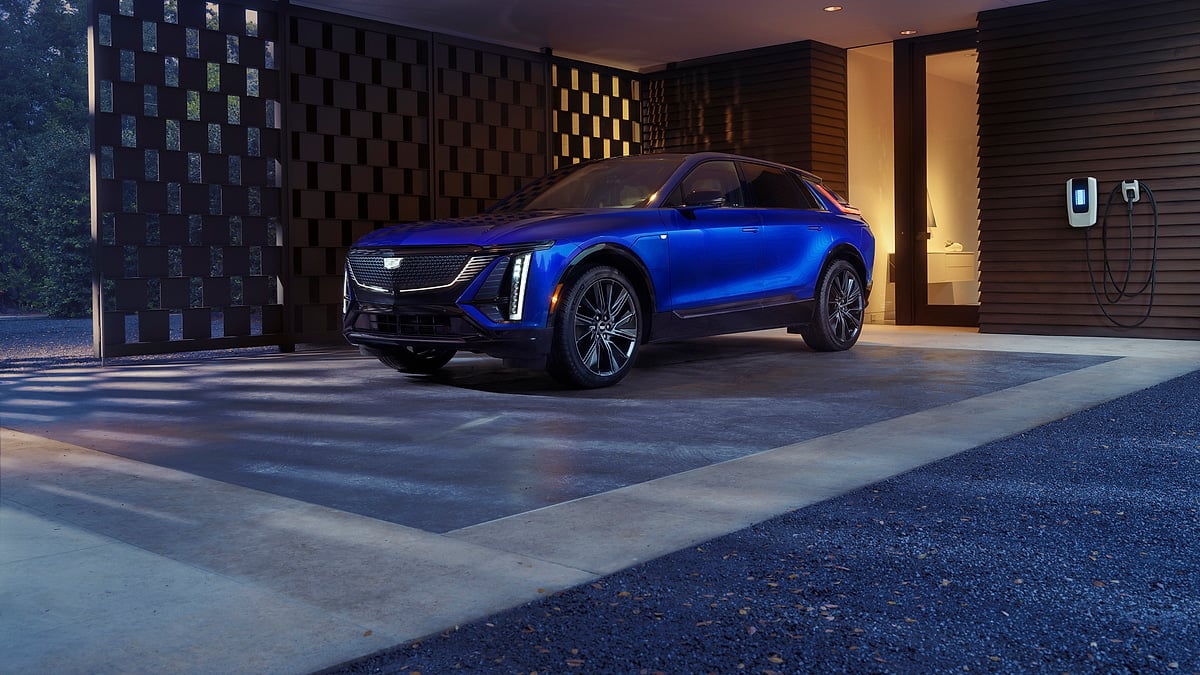
Yet here it is, knocking down highway miles at 3.3 to 3.5 mi/kWh according to the Facebook post.
At 3.3 mi/kWh, a 102-kWh pack implies roughly 337 miles of theoretical travel. At 3.5, the number climbs near 357. Real owners need reserve, weather buffer, terrain allowance, and charger margin, so nobody should plan a trip to the last mile. Still, those numbers explain why Gardner’s post caught attention. Cadillac rates the 2026 Lyriq RWD at up to 326 miles and AWD versions at up to 319 miles, depending on equipment.
Gardner’s trip did not merely match the brochure in theory. It showed how a big luxury EV can stretch itself when the driver stops treating speed as a personality trait.
The 63-MPH Detail Is The Whole Trip
The owner’s average freeway behavior counts more than any badge on the liftgate.
A Lyriq at 75 mph has to push a large body through the air. A Lyriq at 63 mph spends far less energy doing that work. Drag rises quickly with speed, and EVs expose that penalty because the dashboard reports energy directly instead of hiding it behind gallons.
The last leg’s result makes sense. Sixty-degree weather helped. Slow traffic helped. I-5 helped because steady interstate driving avoids the energy waste of constant acceleration. The Lyriq’s mass becomes less punishing once it is rolling, while the cabin stays quiet enough that 63 mph feels civilized rather than slow.
That is where Cadillac’s personality becomes useful. A performance EV makes a driver want to sample all the torque at every opening. The Lyriq encourages a calmer rhythm. It has enough power, but its best trick is distance without effort.
My first thought looking at the 192.3-mile screen was simple: this is how a luxury EV should road-trip. Quiet pace. Low drama. Strong efficiency. No need to prove anything at every merge.
The Trip Computer And Hand Math Disagree For A Reason
The display showed 3.1 mi/kWh for 1,448 miles. Gardner calculated 3.3.
That gap is about six percent. It is too small to dismiss and too large to ignore.
The screen number likely reflects vehicle-side accounting. Depending on how Cadillac calculates trip efficiency, it may include accessory loads, climate use, drivetrain consumption, regeneration accounting, rounding, or trip-boundary behavior. Hand calculation usually depends on charge added, distance covered, or state-of-charge change. Each method answers a slightly different question. Owners should keep both.

The vehicle display tells you what the car believes it consumed. Hand math tells you what the charging sessions and odometer suggest. If the two stay close across several trips, the owner gains confidence. If they drift widely, the next step is to check charging receipts, DC fast-charging losses, home-meter readings, and whether the trip computer was reset at the right point.
For this trip, both figures tell a favorable story. Even the lower 3.1 mi/kWh reading implies about 316 miles from 102 kWh. The owner’s 3.3 number pushes the Lyriq into a range band that makes coastal and mountain road trips feel routine.
That is the part buyers should notice.
Crater Lake Makes The Result More Impressive
This was not a flat suburban loop on a mild spring morning.
Crater Lake means elevation. The Oregon Coast means changing weather, slower towns, grades, curves, and stretches where rain or wind can ruin clean efficiency. The supplied image from the final leg shows wet glass and 60 degrees. That is real weather, even if it is not extreme.
A big EV can claw back energy on descents, though regeneration does not erase physics. Climbing costs more than descending returns. Rain adds rolling resistance. Headwinds and wet pavement can take a clean efficiency number and sand the shine off it.
Gardner still saw 3.1 displayed across the full trip and 3.3 by hand.
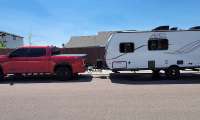
That suggests he did three things right: kept speed sane, avoided unnecessary roof drag, and let the Lyriq settle into its strength. I would rather see one owner’s 1,448-mile mixed road trip than a short test loop engineered to flatter the car. Long trips reveal habits. They reveal speed discipline. They reveal whether an EV feels efficient only during gentle errands or remains efficient when a vacation gets messy.
The Lyriq passed that more useful test.
What Lyriq Owners Should Take From It
A 3.3-mi/kWh Lyriq road trip changes how I would plan one.
At 3.0 mi/kWh, a driver can treat 250 miles as an easy leg with reserve on a full pack. At 3.3, that same leg becomes more comfortable. At 3.5, the car begins acting like a luxury cruiser with real highway legs, provided speed and weather cooperate.
I would still plan charging around terrain and wind instead of chasing the best-case number. Crater Lake and coastal roads can give and take energy quickly. A calm 63-mph day can become a 2.6-mi/kWh day with a roof box, cold rain, loaded cabin, or 75-mph traffic.
Gardner’s post gives owners a better target than EPA range: watch mi/kWh on each leg and build the next stop around observed efficiency.
If the Lyriq is holding 3.3, drive the plan. If it falls toward 2.7, tighten the route before the battery percentage gets interesting.
The best result here is the confidence that comes from seeing a large Cadillac EV behave predictably over nearly 1,500 miles.
Lyriq Owners, What Are You Seeing On Road Trips?
If you own a Cadillac Lyriq, share your longest trip, average speed, trim, wheel size, temperature, displayed mi/kWh, and hand-calculated mi/kWh. The display-versus-receipt gap is worth tracking.
Drop your numbers in the comments, real trips, real speeds, real conditions. I want to see what your Lyriq is actually doing out there.
About The Author
Noah Washington is an automotive journalist based in Atlanta, Georgia, covering sports cars, luxury vehicles, and performance culture. His reporting focuses on explaining the engineering, design philosophy, and real-world ownership experience behind modern vehicles.
Noah has been immersed in the automotive world since his early teens, attending industry events and following the enthusiast communities that shape how cars are built and driven today. His work blends industry insight with enthusiastic storytelling, helping readers understand not just what a car is, but why it matters.
Noah is also a member of the Southeast Automotive Media Association (SAMA), a professional organization for automotive journalists and industry media in the Southeast.
His coverage regularly explores sports cars, luxury vehicles, and performance-driven segments of the automotive industry, including the evolving culture surrounding Formula Drift and enthusiast builds.
Read more of Noah's work on his author profile page.
You can also follow Noah here:
Set Torque News as Preferred Source on Google
Follow us today...