
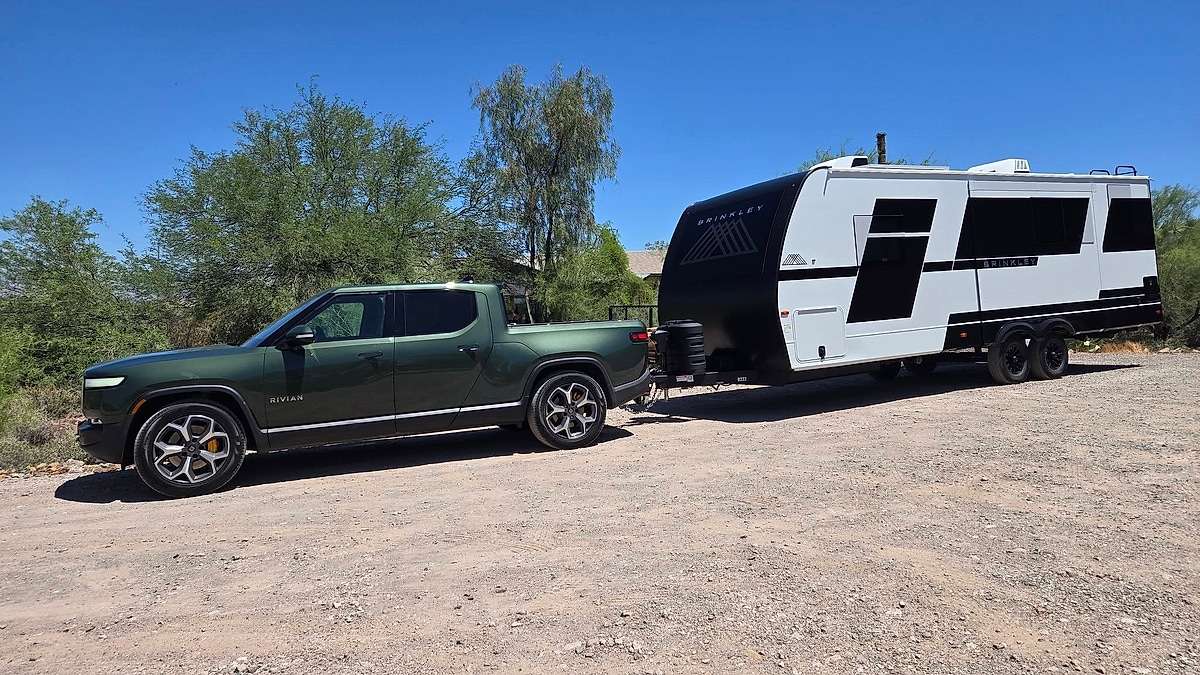

A 2022 Rivian R1T Quad owner towed a 30-foot Brinkley camper from near Phoenix to Prescott, Arizona, and the most useful part of the trip was not the tow rating. Torque News checked the owner's account, Rivian's R1T towing guidance, Brinkley Model I 265 specs, and the elevation difference between New River and Prescott. This trip shows the real EV-truck towing problem: campground charging rules, route elevation, trailer aerodynamics, and slow destination charging can matter more than the brochure number.
The owner, Kevin Williams, posted that he towed a 2025 Brinkley i265 with his 2022 Rivian R1T Quad from New River, just north of Phoenix, to Prescott for an overnight camping trip and a night out at Whiskey and Ivory, a new dueling piano bar in Prescott.
He summed up the truck-and-trailer pairing simply: "Man, I love this combo."
The more useful detail came later. Williams said his campground explicitly forbade EV charging. In a follow-up comment, he identified the campground as Point of Rocks and said it had added a badge to the hookup panel forbidding EV charging.
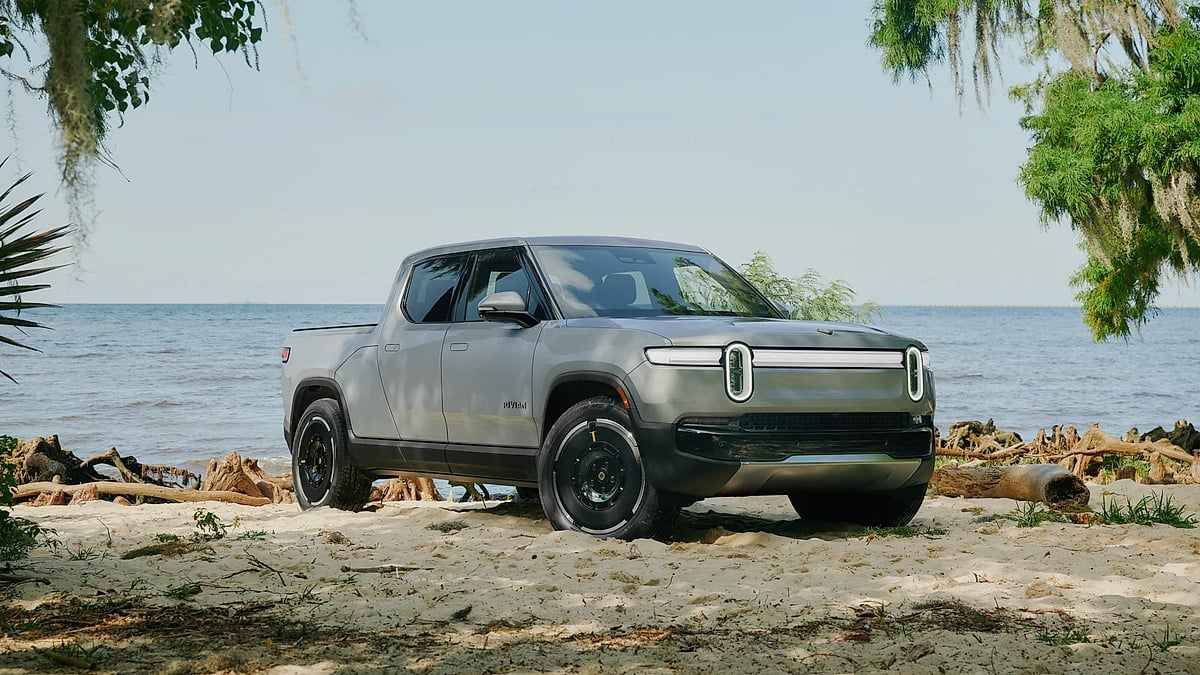
That could have been the trip problem. Instead, he found a Tesla destination charger a couple of blocks from the bar. Because he was parked from about 7 p.m. until 2:30 a.m., he said he got enough free charge to make it home.
The trip was not saved by a massive DC fast-charging stop. It was saved by time parked near the destination.
What Torque News Checked
Torque News checked Williams' owner report and the follow-up comments. He described the truck as a 2022 Rivian R1T Quad and the trailer as a 2025 Brinkley i265, 30 feet long, with a 9,000-pound GVWR. GVWR is the trailer's maximum rated loaded weight; it is not the same thing as the actual weight of the trailer on that trip.
Torque News checked Rivian's R1T owner's guide. Rivian says the R1T can tow up to 11,000 pounds with a weight-distributing hitch, and Rivian also warns that range is affected by towing. Rivian's later owner's guide also says Trailer Profiles can track range impact, estimated trailer weight, efficiency, and mileage, while cautioning that trailer weight estimates should not replace external measurements.
Torque News also checked Brinkley's Model I 265 page and 2026 brochure. Brinkley lists the Model I 265 as a travel trailer in the 30-foot class, and the 2026 brochure lists GVWR at 8,495 pounds. The owner's quoted 9,000-pound GVWR may reflect his specific model year or configuration, so the safe point is this: the Brinkley i265 is a substantial travel trailer, not a tiny teardrop camper.
Finally, Torque News checked the elevation context. New River sits around 2,000 feet above sea level, while Prescott is roughly 5,300 feet. That means the outbound leg toward Prescott is also a climb into higher terrain.
Williams' battery numbers reflect that. He said the trip to Prescott used far more energy, dropping from 100% to 30%. The return trip went from 72% to 32%, and he noted that the return was mostly downhill.
That makes sense. EV towing is extremely sensitive to load, speed, aero drag, and elevation. Pulling a tall travel trailer uphill is asking the truck to fight weight and wind at the same time. Coming back downhill reduces that burden and can allow regenerative braking to recover some energy, though a heavy trailer and long grades still require careful speed and braking management.
How did he get the best efficiency?
Williams said he tries to stay around 60 mph for efficiency and keep the yellow usage bar below the "N" on the display most of the time, except when going uphill. That may sound like a small detail, but it is exactly the kind of habit that separates workable EV towing from stressful EV towing.
At highway speeds, a travel trailer's shape can matter as much as, or more than, its weight. Another Rivian owner in the thread made that point clearly, noting that a large but lightweight trailer can be less efficient than a heavier, shorter, narrower trailer with a more rounded front. That is why EV-truck towing cannot be reduced to "how many pounds can it pull?"
The R1T's official tow rating answers one question. The trip answers a better one: can the owner plan the whole energy loop?
In this case, the energy loop depended on four things. First, the R1T started at 100%. Second, the owner drove around 60 mph instead of treating the interstate like a range test. Third, the trip home was downhill enough to use much less battery. Fourth, the owner found a destination charger during the exact hours the truck would otherwise sit unused.
That last point matters for every EV truck owner who camps
Campground charging is becoming a real friction point. Some campgrounds allow EV charging from properly rated pedestals. Others forbid it because of electrical capacity, billing, fire-risk concerns, nuisance complaints, or fear that multiple EVs will overload infrastructure designed for RV loads. Whether owners agree with those bans or not, the rule at the campground is the rule the trip has to survive.
That means Rivian, Lightning, Silverado EV, Cybertruck, and future Ram REV owners need to ask a question before booking: can the vehicle charge at the campsite, and if not, what is the destination-charging backup?
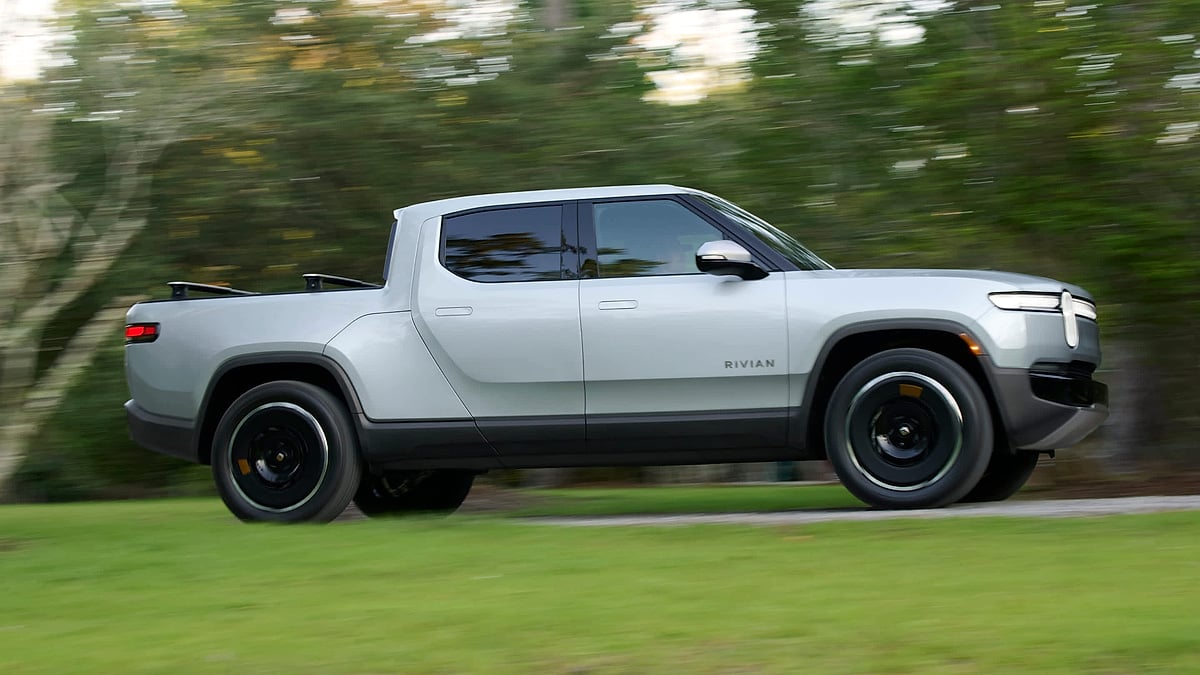
For Williams, the backup was a Tesla destination charger near the bar. That is the real-world magic of Level 2 charging. It is slow if someone is waiting next to the truck. It is powerful if the truck is parked for seven hours while the owner is doing something else.
There is also a useful lesson for R1S shoppers in the comments. One reader asked about towing a 4,000-pound camp trailer with an R1S Max Pack. The best answer was not simply "buy the bigger battery." It was to watch aerodynamics. A 4,000-pound trailer with a tall flat face can be harder on range than a heavier trailer that punches a cleaner hole through the air.
That is the owner's consequence from this trip. Before buying the trailer, look at the front profile, height, width, loaded weight, tongue weight, and where you actually plan to park. Before booking the campground, ask whether EV charging is allowed from the campsite pedestal. Before leaving, set up the trailer profile, start with enough battery, and plan the route by elevation as well as distance.
Williams' Rivian did the job. But the truck was only one part of the system. The destination charger, the downhill return, the 60-mph discipline, and the campground charging rule all shaped the result.
That is what makes this more useful than another "EV truck tows camper" post. It shows the real test. The question is whether the R1T can pull the trailer and whether the owner can plan the trip around the places the truck is allowed to refill.
Rivian and EV-truck owners, have you stayed at a campground that forbids EV charging from the pedestal? Share the campground policy, trailer setup, speed, efficiency, and whether destination charging made the trip work. Let us know in the comment section.
About The Author
Noah Washington is an automotive journalist based in Atlanta, Georgia, covering sports cars, luxury vehicles, and performance culture. His reporting focuses on explaining the engineering, design philosophy, and real-world ownership experience behind modern vehicles.
Noah has been immersed in the automotive world since his early teens, attending industry events and following the enthusiast communities that shape how cars are built and driven today. His work blends industry insight with enthusiastic storytelling, helping readers understand not just what a car is, but why it matters.
Noah is also a member of the Southeast Automotive Media Association (SAMA), a professional organization for automotive journalists and industry media in the Southeast.
His coverage regularly explores sports cars, luxury vehicles, and performance-driven segments of the automotive industry, including the evolving culture surrounding Formula Drift and enthusiast builds.
Read more of Noah's work on his author profile page.
You can also follow Noah here:
Set Torque News as Preferred Source on Google
Follow us today...




Comments
I wonder how many RV parks…
Permalink
I wonder how many RV parks are doing this. It's true, charging an EV is going to use more energy than an ordinary motorhome or trailer. The new electric trailers will use even more. But unlike the motorist here, often this charging is not optional. They really need to figure a way to just charge a bit extra. Depending on their local night electricity cost it shouldn't cost too much, and a $10 surcharge would be fine. But some might try to make it a profit center, unfortunately.
While fully metering is expensive, it would not be hard to make a little box to let you know if somebody charged. In fact, the Emporia would be easy, and for $200 to track 16 circuits it's quite cheap. It could even meter, if that's legal, but it could definitely detect if anybody used a lot of power to ding them if they didn't pay the extra fee. In fact you only need one -- put it on 16 sites, and then mark the other sites as no-charging. Or just put it on all of them, it's cheap.
That seems like the…
Permalink
In reply to I wonder how many RV parks… by Brad Templeton (not verified)
That seems like the reasonable middle ground. A blanket “no EV charging” rule is probably the easiest policy for a campground, but it is not the best long-term answer.
If RV parks are going to see more EV trucks and eventually electric trailers, they probably need a simple surcharge or monitored-use setup rather than pretending the demand will not exist. Most owners would likely accept a fair extra fee if the rule is clear upfront.
Somebody should compile and…
Permalink
In reply to I wonder how many RV parks… by Brad Templeton (not verified)
Somebody should compile and prominently publish online a list of EV-UNfriendly parks to avoid. And then send them all a copy. EV campers need to know, AND park owners need to know they are blacklisting themselves. might motivate a little thought on their part.
Harry, that would actually…
Permalink
In reply to Somebody should compile and… by Harry Tuttle (not verified)
Harry, that would actually be useful, though I might frame it as a campground EV charging policy list rather than just a blacklist.
Campers need to know before booking whether EV charging is allowed, banned, limited, or available for a surcharge. Park owners also need to understand that unclear or hostile charging rules may cost them future business as more EV trucks and electric trailers show up.
A simple public list with “charging allowed,” “charging banned,” “extra fee,” and “ask before arrival” would probably help both sides.