
Nicholas Colavito’s Rivian tire review starts with the kind of caveat that makes the rest of the post more believable.
He had just come out of his winter setup: 20-inch wheels with the OEM Pirelli all-terrain tires. So yes, noise and ride improved when he moved to Michelin Pilot Sport S5s. That part was always going to happen. A performance street tire should feel quieter and more settled than a winter-season all-terrain package on a heavy electric truck.
The useful part came after that.
After just over 2,000 miles, Colavito says the Michelins feel better than the OEM 22s in steering center feel and ride. He says the tire became more impressive after the first few hundred miles, once the initial stickiness wore off and the handling started to show itself. His phrase was simple: point and shoot. That is not a throwaway line on a Rivian.
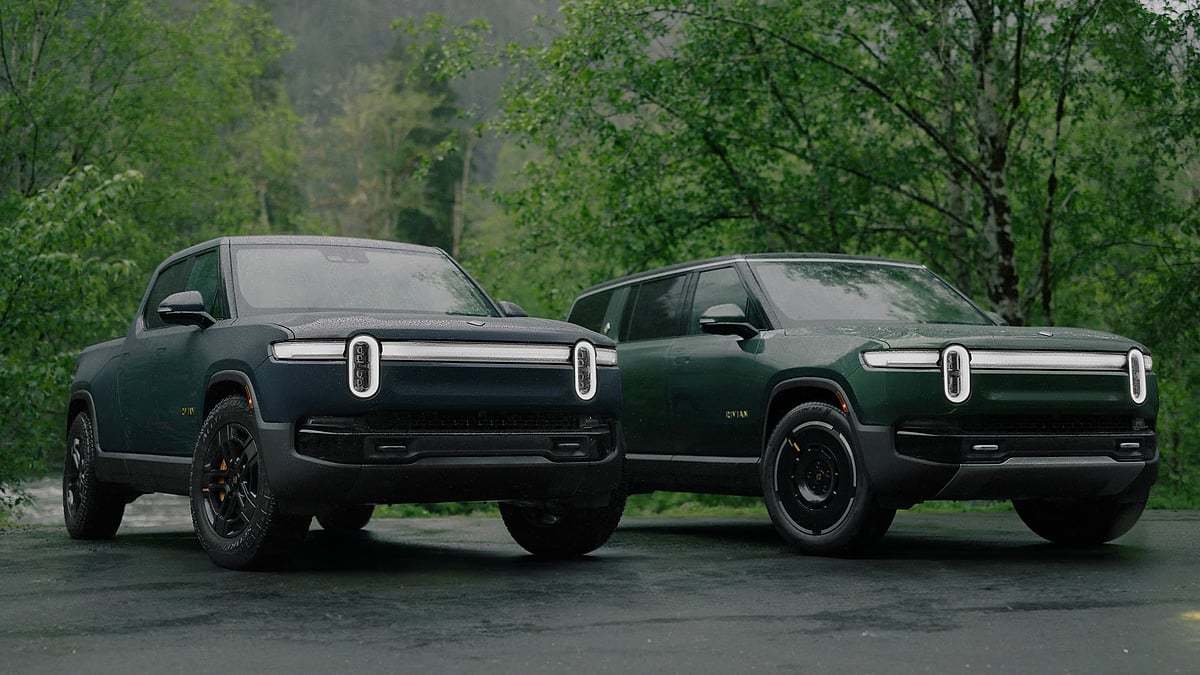
The R1T and R1S are heavy, powerful, tall, fast EVs. They can embarrass sports sedans in a straight line, but the tire has to manage a ridiculous mix of weight, torque, braking load, regenerative deceleration, comfort demands, and owner expectations. A Rivian tire is never doing one job. It is always negotiating.
That is why this owner review matters.
The First 2,000 Miles Say More About Feel Than Wear
Colavito is not pretending he has the full answer yet.
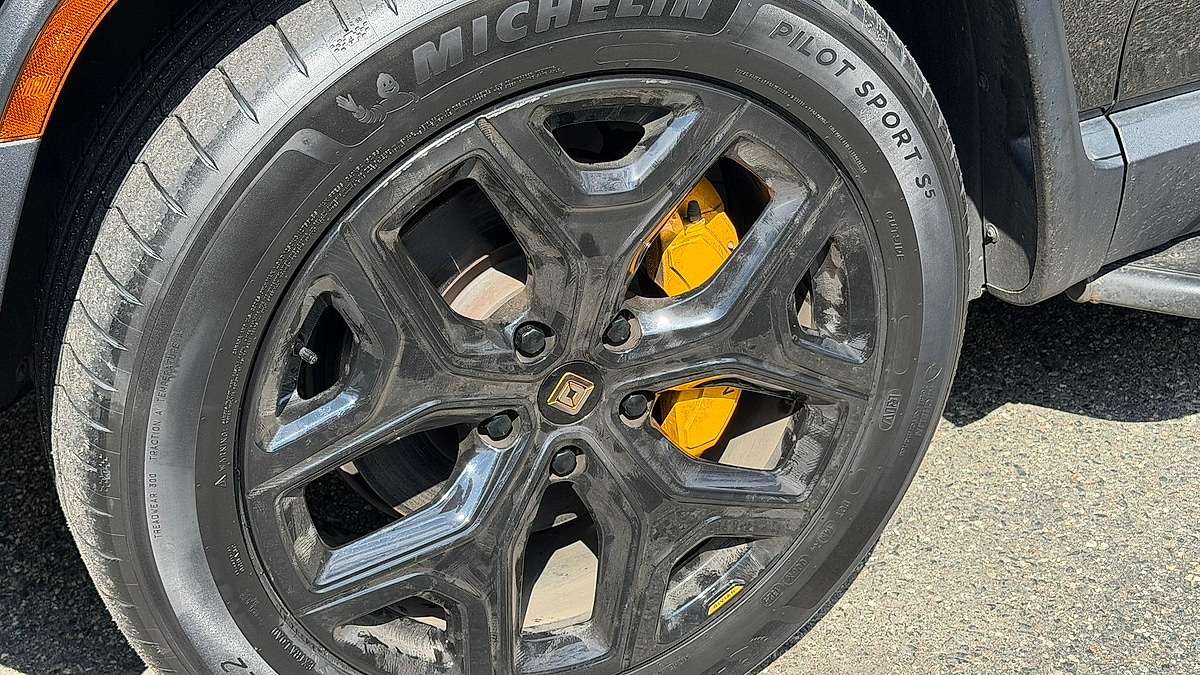
He knows treadwear is the question. He even says he is “not expecting great things,” which is the right attitude for a max-performance summer tire under a Rivian. The Michelin Pilot Sport S5 has a 300 treadwear rating in the Rivian-marked 22-inch size. That is not a long-life touring tire personality. That is a grip-first personality with enough warranty language to make buyers feel slightly less reckless.
The early miles are about feel.
He says the tire was extremely sticky when first installed. Road sand, small rocks, and debris clung to it. That is common with fresh high-performance rubber, especially when the mold-release phase and soft surface layer are still working themselves out. A tire can feel almost gummy at first, then settle into its real character after heat cycles and normal driving scrub away the newness.
That seems to be what happened here.
The owner says the tires no longer look or feel sticky. The last few hundred miles made the handling stand out. That progression is useful. A first-day review often tells you more about novelty than performance. A 2,000-mile review starts to reveal the tire’s actual personality.
Rivian Needed A Tire Like This
The R1 platform has always had a strange dual identity. It is marketed around adventure. It can wear 20-inch all-terrains, climb dirt roads, wade, haul, camp, and make owners feel prepared for a weekend that may never happen. It also has the acceleration and chassis sophistication to make a backroad feel much smaller than the vehicle’s curb weight suggests.
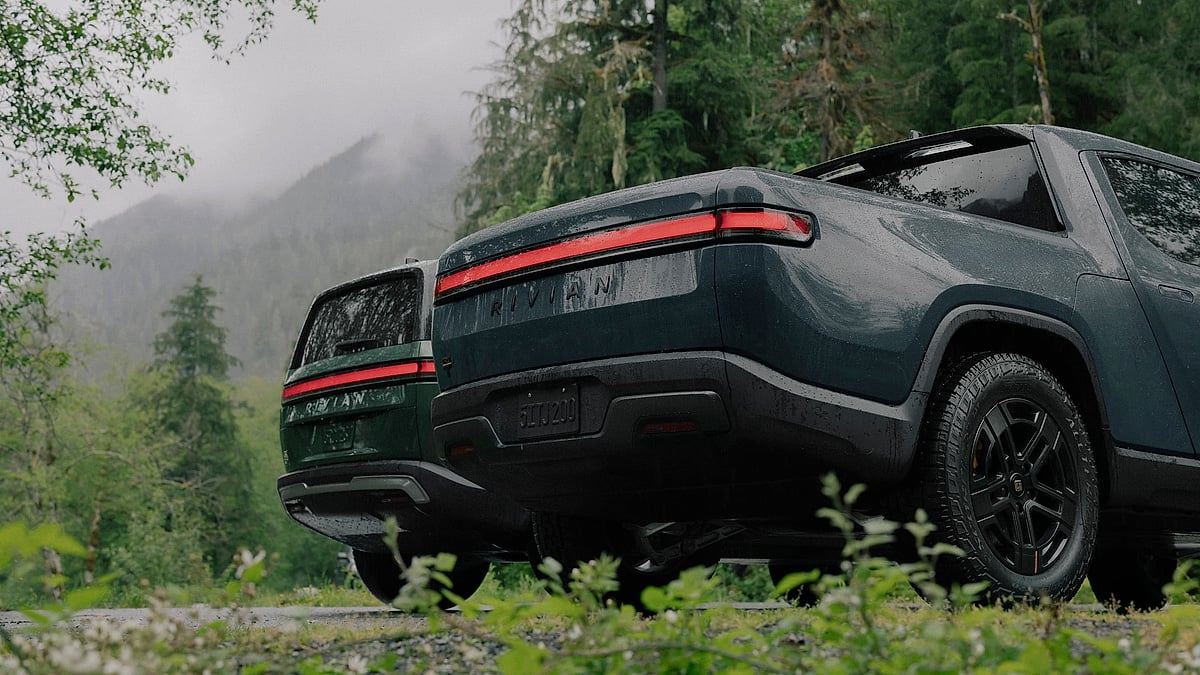
The tires decide which side of the truck shows up first. The 20-inch Pirelli all-terrain setup gives the Rivian the right look and useful bad-weather or light-trail confidence. The cost is noise, rolling resistance, and steering softness. The OEM 22-inch Pirelli street setup sharpens the truck, but many owners have had mixed feelings about wear, price, and feel. Now the Michelin Pilot Sport S5 enters with a different message: give the Rivian a real performance tire and let the chassis speak.
Colavito’s X7 comparison caught my attention.
He says the R1 feels more like his former BMW X7, and he was driving in All-Purpose mode, not Sport. That is a meaningful compliment. The X7 is a large luxury SUV that somehow manages to feel buttoned down when the road bends. If the Michelin makes a Rivian feel more centered and more precise without requiring Sport mode, that is exactly the kind of improvement owners notice every day.
A tire that improves confidence in normal mode has more value than a tire that only feels special during aggressive driving.
The Steering Center Feel Is The Key Detail
Most tire reviews obsess over noise and treadwear.
Colavito’s best detail was steering center feel.
That is where heavy EVs can get vague. The truck may be fast. The suspension may be well tuned. The steering assist may be accurate. But if the tire’s center response feels dull, the whole vehicle can feel like it is waiting half a beat before obeying. On a 7,000-pound EV with instant torque, that delay is annoying.
A performance tire with a stiffer construction and more responsive tread blocks can change the entire front-end relationship.
The owner says the S5 is better than the OEM 22s here. That tells me the Michelin is giving the driver a cleaner first inch of response, the little correction zone where the vehicle spends most of its highway and backroad life. Nobody talks about center feel at the dinner table, but it is one of the main reasons one tire feels expensive, and another feels ordinary.
That is where “point and shoot” begins.
What Rivian Owners Should Watch For
- Efficiency over a full battery cycle, because a sticky summer tire can quietly take range even when the driver loves the feel.
- Tread depth after 5,000 and 10,000 miles, since Rivian weight and torque can punish performance tires faster than owners expect.
- Cold-weather behavior, because the Pilot Sport S5 belongs in warm-weather service and should not be treated like a winter tire.
The Michelin Is Cheaper Than The Scorpions, Which Makes This More Complicated
Colavito says the Michelins were actually cheaper than the Scorpions.
That sounds backwards at first. Michelin Pilot Sport branding usually prepares your wallet for bad news. But current listings support his point in the Rivian 22-inch size. The Michelin Pilot Sport S5 can undercut the Rivian-marked Pirelli Scorpion Zero All Season in set pricing, depending on retailer and timing.
That changes the decision.
If the Michelin were dramatically more expensive, owners could dismiss it as a feel-good performance indulgence. If it costs less than the familiar Pirelli replacement and delivers better steering feel, the argument becomes harder. The trade becomes wear, winter usability, and efficiency rather than purchase price alone.
That is a better conversation.
Still, cheaper on the invoice does not mean cheaper over time. A tire that wears out 6,000 or 10,000 miles earlier can lose the value fight quickly. The 30,000-mile warranty helps, but tire warranties on heavy EVs can become complicated by rotation habits, alignment, tread measurements, use conditions, and whether the wear pattern looks even. Rivian owners should not buy this tire expecting touring-tire life.
Buy it because you want the truck to feel better.
Then measure whether the cost per mile still makes sense.
The Winter Setup Caveat Helps The Review
Some owners overstate tire improvements because they compare fresh street tires to worn all-terrains and act like they discovered suspension tuning.
Colavito did not do that.
He admitted the Michelin was going to beat his winter 20-inch Pirelli all-terrain setup on noise and ride. That honesty makes the rest of the review stronger. He still says the S5 feels better than the OEM 22s in steering and ride. That comparison is the real one.
A Rivian owner cross-shopping 20-inch all-terrain, 22-inch OEM street tires, and Michelin S5s needs to separate three questions.
- How do they feel compared with winter all-terrains?
- How do they feel compared with factory 22s?
- How long will they last under a heavy EV?
The first question is easy. The second is why this review exists. The third needs another few thousand miles.
Efficiency Is The Missing Number
Gerhard Dohne asked for the number everyone needs: impact on “electron economy.”
That should be the next update.
A tire can make a Rivian feel magical and still cost-range. The S5 is a performance summer tire with a sticky compound, wide contact patch behavior, and grip-focused tuning. Michelin and Rivian may have EV-tuned the tire, but physics still collects payment.
The right test is simple but tedious.
Same route. Same tire pressure. Same drive mode. Similar temperature. Similar speed. Several repeated runs. Compare against previous lifetime efficiency if the owner has good data, not vague memory. Separate city, highway, and mixed driving. Note whether the vehicle is R1T or R1S, battery pack, wheel size, software version, payload, and alignment status.
Short-term efficiency numbers can lie. Tires need break-in. Weather shifts. Drivers enjoy new grip and unconsciously drive harder. A few fast on-ramps can make the Michelin look worse than it is. A calm week in traffic can make it look better than it is.
After 2,000 miles, the owner can start watching trends. After 5,000 miles, the efficiency story should be clearer.
The S5 Is A Summer Tire, So Do Not Ask It To Be A Winter Tire
The Michelin Pilot Sport S5 is a max-performance summer tire. It is designed for warm, dry, and wet conditions. It is not the tire you install for freezing mornings, snow, or ice and then blame when it behaves like a performance tire in winter.
That sounds obvious until someone tries to make one expensive tire do every job.
Colavito already has a winter setup, which is the right way to approach this. Use the S5 when the weather fits. Swap back when the season changes. That gives the Michelin a fair chance to be excellent without forcing it into conditions it was not designed to handle.
For Rivian owners in warm climates, the S5 may be a tempting year-round street tire. For owners in snow states, it should be part of a two-set strategy.
The tire’s grip is the point.
Respect the season that grip was built for.
Ride Quality Improving On A Performance Tire Is The Surprise
A sticky performance tire improving steering feel is expected.
Ride improvement is the more interesting claim.
Performance tires can ride harshly, especially under heavy EVs. The S5 apparently avoids that penalty well enough for Colavito to call the ride better than the OEM 22s. That could come from construction tuning, acoustic treatment, sidewall behavior, tread design, or simply how the tire matches the Rivian suspension.
The R1 platform is sensitive to tire choice because the truck is quiet and heavy. A tire with a sharp impact edge can make the whole vehicle feel less premium. A tire that controls the body without slapping over small road texture can make the truck feel more expensive immediately.
That may explain the X7 comparison.
Luxury SUVs feel good when the tire and suspension speak the same language. The tire cushions enough to keep the cabin calm, then firms up enough to keep steering inputs clean. The best tire swaps do not merely add grip. They remove fuzz.
Colavito seems to be describing that.
Wear Will Decide Whether This Is A Recommendation Or A Treat
The S5 may end up being a brilliant tire that wears too fast for some owners.
That would not make it a failure.
Different owners buy different outcomes. Some want maximum range. Some want quiet. Some want snow capability. Some want tread life. Some want steering feel. Some want the truck to feel less like a 7,000-pound appliance and more like a performance SUV that happens to haul camp gear.
The Michelin sounds aimed at that last group.
If it lasts 20,000 miles under normal Rivian street use, many owners may accept the trade. If it starts looking tired at 12,000 miles, the enthusiasm will get more selective. If it keeps strong steering feel and reasonable efficiency with a useful warranty path, it could become a go-to 22-inch street choice.
The next tread-depth update will matter more than another paragraph of praise.
I would want measurements at all four corners. Inner, center, outer. Front and rear. Note rotation interval. Note alignment. Note drive mode habits. Note whether the owner tows, drives mountain roads, or spends most miles commuting. Rivians can chew tires unevenly when alignment, pressure, and rotation discipline slip.
A performance tire will not hide bad maintenance.
This Review Shows Why Tires Are The Most Important Rivian Mod
People love talking about roof racks, light bars, skid plates, wraps, camping gear, and software modes.
Tires change the vehicle more than all of that.
They decide how the truck turns, stops, rides, sounds, coasts, regenerates, grips in rain, behaves in cold, and spends energy. On a Rivian, tire choice can move the vehicle from overland toy to luxury SUV to backroad weapon with the same suspension and motors underneath.
Colavito’s review is valuable because it describes feel rather than merely stating that the new tire is “good.” He noticed center feel. He noticed the change after break-in. He compared it to both the winter setup and OEM 22s. He admitted wear may disappoint. He promised to follow up.
That is how owner data becomes useful.
The Michelin Pilot Sport S5 may not be the universal Rivian tire. Universal tires usually disappoint everyone equally. This one sounds more specific: a warm-weather street tire for owners who care about steering, ride control, and grip more than maximum tread life or winter versatility.
That is a clear purpose.
My Read After This First Owner Report
I would be interested in this tire if my Rivian spent most of its life on pavement, I had a separate winter or all-terrain setup, and I cared about making the truck feel more precise in everyday driving.
I would hesitate if I needed one tire for all seasons, cared most about tread life, lived on rough gravel, or relied on maximum highway range. I would also wait for Colavito’s next update before making a final call, because 2,000 miles can reveal feel but cannot settle wear.
The early signs are strong.
A Rivian that steers better on center, rides better than expected, and feels more like a luxury performance SUV in All-Purpose mode is worth paying attention to. The Michelin Pilot Sport S5 appears to bring out the expensive part of the R1 platform: the low center of gravity, the instant response, the quiet cabin, and the chassis balance that can get buried under the wrong tire.
The next question is simple.
How many miles does that feeling last?
Would You Put Michelin Pilot Sport S5s On Your Rivian?
If you run Michelin Pilot Sport S5 tires on an R1T or R1S, what has changed in noise, ride, steering feel, efficiency, and treadwear? Include wheel size, tire size, mileage, rotation interval, climate, and whether you came from 20-inch all-terrains, 21-inch road tires, or OEM 22s.
One image by Nicholas Colavito on Facebook
About The Author
Noah Washington is an automotive journalist based in Atlanta, Georgia, covering sports cars, luxury vehicles, and performance culture. His reporting focuses on explaining the engineering, design philosophy, and real-world ownership experience behind modern vehicles.
Noah has been immersed in the automotive world since his early teens, attending industry events and following the enthusiast communities that shape how cars are built and driven today. His work blends industry insight with enthusiastic storytelling, helping readers understand not just what a car is, but why it matters.
Noah is also a member of the Southeast Automotive Media Association (SAMA), a professional organization for automotive journalists and industry media in the Southeast.
His coverage regularly explores sports cars, luxury vehicles, and performance-driven segments of the automotive industry, including the evolving culture surrounding Formula Drift and enthusiast builds.
Read more of Noah's work on his author profile page.
You can also follow Noah here:
Set Torque News as Preferred Source on Google
Follow us today...