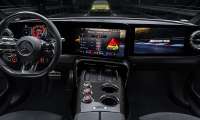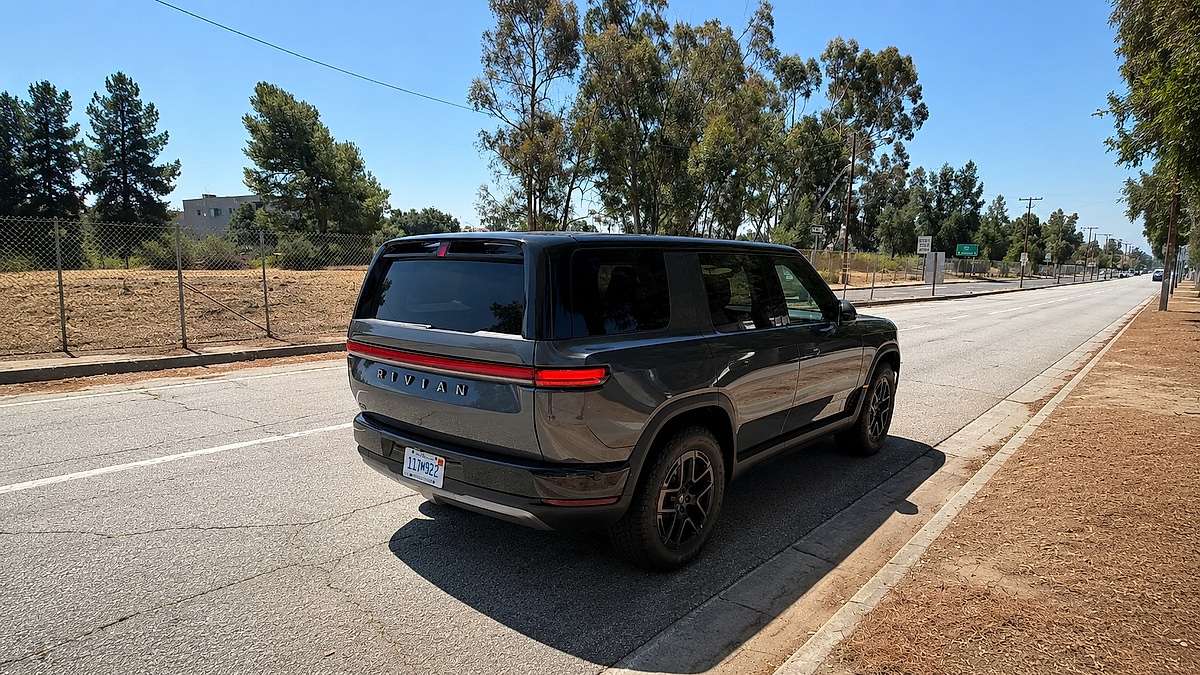

On the Rivian R2’s center display, a black warning card sits over the vehicle graphic. The message is blunt: “Critical battery issue. Service vehicle immediately.” A red battery icon sits beneath the outline of the SUV. The road arrow on the right side of the screen is still visible, almost mocking the situation. This was supposed to be a test drive. The car was supposed to be selling itself. Instead, it told the driver to stop.
Then it stopped.
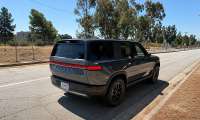
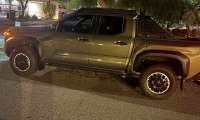
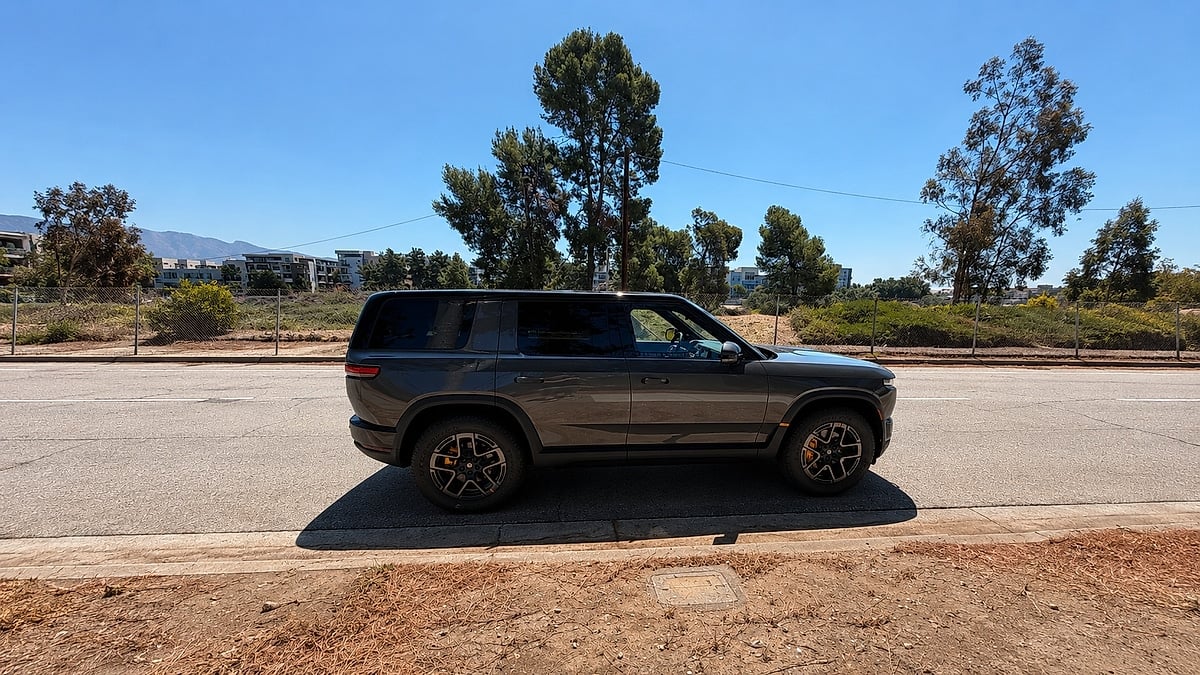
The owner had gone to Rivian Pasadena for a demo drive. Rivian gave him 25 minutes of solo driving. He had a choice between an R2 in Catalina Cove with 21-inch Tungsten wheels and another in Half-Moon Grey with 20-inch all-terrain wheels. He chose the 20s because that setup was closer to what he expects to order, and because he is trying to avoid spending extra money later on the larger Tungsten wheels.
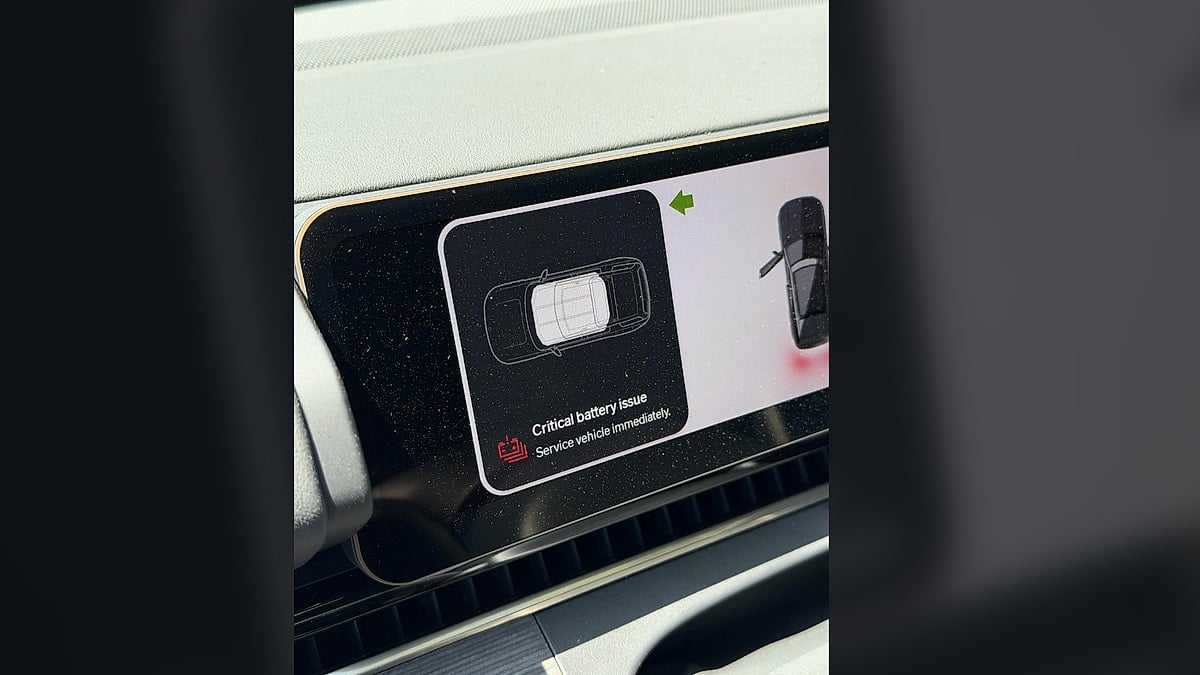
Five minutes into the drive, the R2 threw the battery warning.
The car completely shut down. The owner said he was stranded on the side of the road until Rivian came to get him. He tried a hard reset. Nothing changed. The A/C quit. The vehicle would not come back to life. Rivian sent someone out, put him in an R1S, and brought him back to the shop.
That would be enough for many buyers to walk away, at least for a year.
He had the opposite reaction.
He said the five minutes he got were smooth and fun. He loved the audio system, especially coming from a 2024 Model Y Premium and after once renting an R1S. He disliked the steering-wheel haptics at first because they felt messy, but expected he could adapt. He had another demo scheduled later in the week. He is a March 2026 reservation holder. His Model Y lease ends in March 2027.
After a dead R2 demo, his conclusion was almost comic in its confidence.
He was still sold.
The Image Is Brutal For Rivian
Rivian can explain a failed demo vehicle. Every automaker can. Pre-production vehicles, early customer units, launch software, demo fleets, battery diagnostics, low-voltage oddities, loose sensors, early hardware calibration, dealer-center learning curves, and infant-production defects can all create ugly moments. None of that changes how the photo lands.
A battery warning during an R2 test drive is a bad look.
This is the vehicle Rivian needs to scale beyond the expensive R1 world. The R2 is supposed to make Rivian feel attainable, polished, and ready for buyers who are cross-shopping Tesla, Hyundai, Kia, BMW, Mercedes, Volvo, Ford, and used luxury SUVs. The R1T and R1S built the brand’s aura. The R2 has to build volume.
That makes a dead demo car feel larger than one bad test drive.
A customer does not need to understand the root cause to remember the warning. He does not need to know whether it was a real battery-pack fault, a sensor fault, a software-protection event, a low-voltage issue, or a calibration edge case. He saw “Critical battery issue.” He felt the car die. He waited for Rivian to rescue him.
That is the kind of experience people share because the screenshot is impossible to shrug off.
The Most Rivian Part Is That He Still Loved It
The owner’s reaction may be the most important piece of the story.
He did not excuse the failure completely. He admitted it sucked. He also said he had a blast before it happened. That is the tension Rivian has lived with for years. Owners and shoppers often tolerate more chaos from Rivian than they would from a legacy automaker because the vehicles feel special when they work.
That is both a gift and a warning.
The gift is emotional pull. The R2 apparently created enough of it in five minutes to survive a catastrophic first impression. Smooth drive. Fun character. Strong audio, at least to this driver. Good enough packaging and personality to keep the reservation alive. That says something powerful about the product underneath the failure.
The warning is that emotional pull is finite.
Early adopters may forgive a bricked demo. Mainstream buyers may not. A Tesla owner coming out of a Model Y lease might give Rivian time because his purchase window lands in 2027. A family replacing one car next month may see that warning and decide to wait. A buyer burned by Hyundai ICCU issues, Ford software faults, or earlier Rivian service delays may have less appetite for another adventure.
The R2 can be charming.
It still has to be dependable.
Five Minutes Is Enough To Create Desire, And Nowhere Near Enough To Create Trust
The owner got enough time to know the car felt right.
He did not get enough time to know the car was right.
That distinction matters. A five-minute drive can reveal seating position, steering feel, initial ride quality, throttle response, cabin vibe, visibility, audio character, and first-glance interface reactions. It cannot reveal long-term reliability, charging behavior, heat management, battery stability, service quality, software maturity, water intrusion, rattle development, range accuracy, winter behavior, or whether a warning message was a random fluke.
The owner liked the R2’s first impression.
The R2 failed the trust test.
Both things can be true inside the same parking-lot story. That is why the comment section split so hard. Some readers saw a normal early-production hiccup. Others saw a giant red flag. Some laughed at the idea of being “sold” after the car died. Others understood the pull of a new EV that feels fresh, capable, and better aligned with their life than the Model Y.
This is where early R2 stories will live for a while.
Desire will move faster than proof.
The R2 Is Carrying More Pressure Than The R1S/R1T Ever Did
The R1T and R1S launched into a different buyer environment.
Those vehicles were expensive, unusual, and aimed at people willing to accept startup roughness in exchange for something nobody else sold. Early R1 buyers could tell themselves they were part of a new company’s buildout. They had the first electric adventure pickup, the first Rivian SUV, the gear tunnel, the camp speaker, the torch, the weird charm, the service stories, and all the usual startup pain.
The R2 has less room for that.
This is Rivian’s mainstream swing. The R2 has to convince people who already know Tesla works well enough for most daily use. It has to convince shoppers who can buy a proven hybrid, a polished luxury EV, or a cheaper lease from a brand with a bigger dealer network. It has to convince people who like Rivian’s design language but do not want to become unpaid quality-control staff.
That is why one “Critical battery issue” screen gets attention.
It touches the exact nerve Rivian needs to calm.
The question is not whether one R2 can fail. Of course one can. The question is whether Rivian can make failures rare, recover from them quickly, diagnose them clearly, and keep the service experience from becoming part of the ownership identity.
The Error Message Is Too Vague For A Vehicle This Important
The screen says “Critical battery issue.”
That phrase protects the car. It does not inform the driver.
A warning that severe should probably stop the vehicle when the system sees a serious enough risk. Nobody wants an EV guessing its way through a possible high-voltage problem. If the pack, isolation system, thermal system, contactors, battery-management electronics, or related sensors report something dangerous, the car should protect itself and the occupants.
The problem is the message.
“Critical battery issue” covers too much ground. It could be a major pack concern. It could be a sensor failure that made the vehicle behave conservatively. It could be a low-voltage support issue masquerading as a high-voltage panic. It could be a module communication failure. It could be something simple enough for a service center to solve quickly or serious enough to sideline the car.
The driver gets the same frightening language either way.
One commenter nailed this point by saying Rivian needs a more specific error than a catch-all warning. That is exactly right. A driver stranded on the road needs clarity. So does a prospective buyer trying to decide whether this was a one-off or a pattern.
“Service vehicle immediately” is useful.
“Critical battery issue” without detail invites speculation.
Rivian’s Response Was Good, But The Situation Was Still Bad
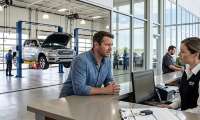
The owner called the showroom. Rivian located the vehicle and sent a representative. She apologized, tried to walk him through a hard reset, drove out, handed him the R1S she arrived in, and offered the possibility of another same-day drive if a slot opened. Since he already had another test drive scheduled, he decided to come back.
That response sounds human and competent.
It also shows how thin the margin is during a demo program. A test drive should be easy. Hand over the car, let the customer experience the product, answer questions, send him home wanting one. In this case, the representative became roadside support. The test drive turned into a service event. The sales experience became a reliability story.
The staff handled the moment with the tools they had.
The product created the moment.
That is the part Rivian has to own.
The Owner Was Already Pulled Over, And That Matters
The owner later said he was already pulled over, adjusting the air conditioning when the initial stop message appeared. That detail lowers the drama and raises a separate question.
It is fortunate the warning arrived while he was stopped.
If the same message appeared in traffic, on the freeway, during a turn, or while crossing lanes, the experience would have been more serious. We do not know how the R2 would behave in those conditions. We only know that this vehicle eventually became inoperable and that the driver wondered what it would have been like if he had been moving.
That thought belongs in the article.
A warning event during a test drive is inconvenient. A vehicle shutting down in a live lane would become a safety discussion. Rivian needs to know exactly what happened, exactly why, and exactly how the vehicle decides when and where to immobilize itself after a critical warning.
Protecting the battery matters.
Protecting the driver matters more.
The Audio System Became A Strange Side Story
The dead R2 should have dominated every comment.
Somehow, the audio system became nearly as polarizing.
The owner initially described it as fantastic, especially compared with a rented R1S. Later he clarified that it was not better than the Tesla system, but much better than he expected after reading early criticism. He gave it about a 7.5 out of 10 from first listen. Other drivers called it mid, average, or underwhelming. One audiophile compared it against systems from Lexus, Mercedes, and older Tesla hardware and concluded it would not be a dealbreaker, but would not impress anyone who cares deeply about sound.
That range of reactions is useful.
It tells us the R2 audio system may be highly dependent on expectations, EQ settings, source material, trim, and listener taste. The owner had only five minutes of driving before the battery issue, so his audio impression came under strange circumstances. Some commenters suggested Rivian centers may be tuning EQ differently or that basic adjustments help significantly.
The stereo is not the headline.
It does matter because Rivian is trying to sell a premium-feeling vehicle. If the R2 can survive a bricked demo and still leave the driver praising the sound, the cabin experience has something working in its favor.
The Steering Wheel Haptics Need Time
The owner was less convinced by the steering-wheel haptics.
He said they felt messy. Later, in the comments, he explained that the controls seemed too sensitive when pushing in or out, sometimes scrolling when he did not want them to. He started to realize they behaved less like mechanical buttons and more like a touch-sensitive haptic surface, where a lighter tap worked better than a hard press.
That sounds like a learning curve Rivian needs to be careful with.
Automakers keep trying to solve buttons by inventing more complicated controls. Sometimes that works. Often it makes simple actions feel less certain. A driver adjusting mirrors, steering wheel position, audio, or menus should not need to discover the difference between a tap, press, push, scroll, and haptic confirmation while driving.
The R2’s controls may improve with practice.
They should feel intuitive before the owner becomes trained.
This matters because the R2 is supposed to reach a broader audience. The R1 crowd may tolerate idiosyncrasies. A Model Y lessee expects simple muscle memory and may be less patient with “you’ll get used to it” controls.
The Wheel Choice Reveals How Real Buyers Think
The owner’s wheel decision was more revealing than it first appears.
He chose the 20-inch all-terrain demo because he expects to order something close to that setup and wants to avoid paying extra for the 21-inch Tungsten wheels later. He works from home, has home NACS charging, lives in Los Angeles, and mostly needs range for occasional Vegas trips. He likes the Tungsten look but is already budgeting for paint and wants to keep the final price down.
That is how real R2 buyers will shop.
They will not build forum-perfect adventure rigs. They will count dollars. They will compare wheels, range, tire replacement cost, aesthetics, lease payments, paint options, and what their daily life actually requires. The owner even clarified that the 20-inch all-terrain wheels he drove were Performance-specific, while the Premium later comes with 20-inch all-season wheels standard. The Rivian representative reportedly told him the all-terrain setup reduces range by roughly 20 to 27 miles.
That matters.
R2 shoppers may love the look of all-terrains while barely using them. Others will want the cheapest tire replacement path. Some will choose 21s for range and aesthetics. Many will be coming from Tesla Model Y ownership, where tire decisions already carry cost and ride-quality consequences.
The bricked demo stole the spotlight.
The wheel discussion shows the R2 is already being evaluated like a real household purchase.
Three Takeaways From This Failed R2 Demo
- A single failed demo vehicle does not prove the R2 has a systemic battery problem, but it gives Rivian exactly the kind of launch image it did not need.
- The owner’s reaction shows how compelling the R2 can feel in only a few minutes, even when the drive ends badly.
- Rivian needs clearer fault messaging, fast diagnosis, and public confidence that critical battery warnings will be rare rather than part of the early-owner experience.
Early Adopter Logic Has Limits
Several commenters defended the failure as part of being on the bleeding edge. Others pushed back hard, saying Rivian has already been making EVs for years and that R2 is too important for this kind of public failure.
Both instincts make sense.
Building cars is hard. Launching a new platform is harder. Launching a new platform under the glare of customers, investors, reservation holders, Tesla comparisons, YouTubers, Reddit threads, and delivery timelines is brutal. Some failures will happen. That is reality.
But “early adopter” cannot become a magic phrase that excuses everything.
The R2 is not a science project. It is a production vehicle carrying Rivian’s next chapter. Buyers are being asked to spend real money. Rivian is asking them to trust a newer company with fewer service locations than legacy brands and a history of owner complaints around reliability and repair timing. The company does not need perfection. It needs enough competence that a customer does not feel foolish choosing it over a mature competitor.
A dead test-drive vehicle attacks that confidence.
One event can be forgiven.
A pattern would be dangerous.
The Owner’s Timing Makes His Forgiveness Easier
The owner is not taking delivery tomorrow.
That is important.
He has a March 2026 reservation and a Model Y lease ending in March 2027. That gives Rivian time. Time to collect early data. Time to fix software. Time to refine battery diagnostics. Time to learn from demo vehicles. Time to improve service training. Time to separate freak events from recurring issues. Time for other owners to absorb the first wave of real-world lessons.
His response makes more sense through that lens.
He is not saying, “This bricked today, and I will take delivery tomorrow morning.” He is saying, “This bricked today, but I liked it enough to keep watching because my real decision point is later.”
That is a reasonable position.
It is still braver than some buyers will be.
Many people in the comments said they will wait until the 2028 or 2029 model year. That may be the most practical response for anyone who loves the R2 idea but has no appetite for early production drama.
Rivian Needs To Tell Customers What Happened
This specific vehicle deserves a postmortem.
Rivian does not need to publish a full engineering report to Reddit, but the company should tell the customer what caused the failure. Loose connector? Battery module fault? Sensor failure? Low-voltage battery problem? Software bug? Thermal-system issue? Pack isolation warning? Something else?
A vague “we’re looking into it” keeps the customer alive. If it was a faulty sensor, say so. If it was a pack issue, own it. If it was software and already fixed in a later build, explain that. If the car needs deeper service, be honest.
This is the burden of selling connected, software-heavy vehicles to an online audience.
The failure travels instantly.
The explanation needs to travel too.
The Hard Reset Doing Nothing Is The Most Concerning Detail
The hard reset detail should not be overlooked.
Rivian owners know the ritual. Screens misbehave, software hangs, odd states appear, and a reset can bring the vehicle back. In this case, the owner tried a hard reset, and the R2 stayed dead. No A/C. No recovery. No movement.
That means the vehicle was either correctly refusing to restart because the fault was serious, or it was trapped in a state where a reset could not help.
Either possibility deserves attention.
A serious fault means the warning did its job, but the vehicle had a real issue. A trapped state means software or module communication could immobilize a good vehicle. From a stranded driver’s point of view, both outcomes feel the same. The car will not go.
This is where Rivian’s internal diagnosis will matter.
Owners can forgive a screen glitch. They have less patience for a vehicle that cannot be coaxed into limp mode, service mode, or safe relocation when sitting on the roadside.
The R2 Still Sounds Like A Strong Product
The strangest part of writing this story is that the R2 still comes across well.
That sounds absurd until you read the full owner account. He had only a few minutes, but he liked the drive. He liked the smoothness. He liked the fun. He liked the audio more than expected. He was already thinking through wheel choices, cost, range, home charging, paint, and how the R2 fits his life after a Model Y lease.
Other test-drive comments in the same thread were positive too. Some had flawless drives. Some were blown away. Some criticized the audio. Some criticized the controls. Some called the whole thing underwhelming. That spread of reactions is normal for a new vehicle entering real customer hands.
The battery warning is the abnormal piece.
The R2 product story and the R2 reliability story now have to be separated carefully. The product may be compelling. The launch has to prove the systems behind it can support that appeal.
The Real Story Is Confidence
The R2 does not have to be perfect to succeed.
It has to be trusted.
That is the harder standard. People will forgive a mediocre stereo, a confusing steering control, a range penalty from all-terrain tires, or an option package they do not love. They will not forgive being stranded repeatedly. They will not forgive service delays that turn an exciting new SUV into a scheduling burden. They will not forgive vague warnings that make the battery pack feel mysterious and fragile.
This test drive created the exact confidence problem Rivian needs to avoid.
One customer walked away still excited.
Many readers walked away more cautious.
That split is the R2 launch in miniature. Rivian has built something people want badly enough to rationalize a frightening failure. Now it has to build enough reliability that customers do not have to rationalize at all.
My Read After This Pasadena Failure
I would not cancel an R2 reservation because of this one post.
I would also keep a file.
That file would include every early battery warning report, every bricked demo story, every service-center response, every confirmed fix, every repeat issue, every software update note, and every owner report after 5,000 miles. I would pay close attention to whether critical battery warnings appear repeatedly across locations or remain isolated to a few demo vehicles.
The owner in Pasadena has time. His lease ends in 2027. That gives him the luxury of patience while keeping his enthusiasm intact.
That may be the perfect way to approach the R2 right now.
Stay excited. Stay skeptical. Drive another one. Ask what happened to this vehicle. Watch the early deliveries. Read the service stories. Track the software fixes. Do not let a five-minute thrill erase a dead-car warning. Do not let one dead-car warning erase a vehicle that may still be excellent.
The screenshot is ugly.
The reaction is fascinating.
Rivian’s job is to make sure future R2 buyers remember the drive, not the battery warning.
Would A Critical Battery Warning End Your R2 Reservation?
If you have test-driven or reserved a Rivian R2, would a failure like this make you cancel, delay, or keep your order? Include your current vehicle, reservation timing, whether you drove 20-inch or 21-inch wheels, and whether your demo changed your confidence in Rivian.
Images by ebrahamian from Reddit
About The Author
Noah Washington is an automotive journalist based in Atlanta, Georgia, covering sports cars, luxury vehicles, and performance culture. His reporting focuses on explaining the engineering, design philosophy, and real-world ownership experience behind modern vehicles.
Noah has been immersed in the automotive world since his early teens, attending industry events and following the enthusiast communities that shape how cars are built and driven today. His work blends industry insight with enthusiastic storytelling, helping readers understand not just what a car is, but why it matters.
Noah is also a member of the Southeast Automotive Media Association (SAMA), a professional organization for automotive journalists and industry media in the Southeast.
His coverage regularly explores sports cars, luxury vehicles, and performance-driven segments of the automotive industry, including the evolving culture surrounding Formula Drift and enthusiast builds.
Read more of Noah's work on his author profile page.
You can also follow Noah here:
Set Torque News as Preferred Source on Google
Follow us today...