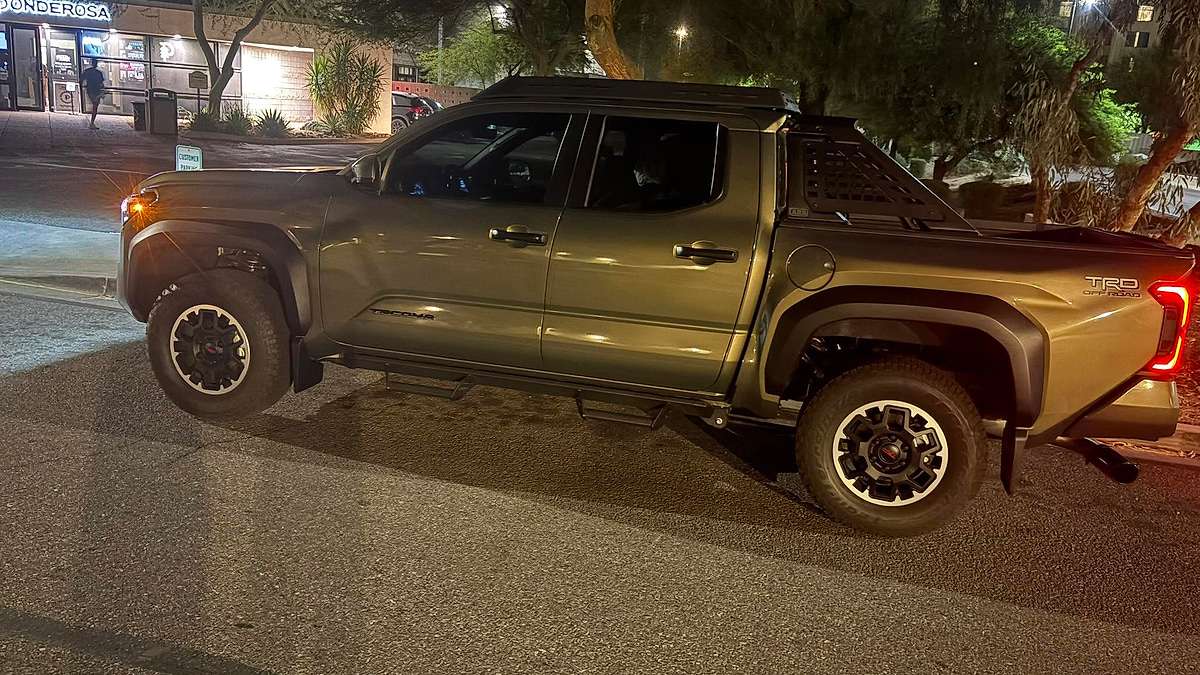

Al J Tuttle did the thing many careful Tacoma owners do with a new turbocharged truck.
He ignored the easy path and paid for an early oil change.
Toyota’s normal covered maintenance cadence often puts the included oil service at the 10,000-mile mark, but plenty of owners are uncomfortable waiting that long on a new engine, especially a turbocharged one. So Tuttle brought his fourth-generation Tacoma in at 5,000 miles, paid for the oil change himself, and waited two hours.
The dealer said it was done.
He watched the inspection video. The video reportedly showed the truck being checked and fluids topped off. The service department released the truck. Then he started it.
Something was wrong.
Tuttle said on Facebook that the Tacoma was “idling like crazy.” He showed the service advisor. The advisor told him it was normal and said that if Tuttle wanted them to look at it, they would have to do it the next day. Tuttle pushed back. He insisted they take the truck back right then.
That insistence may have saved the entire story from becoming much worse.
The truck was short two quarts of oil.
Now he wants to know what compensation makes sense.
That question is fair. The better question is broader: what should a new Tacoma owner demand when a dealer performs a paid oil change incorrectly, dismisses the owner’s concern, and only catches the problem because the customer refuses to leave?
The Mistake Was Not The 5,000-Mile Oil Change
The comment section did what Tacoma comment sections always do.
Some people argued Toyota does not change the oil at 5,000 miles. Others told him to do his own oil changes. Several said to check the dipstick before leaving any dealer. A few suggested asking for the next oil change free. One owner said he marked his oil filter and later found the dealer had never changed the oil at all. Another said he had seen dealers lose dipsticks, leave filters loose, or fail to tighten drain plugs.
Those comments are useful, but they can blur the main issue.
Tuttle did not ask ToyotaCare to cover a service it was not scheduled to cover. He paid for an early oil change. Once the dealer accepted that job, the interval debate ended. The service department’s obligation was simple: drain the oil, replace the filter if that was part of the paid service, refill the engine with the correct amount and specification, verify the level, check for leaks, reset or document whatever needed resetting, and return the truck in proper condition.
That did not happen.
This is not about whether owners should follow 5,000-mile or 10,000-mile oil intervals. That is a separate argument. This is about paying for a basic engine service on a nearly new truck and receiving it back underfilled.
A dealer can disagree with an early oil-change preference.
It cannot take the money and then miss the fill.
Two Quarts Low Is Not A Minor Typo
The fourth-generation Tacoma’s 2.4-liter turbo engine is commonly listed around 5.9 quarts with the filter.
If the truck was really two quarts low, it left the service bay with roughly one-third of its oil capacity missing. That does not automatically mean catastrophic damage occurred. The owner noticed the problem immediately, and the truck apparently did not leave the lot for a long drive. A short idle with several quarts still in the pan is very different from highway driving with no oil pressure.
Still, “probably okay” is not the same as “acceptable.”
Oil is not decorative. It lubricates bearings, cam journals, turbocharger components, timing hardware, piston cooling areas, and other internal surfaces that depend on correct pressure and volume. The engine also uses oil as part of its heat-management life. A new turbo engine deserves better than a rushed fill, a guessed fill, or a technician who forgot where the level should be.
The two-quart number also raises a trust problem.
Several commenters questioned whether it was truly only two quarts low. That skepticism is understandable. “Two quarts low” can become the service-lane version of “minor issue.” If the engine sounded strange enough that the owner noticed immediately, some owners will wonder whether the underfill was worse and the dealership softened the number.
That is why documentation matters.
The Service Advisor’s First Response Made It Worse
The underfill was the mechanical mistake.
The dismissal was the customer-service mistake.
Tuttle started the truck, heard or felt something abnormal, and immediately brought it to the advisor’s attention. The advisor reportedly said it was normal and offered to look at it the next day. That response would be bad even if the truck had turned out to be fine. After an oil change, a customer saying “this does not sound right” should trigger a quick verification, not a shrug.
Checking oil level takes moments.
On a fresh oil-change complaint, the service department should not send the customer home and hope the truck behaves. Pull it back in. Check the dipstick. Check the filter. Check the drain plug. Check for leaks. Check the oil cap. Confirm the oil quantity billed and installed. Confirm oil pressure if there is any warning, noise, or abnormal behavior. Do not ask the customer to come back tomorrow after driving around on the dealership’s mistake.
That is where Tuttle’s insistence matters.
He did the one thing every owner should do when something feels wrong after service: he refused to normalize it.
The truck went back in because he made it go back in.
The Inspection Video Now Works Against The Dealer
The inspection video is an interesting detail.
Dealers use videos to build trust. A technician walks around the vehicle, shows tread depth, fluid condition, underbody components, filters, brakes, leaks, or general inspection points. Done well, it can be useful. Done lazily, it becomes theater.
In this case, the video reportedly showed everything was topped off.
Then the truck was found two quarts low.
That creates a credibility problem. Did the video show a generic inspection rather than an actual oil-level confirmation? Did someone say “topped off” without checking? Did the technician check the level before oil had circulated properly? Did the truck receive the wrong quantity? Did the filter not get changed? Did the oil not get fully added? Did the service process break down after the video?
The owner should keep that video.
He should also ask the dealer to preserve the repair order and technician notes. The video can support his claim that the service department represented the vehicle as ready. The follow-up finding can show the representation was wrong.
That combination is exactly why dealers should be careful with inspection videos.
A trust tool becomes evidence when the work fails.
What Compensation Actually Makes Sense
This is where the answer needs to stay grounded.
If the engine was only run briefly and was corrected before the truck left the dealership, a giant cash payout is unlikely. There may be no provable damage. The dealer may argue the issue was caught and corrected immediately. That does not mean the owner should accept nothing.
A reasonable compensation request should include:
- A full refund of the paid 5,000-mile oil change, because the service was not performed the first time correctly.
- A free next oil and filter change performed by a senior technician or shop foreman, with the oil level verified in front of the owner.
- Written documentation on the repair order stating the truck was found underfilled after service, how much oil was added, how long the engine ran, and that no warning lights or abnormal oil-pressure issues were observed after correction.
That is the minimum package I would ask for.
If the dealer wants to go further, a goodwill service credit, extended internal engine warranty notation, or complimentary inspection at the next interval would be appropriate. The owner can ask. The dealer may resist. The written record matters more than a free coupon.
A free oil change is nice.
A documented paper trail protects the owner later.
Why The Paper Trail Matters More Than The Apology
An apology feels good for ten minutes.
A documented repair order may matter years later.
If this Tacoma develops an engine noise, turbo issue, oil-pressure concern, bearing problem, or warranty dispute later, the owner does not want the story to depend on memory. He needs the dealer’s system to show what happened: paid early oil change, customer noticed abnormal idle before leaving, truck returned to service, oil level found low, corrected, inspected, released.
The wording matters.
Do not accept a vague line such as “customer states idle concern, checked and adjusted fluids.” That hides the issue. Ask for something specific enough to describe the event without drama. The dealer may not want to write “we underfilled engine by two quarts.” That is exactly why the owner should push for a clear record.
A good service manager should understand.
If the dealership made the mistake and caught it before the truck left, transparency is the cleanest way to keep the customer. If they refuse to document it, the owner should wonder why.
The Owner Should Ask To See The Dipstick
Several commenters said they would have wanted to see the dipstick.
They are right.
The owner should ask to see the final oil level after the correction, ideally after the engine has been run briefly, shut off, and allowed to settle per Toyota’s checking procedure. He should also ask what oil was installed, how many quarts were billed, how many quarts were added after the complaint, and whether the oil filter was replaced.
If the truck was two quarts low after a paid oil change, the owner should not assume the rest of the process was perfect.
Was the oil cap installed? Was the drain plug tightened? Was the filter tightened? Was the correct oil used? Was the skid plate or access panel reinstalled correctly? Was there any evidence of oil leakage? Did the technician reset the maintenance reminder correctly? Did the engine bay show spilled oil? Was the underbody clean?
These questions may sound annoying.
They are reasonable after a basic fill error.
The “Do It Yourself” Comments Are Understandable
A lot of owners responded with the familiar advice: learn to change your own oil.
That advice comes from frustration, not arrogance.
Oil changes are simple, but dealer service bays are busy. Quick-lane work can be rushed. New technicians learn on customer vehicles. Flat-rate pressure exists. Communication breaks down. A Tacoma with good ground clearance makes a DIY oil change accessible for many owners with basic tools, space, and a safe way to collect and recycle used oil.
Doing it yourself also gives you control.
You know the filter was changed. You know the drain plug was tightened. You know the oil specification. You know the quantity. You can inspect the old oil, photograph the process, keep receipts, and check for leaks afterward.
That said, not every owner wants to do this.
Some lack space. Some live in apartments. Some do not want the mess. Some prefer service records from a dealer. Some paid for the convenience and warranty confidence of dealer maintenance.
Those owners still deserve competent service.
“Do it yourself” should not become an excuse for dealers doing sloppy work.
Always Check Before Leaving The Lot
The strongest practical lesson is boring: check the oil before leaving.
After any oil change, especially at a dealer or quick-lube shop, take two minutes before driving away. Park level. Wait if needed. Check the dipstick. Look under the truck for drips. Open the hood and confirm the oil cap is installed. Listen for abnormal noises. Watch the cluster for warning lights. Make sure the invoice matches what you asked for.
This feels unnecessary until the one time it saves you.
Tuttle noticed the abnormal idle immediately. That was good. A dipstick check would have given him an even stronger case before arguing with the advisor. It also removes ambiguity. A customer holding a clean dipstick with low oil is harder to dismiss than a customer describing a strange idle.
New vehicles make people too trusting.
Fresh service should make owners more suspicious for the first five minutes, not less.
Would Two Quarts Low Cause A Crazy Idle?
Some commenters questioned whether being two quarts low would cause a gas engine to idle fast or strangely. That skepticism is fair.
A two-quart underfill, by itself, may not directly cause a high idle in a simple cause-and-effect way, especially if oil pressure remained adequate at idle. A fast idle can come from cold-start behavior, A/C load, emissions strategy, battery state, software logic, or other conditions. The owner may have noticed roughness, noise, vibration, or a sound he described as idling “like crazy.”
But that debate does not absolve the dealer.
The idle concern got the truck back into the service bay. The inspection found the oil short. Whether the oil level caused the idle behavior or happened to be discovered because of it, the underfill was real according to the dealer’s own correction.
The owner does not need to prove the idle was caused by low oil to justify being upset.
The truck was underfilled after a paid oil change.
That is enough.
The Turbocharger Angle Makes Owners Nervous
Fourth-generation Tacoma owners are especially sensitive because the new truck moved to a turbocharged four-cylinder.
Turbo engines place real demands on oil. The turbocharger spins at extreme speed and depends on clean, correctly supplied oil. Owners who choose early oil changes often do so because they want fresh oil during break-in, especially before the engine sees long service intervals, heat, towing, off-road use, or short-trip operation.
That makes this mistake feel more personal.
The owner paid early because he was trying to protect the engine. The dealer returned it underfilled. That is exactly backward.
Again, a brief idle while two quarts low does not automatically mean damage. But the situation attacks confidence. A new-truck owner wants to feel better after an early oil change, not wonder whether the service bay just introduced the first bad entry in the vehicle’s history.
What I Would Ask The Service Manager For
I would not start by yelling.
I would ask for the service manager, bring the invoice, mention the inspection video, and describe the sequence calmly: paid 5,000-mile oil change, waited two hours, truck released, abnormal idle noticed immediately, advisor initially dismissed it, owner insisted, truck returned, oil found two quarts low.
Then I would ask for five things.
First, refund the oil change.
Second, document the underfill and correction on the repair order.
Third, have a senior technician inspect the truck for leaks, oil-pressure warnings, abnormal noises, and proper final level.
Fourth, provide the next oil change free with the level verified in front of the owner.
Fifth, put a note in the dealer record that if any related engine concern appears later, this event will be reviewed as part of the history.
That is firm without being ridiculous.
If the dealer refuses, escalate to Toyota customer care with the invoice, inspection video, and written timeline.
Do Not Let Them Rewrite It As A Customer Preference Issue
The dealership may try to steer the conversation toward the 5,000-mile interval.
Do not let that happen.
The owner paid for a requested service. The dealer accepted the money. The dealer performed the job incorrectly. The oil interval debate is irrelevant to the quality of the work.
A service advisor might say Toyota only covers oil changes every 10,000 miles under the normal plan. Fine. The owner already knew that. That is why he paid.
A service advisor might say two quarts low would not damage the engine. Maybe. That is not the same as saying the work was acceptable.
A service advisor might say they corrected it before the owner drove away. Good. That limits damage. It does not erase the error.
Keep the conversation centered on workmanship, documentation, and reasonable goodwill.
The Best Compensation Is Confidence
The owner asked how he should be compensated.
The real answer is that he should be compensated in a way that restores confidence in the truck and creates a record.
A refund alone is not enough. A free future oil change alone is not enough. A verbal apology alone is not enough. The best outcome is a written repair order, a no-charge inspection, a refunded service, and a next-service credit. If the dealer is serious, they should also let the owner watch the final dipstick check or have the service manager personally verify it.
That is not excessive.
The customer caught a dealer mistake before it became a larger problem. The dealership should be grateful the truck did not leave, not irritated that the customer insisted.
Tuttle did the right thing by listening to the truck.
Now the dealer needs to do the right thing by putting the mistake on paper.
The Lesson For Other Tacoma Owners
Check everything.
That is the uncomfortable lesson from a brand known for reliability. Toyota reliability does not protect a truck from human error in a service bay. A Tacoma can be well-engineered and still leave a dealer with the wrong amount of oil. A maintenance video can look reassuring and still miss the most important fluid level. A service advisor can call something normal and still be wrong.
The owner is the last line of defense.
Check the dipstick. Keep receipts. Photograph the oil level if something looks wrong. Save videos. Ask for exact quantities. Mark the filter if you are worried. Learn the engine’s normal sound. Do not drive away when the truck feels wrong just because someone at a desk says it is fine.
This Tacoma probably survived the mistake.
The owner’s trust did not.
That is what the dealer should be trying to repair.
What Would You Ask For?
If your Tacoma, 4Runner, Tundra, or other Toyota came back from a paid oil change two quarts low, would you ask for a refund, a free next service, written documentation, an extended warranty note, or something more? Include whether the vehicle was driven, how low the oil was, and how the dealer handled it.
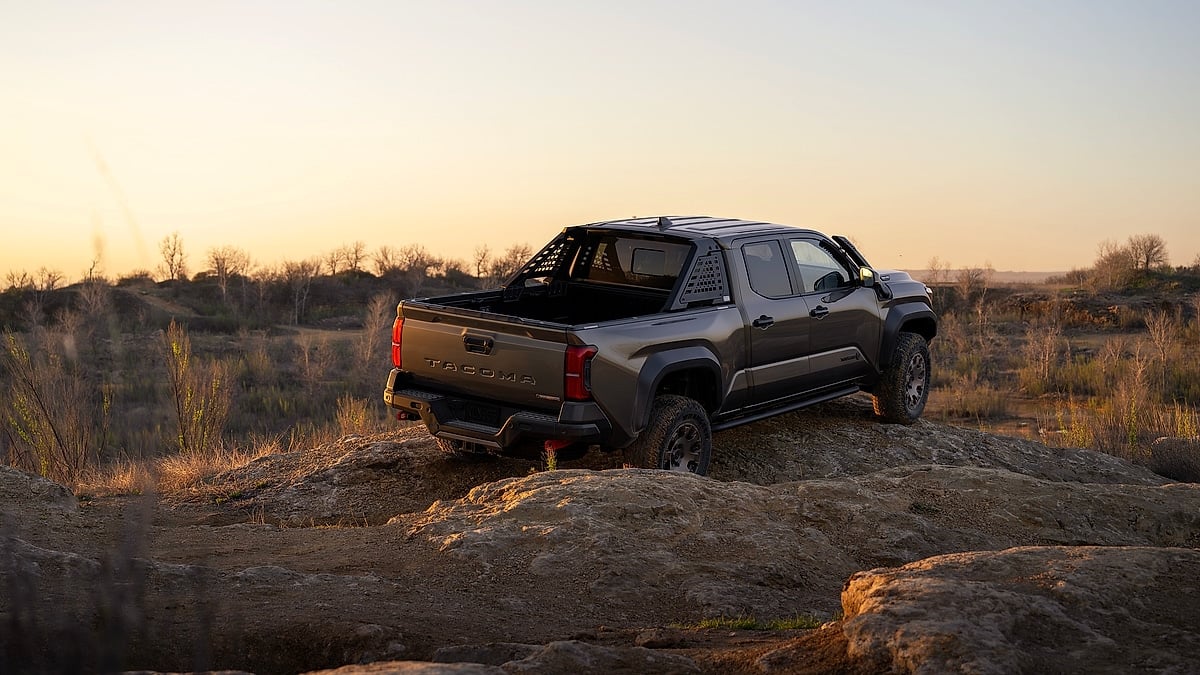
One image by Al J Tuttle from Facebook.
About The Author
Noah Washington is an automotive journalist based in Atlanta, Georgia, covering sports cars, luxury vehicles, and performance culture. His reporting focuses on explaining the engineering, design philosophy, and real-world ownership experience behind modern vehicles.
Noah has been immersed in the automotive world since his early teens, attending industry events and following the enthusiast communities that shape how cars are built and driven today. His work blends industry insight with enthusiastic storytelling, helping readers understand not just what a car is, but why it matters.
Noah is also a member of the Southeast Automotive Media Association (SAMA), a professional organization for automotive journalists and industry media in the Southeast.
His coverage regularly explores sports cars, luxury vehicles, and performance-driven segments of the automotive industry, including the evolving culture surrounding Formula Drift and enthusiast builds.
Read more of Noah's work on his author profile page.
You can also follow Noah here:
Set Torque News as Preferred Source on Google
Follow us today...