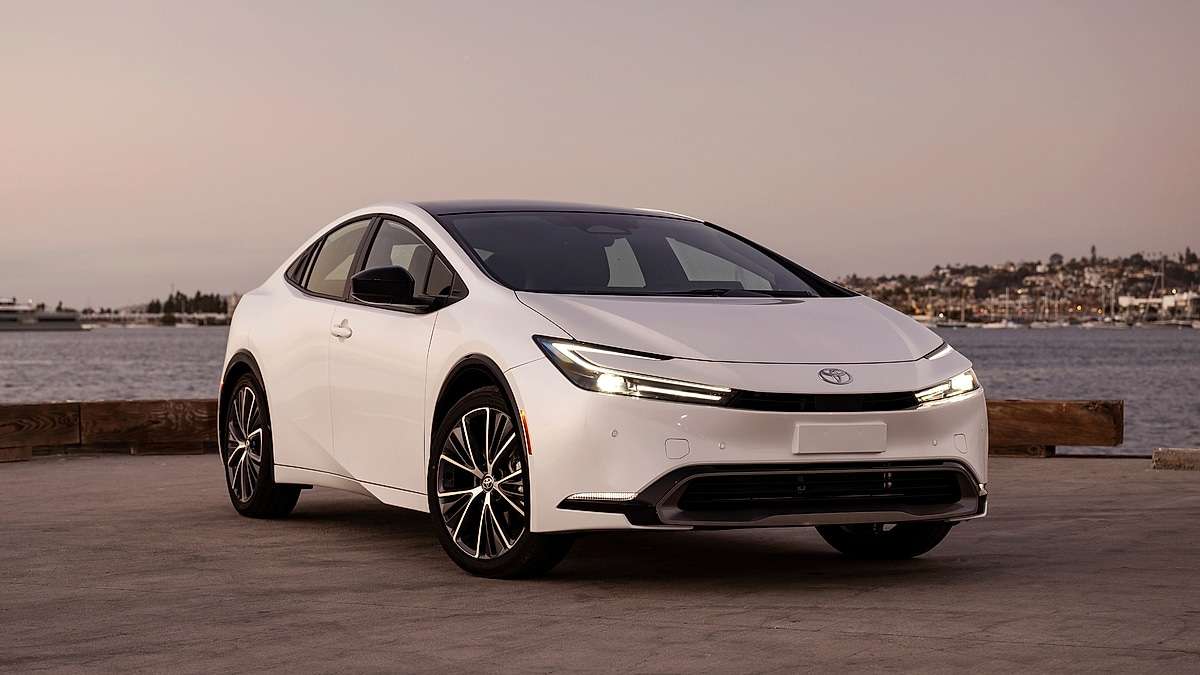

A 2025 Toyota Prius Prime XSE Premium Solar owner plugged into a 220V garage outlet at “dead zero empty” and reached full charge in 3 hours and 15 minutes. That real-world number explains why plug-in hybrids still make so much sense for people who want electric miles without reorganizing their life around charging. Geoffrey Bloom posted the kind of charging result that does not sound dramatic until you live with the car.
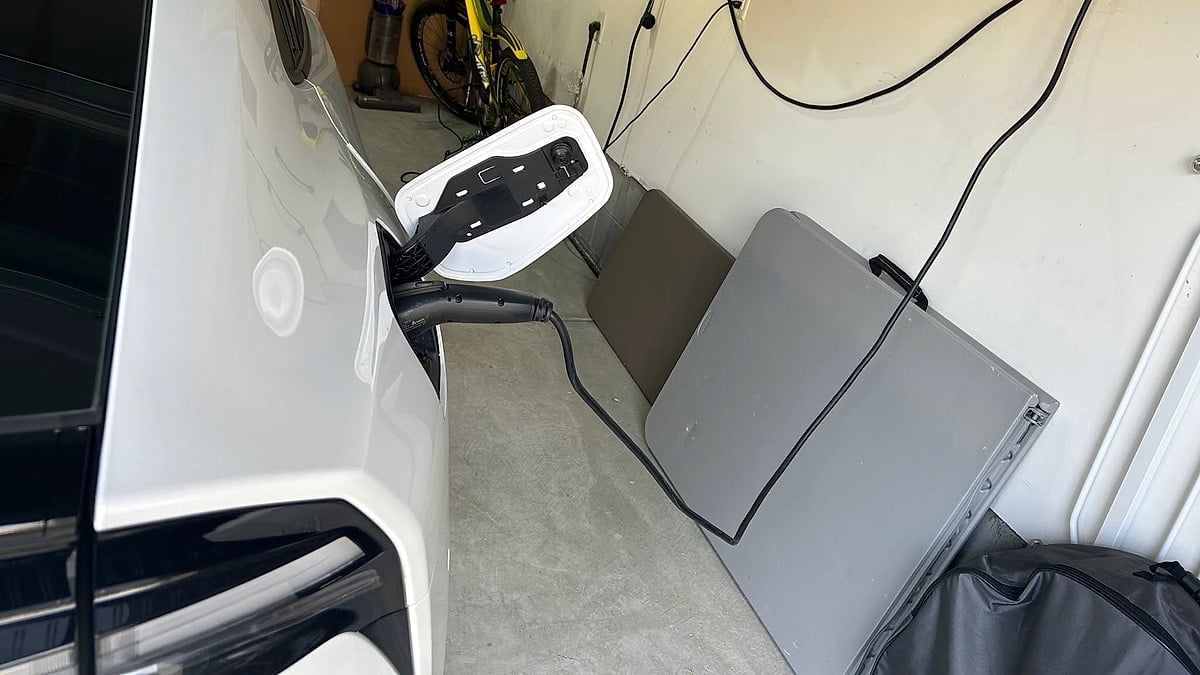
His 2025 Prius Prime XSE Premium Solar was at what he called “dead zero empty.” He plugged it into a 220V garage wall socket. The total time to full was 3 hours and 15 minutes. He broke it down another way: 4.9 minutes per mile. He added that this has been typical for him over the past year. That last sentence is the useful part.
Charging Performance Benchmarks For The 2025 Prius Prime XSE Premium
- 3 hours and 15 minutes from displayed empty to full on this owner’s 220V garage setup.
- 4.9 minutes per mile, which matches the XSE Premium’s roughly 40-mile EV range.
- About 4 hours is Toyota’s general Level 2 estimate, so this owner’s real-world result is a little quicker than the conservative published figure.
Plenty of owners can produce one perfect charging session. Good weather, warm battery, favorable voltage, low household load, clean connection, a battery management system in a cooperative mood. One charging session can flatter almost any plug-in vehicle. A year of seeing roughly the same result turns the number into ownership behavior.
For this Prius, a dead-empty-to-full charge fits inside an ordinary evening.
That is the entire pitch for a plug-in hybrid done right.
The Math Lines Up Almost Perfectly
Toyota estimates the XSE and XSE Premium versions of the 2025 Prius Plug-in Hybrid at about 40 miles of all-electric range. Bloom’s 3-hour-15-minute charge equals 195 minutes.
Divide 195 minutes by 40 miles, and you get 4.875 minutes per mile.
That rounds to 4.9.
So his number is not merely believable. It is neatly consistent with the car’s rated EV range. He is describing the time it takes to refill the usable EV portion of the battery, not inventing a miracle charging curve.
That matters because Prius Prime owners often talk in miles instead of kilowatt-hours. Full EV drivers tend to watch charging speed, peak kW, DC fast-charge curves, battery preconditioning, and state-of-charge windows. Prius Prime owners usually care about a simpler question: can I get tomorrow’s commute back while the car sits in the garage?
Bloom’s answer is yes.
Three hours and fifteen minutes is short enough that the car can come home empty after work, charge during dinner, and be ready again before bedtime. That changes the psychology of the vehicle. You do not need to wait overnight. You do not need to install a giant home-charging setup. You do not need to explain charging strategy to the whole household.
Plug in. Let the car refill. Use electric miles again.
“Dead Zero Empty” Does Not Mean The Battery Is Truly Empty
There is one important technical point hiding inside the owner’s phrase.
When a Prius Prime shows no EV range left, the battery is not physically empty. Toyota keeps a buffer so the car can continue functioning as a hybrid, protect battery health, and manage power delivery. The driver has used the displayed EV portion, then the car blends or switches into hybrid operation. That is why plug-in hybrids feel so normal to own.
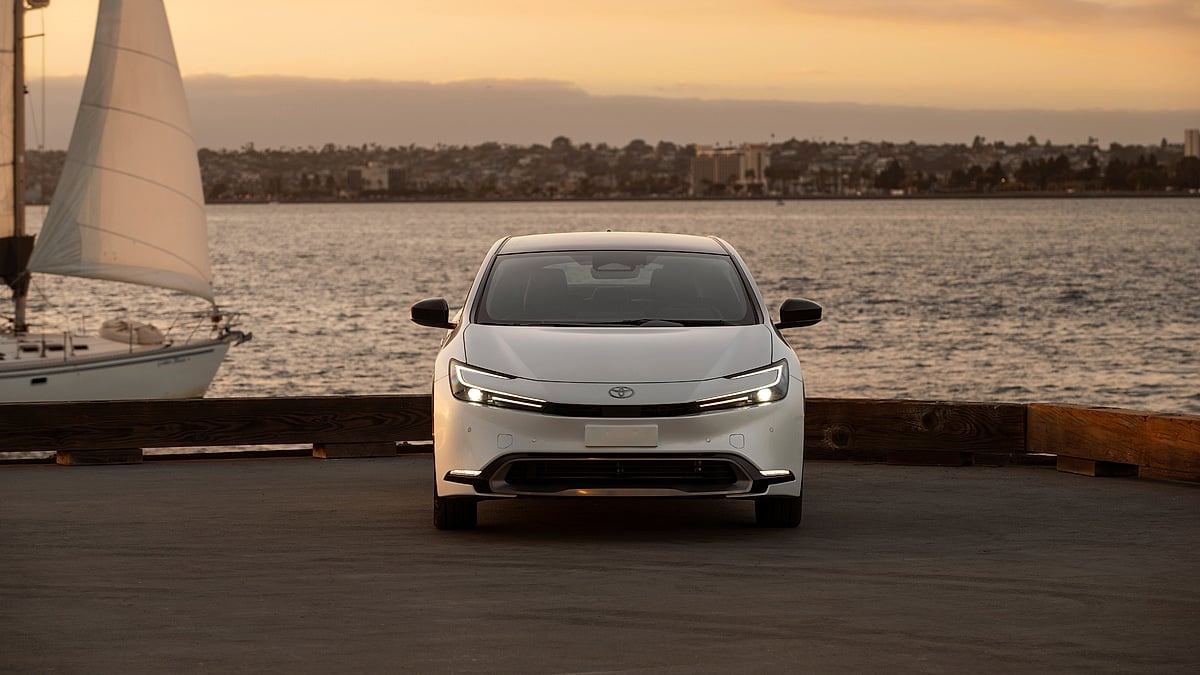
Run out of EV range, and the trip keeps going. The gasoline engine and hybrid system take over. Regenerative braking still works. The car still drives like a Prius. The owner does not have to hunt for a charger before getting home.
This also explains why the charge time is predictable. The car is refilling its usable plug-in window, not dragging a giant depleted EV pack back from the floor. A Prius Prime battery is large enough to cover daily electric driving for many owners, yet small enough to refill quickly on Level 2.
That balance is the clever part.
The Prius Prime does not try to behave like a full EV. It tries to make plugging in easy enough that owners actually do it.
The 220V Garage Outlet Is The Quiet Hero
The phrase “220V garage wall socket” is doing a lot of work here.
On a normal 120V household outlet, a Prius Plug-in Hybrid can take roughly overnight to recharge. That still works for many owners. Plug in after dinner, leave full in the morning. Fine. But Level 2 power changes the car from “ready tomorrow” to “ready later today.”
That difference is more useful than people think.
A driver can come home from errands with the EV range depleted and recover it before an evening trip. A two-driver household can use the car in the morning, charge it mid-day, and use electric mode again at night. Someone with cheap off-peak windows can fit the charge neatly into a shorter pricing period. A driver who forgets to plug in overnight may still recover a meaningful amount before leaving.
The Prius Prime’s small battery makes Level 2 feel powerful because the job is modest.
A full EV may need hours and hours on the same circuit to gain hundreds of miles. The Prius only needs to restore its daily electric cushion. That is why a 220V garage outlet feels like a luxury here, even though the car does not require anything exotic.
The Solar Roof Is Interesting, But The Outlet Does The Work
Bloom’s car is the XSE Premium Solar, which makes this charging post more interesting.
The solar roof is one of the coolest Prius features because it fits the personality of the car. Park it outside, and the car can gather a small amount of energy from sunlight. It can help charge the drive battery while parked and support auxiliary functions while driving. For a Prius owner, that is charming in exactly the right way.
Still, the garage outlet is the main event.
An 185W solar roof can add useful energy over time, especially in a sunny climate with long outdoor parking. It cannot replace a 220V charge session when the car is empty. Solar is a bonus. The wall outlet is the habit.
That distinction keeps expectations healthy.
Owners should enjoy the solar roof for what it can do: add a little range, reduce waste, and make the car feel like it is always quietly working. They should not expect it to turn the Prius into a self-charging fantasy machine that never needs a plug. Bloom’s result shows the practical routine: use the solar when the sun gives you something, use the outlet when you want the battery full.
That is a very Prius answer.
A Full Recharge Fits Comfortably Into Daily Life
The best plug-in hybrid charging experience is boring.
No app anxiety. No charger map. No waiting at a public station. No DC fast-charge curve. No cable-sharing drama. No worry about arriving at 8% because the next charger is down. The car comes home, plugs in, and wakes up ready for local electric driving.
Bloom’s 3-hour-15-minute result makes that routine feel especially clean.
A driver who uses 30 to 40 miles of EV range per day can treat the Prius Prime almost like an EV during the week. Gasoline remains available for long trips, cold days, missed charges, detours, and everything else real life throws at a driver. That is why PHEVs still deserve a serious place in the market, despite all the louder arguments around full EVs.
Many households do not need 300 electric miles every morning.
They need 35 to 45 miles that come back easily.
The Prius Prime gives them that, then keeps a gasoline engine in reserve for the days when life refuses to stay within the plan.
Real-World Charging Performance Compared With Toyota’s Published Estimate
Toyota’s published Level 2 estimate is about 4 hours under ideal conditions. Bloom saw 3 hours and 15 minutes.
That gap does not require suspicion.
Automakers often publish conservative charging estimates because real conditions vary. Voltage can vary. Current limits can vary. Battery temperature can vary. The car may taper at the top. Household wiring and charging equipment can influence the session. The displayed “empty” state may vary depending on how the car ended the trip. The solar roof may contribute a small amount if the car spent time outside before charging, though the owner’s session was described as a garage charge.
There may also be a difference between a true full-rated test and the owner’s practical full display.
Owners care about the latter.
If the car says full and delivers its normal EV miles, the session did its job.
That is how people actually live with cars. They do not audit every electron. They ask whether the car was ready when needed.
Public Charging Almost Misses The Point
Some people will ask whether a Prius Prime should be charged at public Level 2 stations.
Sometimes, yes. If a workplace has charging, use it. If a hotel offers a plug overnight, use it. If a grocery store charger is available and convenient, fine. But the Prius Prime’s strongest case lives at home.
Public charging is where full EV thinking can confuse the Prius conversation.
A Prius Prime does not need a public fast-charging network to be useful. It does not need 800V hardware. It does not need 10-to-80 marketing. It does not need a giant battery. Its advantage is that a modest home setup can refill the part of the car the driver uses most often.
Bloom’s charge time is exactly why.
Three hours and fifteen minutes is not a road-trip charging solution. It is a daily-life solution. That is where the car earns its keep.
The owner who plugs in regularly gets quiet electric errands, lower gas use, strong efficiency, and no penalty when a longer drive appears. The owner who never plugs in still has a good hybrid, though that misses the best part of the car.
The XSE Premium’s 40-Mile EV Range Is The Right Size For A Lot Of People
Forty miles does not sound heroic in a world of 300-mile EVs.
It can be perfect.
A large share of daily driving lives under that number. School drop-off. Commute. Grocery run. Gym. Dinner. Local errands. For those miles, the Prius Prime can behave like an electric car. Then it can leave town without asking the driver to plan around public charging.
The battery is large enough to feel meaningful and small enough to refill quickly.
That is the sweet spot Toyota found with the fifth-generation Prius Prime. The old plug-in Prius models could feel timid. This one has real electric range, much stronger acceleration, and a design people actually want to look at. The plug-in system no longer feels like a science project attached to an appliance. It feels like the best version of the Prius idea.
Bloom’s charging number supports that.
A 40-mile EV window that returns in 3 hours and 15 minutes is easy to use. Easy things get used. That is where efficiency gains become real.
The Practical Lesson For Owners
If you own a fifth-generation Prius Prime or Prius Plug-in Hybrid, the owner’s report gives you a useful benchmark.
A 220V Level 2 setup should make a full displayed-empty-to-full charge feel like a few-hour job. If your car takes much longer on a similar setup, check the charging current, outlet, EVSE, scheduling settings, battery temperature, and whether the circuit is delivering what you think it is delivering. If you are using 120V, expect a slower overnight rhythm and do not compare that directly with Bloom’s 220V result.
Also, track your own minutes per mile.
That number may be more useful than total charge time. If your XSE Premium is taking about 4.9 minutes per EV mile from empty to full, you are right in the same real-world neighborhood as this owner. If your SE has more rated EV miles, the math will look slightly different. If winter range drops, minutes per displayed mile may change.
The car will teach you its pattern if you pay attention for a few weeks.
Bloom has watched it for a year. That is why his post is useful.
Level 2 Charging Performance Sets The Ownership Experience
This is the kind of owner data that does not go viral enough.
No broken charger. No dramatic road trip. No range panic. No expensive failure. Just a plug-in hybrid owner confirming that his car reliably refills from displayed empty to full in 3 hours and 15 minutes on a 220V garage outlet.
That is everyday electrification working correctly.
The automotive world loves extremes: huge EV batteries, ultra-fast charging, thousand-mile road trips, towing tests, failure stories, and culture-war nonsense. The Prius Prime lives in a quieter place. It asks owners to plug in at home, use electric miles locally, burn gasoline only when the trip needs it, and move through the week with fewer stops at the pump.
Bloom’s post shows how painless that can be.
Come home empty. Plug in. Eat dinner. Do something else. The car is full again.
That may be the most convincing Prius Prime argument of all.
How Long Does Your Prius Prime Take To Charge?
If you own a fifth-generation Toyota Prius Prime or Prius Plug-in Hybrid, how long does it take to charge from displayed empty to full on 120V or 240V? Include trim, outlet type, EVSE amperage, outside temperature, displayed EV miles, and whether you have the solar roof.
Come back tomorrow, or check our Torque News Home Page for more interesting automotive news articles.
One image by Geoffrey Bloom from Facebook.
About The Author
Noah Washington is an automotive journalist based in Atlanta, Georgia, covering sports cars, luxury vehicles, and performance culture. His reporting focuses on explaining the engineering, design philosophy, and real-world ownership experience behind modern vehicles.
Noah has been immersed in the automotive world since his early teens, attending industry events and following the enthusiast communities that shape how cars are built and driven today. His work blends industry insight with enthusiastic storytelling, helping readers understand not just what a car is, but why it matters.
Noah is also a member of the Southeast Automotive Media Association (SAMA), a professional organization for automotive journalists and industry media in the Southeast.
His coverage regularly explores sports cars, luxury vehicles, and performance-driven segments of the automotive industry, including the evolving culture surrounding Formula Drift and enthusiast builds.
Read more of Noah's work on his author profile page.
You can also follow Noah here:
Set Torque News as Preferred Source on Google
Follow us today...